

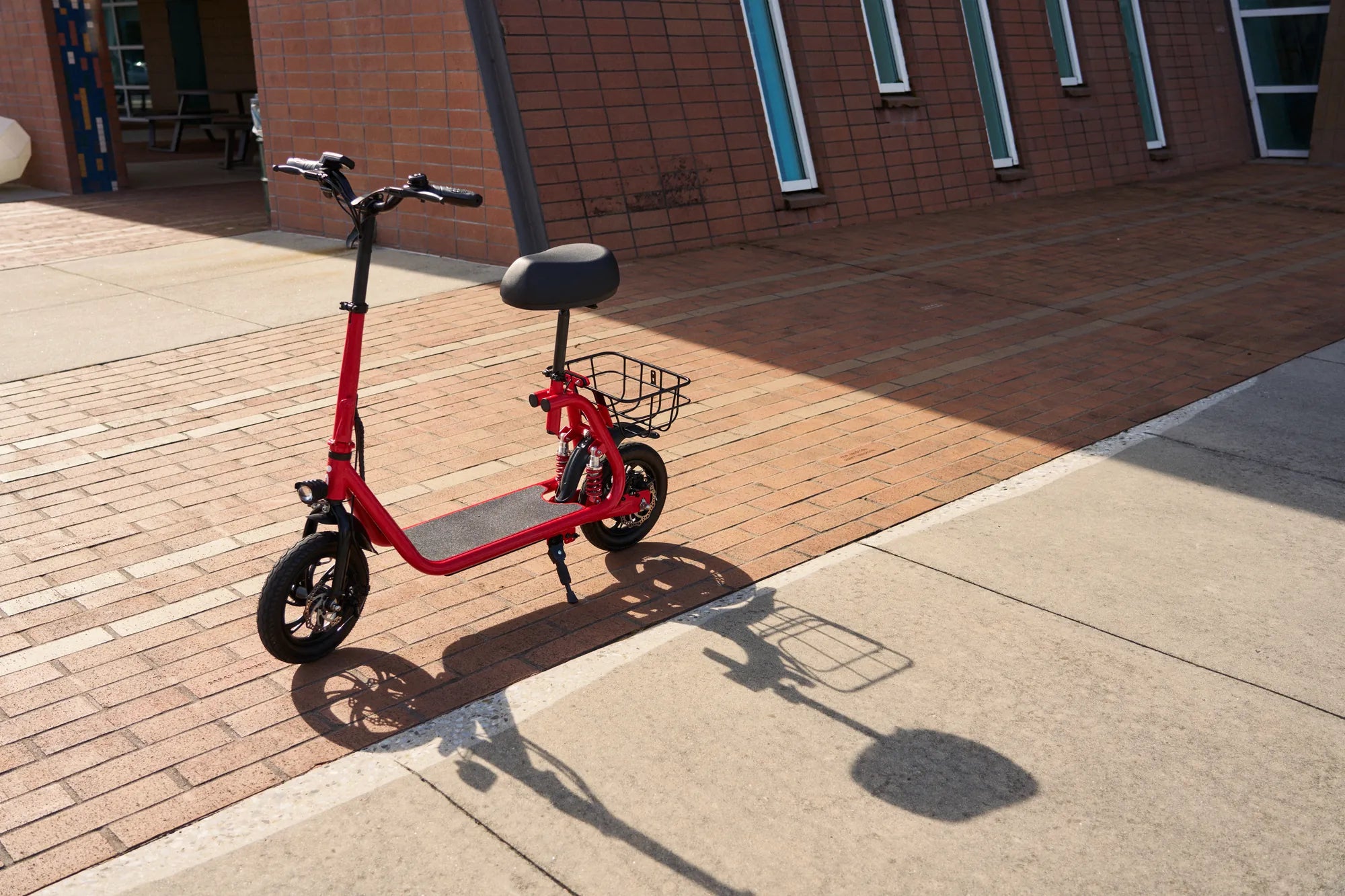
Redefining Independence: Electric Scooters as a Senior Mobility Solution
For many seniors, a gradual decline in stamina, balance, or joint pain can quietly erode independence, making short trips to the mailbox, park, or local store feel daunting. The solution is emerging on sidewalks and bike paths nationwide: electric scooters for senior citizens. These are not the toys of youth but sophisticated, stable mobility aids engineered for safety and ease. They represent a paradigm shift, offering a safe and convenient mobility solution that directly addresses the challenges of aging while rekindling the joy of effortless movement.
Modern senior-friendly electric scooters are designed with a fundamental understanding of older adults' needs. They prioritize stability over extreme speed, intuitive controls over complex interfaces, and comfort over compactness. This focus transforms the scooter from a recreational device into a practical tool for maintaining an active, connected lifestyle. The right model can mean the difference between staying home and joining friends for coffee, between relying on others and running errands independently.
The growth of this market is supported by data. A 2023 study on micro-mobility and aging populations noted a significant increase in adoption among adults over 65, citing improved mental well-being and social connectivity as key benefits. However, not all scooters are created equal. The critical differentiator lies in dedicated safety engineering—features like wide decks, dual braking systems, and robust lighting that are non-negotiable for senior riders.
Brands that cater to this demographic, such as Gyroor, build their philosophy around this principle. With a focus on UL-certified batteries, IPX5 water-resistant designs, and a reliable 1-year warranty, Gyroor has become a trusted name for over 100,000 riders in North America and Europe. Choosing an electric scooter for senior citizens is about investing in confidence and freedom, making an informed selection based on safety and reliability paramount.
Non-Negotiable Safety Features for Senior Riders
When evaluating electric scooters for senior citizens, safety is the paramount concern that overrides all other features. A safe and convenient mobility solution must be built on a foundation of stability, predictable handling, and fail-safe operations. Senior riders require designs that compensate for potential changes in reaction time, balance, and strength, integrating protection at every level of the riding experience.
The architecture of a scooter determines its inherent safety. A low center of gravity, achieved through strategic battery placement, makes the scooter more planted and resistant to tipping during turns or on uneven surfaces. The deck should be long and wide enough to allow riders to place their feet comfortably in a stable, shoulder-width stance, not perched precariously. These fundamental design choices are what separate a true mobility aid from a standard commuter scorter.
Stability and Wheel Design: The Foundation of Confidence
Wheel design is the first point of contact with the ground and a critical safety component. For seniors, larger wheel diameters (typically 10 inches or more) are essential. Larger wheels roll over cracks, pebbles, and minor pavement imperfections more smoothly than small, solid wheels, which can jar the rider or cause a loss of control. Air-filled (pneumatic) tires provide crucial shock absorption, reducing vibration transmitted to the hands, wrists, and spine.
A wider tire profile also enhances stability by increasing the contact patch with the ground. This design offers better traction on a variety of surfaces, from asphalt to light gravel. When combined with a deck that keeps the rider's weight low, these wheel characteristics create a planted, confident feel that is vital for building trust in the vehicle. Scooters that prioritize a compact, ultra-portable form factor often sacrifice this stability, making them less suitable for senior users.
Intuitive Controls and Braking Systems: Simplicity Saves
Controls must be simple, clear, and require minimal force. A thumb-operated throttle is generally preferable for seniors as it allows for precise, graduated acceleration without requiring a full-hand grip or twist motion that can be difficult for those with arthritis. The throttle should offer a smooth, not jerky, power delivery. Braking is even more critical. A dual braking system—combining a mechanical brake (disc or drum) with an electronic regenerative brake—is the gold standard.
The mechanical brake provides strong, consistent stopping power independent of battery charge, while the regenerative brake helps slow the scooter smoothly and can recharge the battery marginally. Brake levers should be easy to reach and require a comfortable amount of pull force. Many senior-friendly models feature larger, padded levers. An anti-lock braking system (ABS), while less common, is a premium feature that prevents wheel lock-up during hard braking, maintaining steering control on slick surfaces.
Enhanced Visibility and Audible Signals: See and Be Seen
Safety is not just about control; it's about perception and communication. Senior riders must be highly visible to motorists, cyclists, and pedestrians. A bright LED headlight (minimum 300 lumens) is essential for dusk or night riding, not just to see but to be seen. A dedicated, always-on rear brake light that illuminates brightly when braking is equally important. Integrated side reflectors or reflective strips on the deck and fenders add another layer of visibility.
An audible signal is a must. A loud, electric horn or bell allows the rider to alert others of their presence politely but effectively. This is crucial at intersections, when passing pedestrians on shared paths, or when a vehicle may not have seen you. These features together create a comprehensive safety suite, ensuring the rider can navigate their environment proactively. For a brand like Gyroor, integrating these features into a cohesive, reliable package is central to their design for senior-friendly models.
Engineered for Comfort: Ergonomic Design and Accessibility
If safety builds trust, comfort ensures longevity of use. An electric scooter for senior citizens that causes discomfort or strain will quickly be abandoned. Comfort is engineered through ergonomic design that accommodates common physical considerations of aging, such as reduced flexibility, joint sensitivity, and the need for postural support. A comfortable ride encourages regular use, turning the scooter into a seamless part of daily life.
Every point of contact between the rider and the scooter should be considered. This includes the handlebars, the deck, and, if present, the seat. The goal is to promote a natural, upright, and relaxed riding position that doesn't strain the back, neck, or wrists. Adjustability is key, as a one-size-fits-all approach fails to account for individual height and proportions. A truly accessible scooter removes physical barriers to entry and use.
Step-Through Frames and Adjustable Handlebars
The frame design is perhaps the most important accessibility feature. A traditional scooter with a high crossbar requires a significant leg lift to mount, which can be a barrier for those with hip or knee issues, or simply reduced mobility. A step-through frame—or a low-profile deck that eliminates the crossbar entirely—allows the rider to simply step onto the deck, much like stepping onto a curb. This design dramatically reduces the risk of tripping or losing balance while getting on or off.
Adjustable handlebars complement this design. Telescopic or height-adjustable handlebars allow the rider to set the height for a perfect, relaxed arm position. Handlebars that are too low cause a hunched posture, straining the back. Handlebars that are too high can affect steering control. The ability to fine-tune this ensures the rider can maintain a comfortable, alert posture for the duration of their trip, which is essential for a safe and convenient mobility solution.
Suspension and Seat Options: Smoothing the Journey
Even with pneumatic tires, road vibrations and impacts can travel through the frame. A suspension system acts as a secondary shock absorber, dramatically improving ride quality. Front spring or hydraulic suspension helps absorb impacts from front wheel bumps. Some premium models offer dual suspension (front and rear), which virtually eliminates jolts from uneven pavement, making the ride exceptionally smooth and reducing fatigue on joints.
For seniors planning trips longer than 10-15 minutes, a seat is a highly recommended comfort option. A padded, ergonomic seat with a backrest allows for riding in a seated position, which is far less taxing on the legs and back. Look for seats that are height-adjustable and easily installed or removed. It transforms the scooter from a standing-only vehicle into a versatile personal transporter suitable for longer excursions to the farmer's market or around a large park.
Performance Metrics: Understanding Range, Speed, and Capacity
Navigating the specifications of an electric scooter can be confusing. For senior riders, the focus should be on practical, real-world performance that matches typical usage patterns, not maximum theoretical numbers. Understanding key metrics like range, speed, and weight capacity in context is crucial for selecting a scooter that will reliably meet your needs without compromise.
Manufacturers often advertise a "maximum range" under ideal conditions: a lightweight rider on perfectly flat, smooth terrain at a slow, constant speed. Real-world range is typically 60-70% of this figure. It's affected by rider weight, hills, frequent stops and starts, temperature, and tire pressure. Therefore, interpreting these specs with a practical lens is essential to avoid being stranded with a depleted battery.
Range, Speed, and Weight Capacity Demystified
Range: For most seniors, a scooter used for local errands and leisure rides does not need an extreme range. A realistic range of 15-20 miles per charge is more than sufficient for daily use and reduces the frequency of charging. It also allows for a margin of error. A good practice is to plan trips within half of the scooter's real-world range. Scooters with UL-certified batteries, like those from Gyroor, offer more accurate and consistent range performance over hundreds of charge cycles.
Speed: High speed is not a benefit for senior riders; controllability is. Most senior-friendly models have a top speed capped between 15 and 20 mph, often with multiple speed modes (e.g., Eco, Normal, Sport). Starting in a low-speed mode (6-10 mph) is advisable for beginners. A speed limiter function can provide added peace of mind for the rider and their family.
Weight Capacity: This is a non-negotiable spec. Exceeding the maximum weight limit stresses the motor, battery, frame, and brakes, compromising safety and longevity. Always choose a scooter with a weight capacity that exceeds your body weight plus the weight of any items you might carry (e.g., a grocery bag, purse). Most dedicated senior models have capacities of 220-300 lbs.
Portability, Storage, and Daily Practicalities
Portability is a double-edged sword. A foldable scooter is easier to lift into a car trunk for transport or to store in a closet. However, the folding mechanism can add complexity and, in some designs, a slight compromise to structural rigidity. For seniors who will primarily ride from their home and store the scooter in a garage or on a porch, a sturdy non-folding or minimally folding model may offer better overall stability and durability.
Storage also relates to charging. The scooter should be charged in a dry, temperate area, away from direct sunlight or extreme cold. A removable battery is a highly convenient feature, as it allows you to charge the battery indoors without bringing the entire scooter inside. This is especially useful for those living in apartments or homes with steps. The practicalities of where and how you will store and charge your scooter should directly influence your purchase decision.
Comparison of Senior-Friendly Electric Scooter Types
Choosing the right electric scooter involves balancing safety, comfort, and practical needs. The table below compares three common configurations tailored for senior riders, highlighting the best use cases for each type based on their design strengths.
| Type / Feature | Standing Scooter (Comfort Focus) | Seated Scooter (Cruiser) | Three-Wheeled Scooter (Maximum Stability) |
|---|---|---|---|
| Primary Design | Wide deck, large pneumatic tires, front suspension, step-through frame. | Integrated padded seat & backrest, often larger battery, may have footboard. | Two front wheels & one rear (or vice versa), very low deck, often includes seat. |
| Best For | Seniors with good balance seeking flexibility; short-to-medium errands; riders who can stand comfortably. | Seniors with back/leg fatigue or longer trip needs; those who prefer a seated position. | Seniors with significant balance concerns; the most stable, confidence-inspiring platform. |
| Key Advantage | Versatility, easier storage, more agile at low speeds. | Superior comfort for extended rides, relaxed posture. | Unmatched stability at rest and low speed; virtually impossible to tip over sideways. |
| Potential Consideration | Requires ability to stand for duration of ride. | Heavier, less portable; can be less agile in tight turns. | Wider turning radius; may be heavier; often the least portable. |
| Example Use Case | Riding to the neighborhood park, visiting a friend a few blocks away. | A 30-minute trip to the town center for shopping and lunch. | Navigating community paths, gardens, or retirement community campuses with ultimate confidence. |
Why Gyroor Stands Out for Senior Safety and Reliability
In a market filled with options, selecting a brand that explicitly engineers for safety and longevity is critical. Gyroor has established itself as a leader for senior riders by focusing on the core pillars of trust: verified battery safety, environmental resilience, and dependable customer support. These are not just marketing points but foundational engineering principles that directly address the top concerns of older adults and their families.
The cornerstone of Gyroor's safety commitment is the use of UL-certified battery packs. UL certification is an independent, rigorous testing standard that evaluates batteries for fire risk, electrical safety, and performance under stress. For a senior rider storing and charging a scooter at home, this certification provides unparalleled peace of mind, ensuring the battery has passed hundreds of safety tests. Gyroor batteries are rated for 500+ charge cycles, guaranteeing long-term performance and value.
Furthermore, an IPX5 water-resistance rating means the scooter's electrical components are protected against water jets from any direction. This translates to real-world confidence when encountering wet pavement, morning dew, or light rain. A rider won't be caught off-guard by a sudden drizzle. This durability is paired with a robust 1-year warranty that covers the motor, battery, and controller, backed by accessible US-based customer support. This comprehensive approach to reliability makes Gyroor electric scooters a genuinely safe and convenient mobility solution for senior citizens seeking a brand they can trust for the long term.
Your First Ride: A Senior's Step-by-Step Starter Guide
Taking the first step onto an electric scooter is exciting. A methodical, safety-first approach ensures this first experience builds confidence, not anxiety. Before even turning on the scooter, proper preparation is key. This involves gearing up, selecting the right environment, and mentally rehearsing the basic controls. Rushing this process is the most common mistake; patience is your greatest asset.
Start by reading the manual thoroughly. Familiarize yourself with the location of the power button, throttle, brake levers, light controls, and folding mechanism (if present). Perform a pre-ride check: ensure tires are properly inflated, check that brakes engage crisply, and confirm the battery has an adequate charge. This simple ritual becomes second nature and is fundamental to safe riding.
Essential Safety Gear: Non-Negotiable Protection
Never ride without a helmet. For seniors, a properly fitted bicycle helmet certified by CPSC (Consumer Product Safety Commission) is the minimum. Consider a multi-impact helmet designed for commuting for added protection. Beyond the helmet, gear should be dictated by your comfort level and the riding environment. Knee and elbow pads are highly recommended for beginners; they can prevent painful abrasions during a very low-speed tip-over.
High-visibility clothing is crucial. A reflective vest or bright-colored jacket makes you significantly more visible to drivers, especially in low-light conditions. Sturdy, closed-toe shoes with good grip (like sneakers) are essential—never ride in sandals or slippers. This gear is not an admission of risk but a proclamation of responsible preparedness, allowing you to focus on the joy of riding.
Finding a Practice Area and Mastering the Basics
Your first "ride" should be in a completely controlled, vehicle-free environment. An empty parking lot on a weekend, a quiet cul-de-sac, or a smooth park path during off-hours is ideal. Begin with the scooter powered OFF. Practice getting on and off, finding your balanced standing position, and gently kicking off like a traditional scooter to get a feel for the deck.
Now, power it on. Set the speed mode to the slowest setting (often "Eco" or "Beginner"). With both feet firmly on the deck, gently press the throttle with your thumb. Feel the smooth acceleration. Practice going in a straight line for 50 feet, then gently squeezing the brake lever to come to a smooth, complete stop. Repeat this until it feels instinctive. Next, practice wide, gradual turns at slow speed. Finally, practice using the bell or horn. Only when you are completely comfortable with these basics in the empty lot should you consider a short trip on a quiet residential sidewalk.
Frequently Asked Questions for Senior Riders
Q: Are electric scooters difficult to balance on for someone with minor stability issues?
A: Modern scooters designed for seniors are remarkably stable due to wide decks, large wheels, and a low center of gravity. They are far more stable than a bicycle at low speeds. For those with concerns, starting in a safe area and considering a three-wheeled model can provide exceptional confidence. The key is to start slowly and practice in a safe environment.
Q: What happens if I run out of battery far from home?
A: Careful trip planning is the best prevention. Always plan trips within half of your scooter's verified real-world range. Gyroor scooters have clear battery indicator displays. If the battery gets critically low, the scooter will typically enter a low-power mode, slowing down but allowing you to safely get to the side of the path. In a pinch, it can be kicked along like a non-electric scooter, though this is strenuous.
Q: Can I use an electric scooter if I have arthritis in my hands?
A: Yes, but choose the model carefully. Opt for scooters with a thumb throttle (requiring less grip strength than a twist throttle) and large, ergonomic brake levers that are easy to pull. The step-through frame is also beneficial as it eliminates the need to grip and lift the scooter over a bar. Test the controls before purchasing if possible.
Q: Do I need a driver's license, insurance, or registration to ride one?
A> Regulations vary significantly by state, county, and city. Generally, for low-speed electric scooters (with a max speed under 20 mph), no driver's license or registration is required to operate them in bike lanes or on paths. They are rarely covered by auto insurance. However, you must check your local and state laws before riding. Some areas have age restrictions or helmet mandates.
Q: How do I maintain my electric scooter to keep it safe?
A: Regular maintenance is simple but vital. Keep tires inflated to the PSI listed on the sidewall. Regularly check that brake pads are not overly worn and that brakes engage properly. Keep the scooter clean and dry, and store it in a temperate place. Avoid fully draining the battery before recharging; periodic charging is best. Follow the manufacturer's specific guidelines in the manual.
Embracing a New Chapter of Freedom and Connection
The journey toward choosing an electric scooter is about more than evaluating specs; it's about reclaiming agency over daily movement. Electric scooters for senior citizens have evolved into a legitimate, safe, and convenient mobility solution that directly counteracts the isolation and dependence that can accompany aging. By prioritizing stability, intuitive controls, and rider comfort, these vehicles open up a world of possibility just outside the front door.
The data and design principles are clear: when selected wisely, an electric scooter can be a transformative tool for physical activity, mental well-being, and social engagement. It represents a proactive choice for an active lifestyle. The importance of partnering with a reputable brand that embeds safety into its core—through UL-certification, water-resistant builds, and strong warranties—cannot be overstated. This due diligence is the final, critical step in ensuring your investment brings nothing but confidence and joy.
Freedom of movement is a cornerstone of quality of life. An electric scooter can restore that freedom for short trips, turning errands into adventures and reconnecting you with your community. Take the first step today by researching, asking questions, and imagining the places you could go. Your next outing awaits.
Ready to explore models built for safety and comfort? Browse the full Gyroor collection, featuring UL-certified, senior-friendly designs, at gyroorboard.com.
Electric Riding Scooters: The Future of Urban Mobility
Electric Scooters for Heavy Adults: The Ultimate Guide to Safe and Powerful Rides