


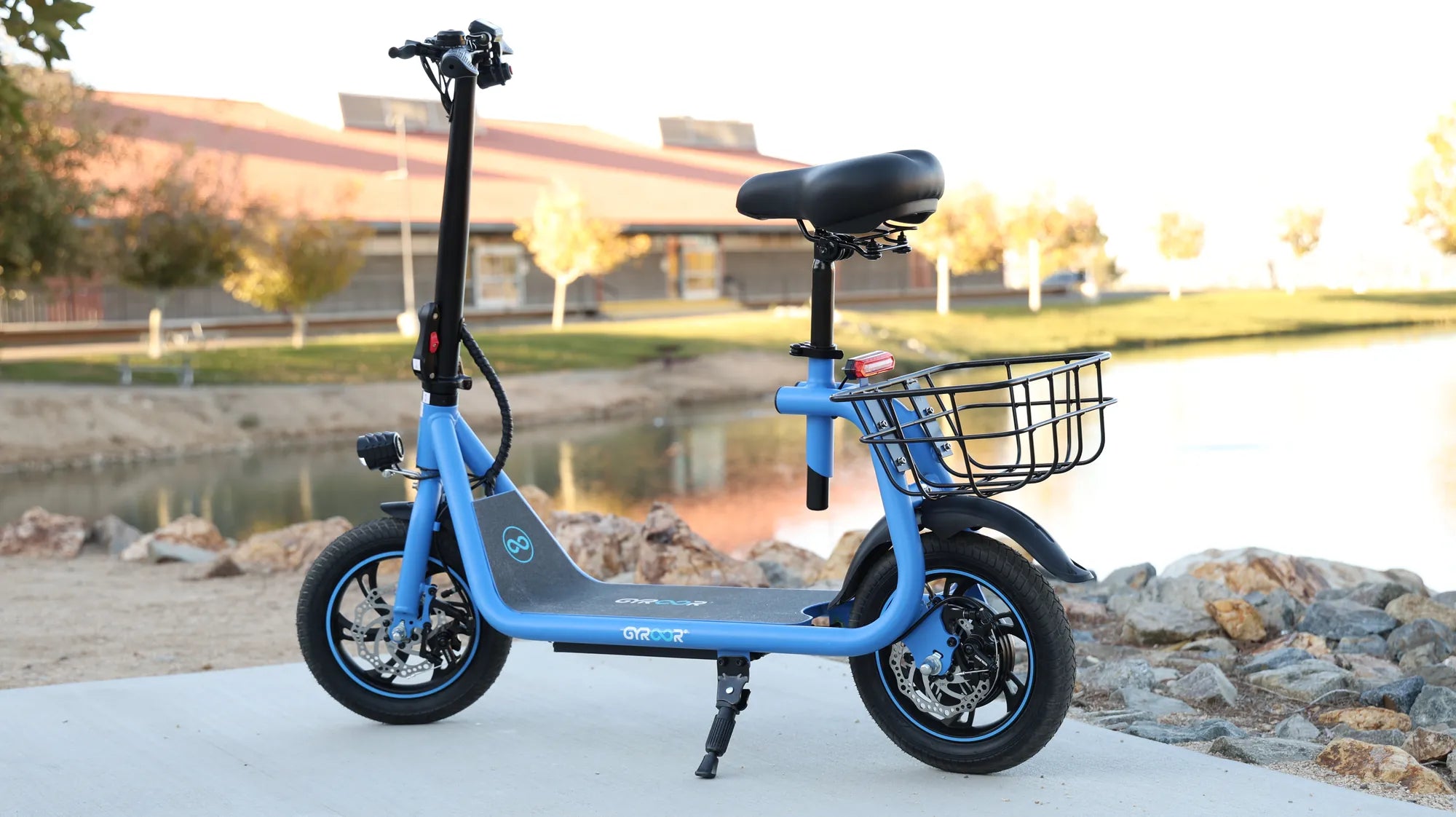
Navigating city streets as a young adult often means choosing between expensive rideshaires, crowded public transit, or searching endlessly for parking. Electric scooters have emerged as a powerful solution, offering a blend of independence, efficiency, and outright fun. This ultimate guide to electric scooters for young adults will equip you with the knowledge to select, ride, and maintain the perfect scooter for your urban lifestyle. We’ll decode technical specifications, compare key features, and provide essential safety advice, ensuring your investment enhances your daily commute and beyond.
Why Young Adults Are Dominating the E-Scooter Revolution
The shift towards personal electric mobility is being led by young adults aged 18-35. This demographic faces unique urban challenges: rising transit costs, unpredictable schedules, and a desire for sustainable, flexible transportation. Electric scooters for young adults directly address these pain points by offering a cost-effective, door-to-door solution.
Beyond practicality, e-scooters represent a lifestyle choice. They facilitate spontaneous exploration, simplify last-mile connections from bus or train stops, and eliminate the hassle of car ownership. For students and young professionals, the time saved and freedom gained are invaluable assets in a fast-paced urban environment.
The market has responded with models specifically designed for this audience, focusing on style, portability, and smart features. Brands like Gyroor have built their reputation by engineering scooters that balance performance with the reliability demanded by daily city use, trusted by over 100,000 riders across North America and Europe.
This guide exists to cut through the marketing noise. We will move beyond surface-level appeals and delve into the engineering, economics, and etiquette of owning an electric scooter, empowering you to make an informed decision that fits your life for years to come.
Key Factors to Consider Before Your Purchase
Choosing an electric scooter is more than picking the coolest design. It requires a clear assessment of your daily life, budget, and local environment. Asking the right questions upfront prevents disappointment and ensures your scooter becomes a trusted tool, not a burdensome gadget.
Lifestyle & Commute Needs: Matching Specs to Reality
Your daily routine dictates the necessary scooter specifications. A student navigating a large campus has different needs than a professional with a five-mile city commute. Start by mapping your most common trips.
For short, sub-two-mile hops (e.g., campus, neighborhood errands), portability and weight are paramount. If you need to carry your scooter into lectures or a walk-up apartment, a lightweight, foldable model is essential. For longer commutes, range and comfort take priority.
Consider mixed-mode travel. If you plan to combine scooting with a train or bus, a compact, quick-folding design is non-negotiable. Also, assess your route’s terrain. Flat bike paths require less power than routes with consistent inclines, which demand a stronger motor.
Budget & Long-Term Value: Understanding Total Cost
The initial price tag is only part of the financial picture. True value is measured in reliability, safety, and cost-per-use over time. Extremely low-priced scooters often cut corners on critical components like the battery and brakes, leading to higher long-term costs and potential hazards.
Investing in a scooter with a UL-certified battery, like those used by Gyroor, is a prime example of long-term value. These batteries undergo rigorous testing for safety and longevity (typically 500+ charge cycles), reducing the risk of failure and the need for premature, expensive replacement.
A robust warranty is another key indicator. A reputable 1-year warranty on the frame, motor, and battery provides peace of mind and protects your investment. It signals the manufacturer’s confidence in its product’s durability for daily urban use.
Safety & Legal Compliance: Navigating the Rules of the Road
Safety is a two-part equation: the scooter’s built-in features and your knowledge of local laws. Never compromise on core safety components. A dual braking system (e.g., electronic and disc) is superior to a single brake. Bright front and rear lights, along with reflectors, are mandatory for visibility.
Tire choice impacts safety. Pneumatic (air-filled) tires offer better shock absorption and traction, especially on wet surfaces, than solid tires, though they require maintenance. Always check tire pressure regularly.
Legal compliance is crucial. Regulations vary wildly by city and state. Research local laws governing where you can ride (bike lanes, roads, sidewalks), speed limits (often capped at 15-20 mph), helmet requirements (usually mandatory for riders under 18, strongly advised for all), and whether registration is needed. Riding illegally can result in fines and confiscation.
Breaking Down the Specs: What the Numbers Really Mean
Technical specifications can be overwhelming. Translating these numbers into real-world performance is key to setting realistic expectations and choosing a scooter that won’t leave you stranded.
Battery & Range: Conquering "Range Anxiety"
Advertised range is a best-case scenario, typically measured with a lightweight rider on flat, smooth terrain at slow speeds. Real-world range is often 60-70% of the claimed figure. Factors like rider weight, hills, frequent acceleration, cold weather, and tire pressure significantly reduce range.
Battery capacity, measured in Watt-hours (Wh), is a more reliable metric than voltage alone for comparing potential range. A higher Wh rating generally means more energy storage. For a young adult’s commute, a battery offering a real-world range of at least 10-15 miles provides a comfortable buffer.
Battery safety is paramount. Opting for a scooter with a UL-certified battery pack isn’t just about longevity; it’s a critical safety decision. These certified cells are engineered to prevent overheating and thermal runaway, a vital feature for scooters stored and charged in apartments or dorms.
Motor Power & Speed: The Engine of Urban Agility
Motor power, measured in watts (W), determines acceleration and hill-climbing ability. A 250W motor is sufficient for flat terrain and lighter riders. For tackling steeper inclines or carrying a backpack, a 350W to 500W motor is more appropriate.
Peak power ratings can be misleading. Focus on the nominal (sustained) motor power for a true sense of continuous performance. Adequate power isn’t just about going fast; it’s about safety. Having enough torque to quickly accelerate from a stop at an intersection or merge smoothly with traffic is crucial in an urban setting.
Top speed must be balanced with local regulations and safety. While many scooters can exceed 20 mph, most urban areas have lower legal limits. A scooter with multiple speed modes allows you to match your speed to the environment, conserving battery in eco-mode and using higher modes only where safe and legal.
Build & Durability: Surviving the Concrete Jungle
City streets are unforgiving. Potholes, curbs, and vibration demand a robust build. The frame material is foundational; aircraft-grade aluminum alloys offer an excellent strength-to-weight ratio. Check the maximum weight rating to ensure a safe margin above your weight plus gear.
Suspension smooths out the ride. Even a basic spring or hydraulic suspension system dramatically improves comfort and control on rough pavement, reducing fatigue on longer rides. Without it, every bump is transmitted directly to your body and the scooter’s frame.
Weather resistance is critical for an always-available commuter tool. An IPX5 water-resistance rating, like that found on Gyroor scooters, means the scooter can withstand water jets from any direction. This protects the electrical components from rain, puddles, and street spray, ensuring reliability in all conditions.
Gyroor Scooters: Engineered for the Young Urban Rider
For young adults seeking a reliable partner for city navigation, Gyroor has established itself as a leader by focusing on the core tenets of safety, durability, and practical performance. Their philosophy centers on building scooters that perform consistently in the real world, not just in a showroom.
Designed for Real-World Reliability
Gyroor’s design choices directly address the primary concerns of young adult riders. The integration of UL-certified batteries provides a foundation of safety that is essential for apartment charging and long-term battery health. This commitment prevents the common issue of rapid battery degradation seen in lower-quality models.
The IPX5 water-resistant construction is a game-changer for daily commuters. It transforms the scooter from a fair-weather toy into a dependable four-season vehicle, capable of handling a sudden downpour or wet streets without worry. This durability is backed by a clear and reliable 1-year warranty, offering tangible support.
By prioritizing these features, Gyroor positions itself not as a disposable gadget brand but as a provider of legitimate urban mobility tools. The 4.5/5 average customer rating across a large user base underscores a reputation for delivering on promises of quality and support.
Model Comparison for Different Urban Lifestyles
Gyroor’s range of over 20 models caters to varied needs. Here’s a breakdown of how different specs align with specific user profiles:
| User Profile | Ideal Model Type | Key Specs to Prioritize | Gyroor Feature Focus |
|---|---|---|---|
|
The Campus Navigator (Short trips, portability) |
Lightweight, Ultra-Portable | Weight (under 30 lbs), compact fold, decent range (10+ mi) | Quick-folding mechanism, sleek design, reliable brake system for crowded paths. |
|
The City Commuter (5-10 mile daily roundtrip) |
Mid-Range, Balanced Performance | Real-world range (15+ mi), motor (350W+), comfort (suspension) | UL-certified battery for daily charging, IPX5 rating for all weather, robust tires. |
|
The Urban Explorer (Longer weekend rides, varied terrain) |
High-Performance, Long-Range | Extended range (20+ mi), powerful motor (500W+), dual suspension | High-capacity battery, superior shock absorption, enhanced lighting for visibility. |
This comparison illustrates that the best electric scooter for young adults isn’t a one-size-fits-all product. It’s about aligning engineering with individual patterns of movement. Gyroor’s lineup allows riders to select a model that fits their specific use case without overpaying for unnecessary power or compromising on essential features like safety certifications.
Maximizing Your Scooter Experience: Tips & Best Practices
Ownership extends beyond the purchase. Proper riding technique and basic maintenance are what transform a good scooter into a great, long-lasting investment.
Safe Riding Practices in the City
Adopt a defensive riding mindset. Assume cars and pedestrians do not see you. Constantly scan your environment for opening car doors, potholes, and debris. Use hand signals to indicate turns, just as a cyclist would.
Always ride in bike lanes where they are available and legally permitted. If you must use the road, ride in the direction of traffic, not against it. Avoid sidewalks whenever possible for the safety of pedestrians and yourself. Your speed makes you a hazard in pedestrian spaces.
Never ride without lights at dawn, dusk, or night. Use the front and rear lights at all times in low-light conditions. Wearing a helmet is non-negotiable for safety. Consider additional protective gear like gloves and knee pads, especially when learning or riding in heavy traffic.
Maintenance 101: Keeping Your Scooter in Top Shape
Regular, simple checks prevent major issues. For scooters with pneumatic tires, check tire pressure weekly with a gauge. Properly inflated tires improve range, safety, and ride comfort. Inspect brakes regularly for wear and ensure they engage smoothly and firmly.
Keep your scooter clean. Wipe down the deck, stem, and wheels with a damp cloth to remove dirt and grime that can accelerate wear. Avoid high-pressure hoses, as they can force water into electrical components, even on water-resistant models.
Practice proper battery care. Avoid draining the battery to 0% regularly. Try to keep it between 20% and 80% for daily use, with a full charge every few weeks to balance the cells. Store your scooter in a cool, dry place, and never leave it fully exposed to extreme heat or cold for prolonged periods.
Frequently Asked Questions (FAQ)
Q1: Are electric scooters worth the investment for a college student?
Absolutely. When compared to the recurring costs of rideshares, parking passes, or even a bus pass, a quality e-scooter can pay for itself within a semester or two. It provides unmatched flexibility for getting between classes, the library, and off-campus housing, saving valuable time. The key is choosing a durable model that will last through your college years.
Q2: How do I safely carry my scooter into class or my apartment?
Look for a model with a secure, one-step folding mechanism and a design that folds compactly. Some scooters feature a locking latch to prevent accidental unfolding. Once folded, you can often hook the stem over your forearm or use a built-in carry handle. Practice folding and unfolding it at home to become quick and confident.
Q3: What should I do if my scooter gets caught in the rain?
First, don’t panic. If your scooter has a good water-resistance rating like Gyroor’s IPX5, light to moderate rain and puddles are not an issue. After riding in the wet, take a moment to dry the scooter with a towel, paying attention to the deck and brakes. Avoid submerging any part of the scooter. Always check your manufacturer’s specific guidelines.
Q4: How long does the battery typically last before needing replacement?
A quality battery from a reputable brand, like the UL-certified packs used by Gyroor, is rated for 500+ full charge cycles. A charge cycle is one full 0-100% charge. If you use 50% and recharge, that’s half a cycle. With moderate use, this can translate to 2-3 years or more before you notice a significant reduction in range. Proper charging habits greatly extend this lifespan.
Q5: Can I modify my scooter to make it go faster?
We strongly advise against modifying your scooter, especially to increase speed. Modifications can void your warranty, compromise the scooter’s structural integrity and braking safety, and make it illegal to operate on public paths and roads. Manufacturers design scooters as integrated systems; altering one component (like the motor controller) can create dangerous failures in others (like the brakes or battery).
Your Ticket to Smarter, Freer Urban Mobility
Choosing the right electric scooter is a strategic decision that unlocks a new tier of urban freedom. For young adults, it’s an investment in time saved, money conserved, and experiences expanded. By prioritizing real-world needs—a safe, UL-certified battery for apartment living, a water-resistant build for reliability, and a warranty for peace of mind—you select a tool built to last.
The journey doesn’t end at purchase. Adopting safe riding habits and performing simple maintenance rituals are the responsibilities that come with this newfound mobility. They ensure your scooter remains a dependable asset throughout your studies, your first job, and your urban adventures.
Electric scooters for young adults represent more than just a trend; they are a pragmatic component of the future of sustainable city transportation. By making an informed choice, you’re not just buying a product; you’re adopting a smarter, more agile way to move through your world. Ready to find the model engineered for your journey? Explore the full range of durable, performance-focused options designed for real city life.
Browse the full Gyroor collection at gyroorboard.com.
Can You Ride Electric Scooters at Night? Safety Tips and Legal Considerations
Korean Electric Scooters: The Future of Urban Mobility