



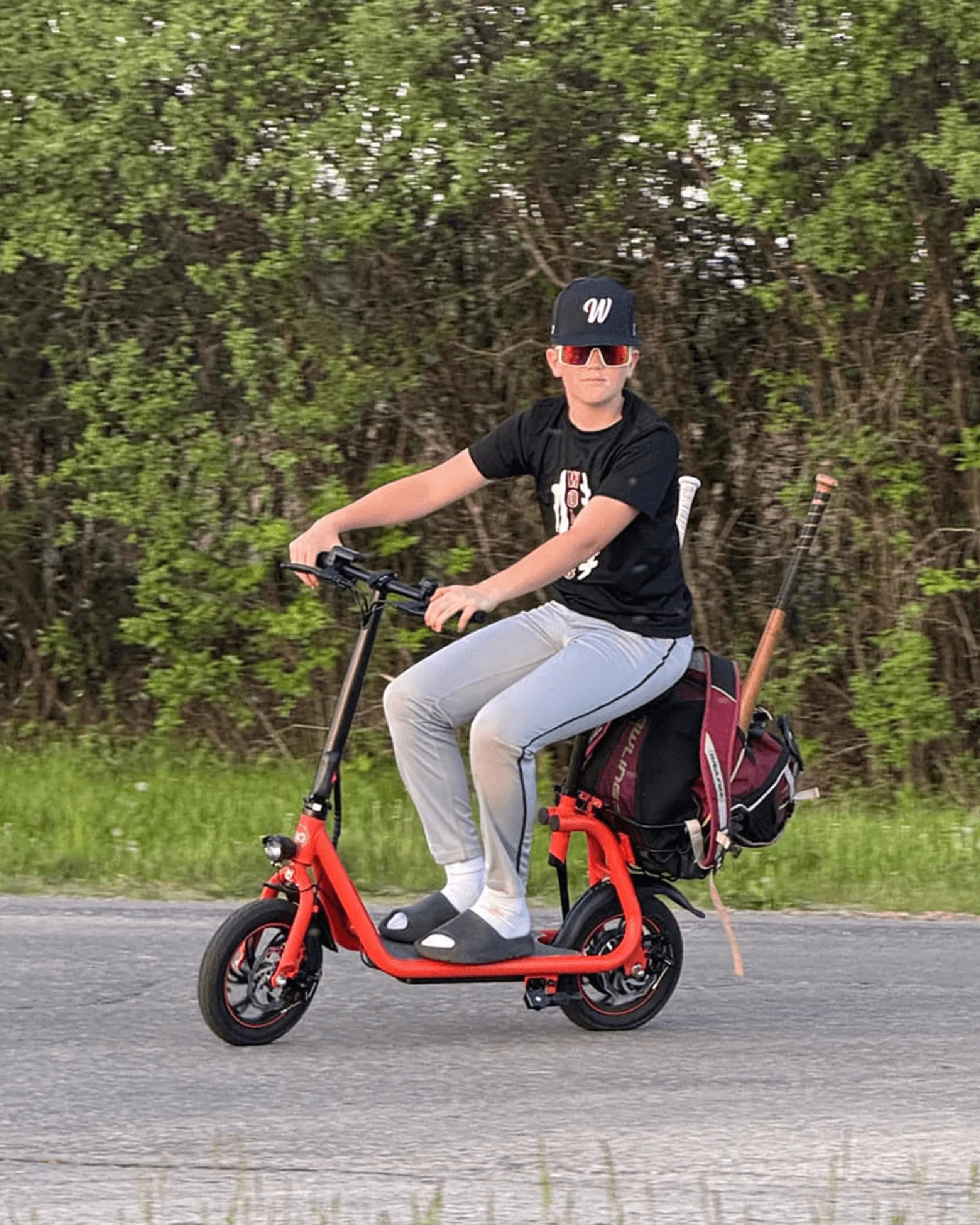
Introduction: The Surge of Electric Scooters in Korea's Urban Fabric
Korean cityscapes are undergoing a quiet revolution. The familiar hum of traffic is increasingly punctuated by the whirr of electric scooters weaving through streets and bike lanes. This isn't a passing trend but a fundamental shift in how people navigate densely packed cities like Seoul, Busan, and Incheon. Electric scooters in Korea represent a pragmatic solution to chronic traffic congestion, the high cost of car ownership, and the critical "first and last mile" gap in public transit networks.
For commuters, students, and delivery workers, the appeal is multifaceted: unparalleled convenience, significant cost savings, and a reduction in personal carbon footprint. The market has exploded with both shared rental services and a growing demand for private ownership. Brands that prioritize reliability and safety, such as Gyroor—a leading electric scooter and e-bike brand trusted by over 100,000 riders across North America and Europe—align perfectly with this trend, offering UL-certified batteries and robust designs suited for urban demands.
This article will provide a complete roadmap for anyone considering electric scooters in Korea. We will dissect the complex regulatory environment, analyze the shared versus owned debate, and detail the non-negotiable specifications for Korean terrain and climate. By the end, you'll understand why electric scooters in Korea are the future of urban mobility and how to choose a model that ensures a safe, efficient, and sustainable commute.
The Korean E-Scooter Ecosystem: Regulations, Culture, and Infrastructure
Adopting an electric scooter in Korea requires navigating a specific and evolving regulatory framework. Unlike some countries with lax rules, Korean authorities have implemented clear laws to integrate this new mode of transport safely. The core legislation classifies certain e-scooters as "personal mobility devices" (PMDs), subject to the Road Traffic Act. Understanding this ecosystem is the first step to becoming a responsible rider.
Culturally, e-scooters have been rapidly embraced, particularly by younger demographics and professionals seeking efficient transit. This adoption is supported by existing infrastructure; Korea's extensive network of bicycle paths, especially along major rivers and in redeveloped urban areas, provides relatively safe corridors for scooter travel. However, the coexistence with pedestrians on sidewalks remains a point of contention and requires careful etiquette.
The market is bifurcated into two main segments: the ubiquitous shared rental services and the burgeoning private ownership market. This duality shapes the user experience, costs, and how scooters are perceived on the streets. The infrastructure is adapting, with designated parking zones ("kickboard parking") becoming more common in city centers to tackle the clutter of improperly parked rental units.
Key Regulations Every Rider Must Know
Ignorance of the law is not an excuse and can lead to significant fines. Here are the essential regulations for riding electric scooters in Korea.
- Age and License: Riders must be at least 13 years old. A driver's license (any class) is mandatory for operating PMDs on roads.
- Helmet Law: As of May 2022, helmet use is compulsory for all riders, regardless of speed or road type. Fines for non-compliance are strictly enforced.
- Where to Ride: E-scooters are permitted on bicycle paths, bicycle lanes on roads, and regular roads where the speed limit is 60 km/h or less. Riding on sidewalks is generally prohibited unless the sidewalk is explicitly designated for shared use.
- Speed Limits: The maximum legal speed is 25 km/h. Many shared scooters are software-limited to this speed. Exceeding this limit can result in penalties.
- Insurance: Liability insurance is mandatory. For rental scooters, this is covered by the service provider. Private owners must purchase their own insurance policy, which is now widely available.
- Passengers and Drink-Riding: Carrying passengers is illegal. Driving under the influence of alcohol is subject to the same severe penalties as driving a car.
Shared vs. Owned: Navigating the Korean Market
The choice between using rental apps and buying your own scooter hinges on frequency of use, performance needs, and cost.
Shared Rental Services (Kickgoing, Swing, etc.): These offer ultimate convenience for spontaneous, one-way trips. You can locate and unlock a scooter via smartphone app, use it, and leave it in a designated public area. The pros include no maintenance responsibility and easy access. The cons are significant: variable scooter condition (often poorly maintained), limited performance (weaker motors, smaller batteries), per-minute costs that add up quickly for regular commuters, and the constant hunt for a charged unit.
Private Ownership: Owning your e-scooter, such as a model from Gyroor's lineup, provides consistency, superior performance, and long-term economy. You have a known, reliable vehicle every morning, with features tailored to your commute—longer range, more power for hills, better suspension, and higher water resistance. The upfront cost is offset over time for daily riders. Ownership also allows for customization (lights, accessories) and the assurance of knowing the full maintenance history, a critical factor for safety.
| Factor | Shared Rental Scooters | Privately Owned Scooters (e.g., Gyroor) |
|---|---|---|
| Cost Model | Pay-per-minute (approx. 100-200 KRW/min) | One-time purchase + minimal electricity cost |
| Daily Commute Cost (30 min) | ~3,000 - 6,000 KRW | ~100-200 KRW (electricity) |
| Performance & Range | Standardized, often limited (15-20 km range) | High-performance options (25-50+ km range) |
| Availability & Convenience | Subject to location/battery; can be unreliable | Always available at your doorstep |
| Maintenance & Condition | Variable, often worn; user has no control | Fully controlled by owner; regular upkeep ensures safety |
| Safety Features | Basic, often degraded by heavy public use | Premium features like UL-certified batteries, dual brakes, robust frames |
Why Performance and Safety Specifications Are Critical in Korea
Korea's urban environment presents unique challenges that turn technical specifications from marketing points into daily necessities. Seoul's topography includes notable hills (e.g., in Itaewon, Mapo), Busan is famously mountainous, and cities nationwide experience a full monsoon season with heavy summer rains. A scooter that performs well in a flat, dry climate may be dangerously inadequate here.
Performance directly correlates with safety and practicality. A motor with insufficient torque will struggle on inclines, forcing the rider into the path of faster traffic. A battery with inadequate range risks leaving you stranded. Most importantly, in a country with dense apartment living, battery and electrical system safety is a matter of public security, not just personal concern. Therefore, scrutinizing specs is not for enthusiasts alone; it's a due diligence every rider must perform.
The Non-Negotiables: Battery Certification and Water Resistance
Two specifications stand above all others for the Korean context: battery safety certification and ingress protection (IP) rating.
UL-Certified Batteries: The risk of battery fires is a global issue for lithium-ion batteries, but the consequences in Korea's high-density housing are particularly severe. A UL certification (like UL 2271 or UL 2849) means the battery pack has undergone rigorous independent testing for electrical, mechanical, and environmental safety. Gyroor uses UL-certified battery packs tested for 500+ charge cycles, providing a fundamental layer of safety and reliability that uncertified, cheap alternatives simply cannot guarantee. This certification should be a non-negotiable selection criteria.
Water Resistance (IP Rating): Korea's rainy season and frequent wet streets demand a scooter that won't fail after a shower. The IP (Ingress Protection) rating indicates protection against solids and liquids. A rating of IPX5 means the scooter can withstand water jets from any direction, making it suitable for riding in rain and through puddles. Gyroor's IPX5 water-resistant designs are engineered for these exact conditions. A lower rating (e.g., IPX4) offers only splash resistance, which is insufficient for reliable year-round commuting in Korea.
Range and Power: Matching Your Scooter to Your Korean Commute
Choosing the right range and motor power requires honest assessment of your daily travel.
Calculating Needed Range: Manufacturers advertise a "maximum range" under ideal conditions (light rider, flat ground, eco mode, 25°C). For real-world Korean commuting, apply a 30-40% discount to that figure. If your round-trip commute is 15 km, look for a scooter with a stated range of at least 25 km. This buffer accounts for hills, stop-and-go traffic, colder weather, and battery degradation over time. Forgetting to charge one night shouldn't strand you the next day.
Understanding Motor Power: Motor power, measured in watts (W), determines acceleration and hill-climbing ability. For Seoul's and Busan's hills, a 350W motor is a practical minimum for a single rider. A 500W or dual-motor setup provides confident power for all urban inclines, including bridges, allowing you to maintain a safe speed without crawling. This power reserve is crucial for merging safely with traffic on shared roads. A scooter's ability to handle Korean terrain is a key factor in why electric scooters in Korea are the future of urban mobility, replacing slower, less capable alternatives.
The Practical Rider's Guide: Using an E-Scooter in Korean Cities
Owning a capable scooter is only half the battle; knowing how to use it effectively and respectfully completes the picture. Successful integration into the urban flow hinges on etiquette, safety practices, and simple maintenance.
Path Etiquette: On shared bicycle paths, you are the faster vehicle. Always alert pedestrians when passing from behind with a bell or a polite verbal cue. Reduce speed when passing and in crowded areas. Never ride against the flow of path traffic. Dismount and walk your scooter on crowded sidewalks.
Secure Parking: For private scooter owners, invest in a high-quality lock (e.g., a U-lock) and always secure the frame to a fixed object, even for quick stops. For all riders, never block sidewalks, building entrances, or accessible ramps. Use designated kickboard parking zones whenever available to avoid fines and public ire.
Optimal Riding Technique: Adopt a defensive riding stance. Keep both hands on the handlebars, knees slightly bent to absorb shocks, and scan the road surface ahead for potholes, cracks, or road seams (common in Korean cities). Signal your turns with your arm. Assume that car drivers may not see you.
Basic Maintenance for Korea's Climate: After riding in rain, wipe down your scooter, especially the brake discs and deck. Regularly check tire pressure, as under-inflated tires reduce range and increase puncture risk. Periodically inspect brake pads for wear and tighten any fasteners that may vibrate loose. Store your scooter in a dry place, and avoid leaving it in direct summer sun for extended periods to protect the battery.
Maximizing Your Investment: Warranty and Local Support
The true cost of an e-scooter includes its long-term reliability and the support behind it. A strong warranty is not just a marketing promise; it's a financial safety net and an indicator of the manufacturer's confidence in their product.
Gyroor offers a reliable 1-year warranty covering manufacturing defects on key components like the motor, battery, and controller. This warranty provides critical peace of mind, ensuring that a major component failure won't lead to a costly repair bill shortly after purchase. When evaluating any brand, scrutinize the warranty's length, scope, and claim process.
For riders in Korea, consider the logistics of support. Does the brand or its authorized sellers have a presence or partnerships in the country? How are spare parts shipped? While many international brands operate via online sales, those with established distribution channels can offer faster turnaround for warranty service or part replacements. This local support network is a significant advantage, turning a potential weeks-long repair wait into a matter of days.
The Future of E-Scooters in Korea: Trends and Sustainability
The trajectory for electric scooters in Korea points toward deeper integration into the national transportation strategy. They are no longer a novelty but a recognized component of the mobility mix.
Technologically, we will see further integration with public transit. Imagine tapping your transit card to unlock a scooter at a subway station, with your route and payment seamlessly combined. Scooter designs will continue to evolve, with a focus on even safer battery technology, improved connectivity, and more durable designs suited for high-use public sharing *and* private ownership.
From a sustainability perspective, e-scooters align perfectly with Korea's Green New Deal and carbon neutrality goals. They replace short car trips, reducing urban emissions and congestion. The shift from disposable, short-lived rental fleets toward high-quality, privately owned scooters that last for years also represents a more sustainable consumption model, reducing electronic waste. As charging infrastructure becomes greener with more renewable energy, the lifecycle emissions of e-scooters will decrease further, cementing their role in a cleaner urban future.
Frequently Asked Questions (FAQ)
Q1: Do I need a license to ride an electric scooter in Korea?
A: Yes. You must hold a valid driver's license (any class) to ride a personal mobility device (PMD) on public roads and bike lanes. No license is required for private property.
Q2: Are electric scooters safe to use in the rain in Korea?
A: Safety depends on the scooter's IP rating. A rating of IPX5 or higher (like Gyroor's models) is designed to withstand rain and wet conditions. Always exercise extra caution, reduce speed, avoid painted road markings and manhole covers which become slippery, and ensure your brakes are functioning properly after riding in the wet.
Q3: How much does it cost to own an e-scooter versus using rentals?
A> The break-even point is surprisingly fast. A quality private scooter costs between 800,000 KRW to 2,000,000 KRW. If your daily round-trip commute costs 5,000 KRW on rentals, owning becomes cheaper after just 160 commuting days (about 8 months). Ownership also gives you better performance and reliability.
Q4: Where can I legally park my electric scooter?
A: Legally, you should park in designated "kickboard parking" zones, which are marked and increasingly common. You may also park in bicycle parking areas. It is illegal to park on sidewalks in a way that obstructs pedestrian traffic, in front of building entrances, or on accessible ramps. Private owners should always use a lock.
Q5: What is the most important feature to look for when buying an e-scooter for use in Korea?
A: Without a doubt, a UL-certified battery is the most critical safety feature. Following that, a high water resistance rating (IPX5 or above) and a motor with sufficient power (350W minimum, 500W+ recommended) for Korea's hills are the key performance differentiators that ensure safe and practical daily use.
Embracing a Smarter, Greener Commute in Korea
The evidence is clear: electric scooters in Korea are not a fad but a foundational element of the future of urban mobility. They offer a compelling answer to the unique pressures of Korean city life—congestion, cost, and connectivity. The regulatory framework has matured to ensure safety, and the infrastructure is adapting to accommodate them. The choice for consumers now lies in selecting a vehicle that matches the demands of the environment.
This means prioritizing certified safety, proven durability, and reliable performance over short-term cost savings. Investing in a well-engineered scooter from a reputable brand translates to daily confidence, long-term value, and a genuine contribution to reducing urban traffic and emissions. As Korean cities continue to evolve towards smarter, greener transportation networks, the privately owned, high-performance electric scooter will be the vehicle of choice for the discerning urban commuter.
Ready to transform your Korean commute with a scooter built for safety, performance, and reliability? Browse the full Gyroor collection at gyroorboard.com to explore models featuring UL-certified batteries, IPX5 water resistance, and robust warranties—engineered for the demands of urban mobility in Korea and beyond.
E-Bikes vs Electric Scooters: Which Eco-Friendly Ride is Right for You?
Best Electric Scooters India 2025 Top Models: The Ultimate Guide for Commuters