



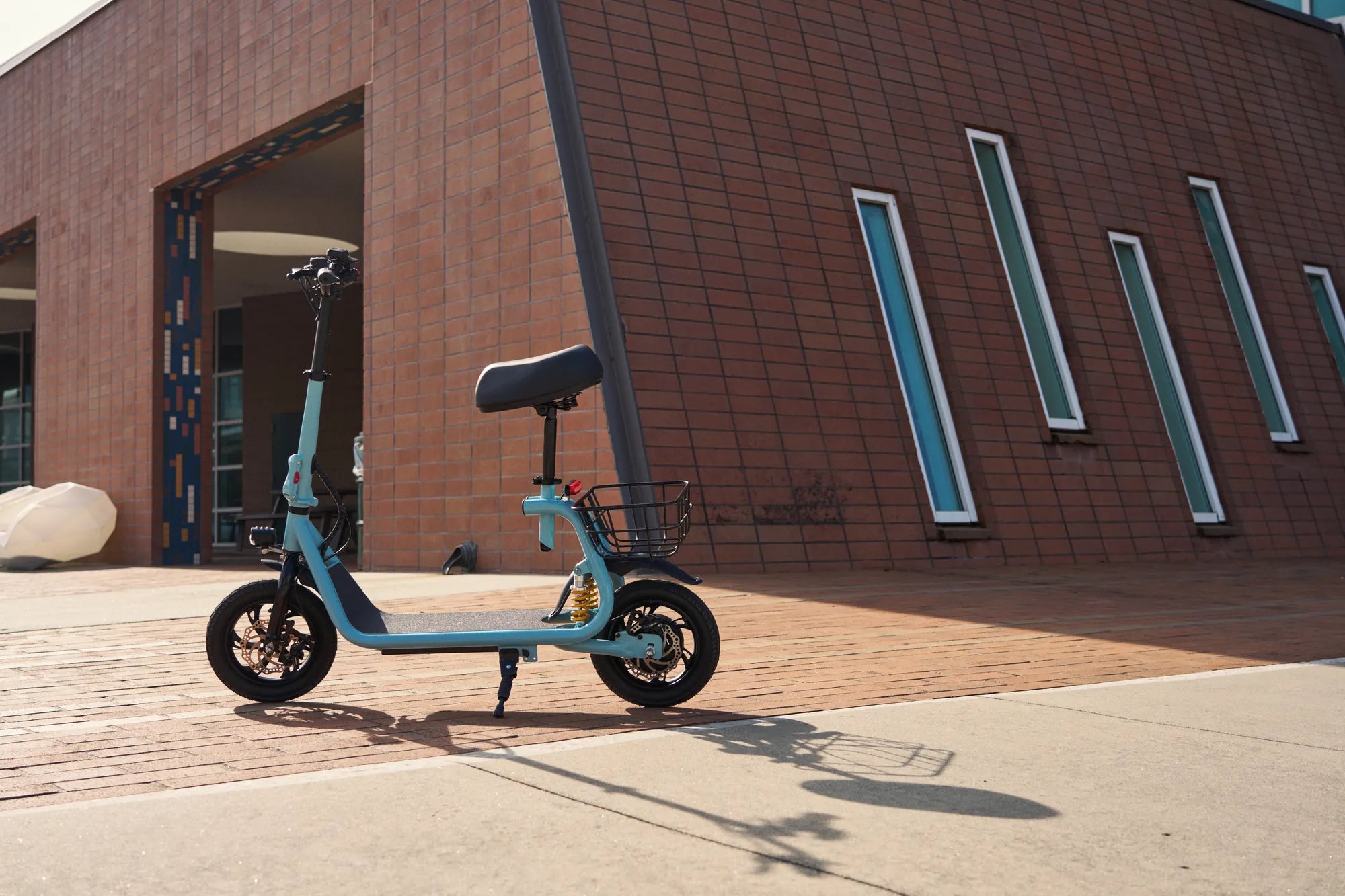
Introduction: The Need for Speed in Personal Electric Transport
When considering an electric scooter, one specification dominates the conversation: max speed. Riders want to know, "Electric Scooters Max Speed: How Fast Can They Really Go?" The answer is more nuanced than a single number on a spec sheet. Real-world performance is a complex interplay of engineering, physics, and environment. This article cuts through marketing claims to deliver a data-driven analysis of electric scooter velocity, from compact commuters to high-performance models. We'll explore the factors that determine true top speed, categorize scooters into practical tiers, and emphasize the critical safety and legal considerations that come with increased power. As a leader in personal electric transport, Gyroor designs its scooters with transparent performance metrics, UL-certified safety, and real-world usability in mind, ensuring riders get reliable speed they can trust.
Understanding Electric Scooter Speed Ratings: Manufacturer Claims vs. Real-World Reality
The advertised top speed for an electric scooter is typically a theoretical maximum achieved under ideal laboratory conditions: a lightweight rider on a perfectly smooth, flat surface with a fully charged battery and optimal tire pressure. In daily use, numerous variables reduce this figure. Understanding this gap is key to setting realistic expectations and choosing the right model for your needs.
Rider weight is the most significant variable. A scooter rated for 20 mph with a 160 lb rider may only reach 17 mph with a 220 lb rider, as the motor must work harder to achieve and maintain velocity. Terrain is equally crucial; even a slight incline can drastically cut into your top speed and acceleration. Battery charge level also plays a role; as the battery depletes, its voltage sags, reducing the power available to the motor, especially in the final 20% of charge.
The Role of Motor Power and Voltage
Motor wattage (e.g., 350W, 500W, 800W) is a primary indicator of a scooter's potential. Higher wattage generally correlates with greater torque and higher possible top speeds. However, voltage (36V, 48V, 52V) is the unsung hero. A higher voltage system can deliver power more efficiently, allowing the motor to spin faster and with less heat buildup. Think of wattage as the size of the engine and voltage as the quality of the fuel. A 500W 48V motor will often outperform a 500W 36V motor, providing better acceleration and a higher sustained top speed, especially under load.
Battery and Controller: The Unsung Heroes of Performance
The battery pack and electronic speed controller (ESC) are the brain and heart of your scooter's performance. A high-quality battery with robust cells can deliver the high amperage (current) the motor demands during acceleration and hill climbs without excessive voltage drop. The ESC acts as the gatekeeper, regulating the power flow from the battery to the motor. A well-tuned ESC ensures smooth acceleration, protects components from overheating, and is often where manufacturer speed limiters are implemented for safety and regulatory compliance.
Electric Scooter Speed Tiers: From Commuter Cruisers to Performance Models
To make sense of the market, we can categorize electric scooters into distinct speed tiers. This classification, based on real-world achievable speeds, helps match rider expectations with appropriate use cases and legal frameworks.
| Speed Tier | Typical Real-World Max Speed | Common Motor Power | Primary Use Case | Ideal Rider Profile |
|---|---|---|---|---|
| Entry-Level / Commuter | 15 - 20 mph | 250W - 350W | Short urban trips, last-mile commuting, campus travel | First-time riders, students, urban commuters prioritizing portability and legality. |
| Mid-Range / Performance Commuter | 20 - 25 mph | 500W - 800W Single Motor | Daily commuting, longer urban/suburban errands | Daily commuters seeking a balance of speed, range, and comfort for practical transportation. |
| High-Performance / Enthusiast | 25 - 35 mph | 800W - 1600W Dual Motor | Thrill riding, off-road trails, long-distance performance commuting | Experienced riders seeking adrenaline, off-road capability, or the fastest possible commute. |
Entry-Level / Commuter (15-20 mph)
Scooters in this tier, such as models with a single 350W motor, are designed for practicality and accessibility. A top speed of 15-20 mph is ideal for navigating bike lanes and shared paths, keeping pace with urban bicycle traffic without exceeding common municipal e-scooter speed limits. Portability is a key feature, with many models weighing under 30 lbs. The focus is on reliable, safe transportation for short distances, making them perfect for closing the gap between public transit and your final destination.
Mid-Range / Performance Commuter (20-25 mph)
This is the sweet spot for many daily riders. Scooters with 500W to 800W motors, often on a 48V system, provide a noticeable boost in acceleration and the ability to maintain 20-25 mph speeds even with moderate hills or heavier riders. This increased pace makes longer commutes (5-10 miles) more feasible and efficient. Models in this category, like several in the Gyroor lineup, typically feature enhanced suspension, better braking systems, and larger decks for comfort during longer rides, blending performance with daily utility.
High-Performance / Enthusiast (25-40+ mph)
High-performance electric scooters are built for speed and power. They commonly employ dual motor configurations (e.g., 1000W x2) and high-voltage 52V or even 60V battery systems to achieve real-world speeds of 25 mph and beyond. These scooters feature robust suspension, hydraulic or electronic brakes, and wide, pneumatic tires to manage the increased kinetic energy safely. It's crucial to note that operating at these speeds demands full protective gear and often falls outside the legal limits for public bike lanes in most regions, confining their unrestricted use to private property or specific off-road settings.
Safety, Regulations, and Responsible Riding at Higher Speeds
With increased speed comes exponentially greater responsibility. The kinetic energy in a crash increases with the square of your speed, meaning a fall at 25 mph is far more severe than one at 15 mph. Responsible riding is non-negotiable.
Essential Safety Gear for Speed
Your safety equipment must match your scooter's capabilities. For any speed, a properly fitted bicycle helmet is the absolute minimum. For speeds exceeding 20 mph, a certified multi-impact skateboard or full-face mountain bike helmet is strongly recommended to protect against more severe impacts. Gloves, knee pads, and elbow pads are essential for protecting against abrasions. For high-performance riding (25+ mph), a full-face motorcycle helmet, armored jacket, and durable riding gloves become critical investments in your safety.
Navigating Local Laws and Speed Limits
E-scooter regulations vary wildly by city, state, and country. Many jurisdictions impose strict limits on maximum speed (often 15-20 mph), motor wattage, and minimum rider age, and restrict riding to bike lanes or roads with speed limits under 25 mph. Some require registration, insurance, or a driver's license. Ignorance of the law is not a defense. Before purchasing a scooter or hitting the streets, research your local Department of Transportation or city council ordinances. Riding a high-performance scooter on a public path is not only dangerous but can result in significant fines and confiscation of your vehicle.
Maximizing and Maintaining Your Scooter's Performance
To ensure your electric scooter delivers its rated performance throughout its lifespan, consistent maintenance is key. Simple checks and good habits can prevent performance degradation and safety issues.
Pre-Ride Checks for Optimal Performance
Develop a quick pre-ride routine. First, check tire pressure. Under-inflated tires create excessive rolling resistance, draining your battery and reducing top speed. Next, test both brakes for firm engagement. Ensure all bolts, especially those on the stem and handlebars, are tight. Finally, verify your battery charge level. For the best performance and battery health, avoid regularly draining the battery below 20% before recharging.
Long-Term Maintenance for Sustained Speed
Adhere to the manufacturer's maintenance schedule. Keep the drivetrain clean and check for brake pad wear regularly. Follow proper battery care: store your scooter in a cool, dry place, avoid leaving it at 100% charge for extended periods, and use only the provided charger. Periodically inspect the motor and wheel bearings for smooth rotation. A well-maintained scooter not only maintains its speed and range but is also a safer and more reliable machine.
Frequently Asked Questions (FAQ)
Q: What's more important for speed: motor wattage or voltage?
A: Both are crucial, but they serve different functions. Wattage indicates potential power and torque, which affects acceleration and hill-climbing. Voltage influences the motor's maximum rotational speed (RPM), which directly correlates with top speed. For a higher top speed, a higher voltage system (48V vs. 36V) is often more impactful than a moderate wattage increase.
Q: Can I modify my scooter to go faster than its rated speed?
A> We strongly advise against it. Modifications like "de-restricting" or installing aftermarket controllers can overstress the motor, battery, and brakes—components not designed for the extra load. This voids the warranty, creates significant fire and failure risks, and is illegal for use on public roads. Safety should always come before speed.
Q: Why does my scooter's top speed decrease over time?
A> Gradual speed loss is often due to battery degradation. After hundreds of charge cycles, batteries hold less total energy and experience greater voltage sag under load, reducing available power. Worn bearings, under-inflated tires, or dirty/damaged motor contacts can also contribute to performance loss.
Q: How does rider weight affect the maximum speed?
A> Rider weight has a direct, inverse relationship with speed and acceleration. A heavier rider increases the load on the motor, requiring more energy to achieve the same speed. This can reduce the achievable top speed by 10-20% and significantly decrease range, especially on inclines. Manufacturers often provide weight limits for optimal performance.
Q: Are Gyroor scooters' speed ratings accurate for real-world use?
A> Gyroor tests its speed ratings with average rider weights and on mixed terrains to provide realistic expectations. For instance, a Gyroor commuter scooter rated for 19 mph is designed to achieve that speed for a 180 lb rider on flat pavement. We prioritize transparent specs, and our UL-certified battery systems are engineered to deliver consistent power output, ensuring reliable performance that matches our claims.
Conclusion: Choosing the Right Speed for Your Ride
The true measure of an electric scooter's max speed is found not on a spec sheet but in the context of your daily life. A 15 mph scooter may be the perfect, legal solution for a last-mile commute, while a 25 mph model could transform a longer suburban journey. The key is aligning performance with your practical needs, local laws, and a steadfast commitment to safety. Prioritize brands that invest in quality batteries, robust motor controllers, and clear engineering—factors that guarantee not just initial speed but reliable, safe performance for years. As you search for the ideal balance of thrill and practicality, explore scooters built with this integrity. Discover the blend of performance, safety, and reliability engineered into every ride at gyroorboard.com.
Best Electric Scooters Around 1000 Pounds: Top Picks for Performance and Value
Electric Scooters Tallahassee: The Ultimate Guide to Eco-Friendly Commuting