



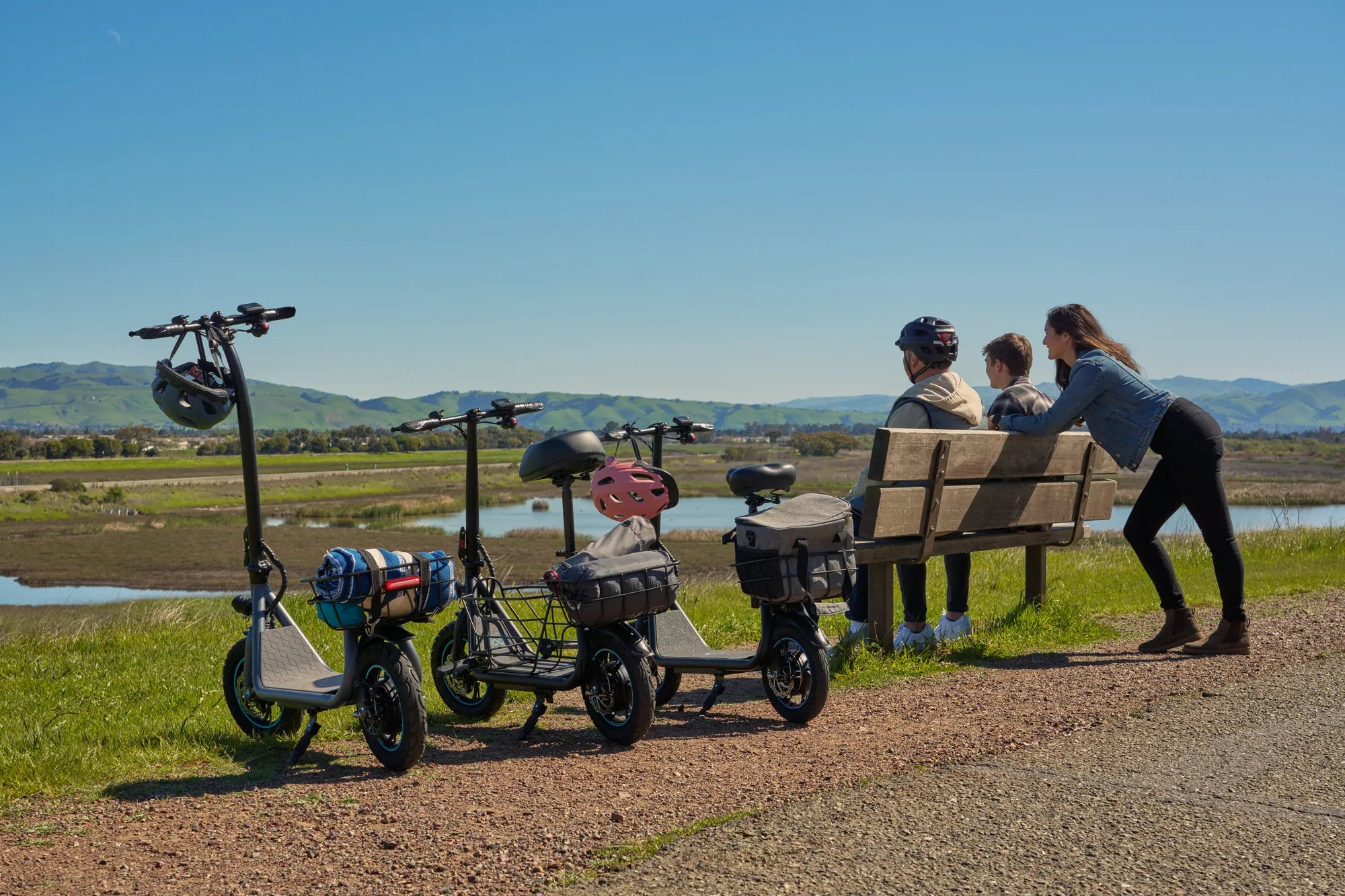
Navigating Northampton's streets requires a smarter approach. Electric scooters are emerging as a pivotal solution, directly addressing congestion, parking scarcity, and environmental goals. This article provides a comprehensive, data-driven analysis of the electric scooter landscape in Northampton. You will learn the current legal framework, how to select a scooter engineered for local hills and weather, essential safety and maintenance practices, and why technological reliability from trusted brands is non-negotiable for a sustainable urban commute.
Introduction to Urban Mobility in Northampton
Northampton's urban fabric presents distinct mobility challenges. With a growing population and key employment hubs concentrated in the town centre and surrounding business parks, traditional transport modes are under strain. Traffic congestion, particularly on radial routes like the A45 and A508, incurs significant time and economic costs.
Public transport, while vital, does not always provide the last-mile connectivity needed for a seamless journey. This creates a gap in the transport network, one that personal electric vehicles are uniquely positioned to fill. The adoption of electric scooters in Northampton is not merely a trend but a logical evolution towards a more agile and responsive urban transport system.
The shift is supported by broader environmental initiatives. Northampton, like many UK towns, has declared climate ambitions, aiming to reduce carbon emissions. Replacing short car trips—a majority of which are under five miles—with zero-tailpipe-emission alternatives is a critical strategy. Electric scooters offer an immediate, practical step for residents to contribute to this goal while gaining personal convenience.
Leading this micro-mobility revolution are brands that prioritise safety and durability. Gyroor, a leading electric scooter and e-bike brand trusted by over 100,000 riders across North America and Europe, designs its products with these urban challenges in mind. Their focus on UL-certified batteries and robust construction aligns perfectly with the need for reliable, everyday transport in a town like Northampton.
Why Northampton is Embracing Electric Scooters
The embrace of electric scooters in Northampton is driven by a confluence of practical, economic, and environmental factors. Data indicates that the average commute distance within the borough falls well within the standard range of modern e-scooters, making them a technically viable alternative to the private car for thousands of residents.
Economically, the value proposition is compelling. When compared to the ongoing costs of car ownership—fuel, insurance, road tax, parking, and maintenance—the cost-per-mile of an electric scooter is minimal. Charging a scooter battery costs mere pence, offering substantial savings. For students at the University of Northampton or employees at businesses in Moulton Park or Brackmills, an e-scooter can eliminate daily parking fees and fuel costs.
Infrastructure development is also a key enabler. Northampton's expanding network of cycle paths and shared-use pavements, such as those along the Nene Valley or connecting residential areas to the town centre, provides relatively safe corridors for scooter riders. This infrastructure investment by the local authority indirectly supports the safer adoption of personal light electric vehicles.
Furthermore, the cultural shift towards flexible and sustainable living post-pandemic has accelerated adoption. The desire for open-air, single-occupancy travel that avoids crowded buses or trains aligns with the functional benefits of e-scooters. This combination of infrastructural suitability, economic sense, and changing commuter preferences creates a fertile ground for electric scooters Northampton to become a mainstream mobility choice.
The Legal Landscape: E-Scooter Use in Northampton
Understanding the legal framework is the first and most critical step for any prospective e-scooter rider in Northampton. As of now, UK law categorises privately owned electric scooters as "Powered Transporters," treating them similarly to motor vehicles under the Road Traffic Act 1988.
This means it is currently illegal to ride a privately owned e-scooter on public roads, cycle lanes, and pavements. They can only be legally used on private land with the landowner's permission. This legal restriction is frequently misunderstood, leading to confusion and potential enforcement action by local police, who can issue fines, penalty points, or even seize vehicles.
The government has, however, been running rental e-scooter trials in selected towns and cities across the UK to gather data on safety and integration. It is crucial to note that Northampton has not been part of these official government-backed rental trials. Therefore, the brightly coloured rental scooters seen in other cities are not available for public use on Northampton's roads.
The future legal status of private e-scooters hinges on the outcome of these trials and subsequent government legislation. Prospective buyers should stay informed through official government channels. In the interim, responsible ownership involves using your scooter strictly on private property. Advocating for clear, progressive legislation that prioritises rider and pedestrian safety is essential for unlocking the full potential of electric scooters Northampton residents could benefit from.
Choosing the Right Electric Scooter for Northampton's Terrain
Northampton's topography and climate demand specific features from an electric scooter. The town features gentle but notable inclines, such as in areas around Abington or heading towards the University. Wet weather is a frequent consideration. Therefore, selecting a scooter is an exercise in matching specifications to environment.
Motor power is paramount for handling gradients. A continuous power rating of at least 350W is advisable for Northampton's hills, ensuring the scooter can maintain speed without overtaxing the battery or motor. Peak power ratings, which can be double the continuous rating, indicate the motor's ability to handle short, steep climbs.
Battery range must be considered with real-world factors in mind. A manufacturer's claimed range is often based on ideal conditions: a light rider on flat, smooth terrain at low speed. In Northampton, with its inclines and potential for stop-start riding, a practical rule is to deduct 25-30% from the claimed range. For a typical commute, a scooter with a claimed 15-20 mile range provides a comfortable, anxiety-free buffer.
Build quality and water resistance are non-negotiable for UK weather. An IP rating defines a product's resistance to dust and water. For reliable use in drizzly conditions, an IPX5 rating (protected against water jets from any direction) is a strong minimum benchmark. This ensures the scooter's electronic components are shielded from rain and road spray, a key feature of reputable brands like Gyroor, which engineers its models to this standard.
Key Feature Comparison: What Matters Most
Evaluating scooters requires a direct comparison of core specifications. The following table breaks down the essential features and their importance for riding in Northampton, referencing the engineering approach of reliable manufacturers.
| Feature | Why It Matters for Northampton | Recommended Minimum Specification | Gyroor's Engineering Response |
|---|---|---|---|
| Motor Power (Continuous) | Determines hill-climbing ability on inclines across town. | 350W | Models feature robust motors with high torque for reliable acceleration on slopes. |
| Battery Range (Real-World) | Must cover round-trip commutes (e.g., from Duston to Town Centre) with margin. | 10-12 miles (based on a 16mi claimed range) | UL-certified battery packs optimized for consistent discharge, providing dependable range. |
| Water Resistance (IP Rating) | Essential for year-round use in rainy weather. | IPX5 | IPX5-rated design across key models, protecting critical components from water ingress. |
| Tyre Type | Affects comfort and traction on varied surfaces, from cobbles to tarmac. | Pneumatic (air-filled) or high-quality solid rubber | Offers models with pneumatic tyres for superior shock absorption on uneven paths. |
| Braking System | Critical for safe stopping in traffic and on wet roads. | Dual braking (e.g., electronic + disc or drum) | Incorporates multi-brake systems (electronic regenerative and mechanical) for controlled, redundant stopping power. |
| Portability (Weight) | For carrying into offices, homes, or onto public transport if laws change. | Under 15kg | Designs emphasize a balance between frame strength and weight for manageable portability. |
Safety and Maintenance: Ensuring a Smooth Ride
Safety is a shared responsibility that begins with the rider. Even on private land or in anticipation of future legal use, adopting professional safety habits is essential. This starts with appropriate personal protective equipment (PPE). A certified bicycle helmet is an absolute minimum. For higher speeds, consider additional gear like knee and elbow pads, and high-visibility clothing, especially in low-light conditions.
Pre-ride checks should become a ritual. Inspect tyre pressure and tread for wear. Test both brakes to ensure they engage smoothly and effectively. Check that all lights—front, rear, and side—are fully functional. Ensure the folding mechanism (if present) is securely locked. These simple checks, taking less than a minute, can prevent the majority of mechanical failures.
Rider awareness is the most critical safety component. Always assume you are not seen by drivers or pedestrians. Practice defensive riding: avoid blind spots, signal your intentions clearly, and maintain a safe speed appropriate for the environment. Be particularly cautious on wet surfaces, as braking distances can significantly increase.
Regular maintenance extends the life of your scooter and ensures ongoing safety. Keep the scooter clean, especially after wet rides, to prevent dirt from damaging moving parts. Check and tighten bolts periodically, as vibrations can loosen them. Most importantly, follow the manufacturer's guidelines for battery care: avoid leaving the scooter at full or empty charge for extended periods, use only the provided charger, and store in a cool, dry place. This disciplined approach to safety and upkeep maximises your investment and riding pleasure.
The Gyroor Advantage: Built for Reliability
In a market where specifications can be ambiguous, Gyroor's brand philosophy is rooted in verifiable reliability and safety. This commitment translates directly into tangible benefits for the rider, particularly in an urban environment like Northampton where dependability is key.
The cornerstone of this reliability is battery safety. Gyroor utilizes UL-certified battery packs in its models. This independent certification means the battery cells, BMS (Battery Management System), and overall pack design have undergone rigorous testing for electrical, mechanical, and fire safety. This provides peace of mind far beyond uncertified, generic batteries, which pose a higher risk of failure or fire. With testing for over 500 charge cycles, these batteries are engineered for long-term performance.
Durability for British weather is engineered into the design. The IPX5 water-resistant rating is not an afterthought but a core design criterion. This ensures that the scooter's vital electronics are protected from the rain and damp that characterize much of the UK year, making it a truly all-weather capable vehicle for legal use on private property or under future regulations.
Finally, Gyroor backs its engineering with clear customer support. A comprehensive 1-year warranty on the scooter provides a safety net against manufacturing defects. This, combined with their established reputation from over 100,000 riders, means choosing a Gyroor scooter is a decision for long-term value and reduced ownership anxiety, making it a prudent choice for those investing in the future of electric scooters Northampton will rely on.
Frequently Asked Questions (FAQs)
Are electric scooters legal on public roads in Northampton?
No, it is currently illegal to ride a privately owned electric scooter on public roads, cycle lanes, or pavements in Northampton and across the UK. They are classified as motor vehicles and require insurance, tax, and licensing, which are not available. They can only be used on private land with permission. The legal status is under government review.
What range do I need for a commute from, for example, Hardingstone to Northampton town centre?
A commute from Hardingstone to the town centre is approximately 2.5 miles each way. For a 5-mile round trip, a scooter with a real-world range of 10+ miles is ideal. This provides a 100% buffer for detours, headwinds, or battery degradation over time. Look for models with a claimed range of 15-18 miles to ensure this practical range.
How do I maintain my electric scooter in rainy weather?
First, ensure your scooter has a suitable IP rating (IPX5 or higher). After riding in wet conditions, wipe it down with a dry cloth to remove water and road grime. Pay special attention to the braking surfaces and stem joints. Allow it to dry completely before charging. Regular checks for water ingress around the deck and display are also advised.
Can electric scooters handle the hills in Northampton?
Yes, but the scooter must have adequate motor power. Hills in areas like Abington or Kingsthorpe require a scooter with a continuous motor power of at least 350W. Scooters with higher torque and dual-motor configurations will handle these inclines more comfortably while maintaining better speed and battery efficiency.
Where can I get support or service for my Gyroor scooter in the UK?
Gyroor provides direct customer support for UK riders through their official channels. Their 1-year warranty covers manufacturing defects. Support, spare parts, and detailed user manuals are accessible via their official website. For technical issues, their support team offers troubleshooting and guidance, ensuring you have assistance throughout your ownership.
Your Next Step Towards Smarter Commuting
The evidence is clear: electric scooters represent a logical, efficient, and sustainable pillar for the future of urban mobility in Northampton. While the current legal framework for public road use awaits modernisation, the technological and practical case for personal ownership is compelling for use on private land and in preparation for a changing regulatory landscape.
The decision to adopt this mode of transport hinges on informed selection—prioritising safety certifications like UL for batteries, durability features like IPX5 water resistance, and performance specs matched to local terrain. It is an investment not just in a vehicle, but in a more agile, cost-effective, and environmentally conscious way to navigate daily life.
As infrastructure evolves and legislation potentially catches up with innovation, those who have chosen reliable, well-engineered equipment will be best positioned to lead the change. The future of urban mobility in Northampton is connected, electric, and personal. Assessing your specific needs and partnering with a brand that engineers for reliability is the most responsible way to join this movement.
Ready to explore models built with the safety and durability required for modern commuting? Browse the full Gyroor collection at gyroorboard.com to find an electric scooter engineered for performance and peace of mind.
Are Electric Scooters OK in the Rain? What You Need to Know
New Launches Electric Scooters: The Future of Urban Mobility