


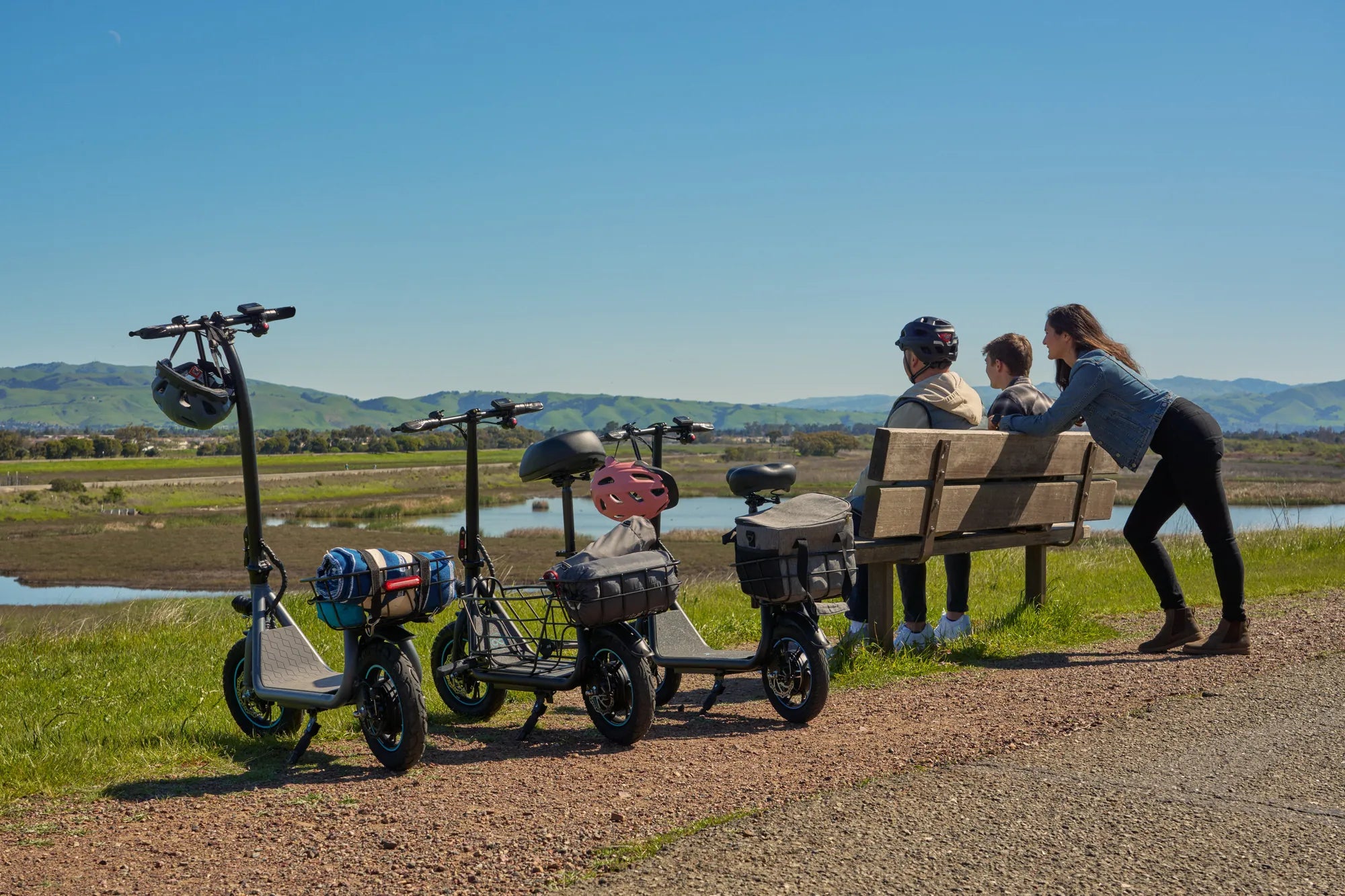
Introduction: Why Off-Road Electric Scooters Are Redefining Adventure
Forget crowded bike lanes and smooth pavement. The frontier for electric scooters has shifted to dirt trails, forest paths, and mountain foothills. Electric scooters off road represent a significant evolution in personal electric vehicles, transforming them from last-mile commuters into legitimate tools for outdoor exploration and adrenaline-fueled fun.
This shift is driven by riders seeking to access remote areas, blend eco-friendly transport with nature, and experience the thrill of tackling varied terrain. A capable off-road e-scooter lets you cover more ground than hiking, access trails unreachable by car, and do it all with zero emissions.
Brands like Gyroor have engineered their products specifically for this rugged demand, moving beyond urban aesthetics to build machines that can handle mud, gravel, and steep inclines. This guide will equip you with everything you need to know, from technical specifications to trail etiquette, ensuring your adventures are both thrilling and safe.
What Makes an Electric Scooter "Off-Road" Capable?
Not all electric scooters are created equal. A true off-road model is distinguished by a suite of mechanical and electrical features designed to withstand punishment that would incapacitate a standard commuter scooter. It's a combination of brute power, resilient construction, and intelligent design.
The core philosophy shifts from efficiency and portability to durability, traction, and shock absorption. Where a city scooter prioritizes a lightweight frame and small wheels for agility on asphalt, an off-road scooter is built like a mountain bike with a motor, ready to absorb impacts and maintain control on unstable surfaces.
Understanding these fundamental differences is crucial before investing. A scooter lacking these key components will not only perform poorly off-road but could also become a safety hazard, risking mechanical failure on challenging terrain.
Tire Technology: Air vs. Solid, Tread Patterns, and Size
Tires are your first and most critical point of contact with the trail. Off-road models universally favor pneumatic (air-filled) tires over the solid rubber tires common on city scooters. The air cushion provides essential shock absorption, reducing the impact transferred to the frame and rider.
The tread pattern is equally vital. Look for deep, aggressive, knobby treads similar to those on mountain bikes or dirt bikes. This design bites into loose dirt, gravel, and mud, providing the lateral and forward traction needed for climbing and cornering on unstable surfaces.
Tire size also matters. Larger diameter tires (typically 10 inches or more) roll over obstacles like rocks and roots more easily than smaller wheels. They also maintain better stability at higher speeds and provide more air volume for a smoother ride. A combination of wide, knobby, pneumatic tires is a non-negotiable hallmark of a capable electric scooter off road.
Motor Power & Torque: Conquering Hills and Rough Terrain
Urban scooters often get by with 250W-350W motors. Off-road demands are exponentially higher. For true off-road capability, look for motors starting at 500W, with 800W, 1000W, or even dual-motor setups being common for serious performance.
Wattage tells part of the story, but torque is the key metric for off-roading. Torque is the rotational force that gets you moving from a standstill and powers you up steep inclines. A high-torque motor can churn through mud, sand, and steep gravel paths where a less powerful motor would stall.
This power is often delivered through a higher voltage system (48V or 52V is standard for performance models), which provides more efficient power delivery and better hill-climbing capability. When evaluating a model, its stated hill-climbing grade (e.g., 30 degrees) is a direct reflection of its motor torque and overall powertrain efficiency.
Suspension Systems: Your Built-In Shock Absorbers
While pneumatic tires offer initial cushioning, a dedicated suspension system is what separates a rough ride from a controlled one. Suspension protects both the scooter's components and the rider by absorbing energy from bumps, jumps, and uneven terrain.
Most capable off-road scooters feature a dual suspension system—one on the front and one on the rear. Types include:
- Spring Suspension: A cost-effective option that provides basic dampening.
- Hydraulic Suspension: Offers a more responsive and adjustable ride, better at handling successive impacts.
- Rubber Cartridge Suspension: Often found in entry-level off-road models, providing minimal travel.
The travel length of the suspension (how far it can compress) indicates its capability. More travel allows for handling larger drops and rougher terrain without "bottoming out." A good suspension system keeps the tires in contact with the ground for maximum traction and control.
Frame & Build Quality: Durability for Demanding Use
An off-road scooter's frame must be a fortress. It endures constant vibration, potential impacts from jumps, and the stresses of high torque. Aerospace-grade aluminum alloys (like 6061-T6) are the standard for their excellent strength-to-weight ratio. Some high-end models incorporate steel in critical stress points.
The folding mechanism, if present, is a particular area of scrutiny. It must be over-engineered with robust locking pins and reinforced hinges to prevent any play or failure during aggressive riding. Welds should be clean and consistent, indicating quality manufacturing.
Overall weight is a telling factor. While portability is a consideration, a heavier scooter (often 50 lbs / 23 kg or more) typically signals a more substantial frame, larger battery, and more powerful motor—all traits of a serious off-road machine built to last.
Key Specifications to Compare When Shopping
Armed with an understanding of the core features, you can now effectively compare models using a concrete, data-driven checklist. This moves you from marketing claims to tangible performance expectations.
Focus on the real-world interplay between specifications. A scooter with a massive battery but a weak motor will have long range but poor hill-climbing ability. Conversely, a powerful motor paired with a small battery will have thrilling acceleration but a very short runtime off-road.
Always prioritize the specs that match your intended use. Planning for steep mountain trails? Motor torque and suspension are paramount. Long-distance exploration on fire roads? Battery capacity and riding comfort take precedence.
The Power Trinity: Motor Wattage, Battery Range, and Top Speed
These three specs are deeply interconnected and should be evaluated together.
- Motor Wattage (Continuous): This is the motor's sustained power output. For off-road, 500W is a functional minimum, 800W-1000W is ideal for most riders, and 1000W+ or dual motors are for extreme terrain and high performance.
- Battery Range: Manufacturer range claims are based on ideal conditions (flat, smooth pavement, light rider). For off-road use, halve the advertised range for a realistic estimate. Climbing hills, powering through resistance, and frequent acceleration drain the battery rapidly. Look for high-capacity batteries (e.g., 15Ah, 18Ah) with 48V or 52V systems.
- Top Speed: While thrilling, top speed is less critical off-road than torque. Speeds over 20 mph (32 km/h) on trails require significant skill. The ability to reach that speed, however, indicates a potent motor that will excel at climbing.
Water & Dust Resistance: The Importance of IP Ratings
Off-road means encountering puddles, stream crossings, morning dew, and dust clouds. Water and electronics are a dangerous mix. The Ingress Protection (IP) rating is your guarantee of resilience.
An IP rating has two digits. The first indicates solid particle (dust) protection, the second liquid protection. For off-roading, an IPX5 rating (where "X" means not formally rated for dust, but the second digit "5" is key) is a critical benchmark.
IPX5 means the scooter can withstand water jets from a nozzle from any direction without harmful effects. This is a core engineering principle at Gyroor, whose models are built with IPX5 water-resistant designs. This allows you to ride confidently in light rain, through unavoidable puddles, and after washing the scooter down, protecting the battery, motor controller, and display from costly water damage.
Weight Capacity and Portability
A scooter's maximum weight capacity is a direct indicator of its structural integrity. Most quality off-road models support riders up to 265-330 lbs (120-150 kg). This high capacity ensures the frame, stem, and deck can handle the dynamic loads of off-road riding, including jumps and hard landings.
Portability involves a trade-off. A robust scooter will weigh 55-75 lbs (25-34 kg). While foldable, it's not something you'll carry far. Consider how you'll transport it—will it fit in your car trunk? Does its folded dimensions work for you? The portability question is about getting the scooter to the trailhead, not carrying it on the trail.
Safety and Preparedness: Gearing Up for the Trail
The increased capability and speed of off-road electric scooters come with increased risk. Responsible riding is paramount. Your safety strategy should be as robust as your scooter's specifications.
Adventure is about calculated risk, not recklessness. Proper preparation minimizes the chance of injury and mechanical failure, especially when you may be miles from assistance. This section covers the essential gear and knowledge every off-road rider must have.
Investing in high-quality safety equipment is non-negotiable. It is far less expensive than a hospital visit and can be the difference between a minor scrape and a serious, life-altering injury.
Essential Protective Gear Beyond the Helmet
A helmet is the bare minimum, but for off-roading, a standard bicycle helmet is insufficient.
- Full-Face Mountain Bike Helmet: This is the gold standard. It protects your chin and jaw in a forward fall, which is common when hitting an unexpected obstacle.
- Gloves: Padded mountain biking gloves protect your hands in a fall, improve grip, and reduce vibration fatigue.
- Knee and Elbow Pads: These are crucial. Off-road falls often involve impacting rocks, roots, and hard-packed dirt. Quality pads can prevent fractures and severe abrasions.
- Durable Footwear: Wear sturdy, closed-toe shoes with good grip. Your feet are your outriggers during low-speed maneuvers and will take impacts.
- Eye Protection: Sunglasses or clear goggles protect your eyes from dust, debris, and low-hanging branches.
Riding Techniques for Unstable Surfaces
Riding on trails requires different skills than pavement riding.
- Body Position: Bend your knees and elbows to act as secondary suspension. Keep your weight centered and slightly back when descending.
- Braking: Use both brakes gently and evenly. Sudden front braking on loose terrain can cause the wheel to wash out. Engine braking (using the motor's resistance) can help control speed on descents.
- Obstacles: For small roots and rocks, lift the front wheel slightly by shifting your weight back and applying a little throttle. For larger obstacles, it's often safer to dismount and walk.
- Cornering: Slow down before entering a turn on loose surfaces. Lean the scooter, but keep your body more upright to maintain balance.
Pre-Ride Checklist and Trail Etiquette
Develop a routine before every ride.
Pre-Ride Checks: Verify tire pressure; check that all bolts (especially around the stem and folding mechanism) are tight; ensure brakes are functioning correctly; confirm battery charge is sufficient for your planned ride plus a safety margin.
Trail Etiquette: Ride only on trails where motorized vehicles are permitted. Yield to hikers, horses, and uphill mountain bikers. Stay on designated trails to prevent erosion and protect ecosystems. Pack out all trash. Keep noise levels respectful—the quiet hum of an e-scooter is one of its advantages over gas-powered vehicles.
Why Gyroor's Engineering is Built for the Off-Road
When the terrain gets tough, the engineering behind your scooter matters more than ever. Gyroor designs its electric scooters with a philosophy that aligns perfectly with the demands of off-road adventure: reliability, safety, and performance under pressure.
With over 100,000 riders trusting their products across North America and Europe, Gyroor's focus on certified safety and robust construction translates directly to confidence on the trail. Their models incorporate the very features this guide outlines as essential for true off-road capability.
Choosing a brand with a proven track record in durability means you're investing in a vehicle built for the long haul, not just a few exciting rides. This engineering focus provides a tangible safety net for your adventures.
UL-Certified Batteries: Reliability and Safety Where It Matters Most
The battery is the heart of your e-scooter and its most critical safety component. Gyroor's use of UL-certified battery packs is a major differentiator. UL (Underwriters Laboratories) certification is an independent, rigorous safety standard.
This means the battery's cells, BMS (Battery Management System), and construction have been tested to prevent overcharging, short-circuiting, and thermal runaway—risks that are amplified when a battery is subjected to the vibrations and stresses of off-road use. This certification, coupled with testing for 500+ charge cycles, ensures long-term reliability and peace of mind, especially when you're far from home.
IPX5 Water-Resistant Design: Confidence in Any Conditions
As established, weather and trail conditions are unpredictable. Gyroor builds IPX5 water resistance into its designs as a standard feature, not an afterthought. This systemic protection covers critical electronic components, allowing riders to confidently tackle trails after a rain shower or cross shallow streams without the looming fear of water damage.
This design consideration extends the scooter's lifespan and reduces maintenance headaches. It's an example of engineering that anticipates real-world use, ensuring a puddle doesn't end your adventure or lead to a costly repair.
Warranty and Support: Adventure with a Safety Net
Off-road riding tests a product's limits. Gyroor backs its robust engineering with a comprehensive 1-year warranty, covering manufacturer defects in materials and workmanship. This warranty is a statement of confidence in their build quality.
Access to knowledgeable, responsive customer support is invaluable. Whether it's a question about maintenance, a needed part, or warranty service, having a direct line to the manufacturer provides significant peace of mind. It means your investment is protected, allowing you to focus on the ride.
Off-Road Electric Scooter Comparison Table
| Feature / Use Case | Light Trail / Beginner | Aggressive Trail / Enthusiast | Extreme Terrain / Performance |
|---|---|---|---|
| Motor Power (Continuous) | 500W - 800W | 800W - 1000W (Single or Dual) | 1000W+ (Dual Motor Common) |
| Real-World Off-Road Range | 10-15 miles | 15-25 miles | 20-35 miles |
| Suspension | Front Spring or Basic Dual | Hydraulic or Advanced Dual Suspension | Long-Travel Hydraulic Dual Suspension |
| Tires | 10" Pneumatic, Knobby Tread | 10"-11" Pneumatic, Aggressive Tread | 11"+ Pneumatic, Off-Road Specific |
| IP Rating | IPX4 (Splash Resistant) Minimum | IPX5 (Water Jet Resistant) Recommended | IPX5 or Higher |
| Ideal Terrain | Packed dirt, gravel paths, mild hills | Rooty/rocky trails, steeper hills, mud | Mountain bike trails, sand, very steep climbs |
| Key Consideration | Balance of capability and value | Performance and durability for regular use | Maximum power, control, and component quality |
Frequently Asked Questions (FAQ)
Q: Can I use a regular city scooter off-road?
A: We strongly advise against it. City scooters have small, solid tires, minimal or no suspension, and lower-powered motors. They offer poor traction and control on loose surfaces, risk immediate damage from impacts, and can be dangerously unstable. The braking systems are also not designed for downhill trail use.
Q: How much should I expect to spend on a good off-road e-scooter?
A>For a capable entry-level model with essential features (500W+ motor, pneumatic tires, suspension), expect to invest between $700 and $1,200. High-performance models with dual motors, large batteries, and advanced suspension typically range from $1,500 to $3,000+.
Q: How do I maintain an off-road electric scooter?
A>Post-ride maintenance is key: 1) Wipe down the scooter to remove mud and debris, especially from brakes and suspension parts. 2) Regularly check and maintain proper tire pressure. 3) Periodically check and tighten all bolts, particularly after rough rides. 4) Keep the battery charged between 30-80% for daily use and store in a cool, dry place.
Q: Are off-road electric scooters street legal?
A>Laws vary dramatically by country, state, and municipality. In most places, electric scooters off road are not legal for use on public roads, sidewalks, or bike lanes due to their power, speed, and lack of required safety equipment (lights, turn signals). Their primary and intended use is on private property or designated off-road trails where such vehicles are permitted. Always check your local regulations.
Q: What's the single most important spec for climbing hills?
A>Motor torque is the most critical factor. While wattage gives a general idea, high torque is what provides the low-end grunt to power up steep inclines without stalling. Look for specifications mentioning hill-climbing grade or high torque output, often associated with higher voltage systems (48V/52V).
Conclusion: Your Path to Rugged Exploration
Choosing the right off-road electric scooter is about matching robust, purpose-built engineering to your personal adventure goals. It requires looking beyond sleek designs to the core specifications that guarantee performance and safety on unpredictable terrain: powerful motors, high-torque delivery, advanced suspension, rugged frames, and proper ingress protection.
With the right knowledge, protective gear, and responsible trail etiquette, a capable electric scooter off road can unlock vast new landscapes for exploration. It represents a fusion of modern electric mobility with the timeless desire to explore the natural world, offering a unique blend of accessibility, excitement, and freedom.
When your adventure demands reliability, trust in engineering built for the challenge. Explore the rugged, UL-certified, and IPX5 water-resistant models designed for real off-road performance. Your trail awaits.
Ready to redefine your adventure? Browse the full Gyroor collection of off-road capable electric scooters and e-bikes at gyroorboard.com.
Cheap Electric Scooters for Adults with Seat: Your Guide to Value
Top Electric Scooters for Adults: The Ultimate Guide to Choosing the Best Ride