


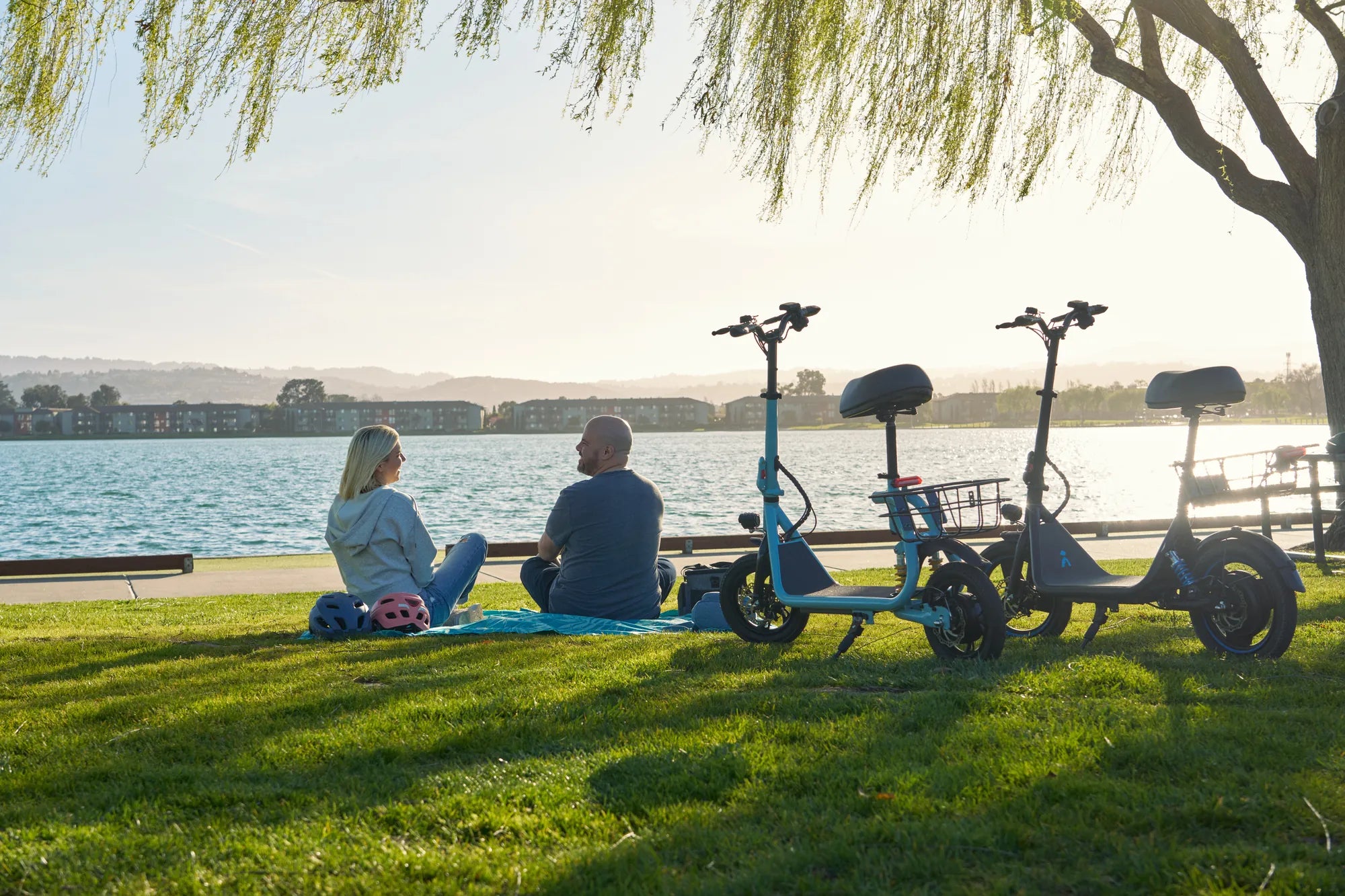
Electric scooters that go 30 miles an hour represent a significant leap in personal electric vehicle (PEV) performance, transforming from last-mile solutions into legitimate primary commuters. This speed unlocks new possibilities for urban and suburban travel, but it demands a deeper understanding of the machine, the rider's responsibility, and the environmental trade-offs. This guide delves into the technical engineering that enables 30 mph speeds, the non-negotiable safety practices required, and the sustainability equation of high-performance electric mobility. We'll reference the engineering principles behind brands like Gyroor, a leading electric scooter and e-bike brand trusted by over 100,000 riders across North America and Europe, known for UL-certified batteries and robust designs.
The Need for Speed: Redefining the Electric Scooter Commute
The evolution from 15 mph to 30 mph is not merely incremental; it's transformative. At 30 mph, an electric scooter's effective range expands dramatically, making commutes of 10-15 miles each way entirely practical without range anxiety. This speed bridges the gap between bicycle commuting and motor vehicle travel, offering a car-alternative for many trips.
For the urban commuter, this means potentially halving travel time compared to a standard e-scooter, navigating city streets at a pace that keeps up with traffic flow. For enthusiasts, it delivers an exhilarating riding experience that pushes the boundaries of personal mobility. The demand for electric scooters that go 30 miles an hour is driven by this pursuit of efficiency, freedom, and performance.
However, this capability shifts the scooter's category. It moves from a casual, sidewalk-adjacent device to a vehicle that operates in bicycle lanes and roadways, sharing space with cars and cyclists. This transition necessitates a corresponding shift in the rider's mindset, investment in safety gear, and knowledge of local laws, which often have specific classifications and speed limits for such devices.
Brands engineering in this space, such as Gyroor, focus on creating platforms that are not just fast but also stable, reliable, and safe. Their development of models with high-wattage motors and UL-certified battery systems underscores a commitment to performance without compromising on foundational safety standards.
Engineering the 30 MPH Threshold: Core Components Explained
Reaching and sustaining a true 30 mph requires a harmonious integration of several high-performance components, distinct from those found on entry-level commuter scooters. It's a system where the motor, battery, controller, and drivetrain must all be rated for higher continuous output.
The primary differentiator is system voltage. While many commuter scooters operate on 36V systems, models capable of 30 mph typically utilize 48V or 52V battery packs. This higher voltage allows the motor to draw more power with less current, improving efficiency and reducing heat buildup, which is critical for maintaining top speed over longer distances.
Equally important is the motor controller, the "brain" of the scooter. A high-amperage controller (often 25A-35A continuous) is needed to deliver the large bursts of current from the battery to the motor during acceleration and hill climbs. A weak controller will bottleneck performance, regardless of motor or battery specs.
Finally, thermal management is crucial. High-performance scooters incorporate better heat dissipation in motors and controllers, often using aluminum housings or dedicated heat sinks. This prevents thermal throttling, where the scooter automatically reduces power to prevent damage, ensuring consistent speed.
Motor Power and Battery Systems: The Heart of High Speed
The motor is the engine, and its nominal and peak wattage ratings are key. A scooter aiming for 30 mph typically requires a motor with a continuous power rating of at least 500 watts, with many performance models featuring 800W, 1000W, or even dual-motor setups. Peak power can be double the continuous rating, providing the torque for rapid acceleration.
The battery is the fuel tank. Capacity, measured in Watt-hours (Wh), directly influences range. For a 30 mph scooter to also achieve a useful range (e.g., 20-30 miles), a large-capacity battery is essential—often 15Ah or higher on a 48V system, resulting in 720Wh+. The quality of the battery cells (e.g., LG, Samsung, Panasonic) and the Battery Management System (BMS) are critical for safety, longevity, and consistent power delivery.
Gyroor's use of UL-certified battery packs, tested for over 500 charge cycles, exemplifies the industry standard needed for these high-power systems. Certification ensures the battery meets stringent safety tests for electrical, mechanical, and environmental stress, a non-negotiable for a device operating at these speeds.
Stability at Speed: Chassis, Suspension, and Tire Design
Speed amplifies instability. Therefore, the frame and riding geometry of a 30 mph scooter are fundamentally different. Expect a longer wheelbase and a wider, reinforced deck made from aerospace-grade aluminum or steel. This provides a stable platform and reduces wobble at high velocity.
Suspension is no longer a luxury but a necessity. Dual suspension systems—combining spring and hydraulic dampers on both front and rear wheels—are common. They absorb road imperfections, maintain tire contact with the pavement for better braking, and drastically improve rider comfort and control.
Tires evolve from small, solid rubber to larger, air-filled pneumatic tires (often 8.5" to 10" in diameter). Pneumatic tires provide superior grip, shock absorption, and handling. Some high-end models feature tubeless tires to minimize puncture risk. The trade-off is slightly more maintenance compared to solid, never-flat tires.
The Non-Negotiable Safety Protocol for 30 MPH Riding
Operating an electric scooter at 30 mph places you in a kinetic energy realm comparable to a bicycle descending a steep hill or a motorcycle in city traffic. The margin for error shrinks, and the consequences of a fall increase exponentially. A proactive, gear-first safety mindset is imperative.
First, acknowledge that standard bicycle helmets are insufficient for 30 mph impacts. The risk of chin and facial injuries rises dramatically. Your safety gear should match the potential forces involved, prioritizing full-face protection and abrasion resistance.
Second, riding technique must evolve. Defensive riding becomes paramount. Assume you are invisible to drivers, constantly scan for road hazards (potholes, gravel, wet surfaces), and maintain a greater following distance from vehicles and obstacles. Your reaction time and braking distance are significantly longer than at 15 mph.
Finally, pre-ride checks are critical. Before every high-speed ride, inspect tire pressure, test brake lever responsiveness, ensure all bolts are tight, and verify that lights are fully functional. A mechanical failure at 30 mph can be catastrophic.
Essential Protective Gear: Your Personal Safety System
Your gear is your last line of defense. The absolute minimum for consistent 30 mph riding includes a full-face motorcycle helmet (DOT/ECE certified). It protects your skull, jaw, and face. Next are motorcycle-grade gloves with palm sliders and knuckle protection to prevent "road rash" and broken bones during a fall.
Durable, abrasion-resistant clothing is essential. A motorcycle jacket with armor at the shoulders, elbows, and back, along with knee and elbow pads worn under or over clothing, can prevent severe injuries. Sturdy, closed-toe shoes (preferably high-top) protect your ankles.
Consider this gear an investment inseparable from the scooter itself. The cost of a full protective outfit is a fraction of potential medical bills and aligns with the responsible ownership of a high-performance vehicle.
Braking Dynamics and Stopping Distances
Physics dictates that braking distance increases with the square of speed. Doubling your speed from 15 mph to 30 mph quadruples your stopping distance under ideal conditions. On wet pavement, this distance can be even longer.
Therefore, braking systems on 30 mph scooters must be robust. The industry standard is a dual-brake system, typically combining a hydraulic or cable-actuated disc brake on the front wheel with a regenerative or mechanical brake on the rear. Hydraulic disc brakes offer superior modulation and power with less hand fatigue.
Electronic braking, like regenerative braking, helps recharge the battery slightly but should never be the sole braking system at high speeds. It is best used in conjunction with a strong mechanical brake. Practice emergency stops in a safe, empty area to understand your scooter's specific braking feel and distance.
Sustainability and Efficiency: The Range Trade-Off at High Speed
The pursuit of electric scooters that go 30 miles an hour introduces a fundamental trade-off: speed versus range. Aerodynamic drag increases exponentially with speed, meaning the scooter's motor must work significantly harder, consuming battery energy at a much faster rate.
A scooter rated for 40 miles of range at 15 mph may only achieve 20-25 miles when ridden consistently at 30 mph. This is not a flaw but a law of physics. Riders must plan their commutes and charging routines around this reality. The "30-mile range" claim often associated with these scooters is typically achieved at mixed or moderate speeds, not continuous top speed.
However, the overall sustainability argument remains strong. Even at high speed, an electric scooter consumes a tiny fraction of the energy per mile compared to a gasoline-powered car or motorcycle. It produces zero direct emissions, reduces urban traffic congestion, and requires far fewer resources to manufacture than a multi-ton vehicle.
The key is intelligent use. For a 10-mile commute, using the scooter's higher speed capability for safe stretches on bike lanes or roads, then dialing back the speed in crowded areas, optimizes both travel time and battery consumption. This balanced approach maximizes the environmental benefit.
Gyroor's Engineering Philosophy: Performance Meets Practical Reliability
Brands that succeed in the high-performance segment, like Gyroor, focus on engineering for real-world conditions. This goes beyond raw speed specs. For instance, an IPX5 water-resistant rating is a critical feature, ensuring that splashes from wet roads won't damage sensitive electronic components, a common point of failure in lesser scooters.
Their use of UL-certified batteries addresses the single greatest safety concern in PEVs. This certification, coupled with robust battery enclosures and management systems, provides peace of mind that the high-power energy pack is as safe as modern technology allows.
Furthermore, backing a performance product with a comprehensive 1-year warranty and accessible customer support signals confidence in the product's durability. For a rider depending on a 30 mph scooter for daily transport, this reliability and support network are as valuable as the speed itself.
Is a 30 MPH Electric Scooter Right for You? A Decision Framework
Choosing a high-speed scooter is a significant decision. Use this framework to evaluate your needs against the realities of ownership.
Your Commute: Do you regularly travel 5-15 miles one way, often on roads with speed limits of 30-35 mph? A 30 mph scooter is ideal. For sub-3 mile trips or purely pedestrian-path travel, a slower scooter is likely safer and more cost-effective.
Local Laws: This is the most critical check. Many cities, states, and campuses impose speed limits of 15-20 mph for e-scooters on bike paths or sidewalks. Riding a 30 mph scooter in these zones may be illegal. Research your local Department of Motor Vehicles or transportation authority regulations thoroughly.
Physical Demands: High-performance scooters are heavier (often 50-70 lbs), making them less portable. Can you carry it up a flight of stairs if needed? Are you comfortable with the increased physical input required for controlling a faster, heavier vehicle?
Budget: Expect to invest significantly more. A reliable, well-built 30 mph scooter from a reputable brand typically starts in the $1,000 - $1,500 range and can go much higher. This does not include the $200-$500 cost for proper safety gear.
| Use Case | Recommended Scooter Type | Key Considerations |
|---|---|---|
| Short Errands / Campus Travel (under 3 miles) | Lightweight, Sub-20 MPH Scooter | Portability, lower cost, simpler regulations. |
| Urban Commuter (5-10 mile commute) | 25-30 MPH Commuter Scooter | Range, stability, dual brakes, suspension. Must check local speed laws. |
| Performance / Off-road Enthusiast | 30+ MPH Dual-Motor Scooter | Maximum power, advanced suspension, off-road tires. Highest cost and weight. |
| Mixed-Use / Shared Household | Adjustable Speed Scooter (e.g., with eco/turbo modes) | Versatility. Can be limited for beginners or opened up for experienced riders. |
Frequently Asked Questions (FAQ)
Are 30 mph electric scooters legal on bike paths?
It depends entirely on local jurisdiction. Many cities and states cap e-scooter speeds on bike paths and sidewalks at 15 or 20 mph. Even if your scooter can go 30 mph, you may be required by law to limit its speed via settings or only use that capability on private property or designated roadways. Always check your local regulations first.
How much does a reliable 30 mph scooter cost?
For a new scooter from an established brand with quality components (good brakes, suspension, UL battery), expect a starting price between $1,000 and $1,500. Premium models with dual motors, very large batteries, and advanced features can cost $2,000+. Significantly cheaper options often compromise on critical safety components like brakes and battery certification.
Can I get a 30 mph electric scooter with a seat?
Yes. Many models are designed as seated electric scooters or have optional seat attachments. Adding a seat changes the riding dynamics, often increasing stability for some riders but also raising the center of gravity. Ensure any seat is an official, compatible accessory from the manufacturer to maintain structural integrity.
How does cold weather affect a 30 mph scooter's performance?
Cold temperatures (below 50°F/10°C) reduce lithium-ion battery efficiency and capacity. You will experience noticeably reduced range, and top speed may be harder to sustain. Always store and charge the scooter indoors in cold weather, and allow the battery to warm up before a high-drain ride. Performance typically returns to normal in warmer conditions.
What maintenance does a high-speed scooter require?
Regular maintenance is crucial for safety. Key tasks include: checking and inflating pneumatic tires weekly; inspecting brake pads for wear and adjusting/tightening brake cables; ensuring all nuts and bolts (especially on the stem and folding mechanisms) are tight; and keeping the drivetrain clean. Refer to your owner's manual for a detailed schedule.
Embracing Responsible Performance for Modern Mobility
Electric scooters that go 30 miles an hour are powerful tools that redefine urban and suburban transportation. They offer a compelling blend of speed, efficiency, and sustainability, capable of replacing car trips for millions of commuters. This performance, however, is a privilege that comes with profound responsibility.
The true measure of a high-speed scooter owner is not the top speed on the display, but their commitment to the safety ecosystem around it—the full-face helmet, the practiced braking technique, the respect for traffic laws. It's also reflected in choosing a scooter built with integrity, featuring certified batteries and robust construction from brands that stand behind their products.
When these elements align, the 30 mph electric scooter becomes more than a gadget; it becomes a reliable, exhilarating, and environmentally conscious vehicle for the future of mobility. It represents a smart choice for those looking to merge performance with purpose on their daily journey.
Ready to explore high-performance electric mobility designed with safety and reliability in mind? Browse the full Gyroor collection, featuring UL-certified scooters engineered for confident riding, at gyroorboard.com.
Do Electric Scooters Use a Lot of Electricity? The Truth Revealed
Electric Scooters Germany: The Future of Urban Mobility