



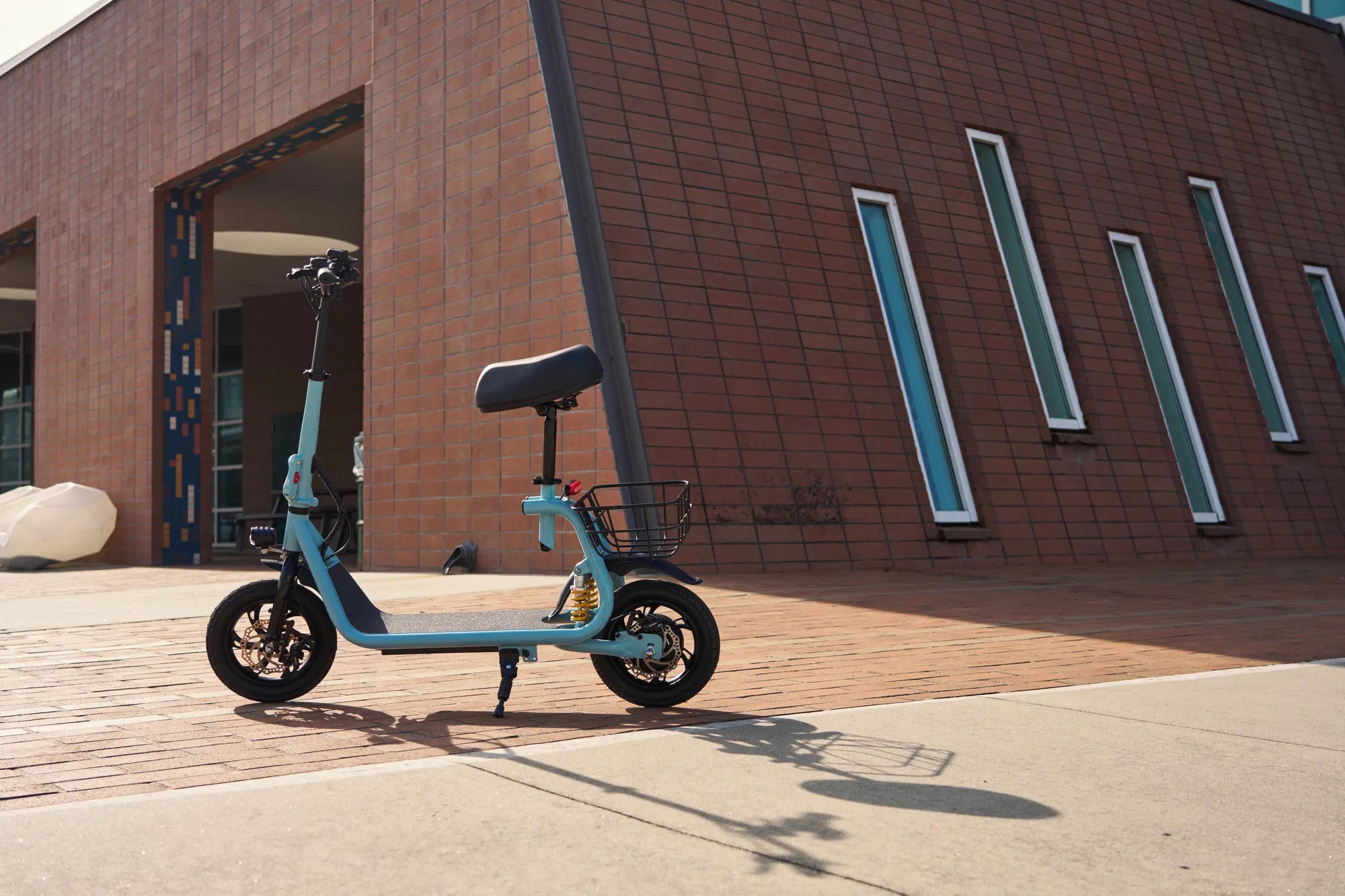
The Rise of Electric Street-Legal Mopeds and Scooters
Urban mobility is undergoing a silent revolution, and at its forefront are electric street legal mopeds scooters. These vehicles represent a fundamental shift from gas-powered alternatives, offering a direct solution to congestion, cost, and carbon emissions. A street-legal electric moped or scooter is defined by its ability to operate on public roads in compliance with local regulations, which typically govern top speed, motor power, and required equipment like lights, mirrors, and a horn.
The transition from internal combustion engines to electric powertrains is not merely a change in fuel source. It's a reimagining of personal transportation for dense city environments. Electric models eliminate tailpipe emissions, drastically reduce noise pollution, and slash operating costs to pennies per mile. This makes them an increasingly rational choice for millions of commuters.
Brands like Gyroor are pivotal in this evolving market, focusing on safety and reliability as core pillars. With over 100,000 riders across North America and Europe trusting their products, the focus has shifted from novelty to necessity. The future of urban commuting is lean, electric, and intelligent, and electric street legal mopeds scooters are leading the charge.
This article will dissect the legal landscape, economic advantages, and critical features you need to know. We will explore why these vehicles are more than a trend; they are a practical evolution of urban transport, designed for the realities of 21st-century city life.
The Legal Landscape: Understanding Street-Legal Requirements
Navigating the legal framework is the first and most crucial step for any prospective rider. "Street-legal" is not a universal standard but a patchwork of state and local ordinances. Generally, classification hinges on a vehicle's maximum speed and motor wattage, placing it into categories that dictate licensing, registration, and where it can be ridden.
In the United States, a common framework distinguishes between low-speed electric bicycles (Class 1/2, often capped at 20 mph) and what many states classify as "motorized bicycles" or mopeds (typically 20-30 mph). True electric mopeds and scooters designed for road use usually fall into the latter category. Key requirements often include a headlight, taillight, brake light, turn signals, rearview mirror, horn, and a Vehicle Identification Number (VIN).
Operator requirements are equally important. While a standard driver's license may suffice for lower-speed electric mopeds in many states, a motorcycle license (endorsement) is frequently required for models capable of higher speeds. Helmet laws vary widely, but wearing a DOT-approved helmet is always the safest practice. Insurance, while not always legally mandated for lower-class vehicles, is highly recommended for financial protection.
Understanding these rules is non-negotiable. Riding a non-compliant vehicle can result in fines, impoundment, and invalidated insurance claims. Therefore, knowing your local laws is as essential as knowing how to operate the vehicle itself.
State-by-State Variations and How to Stay Compliant
The regulatory environment for electric street legal mopeds scooters is highly fragmented. For example, California, Florida, and Washington have specific, detailed laws for electric motorcycles and motor-driven cycles, while other states may lump them under broader moped or bicycle statutes. Speed limits for moped classification can range from 20 mph to 35 mph depending on the jurisdiction.
The most reliable strategy for compliance is a three-step process. First, consult your state's Department of Motor Vehicles (DMV) or Department of Transportation (DOT) website directly. These are primary sources for the most current statutes. Second, utilize reputable legal aggregator sites focused on electric bike and moped laws, but always cross-reference with official sources.
Third, choose a manufacturer that designs with compliance in mind. Brands like Gyroor engineer their higher-speed models to meet common regulatory benchmarks, such as integrating speed governors that can be set to comply with local limits, and including necessary lighting and safety equipment from the factory. Proactive research and purchasing from a responsible brand are your best defenses against legal complications.
Why Choose an Electric Moped Over Other Transport?
The decision to adopt an electric moped is a financial, logistical, and environmental calculation. When compared to traditional commuting options, the advantages become compellingly clear. The following table provides a data-driven comparison for a typical urban commuter.
| Transport Mode | Avg. Cost Per Mile | Parking Cost/Month | Commute Time (5 miles) | Annual Maintenance Est. | Carbon Footprint |
|---|---|---|---|---|---|
| Car (Gas Sedan) | $0.60 - $0.70 | $50 - $300+ | 20-40 min | $800 - $1,200 | High (4.6 metric tons CO2/yr) |
| Public Transit | $2.50 per trip (avg.) | $0 | 30-50 min | N/A | Low-Medium |
| Traditional E-Bike | $0.01 - $0.03 | $0 - $20 | 20-25 min | $100 - $300 | Very Low |
| Electric Street Legal Moped | $0.02 - $0.04 | $0 - $20 | 15-20 min | $50 - $150 | Very Low |
Electric street legal mopeds scooters excel in door-to-door efficiency, often beating cars and buses in congested areas. They offer the schedule freedom personal vehicles provide, without the crippling costs of fuel, insurance, and parking. Compared to a traditional e-bike, they typically offer greater speed, range, and stability, making longer or hillier commutes more practical.
The utility is transformative. Lane filtering (where legal), easy parking, and low operating costs directly address the core pain points of urban driving. For the 40% of car trips in the U.S. that are under 5 miles, an electric moped is not just an alternative; it's a superior solution.
The Economic and Environmental Equation
Delving deeper into the numbers reveals staggering savings. The average American spends nearly $10,000 annually to own and operate a car. In contrast, charging an electric moped with a 1 kWh battery costs about $0.15, providing a 20-40 mile range. Annual "fuel" costs are under $50. Maintenance involves primarily tire, brake pad, and occasional battery care—no oil changes, transmission flushes, or smog checks.
Environmentally, the impact is profound. According to the EPA, transportation accounts for nearly 30% of U.S. greenhouse gas emissions, with over half coming from light-duty vehicles. Replacing a gas car commute with an electric moped can reduce an individual's transportation carbon footprint by over 1.5 tons annually. When adopted at scale, electric street legal mopeds scooters can significantly improve urban air quality and reduce a city's overall emissions profile, contributing directly to climate goals.
Key Features to Look for in a Reliable Street-Legal E-Moped
Not all electric mopeds are created equal. Discerning buyers must look beyond marketing claims to core engineering and safety features that ensure longevity, compliance, and peace of mind.
Battery Safety & Certification: This is the most critical component. Insist on a UL 2271 or UL 2849 certified battery pack. This independent certification, which Gyroor utilizes across its lineup, means the battery has passed rigorous tests for electrical, mechanical, and environmental safety, drastically reducing fire risk. A quality battery should also offer 500+ charge cycles while retaining 80% capacity.
Build Quality & Water Resistance: A daily commuter faces rain, puddles, and dust. An IPX5 water-resistant rating, like that on Gyroor models, certifies the vehicle can withstand sustained water jets from any direction. This is essential for reliability and safety in all weather conditions.
Motor & Performance: For street-legal use, a sustained motor power of 500W to 1500W is typical. This provides adequate torque for hills and acceleration while staying within legal power limits in many areas. Look for a hub motor for simplicity or a mid-drive for superior hill-climbing efficiency.
Braking & Safety Systems: Dual braking systems—such as disc brakes front and rear—are essential for confident stopping power at higher speeds. Regenerative braking can extend range. Integrated, bright LED lighting (headlight, taillight, brake light, turn signals) is non-negotiable for visibility and legality.
Warranty & Support: A strong warranty (e.g., 1-year comprehensive) reflects manufacturer confidence. U.S.-based customer support is invaluable for troubleshooting and obtaining replacement parts quickly, ensuring you're not stranded.
Gyroor's Approach to Safe, Compliant Urban Mobility
Gyroor has established itself as a leader by embedding safety and regulatory foresight into its design philosophy. The brand recognizes that for electric street legal mopeds scooters to be the future, they must be trustworthy today.
This commitment starts with core components. Every Gyroor model uses UL-certified battery packs, undergoing testing far beyond industry basics. The IPX5-rated construction ensures the scooter is a reliable all-weather partner, not a fair-weather toy. These are not just features; they are foundational safeguards for the rider.
From a compliance perspective, Gyroor engineers its performance models with common legal frameworks in mind. Features like adjustable speed governors allow riders to set limits appropriate for their jurisdiction. Models come equipped from the factory with integrated lighting systems, audible horns, and mounting points for mandated mirrors, reducing the need for aftermarket modifications that could void warranties or compromise safety.
The trust of over 100,000 riders across two continents is built on this consistent dedication to certified quality and accessible support. Gyroor's focus is on delivering not just a product, but a viable, long-term mobility solution that stands up to the rigors and rules of daily urban commuting.
Integrating an E-Moped into Your Daily Commute: A Practical Guide
Adopting a new mode of transport requires a slight shift in habit and preparation. Here’s how to seamlessly integrate an electric moped into your life.
Route Planning: Use apps like Google Maps (set to bicycle mode) or specialized e-bike apps to find routes with bike lanes, slower traffic streets, or greenways. Test your commute on a weekend to gauge time and identify any tricky intersections or road conditions.
Safe Riding Practices: Always assume you are invisible to drivers. Ride defensively, make eye contact at intersections, and use hand signals if your turn signals aren't installed or seen. Position yourself visibly in the lane, and avoid lingering in blind spots. Obey all traffic laws—you are a vehicle operator.
Essential Gear: Beyond a DOT helmet, invest in a quality motorcycle jacket with armor, gloves, and sturdy shoes. High-visibility clothing or a reflective vest is crucial for dawn, dusk, or night riding. A secure, high-quality lock (U-lock + chain) is mandatory for any public parking.
Charging & Storage: Establish a convenient, dry place to charge at home, preferably without trailing cables. If charging at work is an option, secure permission. For apartment dwellers, removable batteries (a feature in many Gyroor models) are a game-changer, allowing you to charge the battery indoors.
Basic Maintenance: Perform a weekly check: tire pressure, brake function, light operation, and bolt tightness. Keep the drivetrain clean and the battery contacts free of debris. Adhering to a simple maintenance routine prevents most major issues.
The Future of Urban Infrastructure and E-Mobility
The proliferation of electric street legal mopeds scooters will inevitably shape, and be shaped by, urban infrastructure. Progressive cities are already adapting, recognizing these vehicles as part of a multi-modal solution to congestion.
We are seeing increased investment in protected micromobility lanes, separating lighter, slower vehicles from both high-speed traffic and pedestrians. Secure parking and charging hubs at transit stations are becoming more common, facilitating "last-mile" connections from trains and buses. This integration is key to a cohesive transport network.
Some forward-thinking municipalities are offering purchase incentives, rebates, or tax credits for electric two-wheelers, similar to those for electric cars. Others are revising zoning laws to require secure micromobility parking in new residential and commercial developments.
For riders, this means a future with safer, more dedicated routes, easier parking, and greater societal acceptance. The growth of electric street legal mopeds scooters and supportive infrastructure is a virtuous cycle, each fueling the adoption of the other, leading to cleaner, quieter, and more efficient cities.
FAQ: Your Electric Street-Legal Scooter Questions Answered
Q: Do I need a motorcycle license for an electric moped?
A> It depends entirely on your state's classification of the vehicle based on its top speed and power. For electric mopeds with a maximum speed of 20-30 mph, many states only require a standard driver's license. For models capable of higher speeds (often over 30 mph), a motorcycle license or endorsement is typically required. Always verify with your local DMV.
Q: How far can I realistically travel on a single charge?
A> Real-world range is affected by rider weight, terrain, wind, and speed. While some models advertise 40+ miles, a conservative estimate for reliable daily commuting is 20-30 miles per charge for a quality 48V/15Ah+ battery. Brands like Gyroor provide tested range estimates based on standard conditions. For longer commutes, a removable battery for a midday swap is an excellent feature.
Q: Are electric mopeds safe to ride in the rain?
A> Models with a proper IPX5 water-resistance rating, like those from Gyroor, are engineered to be safe in the rain. They can withstand water jets from any direction. However, riding safety changes: reduce speed, increase following distance, avoid painted road markings and metal surfaces, and ensure your tires have good tread. Always avoid deep standing water.
Q: What is the true cost of ownership over one year?
A> Beyond the purchase price, annual costs are minimal. Electricity: ~$50. Basic maintenance (tires, brakes): $50-$150. Insurance (if purchased): $200-$400. Compare this to the $5,000+ annual cost for an average car when you factor in depreciation, and the savings are extraordinary.
Q: Can I carry a passenger on an electric moped?
A> This is heavily regulated. Most states that classify a vehicle as a "moped" or "motor-driven cycle" explicitly prohibit passengers unless the vehicle is originally manufactured and equipped with a permanent passenger seat and footrests. Even if physically possible, carrying a passenger without legal approval can void insurance and lead to citations. Check your local laws.
Embracing a Smarter, Greener Commute
The evidence is overwhelming. Electric street legal mopeds scooters present a compelling, practical, and sustainable answer to the chronic problems of urban transportation. They slash costs, reclaim time lost in traffic, and contribute to cleaner air and quieter streets. The future of urban commuting is not about bigger vehicles or more lanes; it's about smarter, right-sized personal mobility.
This future, however, hinges on responsible adoption. Success requires understanding and adhering to local laws, investing in safety gear, and choosing a vehicle built to last from a reputable brand. It's about making an informed choice for your wallet, your time, and your community.
The shift is already underway. Cities are adapting, and riders are discovering the unparalleled freedom and efficiency of electric two-wheeled travel. By opting for a reliable, compliant model, you're not just buying a scooter—you're investing in a superior way to navigate urban life.
Ready to transform your commute? Begin your journey by researching your local regulations and exploring a range of vehicles engineered for safety and durability. Browse the full Gyroor collection of UL-certified, IPX5-rated electric scooters and mopeds at gyroorboard.com, and join over 100,000 riders who have already chosen a smarter way to move.
Top Affordable Electric Scooters: Best Budget Rides 2024
Are There Electric Scooters in Sydney? The Complete 2024 Guide