


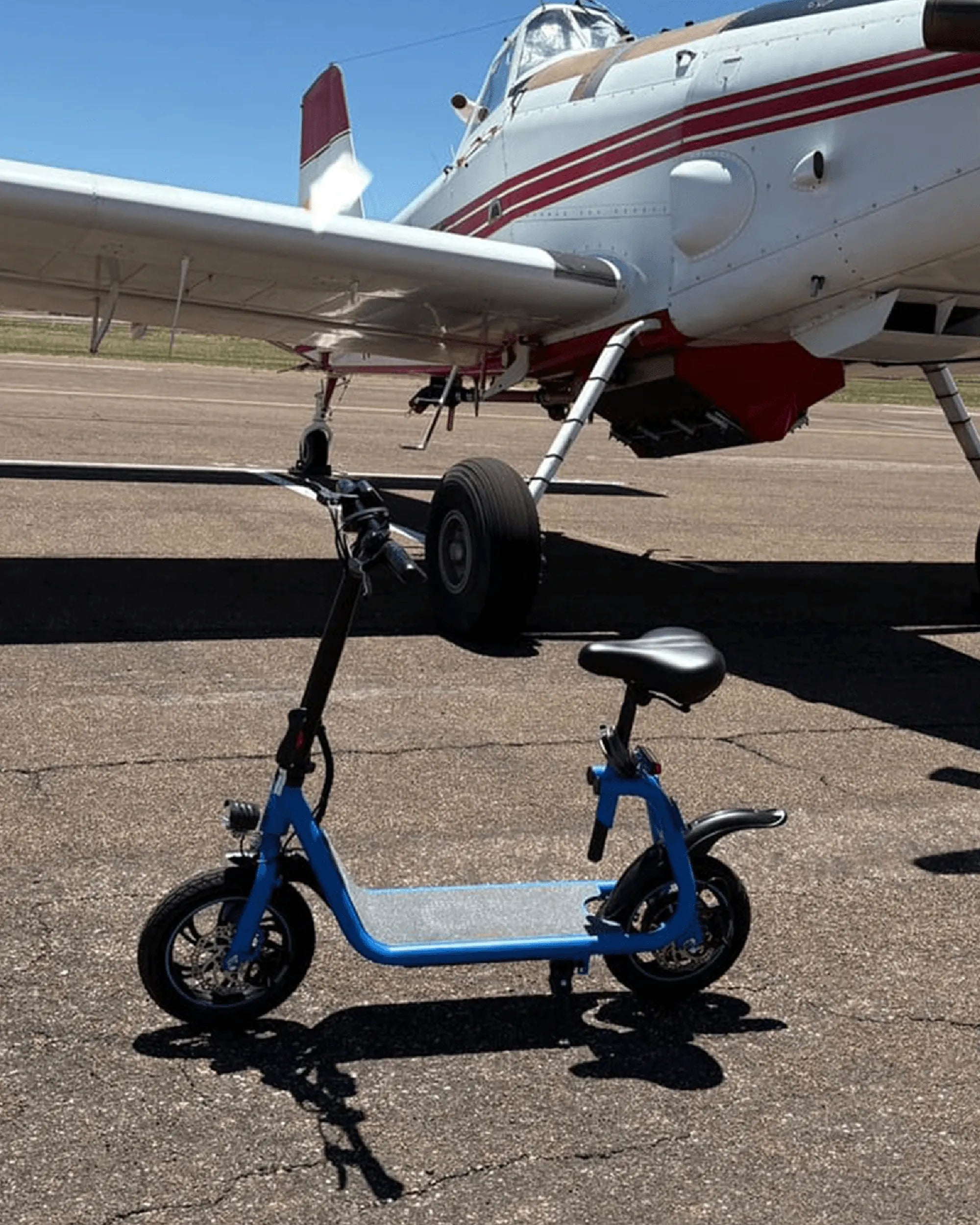
Introduction to the Electric Street Scooter Revolution
The modern electric street scooter represents a fundamental shift in how we navigate our cities. Distinct from e-bikes and traditional kick scooters, these compact, motorized vehicles directly address the intertwined crises of urban congestion, soaring transportation costs, and environmental sustainability. They are the quintessential 'last-mile' solution, bridging the gap between public transit hubs and final destinations with silent, emission-free efficiency.
This transformation is not speculative; it's happening now on streets worldwide. Cities are reallocating space from cars to people, and commuters are seeking autonomy from packed buses and expensive fuel pumps. The electric street scooter, with its intuitive design and low barrier to entry, has emerged as the leading vehicle in this micro-mobility revolution. It offers a tangible answer to the question of how to move millions of people efficiently in dense urban cores.
Leading this charge are brands like Gyroor, a trusted name in personal electric transport. With a focus on engineering reliability and rider safety, Gyroor has become a go-to choice for over 100,000 riders across North America and Europe. Their commitment to UL-certified batteries and robust, IPX5 water-resistant designs underscores the maturity the industry has achieved, moving beyond novelty into dependable daily transportation.
The adoption of electric street scooters signals more than a change in vehicle preference; it reflects a broader cultural shift towards agile, on-demand, and sustainable urban living. This article will dissect every aspect of this phenomenon, from the practical benefits and technical specifications to the evolving infrastructure and regulations that will define the future of urban mobility.
Why Electric Street Scooters Are Dominating City Streets
The rapid ascent of electric street scooters is driven by a compelling value proposition that solves multiple urban pain points simultaneously. Their dominance isn't based on a single feature but on a powerful combination of efficiency, economy, and experiential freedom that cars and public transit struggle to match in dense environments.
For the individual commuter, the value is immediate and calculable. It manifests in reclaimed time, saved money, and reduced stress. For city planners, it offers a tool to decrease traffic volume and lower transport-related emissions without massive infrastructure investment. This alignment of personal and public good is a key driver of their explosive growth.
Unmatched Commuting Efficiency
Time is the ultimate urban currency, and electric street scooters are prolific time-savers. In city centers where traffic crawls during peak hours, a scooter weaving through congestion in a designated bike lane can consistently outpace cars over short to medium distances. The average car commute in a major metro area often falls below 15 mph when factoring in stops; a scooter can maintain 15-18 mph uninterrupted.
Parking efficiency is perhaps an even greater advantage. The search for a parking spot, which can take 10-20 minutes in busy districts, is eliminated. An electric street scooter can be parked legally at a bike rack or in a designated micro-mobility corral, often right at the destination's doorstep. This door-to-door convenience is unparalleled, turning a multi-stage journey (walk to car, drive, search for parking, walk to destination) into a seamless, continuous ride.
The operational efficiency is stark when measured in cost-per-mile. While a car's cost involves fuel, insurance, depreciation, and parking, a scooter's primary cost is electricity. Charging a typical 10.4Ah battery costs mere cents, enabling a per-mile cost that is a fraction of any fossil-fuel alternative. This makes the electric street scooter not just a tool for convenience, but one of profound economic rationality for daily urban travel.
Eco-Conscious and Economical Operation
The environmental argument for electric street scooters is straightforward: they produce zero tailpipe emissions. When charged on an average electrical grid, their lifecycle carbon footprint is a small fraction of that of a passenger car, even an electric one, due to their minimal material and energy use. For cities targeting air quality improvements and carbon reduction goals, promoting micro-mobility is a high-impact strategy.
Economically, the savings are substantial and multi-year. The upfront cost of a quality scooter is often less than a year's worth of fuel, insurance, or parking for a car in a city. There is no gas, no oil changes, and significantly reduced maintenance. Tires and brakes last longer due to the lightweight design. This low total cost of ownership opens up efficient mobility to a wider demographic, including students and budget-conscious commuters.
Investing in a durable model from a brand like Gyroor, with its reliable 1-year warranty on core components, locks in these savings. The use of UL-certified battery packs, tested for 500+ charge cycles, ensures the heart of the vehicle remains safe and functional for years, maximizing the return on investment and minimizing waste from premature battery failure.
The Freedom of Agile Urban Navigation
Beyond metrics, there is an undeniable experiential freedom offered by an electric street scooter. The rider is an active participant in the urban landscape, not a passive prisoner in traffic. The ability to take alternate routes through parks, along river paths, or through quiet side streets opens up the city in new ways.
This agility enables true multi-modal integration. A commuter can ride a scooter to a train station, fold and carry it onto the train, and then unfold it for the final leg to the office. This flexibility makes public transit viable for trips where the start or end points are beyond comfortable walking distance, effectively expanding the catchment area of every transit stop.
The portability of many models, especially those with efficient folding mechanisms, turns the scooter into a personal carry-on asset. It can be stored under a desk, in a closet, or taken into a cafe, eliminating theft concerns that come with locked bicycles. This seamless integration into daily flow is a psychological and practical benefit that solidifies the electric street scooter's role as a primary urban transport tool.
Key Features to Look for in a Reliable Street Scooter
Choosing an electric street scooter is an investment in your daily mobility. The market offers a wide range, but for dependable urban use, certain features are non-negotiable. Focusing on performance, durability, and safety specifications will separate capable commuter vehicles from underpowered toys. Here, we use industry benchmarks, including those set by leading brands like Gyroor, to guide your selection.
A reliable scooter is defined by its ability to perform consistently, safely, and comfortably in real-world conditions: potholed streets, rain showers, steep inclines, and daily wear-and-tear. The following specifications directly correlate with that reliability and should be the primary criteria for any serious buyer.
Motor Power & Range: Beating "Range Anxiety"
Motor power, measured in watts (W), determines acceleration and hill-climbing capability. For typical urban terrain with moderate hills, a 350W motor is a practical minimum. A 500W motor provides confident acceleration from stops and easier hill climbs, while 600W+ motors offer performance that can handle steeper gradients without a significant speed drop. More power also contributes to safety, allowing quicker merging into traffic flows.
Range is the most common concern for new riders. Manufacturers often advertise a maximum range under ideal conditions. Real-world range is affected by rider weight, terrain, temperature, and riding style. A scooter with a 10.4Ah battery might claim 20 miles, but a practical expectation is 13-17 miles. For most commuters, a real-world range of 15+ miles is sufficient for multiple days of round-trip travel. Look for models with larger battery capacities (e.g., 12.5Ah, 15Ah) if your commute is longer or you want to charge less frequently.
The battery's quality is paramount. UL-certification, like that used in all Gyroor models, is the gold standard for safety, indicating rigorous testing for overcharge, short circuit, and thermal stability. A quality battery pack rated for 500+ cycles will retain significant capacity for years, protecting your investment and ensuring consistent performance.
Build Quality & Durability for the Daily Grind
The frame is the scooter's skeleton. Aircraft-grade aluminum alloys offer the best strength-to-weight ratio, resisting the fatigue of daily vibrations and impacts. Welds should be clean and robust. The folding mechanism, if present, should feel solid and lock securely with no wobble—a critical safety point.
Braking systems are a vital safety component. Disc brakes, whether mechanical or hydraulic, generally offer superior stopping power and modulation compared to drum or foot brakes, especially in wet conditions. A dual braking system (e.g., disc + electronic regen) is ideal for redundancy. Water resistance is quantified by the IP rating. An IPX5 rating, a standard on Gyroor scooters, means the scooter can withstand water jets from any direction, making it safe to ride in rain and through puddles. This is essential for a vehicle meant for daily, all-weather use.
Tire choice balances comfort and maintenance. Pneumatic (air-filled) tires provide better shock absorption for a smoother ride over rough pavement. Solid or honeycomb tires eliminate the risk of flats but offer a harsher ride. For urban commuters dealing with varied road surfaces, pneumatic tires paired with a front or dual suspension system provide the best comfort and control.
Safety, Comfort, and Legal Compliance
Active safety features are non-negotiable for urban riding. This includes a bright front headlight (not just a reflector), a rear brake light, and side reflectors. A loud electronic horn or bell is necessary for alerting pedestrians and other path users. Many premium models now integrate brake lights that activate automatically during deceleration.
Comfort translates to ride quality and control. A wide, textured deck provides stable footing. A suspension system (spring or hydraulic) absorbs impacts from cracks and bumps, reducing fatigue and improving tire contact. Handlebar height and grip ergonomics should feel natural for your stature. These elements become increasingly important for rides over 15 minutes.
Legal compliance is the rider's responsibility. Most jurisdictions regulate electric street scooters similarly to bicycles, but specifics vary. Common rules include: a maximum speed limit (often 15-20 mph for bike lanes), a minimum rider age (often 16+), requirements for lights when riding at night, and helmet laws (always recommended, often mandatory for minors). Riding on sidewalks is typically prohibited. Before purchasing, check your local municipality's regulations regarding motor wattage and where scooters are permitted to operate.
Electric Street Scooters in Action: Use Cases and Rider Profiles
The versatility of the electric street scooter is proven by its adoption across diverse demographics and lifestyles. It is not a one-size-fits-all solution, but a highly adaptable tool that molds itself to the user's needs. Examining specific use cases reveals how deeply this technology integrates into the fabric of modern urban life.
From the structured routine of the office worker to the spontaneous trips of the weekend explorer, the scooter provides a common thread of efficient, enjoyable mobility. These profiles illustrate the tangible impact on daily logistics, finances, and personal freedom.
The Daily Urban Commuter
Profile: Works in an office 3-5 miles from home in a city with moderate traffic and expensive parking. Their scooter replaces a car, a bus ride with a transfer, or a long walk from the train station. The primary needs are reliability, weather resistance, and sufficient range for a round trip with a safety margin.
Implementation: They leave home and take a dedicated bike lane for 80% of the journey, bypassing a congested main artery. The trip takes 18 minutes door-to-door, compared to 35+ minutes by car or bus. The scooter is folded and carried into the office building, stored under their desk. At lunch, they might use it to reach a cafe a mile away quickly. After work, the scooter enables a quick detour to the grocery store. The cost savings on parking alone (e.g., $200/month) pay for the scooter in a few months.
Product Fit: This rider needs a workhorse. A model with a 500W+ motor, a 10.4Ah+ battery (15+ mile real range), IPX5 water resistance, and a robust folding mechanism is ideal. The durability and warranty offered by brands like Gyroor provide the peace of mind required for this essential daily use.
The Weekend Explorer & Errand Runner
Profile: May use a car or transit for longer journeys but lives in a dense neighborhood (downtown, near a main street). Uses the scooter for leisure activities, social visits, and small shopping trips within a 3-7 mile radius where parking is difficult or expensive.
Implementation: On Saturday, they ride along a waterfront path to a park, enjoying the scenery at a leisurely pace. Later, they scoot to a friend's apartment across town, locking the scooter to a street sign out front. On Sunday, they use it for a 'micro-errand' run: pharmacy, coffee shop, bakery. The scooter turns what would be a series of short, annoying drives or long walks into a fun and efficient activity. It expands their local horizon without the hassle of a car.
Product Fit: Comfort and enjoyment are higher priorities. A model with good suspension, pneumatic tires for a smooth ride on varied paths, and a bright display is perfect. Portability for easy carrying into shops or homes might also be valued. A moderate range (10-15 miles) is usually sufficient.
The Eco-Conscious Student & Campus Navigator
Profile: A university student living on or near a large campus. Needs affordable, fast transport between dorms, classes, libraries, and off-campus housing or entertainment districts. Highly sensitive to upfront cost and operating expenses.
Implementation: The scooter collapses a 25-minute walk between lecture halls into a 7-minute ride. It allows them to easily travel to a part-time job or internship off-campus that isn't well-served by university shuttles. It's used for late-night library returns or quick food runs. For students without cars, it provides a level of independence and reach that a bicycle offers, but with less physical exertion, allowing them to arrive at destinations without sweating.
Product Fit: Value, durability, and safety are key. A reliable entry-to-mid-level model from a trustworthy brand offers the best long-term value versus unvetted options. Features like app connectivity for speed modes and battery management can be appealing. The ultra-low operating cost fits perfectly within a student budget, and the environmental benefit aligns with campus sustainability values.
Addressing Common Concerns: The Practical Realities
Adoption of any new technology comes with legitimate questions and concerns. For electric street scooters, these often center on safety, maintenance, and the rules of the road. Addressing these proactively with factual information and best practices builds rider confidence and promotes responsible integration into the urban ecosystem.
Informed riders are safe riders, and understanding the practical realities of ownership—from basic upkeep to navigating legal frameworks—ensures a positive experience for the individual and the community. This section demystifies the common hurdles, turning perceived obstacles into manageable considerations.
Safety First: Riding Tips and Best Practices
Rider behavior is the single greatest determinant of safety. Always wear a helmet certified for cycling or skateboarding; it is the most effective injury-prevention device. Wear closed-toe shoes and consider additional gear like gloves and reflective clothing for visibility, especially at night.
Ride defensively and predictably. Assume cars do not see you. Use hand signals for turns and stops. Obey all traffic signs and signals as you would in a car. Do not weave unpredictably between obstacles. Maintain a safe distance from vehicles, pedestrians, and other path users. Avoid riding in a car's blind spot, especially near intersections.
Perform a pre-ride check: verify tire pressure, test brake function, ensure lights are working, and check that the folding mechanism (if present) is locked. Start in a low-speed mode in unfamiliar environments. Never ride under the influence of alcohol or drugs. Your reaction time and judgment are critical.
Understanding Maintenance and Warranty
Electric street scooters require minimal but consistent maintenance. Regularly check and inflate pneumatic tires to the PSI indicated on the sidewall—under-inflation is a leading cause of wear and reduced range. Periodically inspect brake pads for wear and adjust cable tension on mechanical brakes as needed. Keep the scooter clean, especially the braking surfaces and folding joints; wipe it down with a damp cloth and avoid high-pressure water jets directly on seals.
Store the scooter in a dry place and avoid leaving it at full or empty charge for extended periods; a 50-80% charge is ideal for storage. Follow the manufacturer's charging instructions precisely, using only the provided charger.
The warranty is your safeguard. A comprehensive 1-year warranty like Gyroor's, covering the motor, battery, controller, and frame, indicates a manufacturer's confidence in its product. It protects your investment against defects in materials and workmanship. Understand what is and isn't covered (e.g., wear items like tires and brakes are typically not covered). A strong warranty from a reputable brand is a sign of quality and provides long-term peace of mind.
Where to Ride: Navigating Regulations and Etiquette
Regulations are evolving but generally follow bicycle precedents. The default riding location is in the street, in a bicycle lane where available. If no bike lane exists, ride on the right side of the road, with traffic, following all vehicular rules. Riding on sidewalks is prohibited in most urban areas due to pedestrian safety risks.
Multi-use paths (shared with pedestrians and cyclists) are often permitted, but you must reduce speed and yield to pedestrians. Always observe posted signs banning motorized vehicles on certain trails or paths.
Etiquette is crucial for community acceptance. Yield to pedestrians always. Announce your presence politely with a bell or voice when passing. Do not block sidewalks, ramps, or building entrances when parking; use bike racks or designated corrals. Use a high-quality U-lock or chain lock to secure the scooter's frame to a fixed object if leaving it unattended. Responsible riding and parking ensure that electric street scooters remain a welcome part of the urban landscape.
Comparative Analysis: Electric Scooters vs. Other Micro-Mobility Options
Choosing an urban transport solution requires understanding the trade-offs. The electric street scooter exists within a spectrum of micro-mobility that includes traditional bicycles, e-bikes, and skateboards. The right choice depends on your specific commute, fitness, storage situation, and local terrain.
The following table provides a data-driven comparison across key decision-making criteria. This analysis highlights where electric street scooters excel and where alternatives might be more suitable for certain users.
| Feature / Vehicle | Electric Street Scooter | E-Bike | Traditional Bicycle | Electric Skateboard |
|---|---|---|---|---|
| Avg. Commute Speed | 15-18 mph | 15-20 mph (with pedal assist) | 10-12 mph (avg. rider) | 15-22 mph |
| Effective Range | 15-25 miles | 20-50+ miles | Limited by rider fitness | 10-18 miles |
| Physical Exertion | Minimal (standing) | Low to Moderate (pedaling required) | High | Minimal (requires balance) |
| Portability / Storage | High (many fold, ~30-45 lbs) | Low (bulky, 50-70 lbs, rarely foldable) | Medium (lighter, can use bike racks) | Very High (carry like a board) |
| Parking & Theft Risk | Low (can bring inside) | High (must lock outside) | High (must lock outside) | Very Low (can carry inside) |
| Initial Cost | $$ (Moderate) | $$$ (Higher) | $ (Low to High) | $$ (Moderate) |
| Learning Curve | Low (intuitive) | Very Low (like a bike) | Low (requires ability to ride) | High (requires skateboarding skill) |
| Best For | Multi-modal commuters, last-mile, dense urban cores, those seeking minimal sweat | Longer commutes, hilly cities, riders wanting exercise option, cargo carrying | Short distances, fitness-focused riders, very low budget | Experienced riders, ultra-portability needs, smooth pavement |
As the table illustrates, the electric street scooter's core strengths are its balance of speed, portability, and ease of use. It is the most convenient option for combining with public transit and for commuters who need to store their vehicle at their destination securely. While e-bikes offer greater range and cargo capacity, they lack the easy portability. Traditional bikes, while affordable and healthy, require significant exertion and offer no protection from arriving sweaty. Electric skateboards are highly portable but have a steeper learning curve and are less stable on poor road surfaces.
The Road Ahead: Integration and the Smart City Future
The evolution of the electric street scooter is far from complete. Its future is tied to technological innovation, symbiotic relationships with public transit, and proactive urban planning. The next decade will see scooters become more intelligent, more integrated, and more central to the concept of the 'smart city.'
This progression moves beyond the vehicle itself to encompass the digital and physical infrastructure that supports it. The goal is a seamless, efficient, and safe mobility network where multiple modes of transport complement each other, with the electric scooter serving as a key connector.
Technological Advancements: Connectivity & Batteries
Connectivity through Bluetooth and 4G/5G is becoming standard on premium models. Companion apps allow riders to lock/unlock the scooter electronically, track its location via GPS in case of theft, diagnose maintenance issues, customize performance modes (e.g., eco, sport), and view detailed trip statistics. This digital layer enhances security, usability, and ownership experience.
Battery technology continues to advance. While lithium-ion remains dominant, improvements in energy density promise longer ranges from similarly sized packs. Faster charging technologies are also emerging. The focus on safety will intensify, with more brands adopting UL 2272 certification for the entire drive system and UL 2849 for the electrical system as a standard benchmark, following the lead of established brands.
Shared Mobility and Public Transit Synergy
Dockless scooter-share programs have already demonstrated the demand for on-demand micro-mobility. The future lies in better integration of these shared fleets with public transit. Imagine transit apps that offer unified payment and routing, suggesting a scooter for the first/last mile as part of your trip plan. Cities are moving towards mandated 'geo-fenced' parking zones for shared scooters, reducing clutter and ensuring they are parked at transit hubs, not blocking sidewalks.
For private owners, this synergy means cities will increasingly design transit stations with secure scooter parking and charging lockers. The scooter becomes a recognized and accommodated part of the commuter's toolkit, making multi-modal journeys smoother and more attractive than single-occupancy car trips.
Building a Scooter-Friendly Infrastructure
The ultimate sign of maturity will be infrastructure designed for micro-mobility. This means expanding and protecting the network of bike lanes, making them physically separated from car traffic where possible. It includes installing ample, secure parking corrals in high-demand areas.
Some forward-thinking cities are experimenting with dedicated micro-mobility traffic signals and intersection designs. The inclusion of charging stations in public spaces, though less critical for privately owned scooters with removable batteries, supports shared fleets and enables longer urban explorations. This dedicated infrastructure legitimizes the electric street scooter as a permanent and vital component of urban transport, encouraging more people to make the switch and ensuring their safety.
Frequently Asked Questions (FAQ)
Q1: How far can I really go on a single charge?
A: Real-world range depends on battery capacity (Ah), rider weight, terrain, speed, and temperature. A scooter with a 10.4Ah battery typically achieves 13-17 miles. For a more accurate estimate, take the manufacturer's maximum range claim and reduce it by 25-30%. If your round-trip commute is 10 miles, choose a model advertised for at least 18-20 miles.
Q2: Are electric street scooters safe in the rain?
A: Safety in rain depends on the scooter's IP rating. An IPX5 rating or higher (like those on Gyroor models) means the electrical components are protected against water jets, making it safe to ride in wet conditions. However, riders must exercise increased caution: braking distances are longer, visibility is reduced, and painted road surfaces/metro tracks become slippery. Always use lights and wear reflective gear in the rain.
Q3: Do I need a license or insurance to ride one?
A> In most jurisdictions in the US and Europe, for scooters under a certain power (often 750W) and speed (often 20 mph), you do not need a driver's license, vehicle registration, or mandatory insurance. However, laws vary by city and state/country. It is essential to check your local regulations. Personal liability insurance is rarely required but can be a good idea, and some homeowner's/renter's policies may cover it.
Q4: How much maintenance do they require?
A: Maintenance is minimal but important. Key tasks include: checking tire pressure every 1-2 weeks, testing brakes regularly, keeping the scooter clean, and ensuring all bolts are tight (especially around the folding mechanism). Unlike a car, there is no oil, coolant, or transmission fluid to change. The most significant long-term consumables are tires, brake pads, and the battery after several hundred charge cycles.
Q5: Can I take it on a bus or train?
A: Policies vary by transit authority. Many bus and train systems now allow folded electric scooters on board, similar to folded bicycles. It is generally expected that the scooter is folded, not blocking aisles or doors, and that the battery is not being charged onboard. Always check the specific rules of your local transit agency before your first trip.
Conclusion: Your Ticket to a Smoother, Greener Commute
The evidence is overwhelming: electric street scooters are a cornerstone of the future of urban mobility. They deliver a powerful trifecta of personal convenience, economic savings, and environmental benefit. They are not a futuristic concept but a practical, available, and increasingly refined technology that is reshaping cities today. The question is no longer if they will play a major role, but how quickly individuals and infrastructure will adapt to harness their full potential.
Your choice in vehicle matters. Opting for a scooter from a reputable brand with a proven track record in safety and durability is the key to a confident and enjoyable experience. Brands like Gyroor, with their commitment to UL-certified batteries, IPX5 water-resistant construction, and a comprehensive 1-year warranty, represent the reliable standard that turns a purchase into a long-term mobility solution. Over 100,000 riders have made that choice, trusting in engineering built for the daily grind of city life.
The urban landscape is changing. More bike lanes are being painted, more parking corrals installed, and more commuters are discovering the freedom of two motorized wheels. The electric street scooter offers a direct path to reclaiming your time, reducing your expenses, and lightening your environmental footprint. It is an invitation to experience your city from a new, more connected perspective.
Ready to transform your daily commute? Explore a range of durable, high-performance models designed for real urban life. Browse the full Gyroor collection at gyroorboard.com and find the electric street scooter that will define your journey to a smarter, more sustainable future.
Electric Scooters Top Speed: How Fast Can They Really Go?
Electric Scooters London: The Ultimate Guide to Urban Mobility