


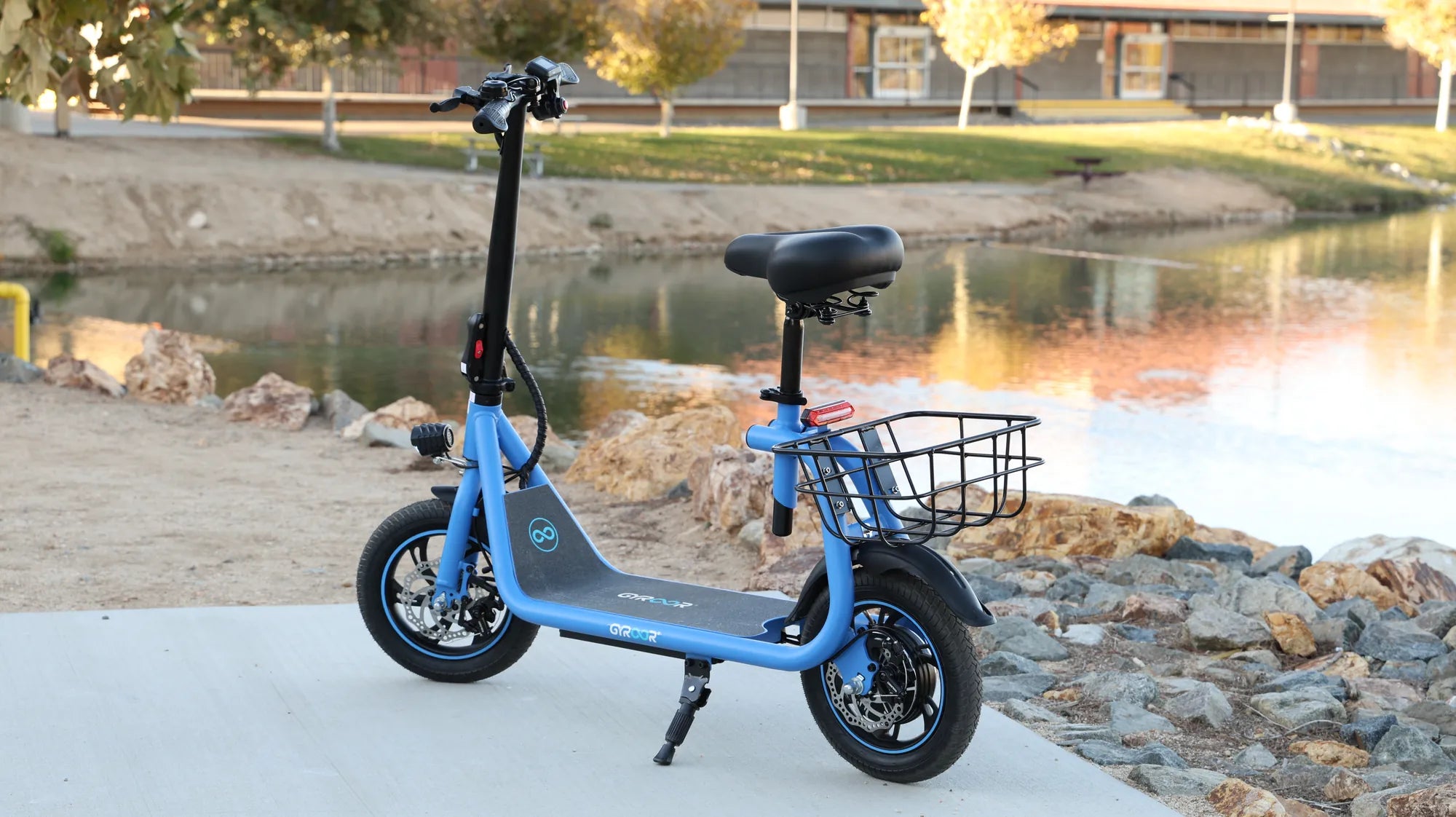
Introduction to 2-Stroke Scooter Performance
The quest for the fastest 2 stroke scooter represents a thrilling chapter in motorized personal transport. Characterized by a power-dense engine cycle that fires once per crankshaft revolution, the 2-stroke engine became synonymous with lightweight, tunable scooters that offered surprising speed from small displacements. For enthusiasts, the pursuit of velocity is a blend of mechanical artistry and raw adrenaline, often pushing these machines far beyond their original design.
Historically, brands like Vespa, Aprilia, Honda, and Yamaha built their reputations on peppy, accessible 2-stroke models. The appeal wasn't just about commuting; it was about the accessible performance platform. A stock 50cc scooter could be transformed with relative ease into a machine capable of highway speeds, creating a vibrant culture of modification and tuning. This legacy of accessible speed continues to influence rider expectations today.
From the perspective of a modern brand like Gyroor, performance must be balanced with safety, reliability, and environmental responsibility. While we celebrate the engineering spirit behind these classic machines, today's technology offers a compelling new path. High-performance electric scooters now deliver exhilarating acceleration and top speeds without the noise, fumes, and maintenance of their 2-stroke ancestors, aligning with contemporary values of clean, sustainable mobility.
This article will dissect the legends, quantify their speeds, and explore the practical realities of owning a high-strung 2-stroke. We'll then examine how the electric revolution, led by innovators focusing on UL-certified safety and robust warranties, is redefining what it means to own a fast scooter.
The Contenders: Legendary 2-Stroke Scooter Models
The pantheon of fast 2-stroke scooters is filled with iconic names from Europe and Japan. Italian marques like Vespa and Aprilia are foundational, with models like the Vespa PK 50 XL and the Aprilia SR 50 becoming legendary for their potential. These scooters often left the factory in a restricted state to comply with moped laws but were famously underpinned by engines begging to be unleashed through derestriction and tuning.
Japanese manufacturers answered with their own high-performance miniatures. The Honda NSR50 and the Yamaha TZR50 were essentially street-legal grand prix replicas, featuring liquid-cooled engines, six-speed gearboxes, and aluminum frames. With displacements hovering around 50cc to comply with strict license categories in many markets, these were arguably some of the fastest production 2 stroke scooter platforms ever sold, capable of 60-70 mph in stock form due to their race-bred DNA.
For larger displacements, the Aprilia SR 125 and 180 models, along with the Vespa PX 125 and 200, offered more grunt straight from the showroom. The air-cooled, rotary-valve engines in these Vespas, in particular, are renowned for their simplicity and torque, making them a favorite for urban riders seeking a classic look with usable power. Their top speeds could range from 55 mph for a 125cc to over 70 mph for a well-tuned 200cc.
It's crucial to understand that 'stock' figures are often a starting point. The culture surrounding these scooters was never about leaving them as-is. The true performance was unlocked in the workshop, transforming a humble runabout into a street-legal pocket rocket, which leads us directly to the art and science of modification.
The Need for Speed: Modifications and Tuning
Achieving the title of fastest 2 stroke scooter almost always involves moving beyond factory specifications. The 2-stroke engine is remarkably receptive to modifications, with each change compounding to unlock significant power gains. The first step is often derestricting the scooter, removing washers in the exhaust or variator limits imposed by manufacturers to comply with power regulations for young riders.
The most common performance upgrade is installing a big-bore kit. This involves increasing the cylinder's displacement, say from 50cc to 70cc or 80cc. A larger cylinder and piston allow more fuel-air mixture to be burned per cycle, directly increasing power and torque. This is frequently paired with an aftermarket exhaust system, or 'expansion chamber,' which is tuned to use sound waves to scavenge exhaust gases and cram fresh mixture into the cylinder, providing a massive boost in mid-range and top-end power.
Carburetor tuning or upgrading is essential to feed the hungry modified engine. A larger carburetor, coupled with precise jetting, ensures the correct fuel-air ratio. Additionally, enthusiasts often port the cylinder, which involves reshaping the intake, transfer, and exhaust ports to improve flow. This is precision work that can dramatically alter the engine's power band, making it a peakier, more aggressive machine.
Finally, transmission tuning via the CVT (Continuously Variable Transmission) is key. Changing the weights in the variator and the stiffness of the clutch springs optimizes the engagement and gear ratio for the new power curve. A fully tuned 70cc 2-stroke scooter can reliably reach speeds of 65-75 mph, with extreme builds pushing past 80 mph—a staggering figure for such a small platform.
Quantifying Speed: What Does "Fastest" Really Mean?
Declaring a single fastest 2 stroke scooter is complex due to countless variables. Rider weight, road gradient, wind conditions, and the state of tune all dramatically affect the result. A lightweight rider on a downhill stretch with a tailwind will see a higher speedometer reading than a heavier rider battling a headwind. Furthermore, the legal definition of a 'moped' or 'scooter' often caps engine size and power output, meaning the fastest machines are often in a legal gray area.
Real-world top speed is also different from theoretical speed. Factors like rolling resistance, aerodynamic drag (significant on a upright scooter), and mechanical efficiency all play a role. A modified scooter might have the power to reach 80 mph, but stability, braking capability, and rider courage become serious limiting factors at those velocities on a small-wheeled chassis not designed for them.
To provide a clear, data-driven comparison, the table below outlines realistic speed ranges for notable 2-stroke scooter categories, in both stock and modified configurations. This illustrates the performance spectrum and the dramatic impact of tuning.
| Model / Displacement | Stock Top Speed (mph) | Common Modified Top Speed (mph) | Key Modifications Required |
|---|---|---|---|
| 50cc (e.g., Aprilia SR 50) | 30-40 (restricted) | 55-70 | Derestrict, 70cc Big-Bore Kit, Exhaust, Carb |
| 50cc Sport (e.g., Yamaha TZR50) | 60-70 | 75-85+ | Exhaust, Porting, Race Carb, Transmission Tune |
| 125cc (e.g., Vespa PX 125) | 55-60 | 65-75 | Exhaust, Carburetor, Cylinder Head |
| 180-200cc (e.g., Aprilia SR 180) | 65-75 | 75-85 | Exhaust, Carburetor, Variator Tuning |
This data shows that a heavily modified 50cc sport model can rival or exceed the top speed of a larger 200cc scooter. It underscores that the pursuit of the fastest 2 stroke scooter is less about the starting point and more about the depth of modification. However, these speed gains come with significant trade-offs in daily usability and ownership costs.
The Trade-offs: Performance vs. Practicality & Emissions
The allure of a fastest 2 stroke scooter is tempered by several inherent drawbacks. First is fuel efficiency, or the lack thereof. A tuned 2-stroke engine consumes fuel and oil at a prodigious rate. Where a stock 50cc scooter might achieve 80-100 mpg, a modified one could see that number halved, making it an expensive machine to run at full throttle.
Emissions are a major environmental and social concern. The 2-stroke combustion process, where oil is mixed with fuel for lubrication, inherently releases unburned hydrocarbons and particulate matter. A tuned engine running rich mixtures is significantly dirtier. This has led to the widespread banning of new 2-stroke street vehicles in many regions, as they fail to meet modern emissions standards.
Reliability and maintenance intervals shrink dramatically with increased performance. High-strung engines experience more thermal and mechanical stress. Pistons, rings, and crankshaft bearings wear out faster. A modified scooter requires frequent tuning, part replacement, and a deep understanding of its mechanics. It becomes a hobbyist's vehicle, not a dependable daily commuter.
Finally, noise is a constant issue. A performance expansion chamber is loud, creating a high-pitched, raspy exhaust note that can be antisocial and draw unwanted attention from authorities and neighbors. When compared to the modern expectation of a clean, quiet, and reliable commuter, the high-performance 2-stroke presents a challenging proposition.
The Modern Electric Alternative: High-Speed, Low-Impact Riding
The electric revolution offers a direct answer to the performance seeker's call, without the baggage of the 2-stroke era. Modern electric scooters utilize hub motors or mid-drive systems that deliver instantaneous torque from zero RPM. This translates to breathtaking acceleration that can easily outpace a comparable 50cc or 125cc 2-stroke off the line, providing an immediate and visceral thrill.
Top speeds in the electric domain are now highly competitive. High-performance electric scooters from reputable brands are capable of sustained speeds of 25 mph, 30 mph, and even 40+ mph, matching the real-world cruising speeds of many modified 2-strokes. The power delivery is smooth, silent, and linear, controlled by advanced electronic speed controllers.
This performance is achieved with near-silent operation and zero direct emissions. Riding an electric scooter is a clean experience, with no smell of gasoline or burning oil. The efficiency is remarkable, with 'fuel' costs measured in cents per mile from a standard household outlet. This aligns perfectly with urban mobility goals and personal environmental ethics.
Furthermore, the maintenance paradigm shifts entirely. There is no engine oil to change, no carburetor to clean, no spark plug to replace, and no complex transmission to tune. The primary moving parts are the wheels, brakes, and suspension. This translates to vastly reduced running costs and downtime, making high-speed electric riding an accessible pleasure rather than a mechanical commitment.
Gyroor's Performance Philosophy: Speed with Safety and Reliability
At Gyroor, we believe exhilarating speed should never compromise safety or peace of mind. Our approach to performance is built on a foundation of robust engineering and certified components. For instance, every Gyroor scooter is powered by a UL-certified battery pack. This isn't just a marketing term; it means the battery has passed rigorous independent safety tests for electrical, mechanical, and environmental hazards, ensuring safe, stable power delivery even under the demands of high-speed riding.
Durability is engineered into the design. Our performance-oriented models feature IPX5 water-resistant construction. This means they can withstand water jets from any direction, allowing you to ride confidently in rain or through puddles without worrying about electrical failure—a critical feature for a vehicle meant for daily use. This resilience is a stark contrast to the vulnerability of a carbureted, air-cooled 2-stroke engine in wet conditions.
We back this engineering confidence with a comprehensive 1-year warranty, covering the scooter, battery, and charger. This warranty reflects our trust in the quality and reliability of our products. When you choose a Gyroor for its speed, you're also choosing a dependable transportation partner supported by a brand trusted by over 100,000 riders across North America and Europe.
Our lineup includes models that cater to the performance-minded rider, offering powerful motors, long-range batteries, and responsive braking systems. We prove that you can have the thrill of the fastest 2 stroke scooter experience—the wind in your face, the rapid acceleration, the freedom of the open path—but delivered through a clean, quiet, and reliable 21st-century machine.
Conclusion: The Evolution of Speed on Two Wheels
The legacy of the fastest 2 stroke scooter is one of ingenuity, passion, and a relentless push for more from less. It represents a hands-on era of motorcycling that many still cherish. The scream of a tuned expansion chamber and the smell of castor oil are indelible memories for a generation of riders. We respect that history and the mechanical artistry it inspired.
However, technology and societal needs evolve. Today, the demand is for speed that is accessible, sustainable, and integrated seamlessly into daily life. The high-performance electric scooter is the logical next step in this evolution. It captures the essential joy of swift, agile personal transport while eliminating the noise, pollution, and fuss associated with internal combustion, particularly the high-strung 2-stroke.
Brands leading this charge, like Gyroor, are focused on delivering that performance without compromise. By prioritizing UL-certified battery safety, IPX5 water resistance, and strong warranty support, we ensure the riding experience is focused on fun, not worry. The result is a machine that honors the spirit of the classic fast scooter while embracing the future.
If the idea of instant electric torque, quiet power, and minimal maintenance appeals to you, it's time to explore what modern engineering can do. Discover the blend of performance, safety, and reliability that defines today's riding experience. Browse the full Gyroor collection at gyroorboard.com to find your perfect high-speed electric companion.
Frequently Asked Questions (FAQ)
Q1: What is the fastest a stock 50cc 2-stroke scooter can go?
A1: It depends on the model and local restrictions. A fully derestricted, stock 50cc sport model like a Yamaha TZR50 can reach 60-70 mph. A typical restricted commuter scooter, once derestricted, might achieve 40-45 mph. True 'stock' restricted speeds are often legally capped around 30 mph.
Q2: Are 2-stroke scooters legal everywhere?
A2> No. Many countries and regions, including the entire European Union for new type-approved vehicles, have banned the sale of new 2-stroke scooters due to emissions regulations. Older models may still be registered and ridden, but riders must check local laws regarding vehicle emissions, noise, and modification legality.
Q3: How does the top speed of a high-performance electric scooter compare to a modified 2-stroke?
A3> They are increasingly comparable. High-end electric scooters can reach 40+ mph, which matches the realistic cruising speed of many moderately tuned 50-70cc 2-strokes. While extreme 2-stroke builds can go faster, the electric scooter delivers its speed silently, cleanly, and with far less maintenance and drama.
Q4: Why is a UL-certified battery important for a fast scooter?
A4> Speed demands high power output, which stresses the battery system. A UL-certified battery (like those in Gyroor scooters) has been independently tested to rigorous safety standards for fire risk, electrical shorts, and durability. This certification is a critical safeguard, ensuring the battery can handle performance demands safely, protecting both the rider and the vehicle.
Q5: What are the main maintenance differences between a fast 2-stroke and a fast electric scooter?
A5> A modified fastest 2 stroke scooter requires constant upkeep: frequent oil changes, spark plug replacements, carburetor cleaning, transmission tuning, and periodic engine rebuilds. A fast electric scooter's maintenance is primarily focused on tires, brake pads, suspension, and keeping the battery charged. There are no fluids, filters, or complex internal combustion components to service.
Single Speed Mountain Bike Sale: Your Guide to Simplicity, Skill, and Savings
Legal E-Bike Speed: The Complete Guide to Regulations & Safety