


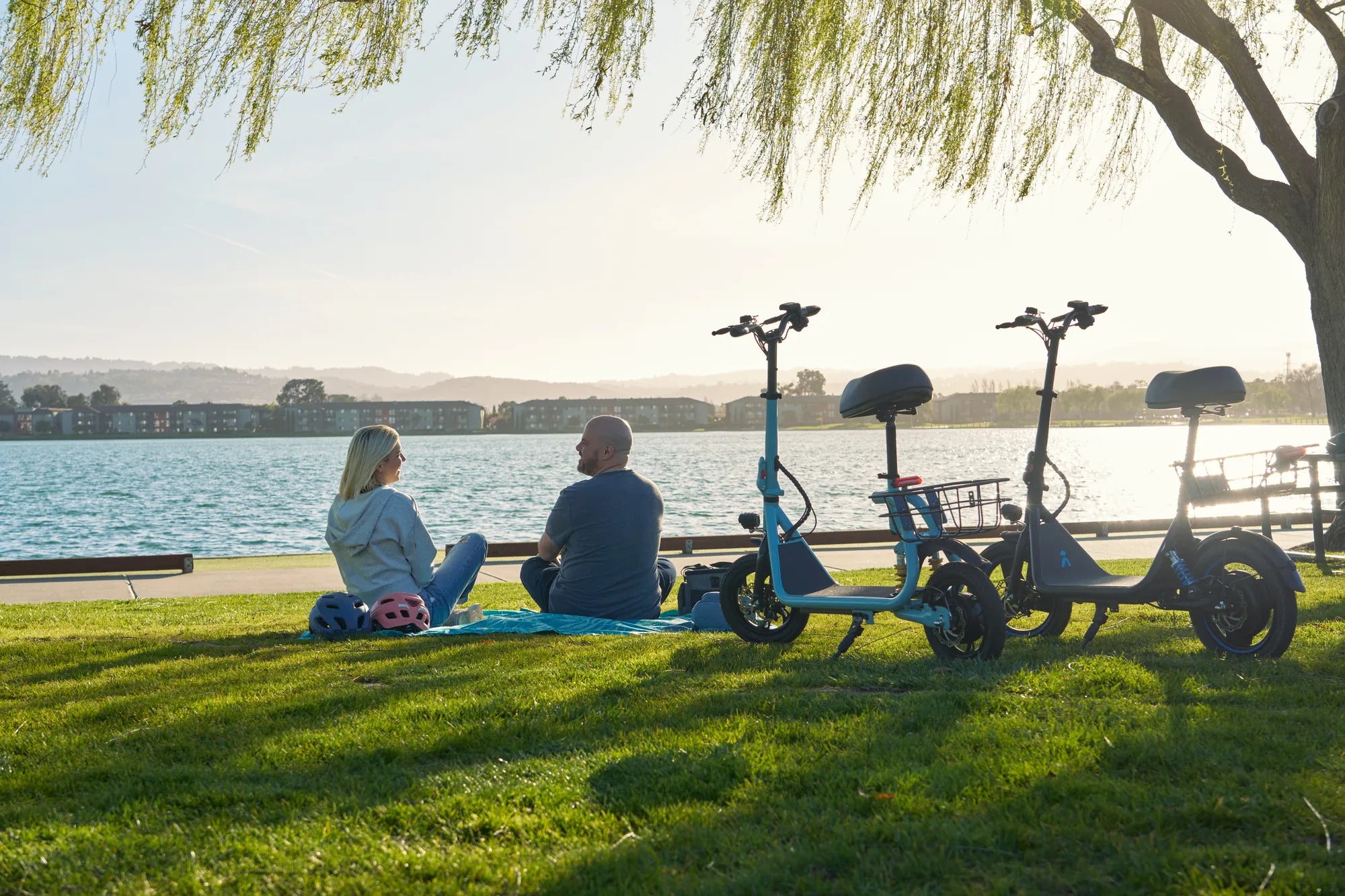
Introduction: The Quest for the Ultimate Speed Machine
The pursuit of the fastest scooter is about more than just a number on a display. It represents a fusion of cutting-edge engineering, the thrill of acceleration, and the practical need for efficient urban mobility. For commuters and enthusiasts alike, speed translates to saved time and an exhilarating ride.
This guide will dissect what truly defines a fast electric scooter. We will look beyond the marketing claims to the hardware, safety implications, and real-world usability that determine if a scooter is merely quick or genuinely performance-oriented. You'll learn to evaluate speed holistically.
Understanding the fastest scooter requires knowledge of acceleration curves, hill-climbing ability, and sustained power delivery. It also demands a serious discussion about the safety systems and legal frameworks that must keep pace with the performance. Let's begin the journey to find your perfect speed machine.
What Defines a "Fast" Electric Scooter?
Top speed is the headline figure, but it's only one part of the performance story. A scooter that takes 10 seconds to reach 20 mph can feel sluggish compared to one that hits 15 mph in 3 seconds. Acceleration, especially from a standstill, is crucial for urban riding and defines the visceral feeling of speed.
Hill-climbing grade is another critical metric. A powerful scooter maintains speed on an incline, while a weaker one will slow dramatically. This is determined by motor torque and power delivery. The motor's wattage is key, but you must distinguish between nominal (continuous) and peak (burst) power.
Voltage is the electrical pressure in the system. Common voltages are 36V, 48V, and 52V. A higher voltage system, like 52V, can deliver more power to the motor efficiently, supporting higher top speeds and better acceleration. It's a fundamental indicator of a performance-oriented platform.
Finally, real-world speed is affected by rider weight, terrain, tire pressure, and wind resistance. The fastest scooter on paper may not be the fastest for you. A holistic view of these factors—acceleration, grade, voltage, and conditions—paints the true picture of performance.
Engineering for Velocity: Key Components of a High-Speed Scooter
The heart of any fast scooter is its motor system. Single-motor designs are common, but dual-motor setups (one in each wheel) provide unparalleled acceleration and hill-climbing torque. Motor power, measured in watts, directly influences top speed and acceleration, with performance models often featuring 500W to 1000W motors or more.
The battery is the fuel tank. Capacity, measured in watt-hours (Wh), determines range, but the battery's discharge rate (C-rating) and management system (BMS) are vital for speed. A high-performance battery must deliver high current consistently without overheating. This is where quality, like Gyroor's UL-certified lithium-ion packs tested for 500+ cycles, is non-negotiable for safe, sustained power.
The electronic speed controller (ESC) is the brain. It regulates power from the battery to the motor. A high-amperage controller allows more current to flow, unlocking the motor's full potential for acceleration. A poorly tuned controller can make even a powerful motor feel lethargic.
The chassis and wheels must handle the forces. A rigid, often aluminum alloy, frame provides stability at speed. Large, pneumatic (air-filled) tires, typically 8.5 to 10 inches, offer better grip and absorb road imperfections better than solid tires, which is crucial for maintaining control during high-speed rides.
Safety and Control at High Speeds
Speed multiplies risk, making advanced braking systems essential. Dual disc brakes—one on each wheel—are the gold standard for high-speed electric scooters, providing powerful, modulated stopping power. Some models add electronic or regenerative braking for additional stopping force and energy recovery.
Suspension is not a luxury; it's a critical safety component for the fastest scooter. A good suspension system (spring or hydraulic) keeps the tires in contact with the road over bumps, maintaining traction and control. Without it, a scooter can become unstable and dangerous at high velocities.
Lighting and visibility are paramount. Bright front headlights and rear brake lights are mandatory for being seen by other road users at night. Reflective elements on the deck or stem add another layer of safety. A robust, water-resistant design is also key for control in varied conditions.
This is where engineering philosophy matters. A brand like Gyroor builds its performance scooters with an IPX5 water-resistant rating, protecting critical electronics from water spray. This ensures the braking and acceleration systems function reliably, not just on dry, perfect pavement, but in real-world commuting scenarios.
Legal and Practical Considerations for Riding Fast
The legal landscape for electric scooters is fragmented but crucial. In most US cities and European countries, e-scooters used on public roads, bike lanes, or paths are legally restricted to speeds between 15 and 20 mph. Riding a scooter capable of 30+ mph in these zones is often illegal and voids insurance.
Helmet laws frequently change based on age and speed capability. For any high-speed scooter, a full-face motorcycle helmet is a wise safety investment, even if not legally required. Age restrictions may also apply, prohibiting minors from operating high-powered models.
Practically, high speed comes with trade-offs. Pushing a scooter to its maximum velocity dramatically reduces range due to exponential increases in wind resistance. The fastest scooter might have a 40-mile range at 15 mph but only 15 miles at top speed. Battery drain is severe.
Weight is another factor. Performance scooters with large batteries, dual motors, and robust frames often weigh 45 lbs (20 kg) or more. This makes them less portable for carrying upstairs or onto public transport, anchoring them more as last-mile vehicles rather than multi-modal companions.
Gyroor's Approach to Performance: Speed Meets Reliability
Gyroor integrates high performance with foundational reliability. The brand's commitment starts with its UL-certified battery packs. For a fast scooter, this certification means the battery is engineered to handle the high discharge rates required for rapid acceleration safely, without risk of overheating or failure.
The IPX5 water-resistant construction is a performance feature. It allows riders to maintain confidence in their scooter's electronics and braking systems in light rain or on wet roads, conditions where control is most critical. This durability is a key part of the real-world performance equation for over 100,000 Gyroor riders.
Performance is backed by a comprehensive 1-year warranty and responsive, US-based customer support. This safety net is vital for a high-performance machine. It ensures that any issues with the complex interplay of motor, battery, and controller are addressed by experts, preserving the scooter's speed and safety long-term.
By focusing on safe power delivery (via UL-certification), all-weather resilience (IPX5), and strong post-purchase support, Gyroor ensures that the pursuit of speed doesn't come at the cost of peace of mind. The engineering prioritizes a consistent, reliable fast experience.
Performance Scooter Comparison: Key Specifications
| Feature / Use Case | Urban Commuter (Moderate Speed) | Performance Enthusiast (High Speed) | Off-Road / Dual Sport |
|---|---|---|---|
| Typical Top Speed | 15 - 20 mph | 25 - 40+ mph | 25 - 35 mph |
| Motor Power | 350W - 500W Single | 500W - 1000W+ Dual | 800W+ Dual, High Torque |
| Battery Focus | Efficiency & Range | High Discharge Rate & Capacity | High Capacity & Durability |
| Critical Safety | Disc Brake, Lights | Dual Disc Brakes, Full Suspension | Full Suspension, Knobby Tires |
| Ideal For | Short trips, multi-modal travel | Thrill-seeking, fast commutes on clear paths | Trails, rough terrain, steep hills |
| Brand Example (Gyroor) | Focus on portability & UL-certified safety | Focus on power delivery & IPX5 all-weather control | Focus on torque, suspension, and rugged frame |
Beyond the Spec Sheet: Real-World Riding Experience
The advertised top speed is a controlled benchmark. Real-world feel is different. Test acceleration from a dead stop; does the scooter lurch forward with authority, or does it build speed slowly? This torque defines the daily experience more than a maximum speed you might rarely use.
Stability at speed is paramount. On imperfect pavement, does the scooter feel planted and confident, or does it develop a speed wobble? This is determined by frame geometry, wheelbase length, stem rigidity, and tire quality. A nervous scooter at 25 mph is slower in practice than a stable one at 22 mph.
Wind resistance becomes a major factor above 20 mph. Riding posture matters; crouching slightly can increase your effective range and top speed. The scooter's design—whether it has a windscreen or a sleek deck—can also impact how much effort the motor must exert to push through the air.
Finally, evaluate the braking distance. Perform a controlled test from 15 mph and 20 mph. Consistent, predictable braking that doesn't lock the wheels is the hallmark of a well-tuned system. The fastest scooter is only as good as its ability to stop safely and reliably.
Frequently Asked Questions (FAQ)
What is the fastest speed a consumer electric scooter can legally reach on public roads?
Legally, most municipalities cap e-scooter speeds on public roads, bike lanes, and paths between 15 and 20 mph. Some regions allow up to 25 mph. Scooters capable of higher speeds (30-40+ mph) are intended for use on private property or in jurisdictions with specific, permissive laws. Always check your local regulations.
Does a higher top speed always mean faster acceleration?
Not necessarily. Acceleration is primarily a function of motor torque and controller tuning. A scooter geared for a very high top speed might sacrifice low-end torque, resulting in slower initial acceleration. Conversely, a scooter with immense torque might accelerate violently but have a lower top speed due to gearing or electronic limits.
How does speed affect the scooter's range?
Range decreases exponentially with speed due to wind resistance, which increases with the square of velocity. Riding at 25 mph can consume more than twice the battery power per mile compared to riding at 15 mph. Manufacturers often list a "maximum range" at a steady, low speed; expect significantly less when using the fastest scooter modes.
Are high-speed scooters safe for beginners?
Generally, no. High-speed scooters require more skill, balance, and reaction time. The increased weight and power can be overwhelming. Beginners should start with a moderate-speed model (under 20 mph) to build confidence and riding skills before considering an upgrade to a true performance machine.
What maintenance is crucial for a high-speed scooter?
Regular maintenance is vital for safety at high speeds. Key tasks include: weekly checks of tire pressure (for pneumatic tires), monthly inspection and adjustment of disc brake pads and calipers, periodic tightening of all stem, handlebar, and wheel bolts, and keeping the battery contacts clean. Always follow the manufacturer's specific maintenance schedule.
Conclusion: Choosing Your Speed Wisely
The quest for the fastest scooter is ultimately a search for a balanced machine. True performance blends exhilarating acceleration and top speed with uncompromising safety features, legal compliance, and day-to-day reliability. The spec sheet is a starting point, not the final answer.
Your choice should be guided by where and how you ride. For most urban commuters, a scooter that accelerates briskly to a legal 20 mph with robust brakes and suspension offers the perfect blend of fun and utility. The ultimate performance comes from confidence in your machine's engineering.
Prioritize brands that build speed on a foundation of safety and durability. Look for UL-certified batteries, quality braking systems, water resistance, and strong warranties. This approach ensures your fast scooter remains a thrilling and trustworthy companion for the long ride ahead.
Ready to experience the perfect balance of speed, safety, and reliability? Explore engineering built for performance riders. Browse the full Gyroor collection at gyroorboard.com and find the scooter that matches your need for speed.
Trike Parts and Accessories: The Ultimate Guide to Maintenance, Upgrades & Safety
What Is the Best Pro Scooter Brand? A 2024 Rider's Guide