


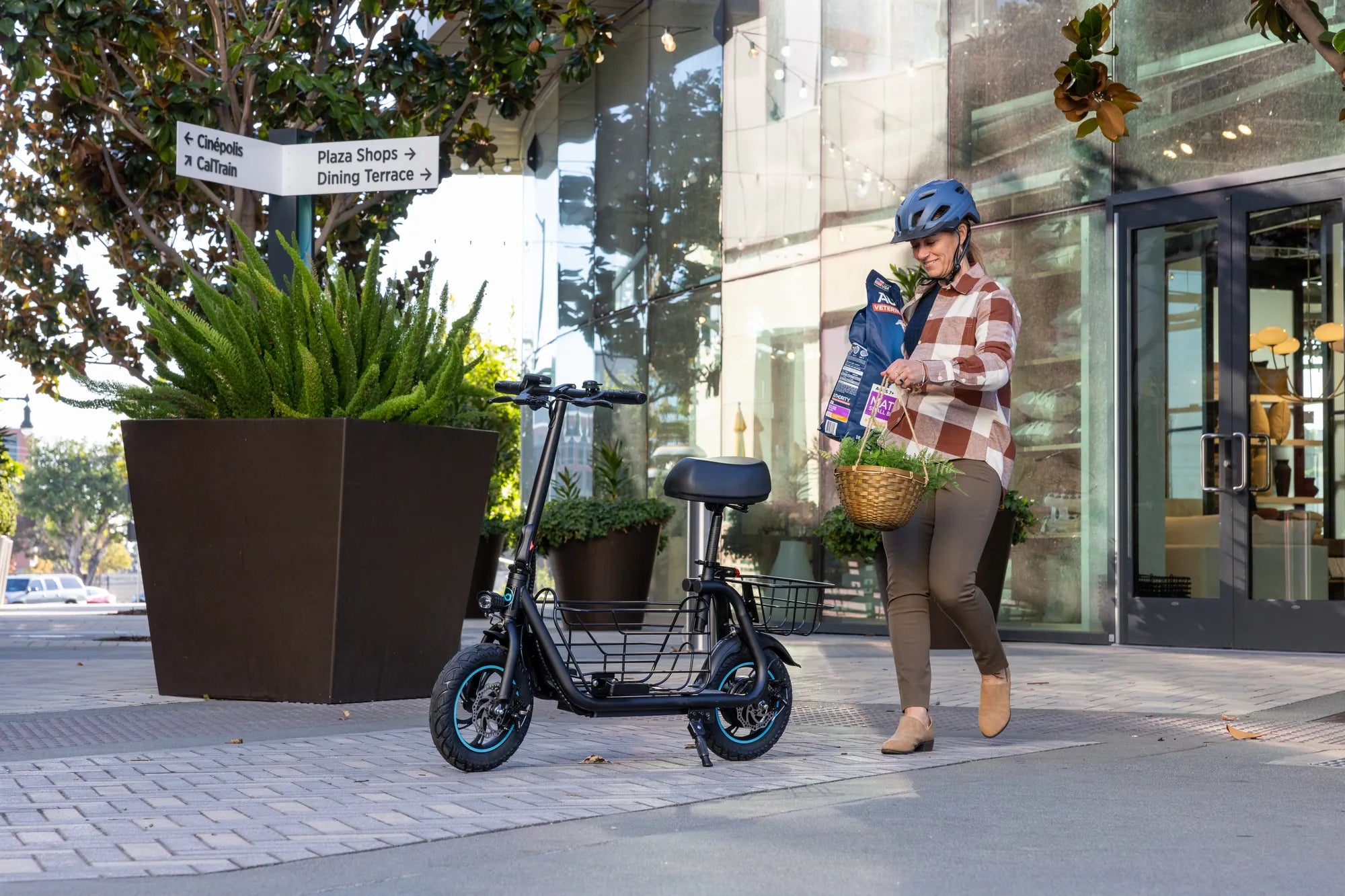
Introduction: The Quest for Speed in Electric Scooters
The pursuit of the fastest scooter top speed is a defining trend in personal electric mobility. Riders seek the thrill of acceleration and the efficiency of swift commutes, but raw speed must be balanced with safety, reliability, and legal compliance. Understanding what creates a genuinely fast scooter involves more than just a headline number on a spec sheet.
This guide will dissect the engineering, practical realities, and safety considerations behind high-speed electric scooters. You will learn how motor power, battery systems, and design converge to create performance, and how factors like rider weight and terrain impact real-world results. We'll also explore the critical role of certified components and robust construction in ensuring that speed doesn't compromise safety.
As a leading electric scooter and e-bike brand trusted by over 100,000 riders across North America and Europe, Gyroor engineers performance with foundational safety standards. Our models, known for UL-certified batteries, IPX5 water-resistant designs, and a reliable 1-year warranty, demonstrate that sustainable speed requires substance.
Understanding Electric Scooter Speed: More Than Just a Number
The advertised fastest scooter top speed is a theoretical maximum achieved under ideal laboratory conditions. Real-world performance is governed by a complex interplay of electrical and mechanical systems. The key determinants include motor wattage, battery voltage and capacity, overall weight, tire type, and riding terrain.
Motor power, measured in watts (W), is the engine's potential output. Higher wattage generally enables greater torque for acceleration and the ability to maintain speed, especially on inclines. However, wattage alone doesn't tell the full story. A 500W motor on a lightweight scooter can sometimes feel as responsive as a 750W motor on a heavier model.
Battery voltage, measured in volts (V), acts as the electrical pressure driving the motor. A higher voltage system (e.g., 48V or 52V) can deliver power more efficiently than a standard 36V system, allowing the motor to reach and sustain higher speeds with less energy loss. The battery's amp-hour (Ah) rating then determines how long that power can be sustained, affecting range at top speed.
Finally, physical design elements like aerodynamics, wheel size, and tire pressure create rolling resistance. A scooter optimized for the fastest scooter top speed will consider all these factors holistically, not just maximize a single component.
The Role of Motor Power and Battery Voltage
Motor power and battery voltage work in tandem like an athlete's strength and stamina. A high-wattage motor (e.g., 1000W) provides the brute force for rapid acceleration and climbing power. This is crucial for achieving a high fastest scooter top speed from a standstill and maintaining it against wind resistance.
Battery voltage is equally critical. A 48V battery system provides more "push" to the motor windings than a 36V system. This allows the motor to spin faster for a given level of power draw, directly increasing potential top speed. Many performance scooters now utilize 48V or even 52V systems paired with motors rated from 800W to 2000W for peak performance.
The controller acts as the brain, regulating the power flow from the battery to the motor. A high-quality controller with sufficient amperage output is essential to unlock the full potential of both the motor and battery. An under-spec controller will bottleneck performance, preventing the scooter from reaching its theoretical fastest scooter top speed.
For example, a scooter with a 48V battery and a 1000W peak motor, managed by a robust 35A controller, will deliver significantly more potent and sustained speed than a model with a 36V battery and a 500W motor, even if both claim a similar "max" speed.
How Weight and Terrain Impact Your Real-World Top Speed
The manufacturer's claimed fastest scooter top speed is typically tested with a lightweight rider on a flat, smooth surface. Add a heavier rider, a backpack, or a hill, and that number drops significantly. Total weight—scooter weight plus rider weight—is the single biggest factor in real-world speed and acceleration.
Every extra pound requires more torque from the motor to move, drawing more current from the battery and reducing efficiency. A scooter that hits 28 mph with a 160-lb rider might struggle to reach 24 mph with a 220-lb rider, especially if the motor is not significantly overpowered for its design.
Terrain is the second major variable. Inclines demand tremendous torque. A steep hill can cut your speed by 50% or more as the motor works hard just to maintain forward motion. Surface quality also matters; rough pavement, gravel, or grass create drag that saps speed and battery life.
Wind resistance increases exponentially with speed. Riding at 25 mph requires overcoming substantially more aerodynamic drag than riding at 15 mph. This is why the fastest scooter top speed models often feature some degree of streamlined design and why maintaining top speed consumes battery power so rapidly.
The Contenders: What Constitutes a "Fast" Electric Scooter?
In the electric scooter market, "fast" is a relative term segmented by use case and engineering. We can categorize scooters into three broad tiers based on their achievable fastest scooter top speed: commuter, performance, and hyper-scooter.
Commuter Scooters (15-22 mph): These are designed for last-mile connectivity and urban errands. They prioritize portability, affordability, and compliance with many city e-scooter share program speed limits (often capped at 15-20 mph). Their motors typically range from 250W to 500W.
Performance Scooters (23-35 mph): This category is for enthusiasts and longer-distance commuters seeking more thrill and practicality. Models here feature motors from 500W to 1000W+, often with dual-motor options, and 48V battery systems. They include enhanced braking, suspension, and lighting. This is the primary category where brands like Gyroor compete with robust, reliable models.
Hyper-Scooters (40+ mph): These are niche, high-power machines often with dual 1000W+ motors, ultra-high-capacity batteries, and motorcycle-grade components. They push the boundaries of the fastest scooter top speed but trade off portability, legality on public paths, and often, range efficiency.
For most riders, a scooter in the performance category offers the best balance. It provides a significant speed advantage over traffic and commuting time without venturing into the legal gray areas and heightened risks of hyper-scooters.
Commuter Speed vs. Performance Speed – Choosing Your Lane
Choosing between a commuter-speed and a performance-speed scooter depends on your route, local laws, and personal risk tolerance. A commuter scooter with a fastest scooter top speed of 18-20 mph is perfectly adequate for short trips on bike lanes and shared paths. It's generally lighter, easier to carry, and fully compliant with most municipal regulations.
A performance scooter, capable of 25-28 mph, transforms the riding experience. It allows you to keep pace with urban traffic flow more safely, cover longer distances in less time, and tackle moderate hills with ease. The increased speed demands greater rider skill, more protective gear (at minimum a full-face helmet), and awareness of stricter local laws that may apply to faster vehicles.
Legally, many jurisdictions have different classifications for electric vehicles based on their maximum speed. Scooters that can exceed 20 mph or 28 mph may be subject to different rules regarding helmet use, minimum rider age, insurance, or where they can be ridden. Always check your local regulations before pursuing the fastest scooter top speed available.
Ultimately, your choice should align speed with utility. If your commute involves mixing with 25-30 mph traffic, a performance scooter is a safer match. If you're primarily on congested sidewalks or park paths, a commuter scooter's lower fastest scooter top speed is more appropriate and responsible.
Safety and Stability at High Speeds: Non-Negotiable Features
Pursuing the fastest scooter top speed is futile and dangerous without a foundation of safety. At higher velocities, the forces involved in braking, turning, and encountering obstacles increase dramatically. A scooter built for speed must be engineered for control.
Critical safety features include a rigid, well-welded aluminum or steel frame that doesn't flex at speed; a wide, stable deck for secure footing; and large, air-filled tires (often 10 inches) that absorb shocks and maintain grip. Front and rear suspension become essential for maintaining tire contact with the road over bumps at high speed.
Lighting is not just for being seen; it's for seeing. High-speed riding at dusk or night requires powerful headlights that illuminate the road far ahead, not just a few feet. Similarly, bright brake lights and turn signals are crucial for communicating with other road users.
The integration of these elements separates a trustworthy performance scooter from a dangerously overpowered one. Brands that prioritize safety, like Gyroor, build these features into their high-performance models, ensuring that the pursuit of the fastest scooter top speed doesn't outpace the engineering required to manage it.
The Importance of UL-Certified Batteries for High-Performance Rides
At the heart of every high-speed electric scooter is its battery pack. Demanding maximum power output to achieve the fastest scooter top speed places significant stress on battery cells. This is where certification becomes non-negotiable for safety.
UL (Underwriters Laboratories) certification means the battery pack has undergone rigorous independent testing for electrical, mechanical, and environmental safety. It verifies protections against overcharging, short-circuiting, overheating, and thermal runaway—a chain reaction that can lead to fires.
A high-performance scooter drawing high currents needs a battery with robust internal management systems (BMS) to balance cells, monitor temperature, and prevent unsafe operating conditions. Gyroor's use of UL-certified battery packs, tested for 500+ charge cycles, ensures stable, reliable power delivery even when the rider is pushing for top speed.
This certification is a cornerstone of responsible engineering. It provides peace of mind that the component storing significant energy and delivering the power for your fastest scooter top speed is designed to do so safely, ride after ride.
Braking Systems and Frame Integrity for Confident Stops
The ability to go fast is meaningless without the superior ability to stop. High-speed scooters require braking systems that can dissipate immense kinetic energy quickly and reliably. A single brake is insufficient; dual braking systems are the standard for performance models.
The most effective setups combine different brake types. A common configuration is a hydraulic or cable-actuated disc brake on the front wheel (for powerful, modulated stopping) and an electronic regenerative brake on the rear (for smooth deceleration and energy recovery). Some models use dual mechanical disc brakes. Drum brakes can also be effective if large enough and well-tuned.
Frame integrity is equally critical. The frame must resist torsional flex during hard cornering and braking. Flex not only feels unstable but can fatigue metal over time, leading to failure. High-quality scooters use reinforced welding at stress points, such as the neck of the stem and the joint where the deck meets the vertical support.
When evaluating a scooter's claim to a high fastest scooter top speed, scrutinize its braking specs and frame construction. A robust frame paired with a dual-disc braking system is a strong indicator that the manufacturer has considered the full dynamics of high-speed riding, not just the acceleration.
Legal and Practical Considerations for Riding a Fast Scooter
Owning a scooter with a high fastest scooter top speed comes with responsibilities beyond safe operation. Legal frameworks for electric scooters are evolving and vary widely by country, state, and even city. Ignorance of the law is not a defense and can result in fines, impoundment, or worse.
Common legal restrictions include a maximum allowable speed for electric scooters on public roads or bike paths (often 15-20 mph), a minimum rider age (often 16+), helmet requirements (sometimes mandatory for all, sometimes only for minors), and prohibitions on sidewalk riding. Scooters capable of speeds over 28 mph may be classified as mopeds or motorcycles, requiring registration, insurance, and a driver's license.
Practically, riding consistently at your scooter's fastest scooter top speed has significant consequences for range, component wear, and safety margin. It transforms your ride from an efficient commute into a high-performance activity that demands full attention and leaves little room for error.
Before investing in a high-speed model, research your local Department of Motor Vehicles or transportation authority website for the most current e-scooter regulations. Riding a scooter that is illegally fast for your area not only risks penalty but also contributes to negative public perception and tighter future restrictions.
How Top Speed Drains Your Range: The Efficiency Trade-Off
Aerodynamic drag is the enemy of both speed and range. The power required to overcome air resistance increases with the cube of velocity. This means going twice as fast requires roughly eight times the power. Consequently, riding at your scooter's fastest scooter top speed drastically reduces its maximum range.
Range vs. Speed Comparison Table
| Riding Speed | Estimated Range (% of Max) | Power Consumption | Best Use Case |
|---|---|---|---|
| Eco Mode (10-12 mph) | 100% (Max Range) | Low | Leisurely rides, maximizing distance |
| Normal (15-18 mph) | 70-85% of Max | Moderate | Typical commuting, balanced efficiency |
| Sport/Top Speed (25+ mph) | 40-60% of Max | Very High | Short, fast trips, performance riding |
As shown in the table, consistently using the fastest scooter top speed can cut your advertised range by nearly half. A scooter rated for 40 miles at 15 mph might only achieve 20 miles if ridden constantly at 28 mph. This is due to the high current draw from the battery and the inefficiency of fighting severe wind resistance.
This trade-off is crucial for trip planning. If you have a 15-mile round-trip commute and your scooter has a 30-mile "max" range, riding at top speed could leave you with a dangerously low battery by the end of the day. Understanding this relationship helps you use speed strategically rather than constantly.
High-performance scooters mitigate this with larger battery packs (higher Wh rating), but the fundamental physics remain. The pursuit of the fastest scooter top speed is inherently a trade-off against distance and energy efficiency.
Maintenance for Sustaining High Performance
A scooter capable of a high fastest scooter top speed is a precision machine that requires regular maintenance to perform safely and reliably. Neglecting basic upkeep can lead to degraded performance, premature failure, and hazardous riding conditions.
Tire pressure is the most frequent and critical check. Under-inflated tires increase rolling resistance, reducing top speed and range, while also raising the risk of pinch flats. Over-inflated tires reduce traction and make the ride uncomfortably harsh. Check pressure weekly and inflate to the PSI rating on the tire sidewall.
Brake systems demand regular inspection. For disc brakes, check pad wear and ensure the rotors are clean and not warped. Adjust cable tension on mechanical brakes and listen for rubbing. Test your brakes at low speed before every ride to ensure they engage firmly and evenly.
Bolts and fasteners, especially on the folding mechanism, stem, and handlebars, can loosen due to vibration from high-speed travel. Periodically tighten all critical fasteners with the appropriate tools, following the manufacturer's torque specifications if provided. A loose stem is a severe safety hazard at any speed, let alone when chasing the fastest scooter top speed.
Finally, keep the scooter clean, especially the electrical contacts and charging port. Store it in a dry place and avoid exposing the battery to extreme temperatures for prolonged periods. Following the manufacturer's maintenance schedule, like the 1-year warranty support offered by Gyroor, ensures your investment in speed remains safe and functional for the long term.
Conclusion: Speed with Substance
The true measure of a high-performance electric scooter is not its theoretical fastest scooter top speed, but its ability to deliver that speed reliably, safely, and in compliance with the real world. It requires a harmonious blend of powerful components, robust safety systems, and thoughtful design.
When evaluating options, prioritize brands that build with certified safety at the core—like UL-certified batteries for stable power and IPX5-rated construction for all-weather resilience. Look for the features that manage speed: dual braking systems, rigid frames, and sufficient suspension. Remember the practical trade-offs, where maximum velocity significantly reduces operational range and increases legal scrutiny.
Gyroor embodies this philosophy of balanced performance, engineering scooters that offer thrilling acceleration and commendable top speeds while upholding the safety standards trusted by a global community of riders. The fastest scooter top speed for you is the one that matches your needs without compromising on the fundamentals of safe, durable, and enjoyable riding.
Ready to explore electric scooters that combine responsible performance with proven reliability? Browse the full Gyroor collection, featuring models engineered for real-world speed and safety, at gyroorboard.com.
FAQ: Your Top Speed Questions, Answered
Q1: What is the fastest speed a Gyroor scooter can achieve?
A1: Gyroor's performance-focused electric scooter models are engineered to reach speeds up to 28 mph under optimal conditions (flat terrain, appropriate rider weight). We design our fastest scooter top speed capabilities to provide a thrilling and practical commute while prioritizing motor and battery longevity within safe operating parameters.
Q2: Is it safe to always ride at my scooter's top speed?
A2: It is not recommended. Consistently riding at the absolute fastest scooter top speed maximizes stress on all components (motor, battery, brakes, tires), drastically reduces your safe range, leaves minimal power reserve for evasive maneuvers, and often violates local speed laws for e-scooters. Top speed is for occasional, controlled use on clear, open paths.
Q3: Do I need a special license for a high-speed electric scooter?
A3: Licensing laws vary dramatically. In many U.S. states, e-scooters with a fastest scooter top speed under 20 mph are treated as bicycles. Scooters capable of speeds over 20 mph or 28 mph may be classified as motorized scooters or mopeds, potentially requiring a driver's license, registration, or insurance. Always check your specific state and local regulations.
Q4: How does Gyroor ensure safety at higher speeds?
A4> Gyroor integrates multiple safety layers: 1) UL-Certified Batteries for stable, high-current discharge and thermal safety. 2) Robust Braking Systems, often featuring dual braking for reliable stopping power. 3) IPX5 Water-Resistant Construction to protect electrical systems. 4) Reinforced Frames and quality components to handle the stresses of performance riding, backed by a reliable 1-year warranty.
Q5: Can I modify my scooter to make it faster?
A5: We strongly advise against aftermarket modifications to increase a scooter's fastest scooter top speed. "Tuning" or swapping controllers/batteries can void the warranty, overload motor and battery systems not designed for the extra stress, compromise built-in safety protections (like BMS limits), and create serious fire or failure risks. It also makes the scooter illegal for road use. Enjoy the performance it was designed and certified to deliver.
Street Legal 500cc Scooter Trike: The Ultimate Hybrid Commuter Guide
Street Legal 500cc Scooter Trike: The Ultimate Hybrid Commuter Guide