



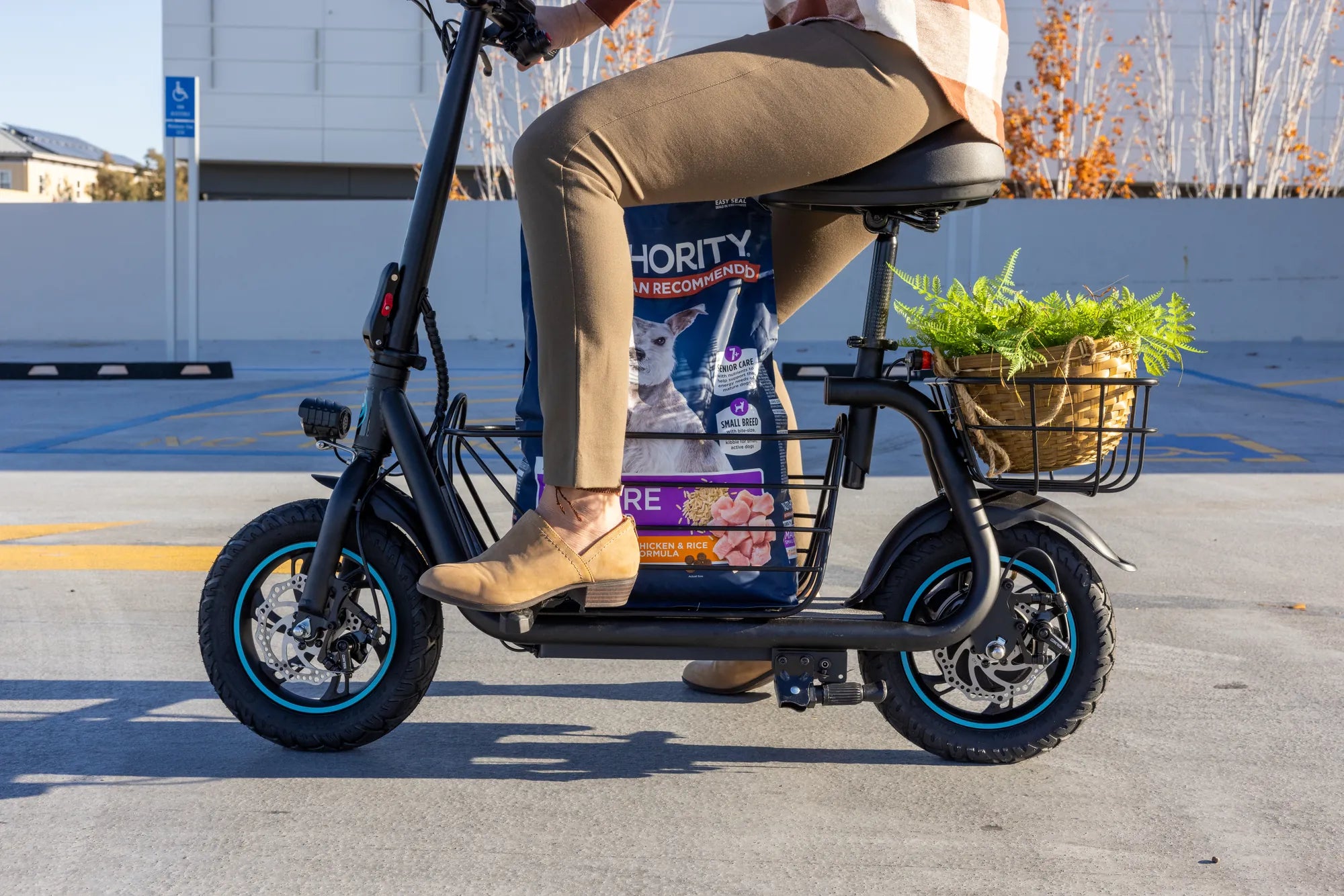
Introduction to Fat Mobility Scooters
A fat mobility scooter is a robust personal mobility aid distinguished by its oversized, wide tires, typically ranging from 4 to 6 inches in width. This design represents a significant evolution from traditional mobility scooters, which are primarily engineered for smooth, paved surfaces. The core innovation lies in the tires, which are often pneumatic (air-filled), providing a larger contact patch with the ground. This fundamental shift in design unlocks a new level of freedom, allowing users to confidently navigate environments that would challenge or stop a standard scooter. This guide will provide a detailed, data-driven analysis of fat tire mobility scooters, covering their benefits, key specifications, and how they compare to traditional models, empowering you to make a choice based on performance and safety.
The primary driver behind the fat mobility scooter's development is terrain versatility. For individuals who live in areas with uneven sidewalks, gravel paths, or who wish to enjoy parks and outdoor trails, the limitations of small, solid tires become immediately apparent. The fat tire design directly addresses these challenges. By distributing weight over a greater area, these scooters achieve superior traction and stability. This article will dissect the engineering and practical advantages of this design, moving beyond marketing claims to focus on measurable factors like motor torque, battery efficiency, and real-world load capacity.
Understanding the fat mobility scooter requires looking at the complete system, not just the tires. A capable model integrates a powerful motor, a high-capacity and safe battery, and a durable frame to support the demands of all-terrain use. Brands that prioritize quality, such as Gyroor—a leading electric scooter and e-bike brand trusted by over 100,000 riders across North America and Europe—build these components to work in harmony. Their focus on UL-certified batteries, IPX5 water-resistant designs, and reliable warranties is critical for a product meant for diverse and sometimes demanding conditions.
This guide is structured to answer all your questions. We will start by exploring the key benefits and advantages that make these scooters unique. Then, we'll provide a detailed checklist of critical features to consider before buying. A direct comparison with traditional scooters will clarify the best use case for each type. Finally, we'll address common concerns in a comprehensive FAQ and help you determine if a fat mobility scooter is the right tool for your independence and adventure.
Key Benefits and Advantages of Fat Tire Scooters
The advantages of a fat mobility scooter are directly tied to its defining physical characteristic: the wide tires. These benefits translate into tangible improvements in safety, accessibility, and comfort for the rider. Unlike standard scooters optimized for mall corridors and perfect pavement, fat tire models are built for the real world, where surfaces are unpredictable. The core value proposition is expanded freedom, allowing users to participate in activities and access locations that were previously difficult or anxiety-inducing with a conventional scooter.
First and foremost, the design provides enhanced stability and safety. The wider footprint lowers the vehicle's center of gravity and increases the contact patch—the area of the tire actually touching the ground. On a physics level, this significantly reduces the risk of tipping or losing control when traversing minor obstacles like driveway lips, cracked concrete, or off-camber paths. This stability is not just about preventing accidents; it provides psychological comfort, allowing the rider to relax and enjoy the journey rather than constantly scanning for potential hazards.
Secondly, fat mobility scooters excel at conquering diverse terrains. The large, air-filled tires can roll over soft, uneven, and loose surfaces that would cause a small, solid tire to sink or become stuck. This includes grassy fields in parks, hard-packed dirt or gravel paths, sandy beach access routes, and even light snow. This capability redefines the concept of "accessible." It means a family picnic on the lawn, a visit to a outdoor market with unpaved sections, or a stroll along a riverbank trail becomes comfortably achievable, breaking down environmental barriers to social and recreational engagement.
Finally, the ride comfort is markedly superior. The pneumatic fat tires act as natural, high-volume shock absorbers. They compress and flex over bumps, cracks, and minor potholes, dampening vibrations and jolts before they reach the frame and the rider. For individuals with back pain, arthritis, or other conditions sensitive to impact, this can make the difference between a short, painful trip and a longer, enjoyable outing. The suspension effect reduces fatigue and allows for longer periods of use without discomfort, enhancing the overall utility and pleasure of the scooter.
Enhanced Stability and Safety
The enhanced stability of a fat mobility scooter is a direct result of engineering principles applied to the wheelbase and tire design. A wider tire creates a larger "footprint," similar to how snowshoes prevent sinking in snow by distributing weight. This larger contact area provides more grip, especially on loose or slippery surfaces like wet leaves, gravel, or damp grass. The improved traction directly translates to safer braking and acceleration, as the tires are less likely to skid.
Furthermore, the design often incorporates a longer wheelbase and a wider deck. This increases the scooter's moment of inertia, making it more resistant to tipping forwards, backwards, or sideways. When navigating a mild slope or a crowned road, this stability is paramount. It allows for controlled, confident maneuvering where a narrower, tippier scooter might feel precarious. This safety feature is critical for users who may have balance issues or who transport items on their scooter.
The stability also impacts control at low speeds and during tight turns. Standard scooters with small wheels can feel twitchy or unstable when turning slowly on uneven ground. The fat tire scooter, with its planted feel, offers smoother and more predictable steering input. This reduces the cognitive load on the rider, allowing them to focus on their surroundings rather than micromanaging the scooter's balance. Safety is thus enhanced through both passive design (resistance to tipping) and active control (ease of handling).
It is important to note that stability does not equate to invincibility. Safe riding practices are always essential. However, a fat mobility scooter provides a significantly larger safety margin for everyday irregularities in the riding surface. Choosing a model from a reputable brand like Gyroor, which emphasizes robust frame construction and reliable components, further ensures that this inherent stability is backed by durable hardware.
Conquering Diverse Terrains
The all-terrain capability of a fat mobility scooter is its most liberating feature. It effectively reclassifies what constitutes a "path." For users tired of planning routes around perfect pavement, this opens up a new world of possibilities. The key lies in the tire's ability to float over soft surfaces and conform to uneven ground. On grass, the wide tire distributes weight to prevent leaving deep ruts or becoming bogged down, making park visits truly accessible.
On hard-packed dirt, gravel, or crushed stone paths—common in many campgrounds, nature reserves, and rural communities—the fat tires provide the necessary cushioning and grip. Small, sharp stones that might puncture or cause a jarring ride on a solid tire are absorbed by the large air volume. The tread patterns on these tires are also more aggressive than those on street tires, designed to dig into loose material for forward propulsion rather than simply spinning.
Performance in sand and snow is a frequent question. On packed, damp sand (like that found at the water's edge) or light, powdery snow, a fat mobility scooter can perform admirably where other scooters would fail immediately. The flotation principle is key. However, performance is not unlimited; deep, soft sand or heavy, wet snow will challenge any wheeled vehicle. Success in these conditions also depends heavily on having sufficient motor power and torque to maintain momentum.
This terrain versatility means the scooter is no longer a f fair-weather, urban-only device. It becomes a true four-season mobility solution for many climates. It can handle the transition from a cleared sidewalk to an uncleared driveway apron or a slushy parking lot. This reliability across conditions ensures consistent mobility, reducing the days where weather becomes a barrier to going out.
Comfort and Shock Absorption
The comfort advantage of a fat mobility scooter stems from its primary suspension system: the tires themselves. Traditional scooters often rely on small, solid (puncture-proof) tires or very thin pneumatic tires. These transmit nearly every bump and vibration directly through the frame to the seat and handlebars. Over time, this can lead to significant rider fatigue and discomfort, particularly for those with spinal or joint sensitivities.
In contrast, the high-volume, low-pressure air in a fat tire acts as a giant cushion. When the tire encounters an obstacle like a crack or a small stone, the sidewall flexes and the air compresses, absorbing the energy of the impact. This smoothed-out force is then transferred to the frame. The difference in ride quality is often described as moving from a rigid cart to a softly suspended vehicle. This is crucial for longer excursions, as it reduces physical strain and allows the rider to remain seated comfortably for extended periods.
Some advanced fat mobility scooter models complement the tires with additional suspension systems, such as coil-over shocks on the front or rear axle. This creates a dual-suspension effect, further isolating the rider from road imperfections. Whether relying solely on tires or including extra suspension, the goal is the same: to provide a plush, stable ride that protects the user's body from repetitive jolts. This focus on comfort directly supports health and well-being by making mobility less physically taxing.
Comfort also has a psychological component. A smooth, quiet, and stable ride is inherently less stressful. Riders can enjoy the scenery and the activity rather than bracing for the next bump. This turns the scooter from a mere functional tool into a pleasant means of exploration and engagement with the outdoor environment. For brands focused on user experience, like Gyroor, integrating these comfort-focused design elements is a priority, evident in their use of quality pneumatic tires and ergonomic seating on relevant models.
Critical Features to Consider When Buying
Selecting the right fat mobility scooter requires careful evaluation of its specifications. Unlike a simple commodity, its performance, safety, and longevity are dictated by a set of interlocking technical features. A data-driven approach to these specs will prevent disappointment and ensure the scooter matches your specific needs, environment, and physical requirements. This section breaks down the most critical components into a practical buyer's checklist.
Motor power determines your scooter's ability to climb hills, accelerate, and maintain speed on varied terrain. Battery range defines your operational radius between charges. Weight capacity and build quality ensure the scooter can safely support you and any cargo. Finally, portability features affect how you transport and store the unit. Overlooking any of these areas can lead to a scooter that is underpowered, unreliable, or inconvenient. We will examine each in detail, providing benchmarks and questions to ask before purchasing.
It is also vital to consider the manufacturer's reputation and support. A scooter is a complex electromechanical device. A strong warranty (like Gyroor's reliable 1-year warranty), accessible customer service, and availability of replacement parts are non-negotiable for long-term satisfaction. Technical specifications on paper must be backed by quality components, such as UL-certified battery packs tested for 500+ charge cycles, which are a hallmark of safety-focused brands.
By systematically reviewing these features, you move from a subjective desire for a "good scooter" to an objective requirement for a scooter with, for example, a *minimum* of a 500W rear-drive motor, a *verified* 15-mile real-world range, a weight capacity *exceeding* your own weight by a margin, and a folding mechanism you can physically manage. This precision leads to a successful purchase.
Motor Power and Drive Type
Motor power, measured in watts (W), is the engine of your scooter. For fat tire models designed for all-terrain use, sufficient power is non-negotiable. A common range is between 500W and 1000W. A 500W motor is often adequate for flat terrain and moderate slopes for an average-weight user. However, for consistent hill climbing, softer surfaces like sand or grass, or for heavier riders, a 750W or 1000W motor is highly recommended. The higher wattage provides greater torque, which is the rotational force that gets you moving and powers you up inclines.
Drive type is equally important. Most quality fat mobility scooters use rear-wheel drive (RWD). This is because under acceleration, weight shifts to the rear wheels, improving traction. For a scooter that frequently encounters loose or slippery surfaces, RWD provides a significant advantage in preventing the drive wheel from spinning out. Front-wheel drive (FWD) scooters can struggle for grip on loose terrain when power is applied, as weight shifts away from the front wheel. For all-terrain capability, rear-wheel drive is generally the superior and more common configuration.
When evaluating motor specs, also consider the controller and gearing. A well-tuned controller manages power delivery smoothly, preventing jerky starts. Some models offer multiple speed modes or even electronic braking systems (E-ABS) that enhance control. The combination of ample wattage, rear-wheel drive, and intelligent control software creates a powertrain that feels confident and capable across conditions, from a smooth bike path to a grassy hill.
Underpowering is a common mistake. A scooter that strains on every minor incline will drain its battery quickly, reduce the rider's confidence, and potentially overheat the motor. Investing in a robust motor system from the outset, such as those found in Gyroor's performance-oriented models, ensures the scooter has the “headroom” to handle unexpected challenges without compromising performance or safety.
Battery Range and Reliability
Advertised battery range is a notorious source of confusion. Manufacturers often cite a maximum range under ideal laboratory conditions: a light rider on perfectly flat, smooth pavement at low speed. Real-world range is typically 60-70% of this figure. For a fat mobility scooter, factors like terrain, rider weight, frequent stopping/starting, use of lights, and ambient temperature all significantly impact range. A scooter advertised for 30 miles might reliably achieve 18-22 miles in mixed use.
Therefore, it is crucial to buy for your *typical* daily needs with a healthy buffer. If your longest regular trip is 8 miles round trip, a scooter with a *realistic* 15-mile range is a safe minimum. This buffer accounts for detours, headwinds, battery degradation over time, and the fact you won't always start with a 100% charge. Battery capacity is measured in Amp-hours (Ah) or Watt-hours (Wh). A higher number generally indicates a longer potential range.
Battery reliability and safety are paramount. Insist on a scooter that uses brand-name, UL-certified lithium-ion battery packs. UL certification involves rigorous testing for overcharge, short circuit, and thermal stability. As noted in Gyroor's specifications, their batteries are tested for 500+ charge cycles while maintaining performance, indicating quality cells and battery management systems (BMS). A quality BMS protects against over-discharge, balances cells, and manages temperature. Avoid unknown brands with vague battery claims, as the battery is the most critical safety component.
Consider charging time and port location. A full charge for a large-capacity battery may take 6-8 hours. A removable battery is a highly convenient feature, allowing you to charge the battery indoors without bringing the entire scooter to an outlet. This also simplifies future battery replacement. Prioritizing battery quality and realistic range planning ensures your scooter is a reliable partner, not a source of range anxiety.
Weight Capacity and Scooter Build
The manufacturer's stated maximum weight capacity is a hard limit that should never be exceeded. This rating encompasses the strength of the frame, axles, motors, and tires. Exceeding it risks catastrophic failure, voided warranties, and serious injury. When evaluating capacity, add your body weight plus the weight of any typical cargo (purse, groceries, oxygen tank) you might carry. Choose a scooter whose capacity exceeds this total by a comfortable margin—at least 50 pounds is a prudent safety buffer.
Build quality is what allows a scooter to safely meet its weight capacity day after day. Examine the frame material. Steel frames are common and very strong but heavier. Aluminum alloys offer a good strength-to-weight ratio. Look for clean, consistent welds and robust construction at stress points like the steering column, neck, and where the deck meets the frame. The overall finish should be durable, with corrosion-resistant coatings if the scooter will be used in all weather.
The quality of components like the brakes, throttle, and controls also falls under build quality. Mechanical disc brakes or drum brakes are standard and should provide strong, modulated stopping power. The throttle should engage smoothly without lag or stickiness. The control panel should be intuitive and readable in sunlight. A wobbly tiller, loose fittings, or flimsy plastic parts are red flags indicating poor assembly and potential future problems.
A well-built fat mobility scooter feels substantial and solid. It should not flex or creak under your weight when stationary. Brands with a reputation for quality, like Gyroor, invest in this robust construction to ensure longevity and rider safety. This durability is essential for a vehicle that may be subjected to the vibrations and impacts of off-pavement use. A strong build protects your investment and provides peace of mind.
Portability and Storage
Fat mobility scooters are, by nature, heavier and larger than their traditional counterparts. The powerful motor, large battery, and stout frame contribute to this. Weights can easily range from 70 to over 100 pounds. Therefore, portability is a major consideration. Ask yourself: Will you need to lift it into a car trunk? Carry it up stairs? Store it in a small apartment?
The most common portability feature is a folding mechanism. Look for a design that allows the scooter to fold at the stem and/or deck. A good folding system should be operable with minimal force, ideally without tools, and should lock securely in both the open and closed positions. When folded, check the overall dimensions to see if it will fit in your intended storage space or vehicle. Some models may require partial disassembly (removing the seat or battery) to achieve a compact size.
For transport in a vehicle, consider the weight you can physically lift. Ramps or lift-assist devices may be necessary for heavier models. If you plan to use public transit or travel, a truly portable model that folds to a manageable size and weight is critical. For primarily home-based use with a garage or shed for storage, a larger, non-folding but more robust model may be perfectly acceptable.
This is a key trade-off: the very features that make a fat mobility scooter capable (size, weight, power) can complicate transport. Be brutally honest about your physical ability to handle the scooter when it is not under power. A scooter that grants outdoor freedom but is impossible for you to load for a trip to the countryside may not fulfill all your needs. Review product dimensions and weights carefully, and prioritize models with thoughtful portability solutions if this is a requirement.
Fat Mobility Scooter vs. Traditional Mobility Scooter: A Comparison
Choosing between a fat tire and a traditional mobility scooter hinges on understanding their fundamental design philosophies and intended environments. The table below provides a data-driven, side-by-side comparison of the key attributes. This is not about one being universally "better," but about which is "better for you" based on your lifestyle, primary terrain, and personal needs.
| Feature | Fat Mobility Scooter | Traditional Mobility Scooter |
|---|---|---|
| Primary Tire Type | Wide (4-6"), pneumatic (air-filled). | Narrow (3-4"), often solid (puncture-proof) or thin pneumatic. |
| Designed Terrain | All-terrain: Pavement, grass, dirt, gravel, light snow, sand. | Primarily smooth, hard surfaces: Indoor floors, sidewalks, asphalt. |
| Stability & Traction | Excellent. Wide footprint provides superior grip and low risk of tipping on uneven ground. | Good on smooth surfaces. Can be tippy on cracks, slopes, or loose material. |
| Ride Comfort | High. Air-filled tires provide significant shock absorption. | Moderate to Low. Solid tires transmit more vibration and impact. |
| Typical Weight & Size | Heavier (70-120 lbs) and larger due to components and tires. | Lighter (50-80 lbs) and more compact, especially folding models. |
| Portability | More challenging due to weight/size. Folding helps but may still be heavy. | Generally easier to transport, lift, and store. |
| Motor Power | Typically higher (500W-1000W+) for terrain challenges. | Often lower (250W-500W), sufficient for flat pavement. |
| Ideal User Profile | Active user in suburban/rural areas, parks, or uneven urban landscapes. Values outdoor access and comfort. | Urban dweller with primarily indoor/pavement use. Prioritizes compact size and easy transport. |
The fat mobility scooter is the tool for expanded geographical freedom. If your daily life or recreational desires involve surfaces beyond smooth concrete, its advantages are compelling. The traditional scooter remains an excellent, often more affordable, solution for those whose mobility needs are confined to shopping malls, well-maintained sidewalks, and indoor venues. The choice fundamentally comes down to the question: Do you need a scooter that can handle the world as it actually exists, with all its imperfections, or one optimized for a controlled, paved environment?
Frequently Asked Questions (FAQ)
Are fat tire mobility scooters good for indoor use?
Yes, but with important considerations. They function perfectly well on indoor surfaces like linoleum, tile, and carpet. However, their larger size and wider turning radius mean they require more space to maneuver than a compact travel scooter. Be mindful of tight doorways, crowded aisles, and the potential for the wide tires to scuff baseboards. For primarily indoor use, a traditional scooter may be more nimble, but a fat tire model used both indoors and out is a viable hybrid if you have sufficient space.
How do they perform in winter weather and snow?
Fat tire mobility scooters are among the best options for winter mobility, but they are not snowmobiles. On packed snow or a light dusting, the wide tires provide excellent flotation and traction, especially with aggressive tread patterns. They can handle slush and icy patches better than small tires. However, performance is limited in deep, fresh snow (over 4 inches) or on sheer ice. For ice, studded tires or tire chains would be necessary for safety. Always exercise extreme caution, reduce speed, and avoid known icy areas. The IPX5 water-resistant rating on models like those from Gyroor helps protect electrical components from slush and spray.
What is the typical maintenance for the fat tires?
Maintenance is straightforward but essential. The primary task is maintaining proper tire pressure, as specified in the user manual (often a low PSI, like 10-20 PSI). Check pressure monthly with a low-pressure gauge; under-inflation reduces range and increases wear, while over-inflation compromises comfort and traction. Inspect tires regularly for cuts, embedded debris, or excessive wear. Pneumatic tires can get punctures, so carrying a small repair kit or knowing your local repair options is wise. Unlike solid tires, they may need occasional replacement after several years of use, but this is a trade-off for the superior comfort and performance they provide.
Are they street-legal and can they be used on roads?
Laws vary significantly by country, state, and municipality. In general, mobility scooters (both fat tire and traditional) are not treated as motor vehicles but as "Electric Personal Assistive Mobility Devices" (EPAMDs) or similar classifications. They are typically legal on sidewalks and bicycle paths where speeds are low (often capped at 4-6 mph on sidewalks). Using them on public roads with car traffic is usually prohibited or highly discouraged due to safety concerns. Always consult your local transportation authority regulations. Regardless of legality, for safety, it is strongly advised to avoid roads with active vehicle traffic. Use sidewalks, multi-use paths, and park trails whenever possible.
What is the lifespan of a fat mobility scooter?
With proper care and maintenance, a quality fat mobility scooter can last 3-5 years or more. Key factors include battery care (regular charging, avoiding full discharges), tire maintenance, and overall build quality. The battery is often the first major component to degrade, typically after 2-3 years of daily use, though high-quality UL-certified packs can last longer. The motor and frame, if from a reputable manufacturer, are built for longevity. Adhering to the weight limit, avoiding extreme abuse, and following the manufacturer's maintenance schedule will maximize the scooter's operational life. A strong warranty, like a 1-year comprehensive warranty, is a good indicator of the manufacturer's confidence in their product's durability.
Conclusion: Is a Fat Mobility Scooter Right for You?
The decision to invest in a fat mobility scooter hinges on a clear assessment of your environment and aspirations. If your daily routine involves navigating cracked sidewalks, gravel driveways, park grass, or you simply desire the confidence to handle any surface you encounter, the benefits are undeniable. The enhanced stability, all-terrain capability, and plush ride comfort directly address the limitations of traditional scooters, offering not just mobility, but adventurous mobility.
Consider your practical needs against the trade-offs. Are you physically able to manage its greater weight for storage or transport? Does your typical travel radius align with realistic battery range expectations? Is the higher initial cost justified by the expanded access it provides? For many, the answer is a resounding yes. The freedom to join a family gathering in the backyard, explore a nature trail, or simply traverse a winter parking lot without fear is transformative.
Prioritize safety and quality in your selection. Focus on specifications like a powerful rear-drive motor, a UL-certified battery from a reputable brand, and a frame built to last. These are not mere details; they are the foundations of reliability and peace of mind. Brands that stand behind their products with strong warranties and customer support demonstrate a commitment to your long-term satisfaction.
If you seek a mobility solution that refuses to be limited by the pavement's edge, a fat mobility scooter is the definitive choice. It represents a commitment to active living and independence across all seasons and terrains. To explore a range of robust, well-engineered options built with these principles in mind, browse the full Gyroor collection at gyroorboard.com and discover the model designed to unlock your world.
Single Speed Bike Wheels: The Ultimate Guide to Simplicity & Durability
Best Lightweight Folding Mobility Scooter UK: The 2024 Buyer's Guide