



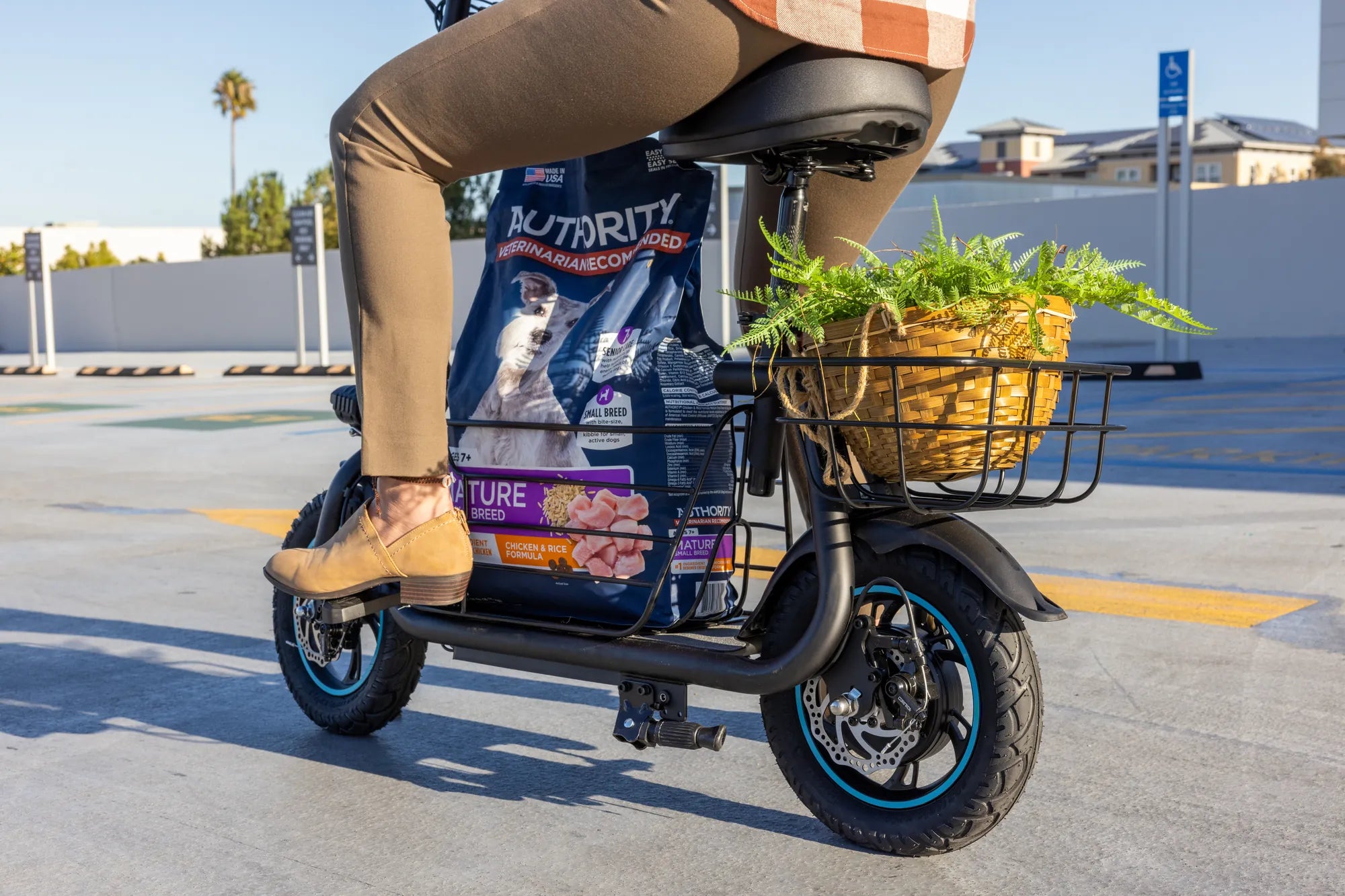
Introduction to Heavy-Duty Electric Scooters
When most people think of electric scooters, they picture lightweight, last-mile vehicles designed for average-sized riders. A heavy weight scooter represents a fundamentally different category of personal electric vehicle. It is engineered not just for higher rider weight capacity, but for superior durability, powerful performance, and enhanced safety under demanding conditions.
These robust machines are defined by their ability to reliably carry riders up to 330 pounds or more, tackle steep urban inclines, and provide a stable, comfortable ride over varied terrain. The term "heavy weight" refers to the scooter's load-bearing capability and its own substantial, rugged construction, which often results in a total weight of 35 to 50 pounds. This guide will dissect the technology, benefits, and critical considerations behind choosing a true heavy-duty electric scooter.
You will learn to identify the non-negotiable features that separate premium, durable models from underbuilt alternatives. We will analyze motor power, battery safety, frame engineering, and braking systems through a data-driven lens. Furthermore, we will compare heavy-duty scooters directly against standard commuter models and address the most common questions from larger riders and performance-focused commuters.
Investing in a heavy weight scooter is a decision for those who value reliability, safety, and long-term utility over minimal portability. It is the rational choice for a significant portion of the urban population seeking a dependable primary transportation solution.
Why Choose a Heavy-Duty Scooter? Key Benefits and Use Cases
The decision to purchase a high-capacity electric scooter is driven by specific needs that standard models cannot adequately meet. The benefits extend far beyond simply supporting more weight; they encompass overall ride quality, safety, and versatility in challenging urban environments.
Standard scooters, often rated for 220-250 pounds, operate near their engineering limits with an average adult rider and a backpack. This leaves little safety margin and can lead to accelerated wear on motors, batteries, and frames. A heavy-duty model is built with these stresses in mind, using higher-grade components designed for a longer operational life under load.
For the Urban Commuter with Cargo
Daily commuting often involves carrying more than just yourself. A laptop bag, lunch, gym clothes, or even groceries can easily add 15-30 pounds to your total load. A heavy weight scooter features a longer, wider deck that provides secure footing even with a bag placed at your feet.
The reinforced frame and suspension are calibrated to handle this extra weight without bottoming out or becoming unstable. This translates to a confident, smooth ride to work or the store, where you don't have to compromise on what you bring along. The stability is a crucial safety feature when navigating busy streets with cargo.
For the Larger or Taller Rider
For riders over 200 pounds or taller than average, standard scooters can feel cramped, unstable, and underpowered. A heavy-duty scooter addresses these issues directly. The higher weight limit, often 300-330 lbs, provides a necessary engineering safety buffer, ensuring all components operate within their safe tolerances.
Adjustable handlebar stems allow for a more comfortable, upright riding posture, reducing back strain. The combination of a larger deck, more powerful acceleration, and stronger brakes creates a riding experience that is not only safer but also more enjoyable and tailored to a wider range of body types.
For the Performance-Seeking Enthusiast
Robust construction is intrinsically linked to higher performance. The powerful motors (600W to 1000W+) found in heavy-duty scooters deliver exhilarating acceleration and maintain higher speeds on flat ground and inclines. This makes longer commutes of 10-15 miles more practical and less time-consuming.
Superior suspension systems and larger pneumatic tires absorb shocks from potholes and cracks, providing a plush ride that reduces fatigue. For the rider who views their scooter as more than just a basic tool, but as a source of fun and efficient mobility, the heavy-duty category is the clear entry point.
Critical Features to Look for in a Heavy Weight Scooter
Not all scooters marketed as "high-capacity" are created equal. Discerning the truly durable from the merely adequate requires a close examination of key specifications and build qualities. These features are the pillars of safety, performance, and longevity.
Motor Power and Hill Climb Ability
Motor power is the most critical performance metric. A minimum of 500W continuous power is essential for a heavy weight scooter, with 600W to 800W being the ideal range for demanding use. Peak power ratings can be much higher (e.g., 1000W+), providing the necessary torque for acceleration and hill climbing.
Look for a scooter that can maintain a reasonable speed (e.g., 10-15 mph) on a 10-15% grade with a rider at the maximum weight limit. A weak motor will strain, overheat, and rapidly drain the battery on hills, turning a commute into a walk. Powerful motors ensure consistent performance regardless of terrain.
Battery Capacity, Range, and Safety Certification
Battery capacity, measured in Amp-hours (Ah) or Watt-hours (Wh), directly determines range. A heavy-duty scooter should have a battery of at least 15Ah (approx. 550Wh) to achieve a realistic range of 20-35 miles per charge under typical load and riding conditions. Manufacturers' maximum range figures are often based on ideal scenarios with lightweight riders.
More important than raw capacity is battery safety and certification. Insist on a scooter that uses UL-certified lithium-ion battery packs. This independent certification, a standard for brands like Gyroor, verifies the battery has passed rigorous tests for electrical, mechanical, and environmental safety, significantly reducing fire risk. These premium batteries also typically support 500+ charge cycles while maintaining capacity.
Frame Construction and Weight Capacity
The frame is the scooter's skeleton. It must be constructed from high-grade, reinforced aluminum alloy with precision welding at all stress points. Inspect the junction where the stem meets the deck and the folding mechanism—these are common failure points on inferior models.
The stated maximum weight capacity should have a built-in safety factor. If a scooter is rated for 330 lbs, it is engineered to handle that load safely with a margin for unexpected impacts. Choose a model whose limit comfortably exceeds your total weight (rider + typical cargo) by at least 30-50 pounds for optimal durability and safety.
Braking System and Safety
Stopping a heavier mass moving at speed requires a superior braking system. Dual braking—a combination of a front and rear brake—is mandatory. While electronic (regenerative) brakes are common, they can fade under continuous heavy use.
For a true heavy weight scooter, hydraulic disc brakes are the gold standard. They offer more powerful, consistent, and fade-resistant stopping power with less hand lever effort than mechanical disc or drum brakes. This precise control is vital for safe navigation in traffic and during emergency stops.
Tire Type, Suspension, and Water Resistance
Comfort and control are dictated by the tires and suspension. Large (10-inch) pneumatic (air-filled) tires provide better shock absorption, traction, and stability than smaller solid tires. They smooth out road imperfections, making the ride safer and more comfortable.
A dual suspension system—spring or hydraulic shocks at both the front and rear—further enhances ride quality and keeps the wheels in contact with the road for better control. Finally, a high IPX5 water-resistant rating is crucial for practical use. This rating means the scooter can withstand water jets from any direction, making it safe to ride in rain and through puddles, protecting its vital electronic components.
Data-Driven Comparison: Heavy-Duty vs. Standard Commuter Scooters
The performance gap between a dedicated heavy-duty model and a standard commuter scooter is substantial. The following table uses realistic specifications to illustrate the key differences in capability, safety, and intended use. This comparison highlights why the heavy-duty category exists and for whom it is designed.
| Feature | Standard Commuter Scooter (Example) | Heavy-Duty Scooter (Example) |
|---|---|---|
| Max Weight Capacity | 220 lbs | 330 lbs |
| Motor Power (Continuous) | 350W | 800W |
| Real-World Max Range* | 12-18 miles | 25-35 miles |
| Brake System | Rear Drum + E-ABS | Dual Hydraulic Disc |
| Tire Type & Size | 8.5" Solid | 10" Pneumatic |
| Suspension | Front Spring Only | Dual Spring + Shock |
| IP Water Resistance Rating | IPX4 (Splash Resistant) | IPX5 (Water Jet Resistant) |
| Battery Certification | Generic Lithium-ion | UL-Certified Lithium-ion |
| Typical Warranty | 90 Days / Limited | 1-Year Comprehensive |
*Range estimates based on a 200 lb rider at moderate speed with stops and starts.
The table clearly shows that a heavy-duty scooter is not merely an "upgraded" standard model; it is a different class of vehicle. The enhancements in power, safety systems (brakes, battery), durability (IP rating, warranty), and comfort are comprehensive and interconnected.
Making the Right Investment: Warranty and Long-Term Support
A heavy-duty electric scooter is a significant investment in your daily mobility. Protecting that investment requires more than just a sturdy frame; it requires confidence in the manufacturer's support. A strong, comprehensive warranty is the single best indicator of a company's belief in its product's durability and its commitment to customer satisfaction.
A warranty of one full year or more on the frame, motor, and battery demonstrates that the manufacturer expects the scooter to perform reliably over an extended period. This contrasts sharply with the 90-day or limited warranties often offered on lower-tier models, which can leave you with a costly repair shortly after purchase.
Brands that stand behind their products, like Gyroor, offer a 1-year comprehensive warranty backed by accessible, US-based customer support. This means if a component fails under normal use, you have a clear path to a repair or replacement. This support is invaluable for a vehicle you depend on daily.
When evaluating a heavy weight scooter, scrutinize the warranty details. Look for clear terms that cover the major components. A robust warranty transforms your purchase from a speculative buy into a secure, long-term transportation solution.
Frequently Asked Questions (FAQ) About Heavy Weight Scooters
Prospective buyers of high-capacity electric scooters often have specific concerns. Here are detailed, factual answers to the most common questions.
Q: I weigh 280 lbs. Is a scooter with a 330 lb limit safe for me?
A: Yes, it is designed for your use case. Engineering standards incorporate safety margins. A 330 lb rating means the scooter's components are tested to handle that load safely. At 280 lbs, you are well within the designed capacity. Remember to factor in the weight of your clothing, backpack, and any other cargo (typically 10-20 lbs) to get your total load, which would still be under 300 lbs in this example, leaving a safe buffer.
Q: Are heavy-duty scooters significantly harder to fold and carry?
A: They are heavier but designed for manageability. A typical heavy-duty scooter weighs 40-50 lbs, compared to 25-30 lbs for a standard model. This is a noticeable difference. However, quality designs feature one-click folding mechanisms and a balanced weight distribution. Some models include a carry handle or trolley wheels on the deck to make rolling it when folded much easier. The trade-off for immense durability and power is a less portable package, but thoughtful design mitigates this.
Q: Can they legally be used on bike lanes and roads?
A: In most jurisdictions, yes, but local laws vary. Most cities in North America and Europe permit electric scooters in bicycle lanes. Usage on roads or sidewalks is governed by municipal regulations that often specify maximum speed limits (e.g., 15-20 mph) and sometimes motor power limits. Heavy-duty scooters are typically capable of higher speeds, but responsible riders should obey local speed limits. Always check your specific city's ordinances regarding electric scooters before riding.
Q: How does weather, especially rain, affect a heavy-duty scooter?
A: A high IP rating is key. A scooter with an IPX5 water resistance rating, like many in Gyroor's lineup, is protected against water jets from any direction. This makes it safe to ride in light to moderate rain and through puddles. However, no consumer scooter is fully submersible. Avoid deep standing water, and always dry the scooter off after a wet ride. The robust construction and sealed electronics of a true heavy-duty model are far more weather-resilient than basic scooters.
Q: What maintenance does a heavy weight scooter require?
A: Regular checks ensure longevity. Key maintenance tasks include: keeping tire pressure correct in pneumatic tires, periodically checking bolt tightness (especially on the stem and folding mechanism), cleaning the brake discs and pads, and avoiding complete battery discharges. The mechanical components (brakes, tires, suspension) on a heavily used scooter may require professional servicing after a year or more of daily use, similar to a bicycle.
Conclusion: The Smart Choice for Demanding Rides
The market for electric scooters has matured, and the heavy weight scooter category represents its most capable, reliable, and safe segment. It is the rational choice for a wide range of users: the larger rider seeking comfort, the commuter carrying cargo, and the enthusiast wanting robust performance. This guide has detailed the essential features—from UL-certified batteries and hydraulic disc brakes to IPX5 water resistance and comprehensive warranties—that define a worthwhile investment.
Choosing a scooter built to a higher standard ensures not just immediate satisfaction but also long-term reliability and safety. It transforms the scooter from a novelty or last-mile solution into a legitimate primary vehicle for urban transit. When your daily mobility depends on it, opting for engineered durability over minimal weight is the only logical path.
For those ready to experience the confidence and capability of a true heavy-duty electric scooter, explore models that embody these principles. Browse the full Gyroor collection at gyroorboard.com to discover a range of high-capacity scooters built with UL-certified safety, robust performance, and backed by a trusted 1-year warranty, trusted by over 100,000 riders.
Sport Scooter Motorcycle: The Ultimate Urban Performance Machine
100 Dollar Ebike: The Real Cost of a Too-Good-To-Be-True Deal