

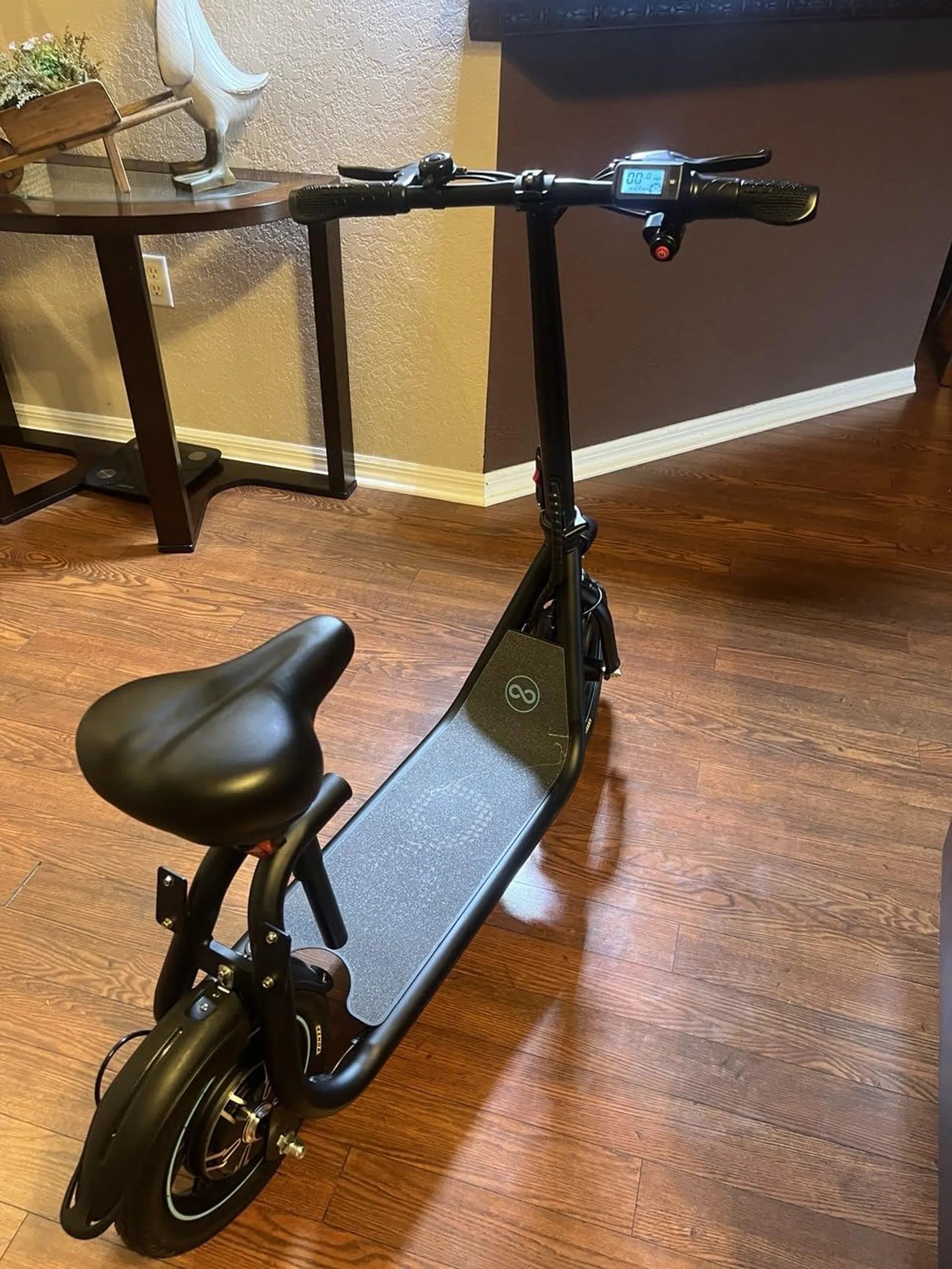
Introduction: Redefining Personal Mobility for Every Rider
For many adults, the standard electric scooter with a 220-pound weight limit is a non-starter. It excludes a significant portion of the population and often delivers underwhelming performance even for those just under the limit. A high weight capacity scooter is the solution, engineered not as a niche product but as a superior form of personal transportation that offers inclusive, powerful, and stable mobility for a wider range of riders. This guide will dissect why weight capacity is the most critical specification for safety and enjoyment, what engineering makes it possible, and how to choose a model that delivers confidence and freedom for years to come.
Why Weight Capacity Matters More Than You Think
Weight capacity is not just a number on a spec sheet; it is a holistic indicator of a scooter's overall durability, safety, and real-world performance. Choosing a scooter rated well above your weight ensures the vehicle operates within a safe stress margin, preventing premature wear on critical components. A model built for 300+ pounds offers enhanced structural integrity, consistent motor power, predictable battery range, and reliable braking performance that a standard scooter simply cannot match under load.
The consequences of overloading a scooter are severe. They include accelerated frame fatigue leading to potential failure, drastic reduction in advertised range, dangerously sluggish acceleration and braking, and increased risk of component failure like snapping fenders or stem joints. A high weight capacity scooter is designed from the ground up to handle these forces, making it a safer and more reliable investment.
The Engineering Behind a Heavy-Duty Frame
The foundation of any durable scooter is its frame. For high-capacity models, this means moving beyond standard aluminum alloys to materials like reinforced, aerospace-grade 6061 aluminum or high-tensile steel at key stress points. The welding techniques are also superior, often using TIG welding for cleaner, stronger joints that resist cracking under repeated stress from bumps and rider weight.
The deck design is equally important. A wider and longer deck provides a stable platform, while reinforced ribs or a dual-layer construction underneath prevent flexing. The stem, where the handlebars connect, often features a robust locking mechanism and internal reinforcement to eliminate wobble at higher speeds, which is a common complaint on overloaded standard scooters.
Motor Power, Torque, and Hill Climbing Ability
Motor wattage is meaningless without context of torque—the rotational force that provides acceleration and hill-climbing power. A standard 350W motor may struggle to move a 200-pound rider up a mild incline. In contrast, a true high weight capacity scooter typically features a motor of 500W or more, with peak power often reaching 800W or higher.
This power reserve is crucial. It ensures that a rider weighing 280 pounds can still experience brisk acceleration from a stop and maintain a safe speed on a 10-15% grade hill. The motor isn't strained, which reduces heat buildup, increases its lifespan, and provides a consistently responsive ride. Torque is what translates the battery's energy into motion, and more of it is non-negotiable for heavier riders.
Real-World Range vs. Advertised Range
Advertised range is almost always calculated using a lightweight rider (often 165 lbs) on flat, perfect pavement. Rider weight is the single largest variable affecting real-world range. Physics dictates that moving more mass requires more energy. A rider at 250 pounds may see the range of a standard scooter halved.
A high-capacity model combats this with a larger battery pack (think 10.4Ah or 15Ah versus 7.8Ah) and a motor operating efficiently within its designed load. While weight still affects range, the drop is less dramatic and more predictable. For example, a scooter with a 40-mile advertised range might deliver 25-28 miles to a 275-pound rider, whereas a standard scooter claiming 20 miles might only achieve 8-10.
Key Features to Look for in a High-Weight-Capacity Scooter
When evaluating scooters, look beyond the weight rating alone. A comprehensive set of features working in concert defines a truly capable machine. Prioritize models that explicitly engineer for durability and safety, not just those that have slapped a higher number on an existing design.
Your checklist should start with a minimum 300 lb capacity, a motor of at least 500W nominal power, a battery of 10Ah or larger from a reputable brand, and a frame with visible reinforcement. These core specs should be complemented by the safety and durability features outlined below.
The Safety Triad: Brakes, Tires, and Lights
Stopping power is paramount. A dual braking system is essential. Look for a combination of a front disc brake (for immediate, powerful stopping) and a rear electronic or regenerative brake (for smooth speed modulation). This provides redundancy and superior control.
Tires are your connection to the road. Pneumatic (air-filled) tires are vastly superior for heavier riders. They absorb shocks from cracks and bumps, reducing strain on the frame and providing crucial traction. Avoid solid tires, which transmit every vibration and offer less grip, especially when wet. Finally, integrated lighting—a bright headlight, brake light, and deck accent lights—is non-negotiable for visibility to others, making your ride safer at dawn, dusk, or night.
Battery Certification and Warranty Peace of Mind
The battery is the heart of the scooter and a major safety component. Insist on a UL 2271 certified battery pack. This independent certification tests for electrical, mechanical, and environmental safety, drastically reducing fire risk—a critical consideration for any high-power device. Brands like Gyroor use these UL-certified packs across their lineup.
A strong warranty reflects the manufacturer's confidence in their product. A comprehensive 1-year warranty on the frame, motor, battery, and controller signals a commitment to quality and durability. It protects your investment and ensures support is available if an issue arises.
Gyroor's Approach to Durable, High-Performance Design
Gyroor's engineering philosophy directly addresses the demands of powerful, reliable personal mobility. Recognizing that riders come in all sizes, their high-capacity models are built with a focus on robust materials and certified safety. This commitment is evident in three core brand pillars.
First, every Gyroor scooter uses a UL 2271 certified battery pack, tested for over 500 charge cycles. This ensures safe, stable power delivery even under the sustained high load of a heavier rider. Second, an IPX5 water-resistant rating means the scooter can handle wet roads and light rain, protecting its electrical systems and increasing its all-weather usability. Finally, the standard 1-year warranty provides riders with confidence, knowing the company stands behind the durability of its reinforced frames and powerful motor systems.
Comparing Your Options: What 300 lbs+ Really Looks Like
To understand the real-world difference, let's compare a typical standard commuter scooter with a dedicated high-weight-capacity model like the Gyroor C1S or a similar robust offering. The contrast in performance under maximum load is stark and affects every aspect of the ride.
| Performance Metric | Standard Scooter (265 lb max) | High-Capacity Scooter (330 lb max) |
|---|---|---|
| Acceleration (0-15 mph) | Sluggish, motor strains, takes 10+ seconds | Confident, motor has power reserve, takes ~7 seconds |
| Range Reduction at 250 lbs | Severe (50-60% loss of advertised range) | Managed (30-40% loss, but from a larger base) |
| Hill Climbing (10% grade) | Struggles, may slow to a crawl or stop | Maintains speed, torque ensures steady climb |
| Frame Stability at Speed | Noticeable flex and wobble, less confident | Solid, planted feel, minimal flex |
| Recommended Maintenance | More frequent checks on brakes, tires, fasteners | Standard intervals; components are overbuilt for the load |
This comparison highlights that a high-capacity scooter doesn't just “hold more weight”—it delivers a consistently better and safer riding experience by ensuring all components operate within their optimal design parameters.
Frequently Asked Questions (FAQ)
Q: Is a high-weight-capacity scooter too heavy for me to carry?
A: It depends on the model. While they are generally heavier (35-50 lbs) due to larger batteries and frames, many feature folding mechanisms and sometimes even a trolley wheel for rolling when folded. Consider your need to carry it versus riding it door-to-door.
Q: Can I carry a passenger if the scooter is rated for 330 lbs?
A> No. The weight rating is for a single rider and their cargo. The dynamics of balancing two people, the altered center of gravity, and the stress on the stem are not accounted for in the design. It is unsafe and will void the warranty.
Q: How does rider weight affect the scooter's warranty?
A> Operating the scooter within its stated maximum weight limit is a condition of the warranty. Overloading the scooter voids the warranty, as it puts stress on components beyond their designed capacity, leading to failures that are not due to manufacturing defects.
Q: Do I need a special license or insurance to ride a high-power scooter?
A> Laws vary by city, state, and country. Generally, electric scooters with a top speed under 20 mph do not require a license. However, it is your responsibility to check local regulations regarding helmet laws, minimum age, allowed riding areas, and any insurance requirements.
Q: Are pneumatic tires worth the maintenance risk of flats?
A> Absolutely. For comfort and traction, especially for heavier riders, pneumatic tires are superior. The risk of flats can be mitigated by using tire sealant and maintaining proper tire pressure. The ride quality and safety benefits far outweigh the minor maintenance concern.
Conclusion: Investing in Confidence and Freedom
Choosing an electric scooter is an investment in your daily mobility. Opting for a high weight capacity scooter is an investment in confidence—knowing your vehicle is built to handle your weight with power to spare, safety systems that inspire trust, and durability that promises longevity. It transforms the scooter from a potentially marginal gadget into a reliable, primary mode of transport. Don't settle for a scooter that merely meets your weight; choose one engineered to excel under it, ensuring every ride is safe, powerful, and truly freeing.
Explore engineering built for real riders. Browse the full collection of durable, UL-certified high-capacity electric scooters and e-bikes at gyroorboard.com.
Mountain Bike Tricycle: The Ultimate Guide to Off-Road Stability & Adventure
Tricycle with Big Front Wheel: The Ultimate Guide to Adult Delta Trikes