


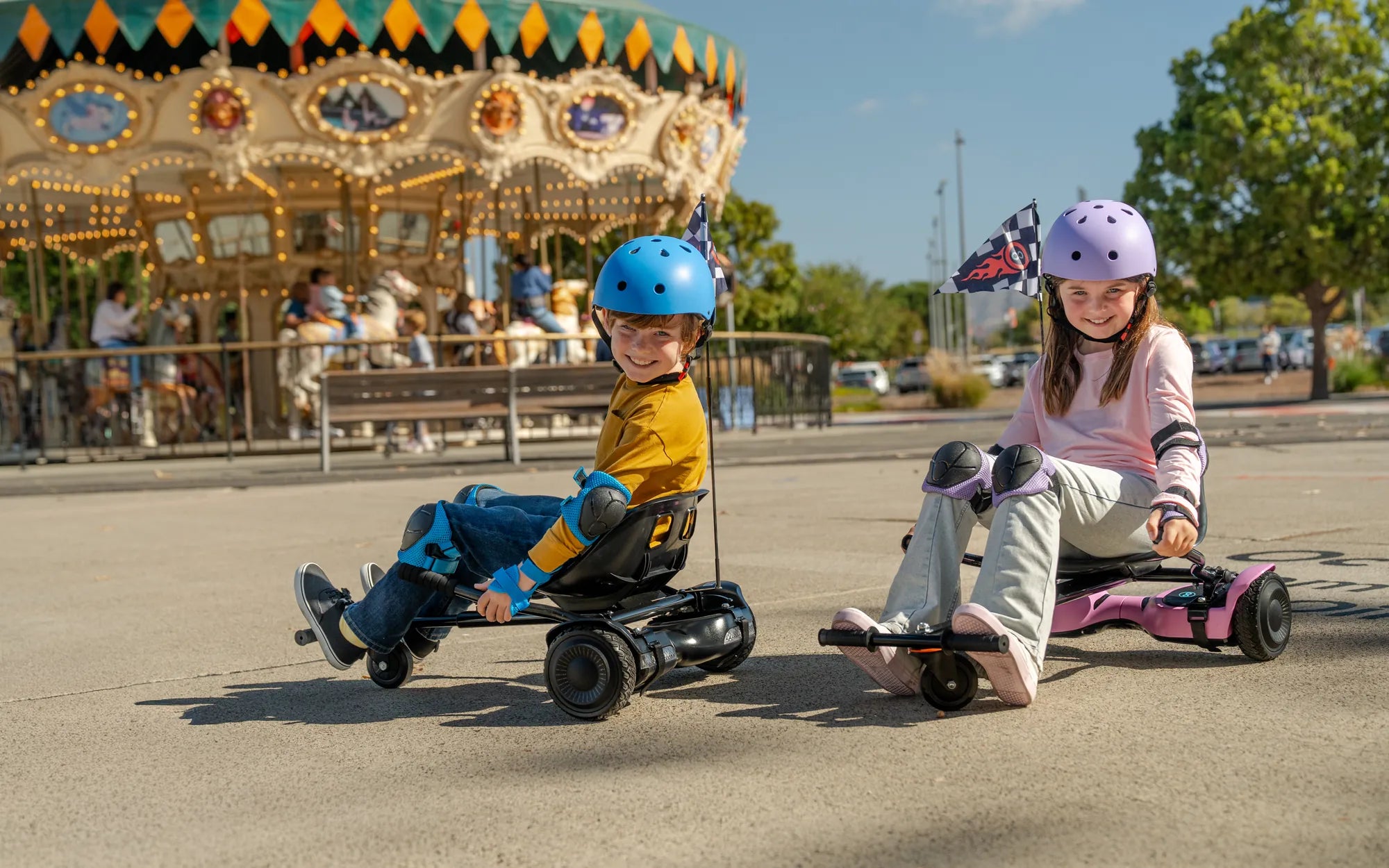
Navigating the Hoverboard Market
You see a hoverboard for $99 and another for $699. What justifies the massive price difference? The answer lies in components you can't see, certifications that prevent fires, and durability that determines how long the fun lasts. Understanding hoverboard cost is the first step to making a purchase you won't regret.
This guide will dissect the hoverboard price spectrum, from risky budget options to premium models. We'll detail the key cost factors, expose hidden ownership expenses, and provide a smart shopping strategy. Your goal isn't to find the cheapest board, but the best value—a reliable, safe, and enjoyable product that fits your needs.
Breaking Down the Hoverboard Price Spectrum
Hoverboard prices cluster into three distinct tiers: Budget, Mid-Range, and Premium. Each tier corresponds to a specific set of features, safety standards, and expected longevity. Knowing which tier aligns with your needs is crucial for a satisfying purchase.
The market's wide range reflects vast differences in manufacturing standards. A lower price often signals compromises on the very components that ensure safety and performance. Let's explore what you can realistically expect within each price bracket.
Budget Tier (Under $200)
Boards in this category are defined by their low initial cost. They are typically sold by unknown brands on major online marketplaces. The primary appeal is obvious: affordability. However, this price point comes with significant and often serious trade-offs.
The most critical compromise is battery safety. These models almost never feature UL-certified battery packs. Instead, they use cheaper, uncertified lithium-ion cells that are more prone to overheating, swelling, and even catching fire. The motors are often underpowered (150W or less), struggling with basic inclines and heavier riders.
Build quality is another major concern. Frames are made from low-grade plastics that can crack under stress. Tires are usually low-quality solid rubber, offering a harsh ride and poor traction. Warranties, if they exist at all, are notoriously difficult to claim. Reputable brands like Gyroor do not operate in this tier due to an uncompromising focus on safety and durability.
Mid-Range Tier ($200 - $500)
This is the value and safety sweet spot for most riders. Here, you'll find established brands that prioritize core reliability. A hoverboard cost in this range typically includes non-negotiable safety features and a substantially better riding experience.
Expect dual motors with a combined wattage of 300W to 500W, providing adequate speed (up to 10 mph) and decent hill-climbing ability. The hallmark of this tier is the inclusion of UL-certified battery packs, like those standard in all Gyroor models. This certification is your best assurance against battery-related hazards.
Build quality improves with the use of reinforced plastics and aircraft-grade aluminum alloys. Water resistance becomes a standard feature, with ratings like IPX4 or IPX5 (a Gyroor standard) protecting the board from splashes and light rain. Most reputable brands in this tier back their products with a 1-year warranty, covering manufacturing defects.
Premium Tier ($500+)
Premium hoverboards justify their price with advanced technology, superior performance, and exceptional build quality. These are for enthusiasts, heavier riders, or those who demand the best in connectivity and off-road capability.
You'll find powerful dual motors exceeding 700W total, enabling speeds of 12 mph or more and excellent torque for steep hills. Batteries are high-capacity, UL-certified, and offer extended ranges of 15+ miles per charge. Advanced features like Bluetooth speaker systems, companion mobile apps for ride tracking and customization, and RGB LED light shows are common.
Build materials are top-tier, featuring full magnesium alloy or carbon fiber frames. Tires are often large, air-filled (pneumatic) for off-road use, or high-quality honeycomb solids for urban terrain. Brands in this segment offer robust customer support and longer warranties, reflecting confidence in their product's longevity.
What You're Really Paying For: Key Cost Factors
The final price tag is a direct reflection of the cost and quality of its components. By understanding these factors, you can compare models objectively and identify where manufacturers may have cut corners to hit a lower price point.
Two boards may look similar, but their performance, safety, and lifespan can be worlds apart. Let's break down the components that have the most significant impact on hoverboard cost.
Battery Quality & Certification (The #1 Priority)
The battery is the most critical—and potentially dangerous—component. Its quality dictates not only your board's range but also its fundamental safety. The difference between a certified and uncertified battery is the difference between a reliable product and a fire hazard.
UL (Underwriters Laboratories) certification is the gold standard. Batteries with this certification, like those used by Gyroor, have undergone rigorous testing for overcharge protection, short-circuit prevention, and overall stability. They are built with quality cells and robust battery management systems (BMS). Uncertified batteries use inferior cells, lack proper BMS, and are the primary cause of the notorious hoverboard fires of the past.
Motor Power & Performance
Motor wattage directly translates to performance. It affects top speed, acceleration, hill-climbing ability, and the maximum rider weight the board can support. A more powerful motor requires better engineering, higher-quality materials, and more sophisticated electronics.
A board with 250W motors might suffice for a lightweight rider on flat ground but will struggle on any incline. Mid-range models with 350W-500W total power offer a balanced performance for most adults. Premium off-road models can feature 1000W+ of combined power. Higher wattage motors also generate more heat, so better boards include improved heat dissipation systems, adding to the cost.
Build Quality & Durability Features
This encompasses the materials and design that determine how well a hoverboard withstands daily use. A cheap plastic shell will flex and crack, while a magnesium alloy frame provides a rigid, stable, and durable platform.
Tire type is a major factor. Cheap solid rubber tires wear quickly and transmit every bump. Premium solid tires use honeycomb structures to absorb shock, while pneumatic (air-filled) tires offer the best ride comfort and off-road traction but require maintenance. Water resistance, measured by an IP rating, is crucial for real-world use. An IPX5 rating (like Gyroor's) means the board can withstand water jets, making it safe for use on wet pavement or in light rain.
Brand Reputation & Warranty
You pay a premium for peace of mind. Established brands invest in research, development, quality control, and customer service. They have a reputation to uphold and are more likely to use certified components and honor their warranties.
A comprehensive warranty, such as Gyroor's 1-year coverage, is a form of insurance. It protects your investment against manufacturing defects. No-name brands often have vague or non-existent warranties, leaving you with a useless board if something fails. The brand's commitment to after-sales support, including the availability of replacement parts, is a significant part of the product's long-term value.
The Hidden Costs of Owning a Hoverboard
The initial purchase price is just the beginning. To understand the true hoverboard cost, you must budget for essential accessories, potential maintenance, and repairs. Failing to account for these can lead to unexpected expenses down the road.
A responsible rider plans for the full cost of ownership. This not only ensures safety but also extends the life of your investment. Let's outline the common additional expenses.
Essential Safety Gear
This is non-negotiable. Riding a hoverboard without proper safety gear is an unnecessary risk. Budgeting for this gear is part of the true cost of entering the sport.
- Helmet: A multi-impact skate or bike helmet is essential. Cost: $30 - $80.
- Wrist Guards: The most common falls are forward, making wrist guards critical. Cost: $20 - $40.
- Knee and Elbow Pads: Especially important for beginners and off-road riders. Cost: $25 - $60 for a set.
A reasonable initial safety gear budget is $75 - $150. This is a one-time investment that protects you every time you ride.
Replacement Parts & Maintenance
Even with careful use, parts wear out. The cost and availability of these parts vary greatly by brand.
- Tires: Solid tires last longer but may need replacement after hundreds of miles. Pneumatic tires can get punctures. Cost: $20 - $60 per pair.
- Battery: Even a high-quality UL-certified battery will degrade over 2-3 years of regular use. A replacement battery from a reputable brand can cost $100 - $250.
- Charger: Losing or damaging the proprietary charger means buying a new one. Cost: $25 - $50.
Choosing a brand like Gyroor ensures you have access to genuine, compatible replacement parts when you need them.
Potential Repair Costs
If a component beyond a tire or battery fails—like a motor, gyroscope, or control board—repairs can be costly. This is where warranty coverage is invaluable.
For boards without a warranty, diagnostic fees and labor can start at $50, with major repairs exceeding $150. Many cheap boards are essentially unrepairable; their design and lack of available parts mean a single internal failure renders the entire unit disposable. Investing in a board with a strong warranty from a company with a service network is the best way to mitigate this risk.
Smart Shopping: How to Get the Best Value
Armed with knowledge of price tiers and cost factors, you can shop strategically. The goal is to maximize safety, durability, and performance for your budget. Here is a step-by-step approach to finding the best value.
Focus on the fundamentals first. Flashy lights and Bluetooth speakers are meaningless if the board is unsafe or breaks in a month. Prioritize these non-negotiable features before considering extras.
Prioritizing Non-Negotiables: UL Certification & IP Rating
Your first filter for any hoverboard should be: Does it have a UL 2272 certified battery? If the product listing does not explicitly state this certification, assume it does not have it and move on. This is the single most important safety feature.
Next, look for a water resistance rating. An IPX4 rating protects against splashes from any direction, which is the minimum for casual use. An IPX5 rating (like Gyroor's) is better, offering protection against low-pressure water jets, making the board suitable for use in more conditions. These two specs form the foundation of a reliable, safe hoverboard.
Where to Buy Reliably
Purchase channel matters. It affects warranty validity, return policies, and the authenticity of the product.
- Official Brand Websites (e.g., gyroorboard.com): The most reliable source. You get the full warranty, direct customer support, and assurance of a genuine product. Often the best place for sales and bundles.
- Authorized Major Retailers (Amazon, Best Buy, Walmart): Look for items "Shipped and Sold by" the retailer or the brand's official storefront. This usually ensures warranty coverage and reliable return windows. Be wary of third-party sellers with prices that seem too good to be true.
- Avoid Unknown Marketplaces: Deep-discount sites and obscure online shops are flooded with uncertified, dangerous products. The risk is not worth the minimal savings.
Reading Reviews and Checking Warranties
Go beyond the average star rating. Read the 3-star reviews—they often provide the most balanced insights into pros and cons. Look for mentions of long-term durability, customer service experiences, and any recurring issues.
Before clicking "buy," find and read the full warranty document. Understand what is covered (parts, labor), what is excluded (water damage, wear and tear), the warranty period (1 year is standard for reputable brands), and the process for making a claim. A clear, accessible warranty is a sign of a confident manufacturer.
Hoverboard Price & Feature Comparison Table
| Feature / Tier | Budget (Under $200) | Mid-Range ($200 - $500) | Premium ($500+) |
|---|---|---|---|
| Battery Certification | Typically uncertified, high risk | UL 2272 Certified (Standard) | UL 2272 Certified (High-Capacity) |
| Motor Power | 150W - 250W total (Weak) | 300W - 500W total (Balanced) | 600W+ total (Powerful) |
| Max Range | 6-8 miles | 8-12 miles | 12-18 miles |
| Build Material | Low-grade plastic | Reinforced plastic, aluminum alloy | Magnesium alloy, carbon fiber |
| Water Resistance | None or unspecified | IPX4 or IPX5 (e.g., Gyroor) | IPX5 or higher |
| Tire Type | Low-quality solid rubber | Quality solid or basic pneumatic | Large pneumatic or honeycomb |
| Warranty | None or 30-90 days (limited) | 1-year comprehensive | 1-year or longer, robust support |
| Best For | Extreme budget risk-takers | Most riders: best value & safety | Enthusiasts, off-road, tech lovers |
Frequently Asked Questions (FAQs)
Is a $100 hoverboard from an online marketplace safe?
No, it is not safe. Hoverboards at this price point almost universally lack UL-certified batteries, which is the primary defense against fire hazards. They also use the lowest-quality motors, plastics, and electronics. The savings are not worth the significant risk to personal safety and property.
How much should I spend on my first hoverboard?
For a first-time buyer, we strongly recommend budgeting for the mid-range tier, specifically between $300 and $400. This price point ensures you get a UL-certified battery, decent motors, basic water resistance, and a legitimate warranty. It provides a safe, enjoyable, and durable experience that won't fail after a few weeks. Brands like Gyroor offer excellent models in this range.
Are expensive hoverboards over $500 worth the money?
They are worth it for specific users. For casual riders on paved paths, a good mid-range board is perfectly sufficient. The premium price is justified for riders who need exceptional hill-climbing power, off-road capability on rough terrain, very long range, or desire advanced tech features like app integration and high-fidelity speakers. It's an investment in specialized performance.
What does Gyroor's 1-year warranty cover, and why does it matter?
Gyroor's warranty typically covers defects in materials and workmanship for one year from the date of purchase. This includes critical components like the battery, motors, and control board. It matters because it functions as an insurance policy for your investment. If a covered component fails through no fault of your own, Gyroor will repair or replace it. This peace of mind and protection add substantial value compared to a no-name brand with no support.
Can I just replace a bad battery with a cheaper one?
This is extremely dangerous and not recommended. Hoverboard battery packs are complex assemblies with specific Battery Management Systems (BMS) matched to the board's electronics. Using an uncertified or incompatible battery can damage the board, void the warranty, and most importantly, create a severe fire hazard. Always use manufacturer-approved, UL-certified replacement batteries.
Final Verdict: Investing in Safety and Enjoyment
The true hoverboard cost encompasses more than the initial price. It includes the safety of a certified battery, the durability of quality construction, and the peace of mind from a solid warranty. Choosing a board is an investment in your fun and safety.
Skimping on the upfront cost often leads to higher long-term costs through replacements, repairs, or worse, accidents. By targeting the mid-range tier and prioritizing UL certification and water resistance, you secure a reliable product that will provide miles of enjoyment. Brands that stand behind their products with clear warranties and customer support, like Gyroor, offer demonstrable value that offsets a slightly higher initial price.
Ready to find a hoverboard that combines safety, performance, and value? Explore the range of UL-certified, IPX5 water-resistant models engineered for reliability. Browse the full Gyroor collection at gyroorboard.com to make an informed investment in your ride.
Electric Scooter for Kids Price: A Comprehensive Guide for Parents
Red Electric Scooter for Kids: The Ultimate Guide to Fun and Safety