



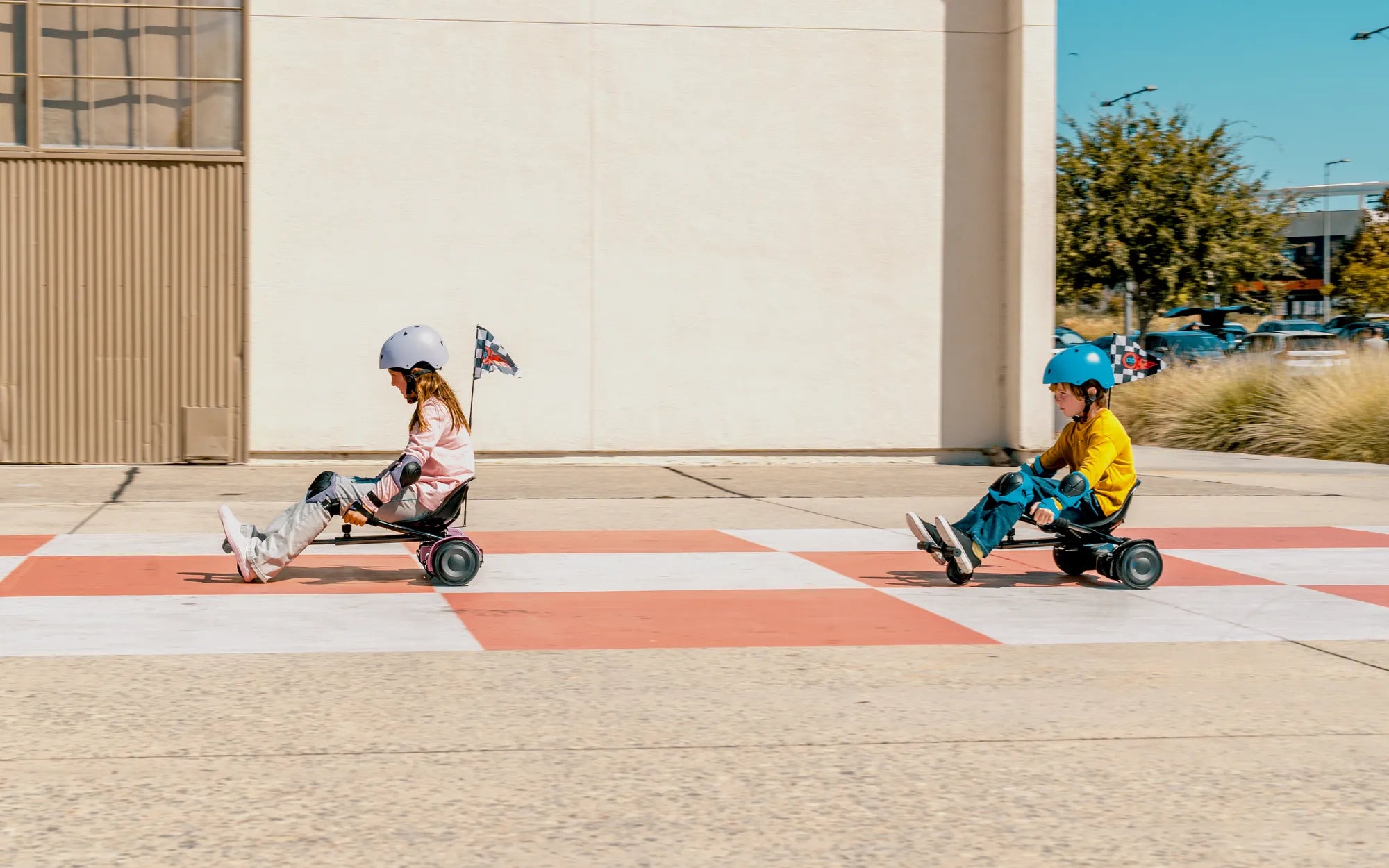
Introduction: Why a Hoverboard is the Perfect Gift for a 10-Year-Old
Finding the ideal gift that balances excitement, outdoor activity, and developmental benefits can be a challenge. A hoverboard for a 10 year old often hits that sweet spot perfectly. At this age, children have typically developed the core balance, coordination, and cognitive skills needed to learn self-balancing transportation safely, turning the device from a mere toy into a tool for building confidence and encouraging physical activity.
This guide is designed to be your comprehensive resource, moving beyond marketing hype to deliver factual, data-driven advice. We will dissect the non-negotiable safety features, compare specific models, and provide a complete framework for safe riding. The goal is to ensure that the experience is not only incredibly fun but also fundamentally secure, giving parents peace of mind.
Central to this peace of mind is choosing a brand engineered for reliability. Gyroor, a leading electric scooter and e-bike brand trusted by over 100,000 riders across North America and Europe, exemplifies this standard with its focus on UL-certified batteries, IPX5 water-resistant designs, and a reliable 1-year warranty. By the end of this guide, you'll be equipped to make an informed decision that prioritizes your child's safety and enjoyment above all else.
Understanding Safety First: Non-Negotiable Features for Kids
When selecting a hoverboard for a 10 year old, safety is not a feature—it's the foundation. The market is saturated with options, but only models built with rigorous safety standards should be considered. Compromising on these core elements can lead to malfunctions, injuries, or worse. The following features are absolute prerequisites for any purchase.
These standards exist for a reason. Data from the U.S. Consumer Product Safety Commission (CPSC) has historically highlighted risks associated with non-compliant devices, particularly concerning battery systems. A safe hoverboard integrates multiple layers of protection, from its electrical heart to its physical construction and user controls, specifically tailored for a younger, learning rider.
UL 2272 Certification: The Gold Standard
UL 2272 certification is the single most critical factor in hoverboard safety. This standard, developed by Underwriters Laboratories, rigorously tests the entire electrical system—including the battery pack, charger, and motor—for over 100 potential hazards like electrical, mechanical, and environmental failures. It specifically addresses the fire risks that plagued early-generation hoverboards.
A hoverboard for a 10 year old must be UL 2272 certified. This is non-negotiable. This certification is your guarantee that the product has passed stringent tests for battery cell integrity, wiring safety, and temperature control. All Gyroor hoverboards are built with UL 2272 certified battery packs, tested for over 500 charge cycles, providing a fundamental layer of safety that parents should never overlook.
Speed Modes and Parental Controls
A hoverboard capable of 10+ MPH is inappropriate for a beginner. Adjustable speed modes are essential for a safe learning curve. Look for models with a dedicated beginner mode that caps speed between 5-7 MPH. This allows the child to master balance and control in a less intimidating environment.
Advanced parental controls, often managed via a companion smartphone app, offer an additional layer of oversight. These apps can allow parents to set a permanent speed limit, monitor battery life, and even lock the device remotely. This feature transforms the hoverboard from a static product into a manageable tool, adapting to the rider's growing skill level while maintaining a safety boundary set by the parent.
Build Quality and Weight Limit
The physical construction must be robust enough to withstand the inevitable bumps and learning falls. A sturdy, reinforced frame is a must. Equally important are wide, textured foot pads with a non-slip surface to provide stable footing, which is crucial for maintaining control during acceleration and turning.
Always check the manufacturer's stated weight limit. A suitable hoverboard for a 10 year old should have a minimum weight capacity that accommodates them with room to grow, typically in the range of 44 to 220 pounds. Riding a device that is under capacity for the rider's weight can strain the motors and battery, leading to premature failure and potential safety issues.
Choosing the Right Gyroor Hoverboard for a 10-Year-Old
With safety fundamentals established, the next step is selecting the right model. The "best" hoverboard depends largely on where and how it will be used. A child riding primarily on smooth driveway pavement has different needs than one navigating park paths or slightly grassy lawns. Gyroor's lineup offers specific models tailored to these different use cases.
Key decision factors include wheel size, motor power, range, and additional features. The following comparison focuses on two exemplary series from Gyroor, highlighting how their specifications translate to real-world performance for a young rider. This data-driven approach removes guesswork and aligns the product's capabilities with your child's environment.
Model Comparison: Gyroor S5 vs. Gyroor C Series
To aid your decision, here is a detailed comparison of two popular Gyroor lines suitable for a 10-year-old rider. This table breaks down the critical specifications that impact safety, performance, and enjoyment.
| Feature | Gyroor S5 Series (e.g., S5 Pro) | Gyroor C Series (e.g., C5) |
|---|---|---|
| Primary Use Case | All-Terrain & Off-Road | Smooth Pavement & City Riding |
| Wheel Size & Type | 8.5" Solid Rubber, All-Terrain | 6.5" or 8.5" Solid Rubber, Standard |
| Max Speed (Beginner Mode) | Adjustable, Beginner ~7 MPH | Adjustable, Beginner ~6.5 MPH |
| Max Range | Up to 12 miles | Up to 7-10 miles |
| Motor Power | Dual 500W | Dual 300W |
| Key Features | IPX5 Water Resistance, Bluetooth Speaker, Robust Frame for bumps | Sleek Design, LED Lights, App Connectivity for parental controls |
| Ideal For | Riders on varied surfaces (sidewalks, grass, gravel paths) | Riders on consistently smooth surfaces (driveways, indoor courts, paved parks) |
The Gyroor S5 Pro, with its larger all-terrain wheels and more powerful motors, is an excellent choice for the adventurous 10-year-old who might encounter uneven pavement or want to ride on a dry, grassy field. Its IPX5 rating also provides protection against puddles and light rain. The C Series, often featuring app-based controls, is perfect for the rider who will stick to well-maintained surfaces and where parental oversight via smartphone is a valued feature.
The Importance of Wheel Size and Terrain
Wheel size is a primary determinant of stability and terrain capability. Larger wheels, like the 8.5" standard on the Gyroor S5, provide a greater contact patch with the ground and can roll over small cracks, pebbles, and imperfections much more smoothly. This translates to a more stable, less jarring ride, which is crucial for a beginner's confidence and safety.
For a 10 year old, we generally recommend hoverboards with 8.5" wheels as the ideal starting point. They offer a significant stability advantage over smaller 6.5" wheels, which are best reserved for perfectly smooth indoor surfaces. If your child's primary riding areas include sidewalks with expansion joints, driveway aprons, or packed dirt paths, the investment in larger, all-terrain-style wheels is a direct investment in their safety and riding enjoyment.
Essential Safety Gear and Riding Fundamentals
Even the safest hoverboard cannot prevent falls during the learning process. Therefore, comprehensive safety gear is as mandatory as the hoverboard's UL certification. This equipment is designed to protect the most vulnerable areas during a tumble and can drastically reduce the severity of scrapes and impacts. Never allow a child to ride without full protective equipment.
Once geared up, proper instruction is key. Learning to ride a self-balancing device is a new physical skill. Rushing this process or practicing in an unsafe environment leads to frustration and accidents. A structured, patient approach in a controlled setting sets the stage for a lifetime of safe riding habits.
The Safety Gear Checklist: Helmet, Pads, and More
Every riding session must begin with this non-negotiable kit. Each piece serves a specific protective purpose based on common fall dynamics for hoverboard riders.
- CPSC-Certified Helmet: This is the most critical item. It must be a multi-impact helmet certified for skateboarding or cycling (CPSC standard). It should fit snugly without wobbling.
- Wrist Guards: Essential. When falling, the instinct is to put hands out. Wrist guards support the joint and prevent sprains, fractures, and severe abrasions.
- Knee and Elbow Pads: These protect the major joints that often make contact with the ground during a sideways or forward fall. Look for hard plastic caps with comfortable, secure straps.
- Closed-Toe Shoes: Sturdy athletic shoes provide ankle support and protect toes. Sandals or flip-flops are absolutely prohibited.
Step-by-Step: Learning to Ride Safely
Follow this progressive learning method in a flat, open, and obstacle-free area like an empty parking lot or a smooth driveway.
Step 1: Mounting and Finding Balance. Place the hoverboard on level ground. Have your child step on one foot at a time, using a fence, wall, or your hand for support. The goal is to simply stand still and get a feel for the board's balance point without moving.
Step 2: Starting and Stopping. To move forward, they must lean forward very slightly from the ankles. To stop, they should straighten up to a neutral stance. Practice gentle, tiny leans to inch forward and then stop. Emphasize that stopping is about posture, not jumping off.
Step 3: Turning and Dismounting. Turning is controlled by applying gentle pressure forward with one foot while easing pressure with the other. Practice wide, slow turns. To dismount safely, come to a complete stop, then step off backward one foot at a time, maintaining control until both feet are on the ground.
Maintenance, Care, and Maximizing Your Warranty
A well-maintained hoverboard is a safe hoverboard. Simple, regular care routines can prevent most common issues, extend the product's lifespan, and ensure it performs reliably. This is especially important for a device used by a child, where predictable performance is a component of safety.
Understanding the manufacturer's warranty is part of this maintenance mindset. It defines what support is available should an issue arise. Gyroor's commitment, reflected in its 1-year comprehensive warranty, provides a clear safety net for parents, but it's important to know how to activate it and what practices keep the warranty valid.
Battery Care and Charging Best Practices
The battery is the heart of the hoverboard. Proper care maximizes its life and safety. Always use the official charger provided by Gyroor. Third-party chargers may not regulate voltage correctly, posing a risk to the UL-certified battery system.
Avoid leaving the hoverboard plugged in for extended periods after it reaches 100% charge. While modern chargers have cut-off features, it's best practice to unplug it once the indicator light shows a full charge. Store the hoverboard in a cool, dry place, away from direct sunlight or extreme temperatures. If storing for more than a month, leave the battery at approximately a 50% charge level.
Understanding Your Gyroor 1-Year Warranty
Gyroor offers a reliable 1-year warranty that covers defects in materials and workmanship for the frame, motor, and battery. This warranty is a testament to their confidence in product durability and a key resource for parents. It provides protection against manufacturer-related failures.
To make a warranty claim, you will typically need your original proof of purchase from an authorized retailer. This underscores the importance of buying from official sources like gyroorboard.com or approved partners, as purchases from unauthorized third-party sellers may void warranty coverage. The warranty process is supported by a US-based customer service team, ensuring accessible support.
Frequently Asked Questions (FAQs) for Parents
Q: What is the appropriate age for a hoverboard?
A>While age is a factor, maturity, physical size, and coordination are more critical. Most manufacturers, including Gyroor, recommend hoverboards for riders ages 8 and up. A responsible 10-year-old with good balance and who follows instructions is typically at an ideal age to start with close supervision and proper safety gear.
Q: Are hoverboards allowed on roads or sidewalks?
A>Laws vary significantly by city, state, and country. Generally, hoverboards are not permitted on public roads. Use on sidewalks is often a gray area; they should always yield to pedestrians. The safest practice is to restrict riding to private property (with permission), empty parking lots, or designated parks and paths where such devices are explicitly allowed. Always check local regulations.
Q: How long does the battery last on a single charge?
A>Range depends on the model, rider weight, terrain, and speed. For Gyroor models suitable for a 10 year old, you can expect a range between 7 miles (for lighter-use models like the C Series) up to 12 miles (for models like the S5 Pro). Real-world range for a child will often be on the higher end due to lower weight and use of beginner speed modes.
Q: Can it handle hills?
A>Hoverboards have a maximum incline or "hill grade" they can climb, usually between 10-15 degrees. While a Gyroor S5 with 500W motors can handle moderate slopes, hills are an advanced maneuver. A 10-year-old beginner should avoid hills entirely until they have mastered control on flat ground. Even then, descending a hill requires expert braking control to avoid a dangerous runaway acceleration.
Q: What do I do if the hoverboard gets wet?
A>First, check the IP rating. Gyroor's S5 series has an IPX5 rating, meaning it can withstand water jets from a nozzle, making it resistant to puddles and light rain. However, no hoverboard is submersible. If it gets wet, power it off immediately, dry it thoroughly with a towel, and allow it to air-dry completely in a warm, dry place for at least 24-48 hours before attempting to use or charge it again.
Conclusion: Fostering Fun with Confidence and Safety
Choosing a hoverboard for a 10 year old is a decision that intertwines fun with serious responsibility. The path to endless hours of enjoyable outdoor activity is paved with deliberate choices: insisting on UL 2272 certification, selecting a model with appropriate speed controls and wheel size for your environment, and mandating the use of full protective gear every single time. These are not mere suggestions; they are the pillars of a safe riding experience.
Brands that prioritize these fundamentals, like Gyroor with its certified battery systems, robust construction, and clear warranty support, provide the reliable foundation parents need. When combined with patient, step-by-step training in a safe area, a hoverboard becomes more than a gadget—it becomes a tool for developing coordination, confidence, and a love for active play.
The ultimate goal is to create memories filled with laughter and adventure, not anxiety or accidents. By leveraging the data and guidelines in this comprehensive resource, you can confidently navigate the selection process and establish safe riding practices. Ready to explore a range of hoverboards built to these rigorous safety standards?
Browse the full Gyroor collection of UL-certified, feature-rich hoverboards and electric scooters designed for safety and durability at gyroorboard.com.
Christmas Gift Ideas for 19 Year Old Boys: Unique and Thoughtful Picks
Electric Hoverboard: The Future of Personal Transportation