


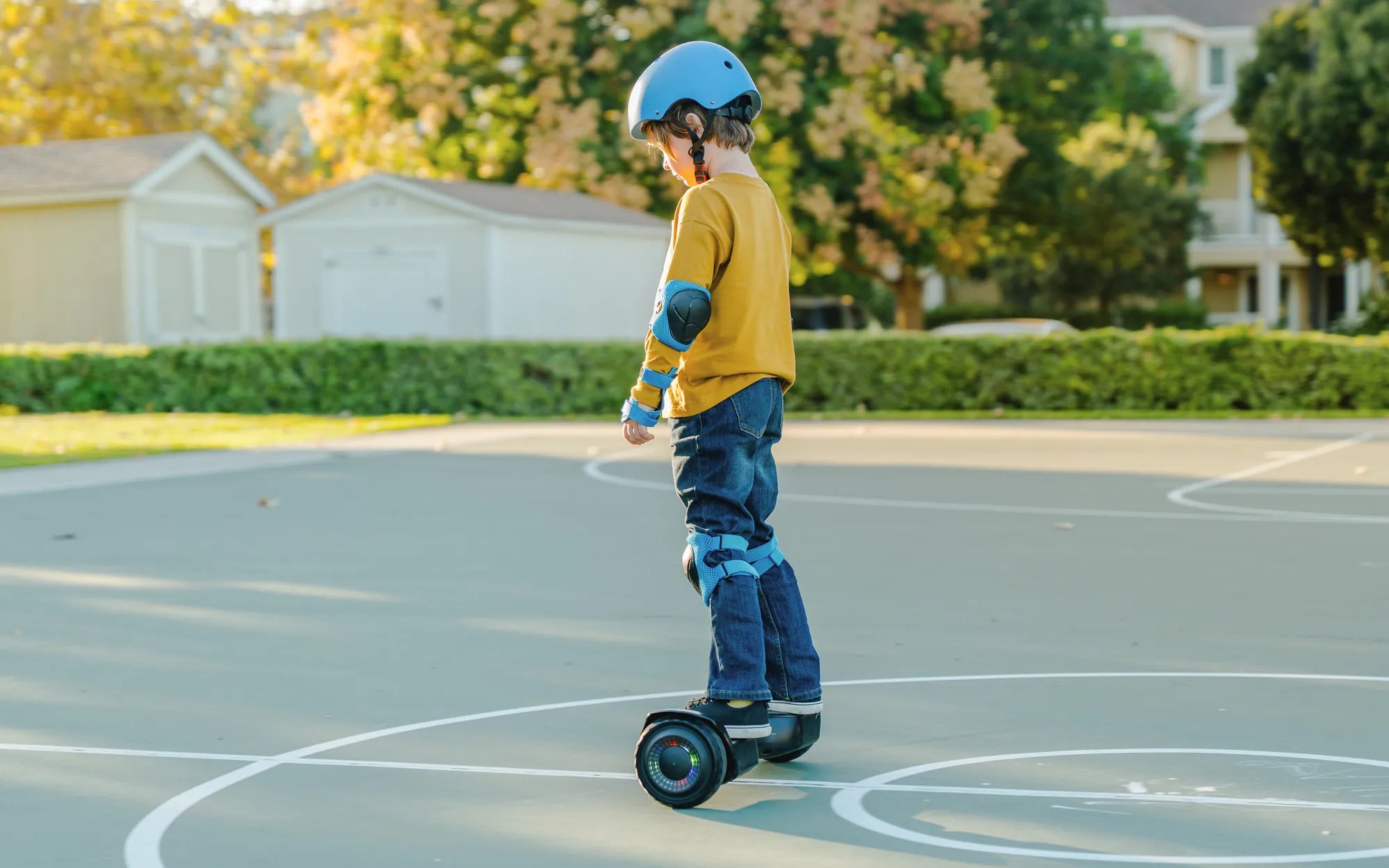
Imagine leaning forward on your hoverboard, expecting a smooth glide, only for it to lurch violently sideways or suddenly cut power beneath your feet. This scenario, a hoverboard out of control, is a frightening reality that has led to thousands of emergency room visits. While self-balancing scooters offer convenient fun and micro-mobility, their complex electromechanical systems harbor specific risks that every rider must understand. This article will dissect the mechanical failures and human errors that cause loss of control, detail the associated injury statistics, and provide a complete, actionable framework for safe operation and informed purchasing. Your safety on two wheels depends on this knowledge.
The Rise of the Hoverboard and the Hidden Risks
Hoverboards, or self-balancing scooters, exploded in popularity in the mid-2010s as a symbol of futuristic personal transport. Their appeal spans from children's toys to last-mile commuter solutions for adults. However, this rapid adoption was initially marred by a lack of industry-wide safety standards, leading to a wave of incidents that prompted recalls and regulatory action. The core risk lies in the device's fundamental operation: it is a dynamically unstable platform that relies entirely on sophisticated sensors, software, and motors to keep the rider upright. A failure in any one of these systems can instantly transform a fun ride into a hazardous situation. Understanding that a hoverboard is more akin to a complex electronic device than a simple skateboard is the first step toward mitigating the danger of a hoverboard out of control scenario.
The U.S. Consumer Product Safety Commission (CPSC) has been actively involved, reporting over 250,000 hoverboard-related emergency department visits between 2015 and 2020. These incidents were not merely minor tumbles; they included fractures, head injuries, and severe burns from battery fires. The initial market flood of uncertified, low-cost models created a perfect storm of risk, teaching a hard lesson about the importance of product integrity. While safety standards have since improved the landscape, the potential for a malfunction remains a present concern, especially with older, second-hand, or non-compliant models still in circulation. The phenomenon of a hoverboard out of control is therefore a critical study in both engineering failure and consumer awareness.
This guide moves beyond scare tactics to provide a data-driven analysis. We will explore the precise technical reasons why these devices fail, the real-world consequences documented by safety agencies, and the definitive measures riders can take to protect themselves. The goal is to empower you with the knowledge to enjoy the technology safely, whether you're a new buyer, a concerned parent, or a daily rider. The distinction between a safe ride and a dangerous one often comes down to the quality of the board and the discipline of the rider—two factors entirely within your control.
Why Hoverboards Go "Out of Control": Mechanical and Human Factors
A hoverboard losing control is rarely a random event. It typically results from a clear chain of failures, categorized into mechanical/electrical faults and rider error. The self-balancing mechanism uses gyroscopic sensors and tilt sensors to detect the rider's lean, sending signals to the logic board, which then commands the motors in each wheel to adjust speed and direction accordingly. A breakdown in this feedback loop is what leads to a hoverboard out of control. Mechanically, the most severe failures involve the battery pack, motor, or main control board. A sudden power surge or drop, a motor seizing, or a software glitch interpreting sensor data can cause the board to jerk, spin, accelerate uncontrollably, or simply shut off.
Human factors are equally significant. Over-leaning, especially by novice riders, can push the board beyond its designed torque limits, causing a motor to cut out. Attempting to ride on surfaces that are too rough, sloped, or wet can overwhelm the traction and stability systems. Incorrect mounting and dismounting are leading causes of falls, as stepping on one pad before the board is level can trigger an unexpected movement. Furthermore, exceeding the posted weight limit stresses all components, increasing the likelihood of a failure that could manifest as a hoverboard out of control. Understanding this interplay between machine limits and user action is crucial for prevention.
Often, incidents are a combination of both. A low-quality board with marginal components may function normally on a smooth driveway but fail catastrophically when a rider attempts a small curb or a faster speed, scenarios that a robust model would handle with ease. This is why investing in a well-engineered product from a reputable brand is not a luxury but a fundamental safety decision. It builds in a margin of error for the inevitable moments of rider misjudgment.
The Battery Issue: More Than Just a Power Source
The lithium-ion battery pack is the single most critical safety component in a hoverboard. In the early days of hoverboards, poorly manufactured batteries with inadequate internal protection circuits were the primary cause of infamous fire and explosion incidents. These cells could overheat during charging or use, entering a state called "thermal runaway," where they rapidly combust and are difficult to extinguish. A battery failing in this manner doesn't just stop the board; it creates an immediate and severe fire hazard, a definitive and extreme version of a hoverboard out of control.
The key differentiator is certification. Reputable brands invest in battery packs from quality cell manufacturers (like Samsung or LG) and encase them in robust housings with proper fusing, temperature management, and charge controllers. In contrast, uncertified, cut-rate boards often use recycled or low-grade cells packed together without necessary safety buffers. For the rider, the danger is hidden until it's too late. A board with a failing battery may exhibit warning signs like excessive heat from the deck, swelling of the casing, or significantly reduced range before a catastrophic event occurs.
Brands committed to safety, such as Gyroor, use UL-certified battery packs that have undergone rigorous testing for over 500 charge cycles, crush resistance, and electrical overload. This certification is a non-negotiable baseline for safety. When a hoverboard's battery is engineered to this standard, the risk of a power-related loss of control or fire is drastically minimized, turning the battery from a liability into a reliable power source.
Software Glitches and Sensor Failures
The "brain" of the hoverboard is its central logic board, running software that interprets sensor data up to hundreds of times per second. If this software has bugs or the gyroscope/tilt sensors become miscalibrated or damaged, the board's perception of "level" can be corrupted. This might cause it to accelerate when it shouldn't, resist leaning in a certain direction, or oscillate wildly in an attempt to correct a non-existent imbalance—all classic hoverboard out of control behaviors.
Sensor failures can be triggered by physical impacts. Dropping the board, riding aggressively over bumps, or even a hard curb strike can jar the sensitive internal components. Water ingress is another major threat; moisture can short-circuit sensors or the mainboard, leading to erratic behavior. While some higher-end models feature IP water-resistance ratings (like IPX5, which signifies protection against water jets from any direction), no consumer hoverboard is fully waterproof for submerged riding. A software glitch might also manifest as a delayed response, where the board reacts a half-second after the rider leans, creating a disorienting and dangerous lag.
Quality manufacturers mitigate these risks through rigorous pre-release testing, waterproofing key components, and using sensor suites with redundancy and error-checking. For the user, the main defense is to handle the board with care, avoid exposing it to impacts or moisture beyond its rating, and heed any error beeps or indicator lights that signal a system fault, powering the board off immediately if such warnings occur.
The Real-World Dangers: From Minor Falls to Major Injuries
The consequences of a hoverboard malfunction or fall are tangible and well-documented. Data from the CPSC and hospital studies paint a clear picture of the injury landscape. The most common injuries are orthopedic: fractures of the wrist, forearm, and elbow as riders instinctively throw out their hands to break a fall. These "FOOSH" injuries (Fall On OutStretched Hand) account for a significant majority of hoverboard-related emergency visits. Ankle sprains and fractures are also frequent, often occurring during awkward dismounts or when the board tips sideways.
More serious are head injuries, including concussions and traumatic brain injuries, which occur when riders are thrown backwards or forwards without a helmet. The risk is particularly acute for children and teenagers. Perhaps the most severe, though less frequent, injuries are burns resulting from battery fires. These can cause deep tissue damage and require extensive treatment. The danger extends beyond the rider; an out-of-control board can become a projectile, striking bystanders, or a fire can endanger an entire home.
The following table summarizes common injury types, their causes, and key preventative measures:
| Injury Type | Typical Cause | Key Prevention Measure |
|---|---|---|
| Wrist/Arm Fracture | Falling forward/backward onto hands | Wearing wrist guards |
| Ankle Sprain/Fracture | Board tipping sideways during ride or dismount | Wearing high-top shoes; practicing proper dismounts |
| Head Injury (Concussion) | Falling backwards, striking head on ground | Wearing a certified bicycle or multi-impact helmet |
| Facial/ Dental Injury | Forward fall onto pavement | Full-face helmet or combination of helmet & mouthguard |
| Burns | Battery thermal runaway/fire | Using only UL 2272 certified boards; proper charging habits |
| Contusions/Abraisons | Any fall onto hard surface | Wearing knee and elbow pads |
This data underscores that while the initiating event—a hoverboard out of control—is technological, the resulting harm is physical and often preventable with proper gear and a safe board. Investing in safety equipment is as important as investing in the hoverboard itself.
Your Essential Safety Checklist: Before, During, and After Riding
Safe hoverboarding is a disciplined practice. Adhering to a consistent checklist can virtually eliminate risks from rider error and help you detect mechanical issues early. Think of this as the standard operating procedure for responsible riding, a protocol that brands like Gyroor design their products to support.
Before You Ride: Always start with a visual and functional inspection. Check tire pressure (for air-filled tires) for proper inflation. Ensure the battery is adequately charged using only the manufacturer-provided charger. Look for any cracks in the body or loose parts. Power the board on on a level surface and listen for unusual beeps; ensure it calibrates to level correctly without drifting. Never bypass this step, as it can reveal a pending hoverboard out of control fault.
Gear Up Non-Negotiatbly: Before stepping on, you must be wearing a helmet (certified for cycling or skateboarding), wrist guards, and knee and elbow pads. This gear is your primary injury mitigation system and should be worn for every ride, regardless of duration or perceived simplicity.
Safe Riding Practices and Environment
Choose Your Terrain Wisely: Begin all practice sessions on a smooth, flat, dry, and private surface like an empty parking lot or driveway. Avoid public roads, sidewalks with heavy pedestrian traffic, gravel, sand, and wet pavement. Never ride on sloped or uneven terrain until you have mastered basic control on flat ground.
Master the Basics: Learn and practice the correct mount and dismount. Always mount by placing one foot on the board, ensuring it's level and activated, then smoothly stepping up with the other. To dismount, step off backwards one foot at a time, don't jump off. Maintain a moderate, controlled speed. Avoid sudden, aggressive leans. Be hyper-aware of your surroundings, scanning for cracks, debris, or obstacles well ahead of your path.
Environmental and Usage Rules: Do not ride in the rain or through puddles unless your board has a verified water-resistance rating (e.g., IPX5). Never exceed the posted weight limit. Do not attempt tricks or jumps unless your board is specifically designed for such use. Never allow a second person to ride with you. After riding, power the board off and store it in a cool, dry place away from flammable materials.
Choosing a Safe Hoverboard: What to Look For (Beyond the Price Tag)
Your first and most important safety decision happens at the point of purchase. Opting for a cheap, uncertified hoverboard is an inherent risk. A safe hoverboard is defined by its certifications, build quality, and the reputation of the brand behind it.
Start by scrutinizing the product description and specifications. The absolute minimum requirement for safety is the UL 2272 certification. This should be clearly stated by the seller. Avoid any board where this certification is absent, ambiguous, or only partially claimed (e.g., "has UL-certified batteries" is not the same as "UL 2272 certified system"). Look for a robust warranty—a brand that offers a comprehensive 1-year warranty is signaling confidence in its product's durability and safety.
Examine the stated features. A good hoverboard will have a clear IP rating for water and dust resistance (IPX4 or higher is recommended for casual use), a reliable range that matches high-quality battery capacity, and a top speed appropriate for its intended rider. Brands like Gyroor design their entire lineup around these principles, offering models with UL-certified batteries, IPX5 water-resistant designs for peace of mind against splashes, and reliable customer support, serving over 100,000 riders across North America and Europe. This established reputation is a key indicator of safety and reliability.
The Non-Negotiable Certifications: UL 2272
UL 2272 is the safety standard for Electrical Systems for Self-Balancing Scooters, established by Underwriters Laboratories. It is not a casual test. To earn this certification, the entire hoverboard—its battery, charger, motor, and all electrical circuitry—undergoes a battery of strenuous tests. These include electrical overload tests, abnormal charging tests, vibration tests, impact tests, and crush tests on the battery. The goal is to ensure the system will not catch fire, explode, or electrocute the user under foreseeable conditions of misuse.
When you purchase a UL 2272 certified hoverboard, you are purchasing a device that has been independently verified to meet rigorous safety benchmarks. This certification became a de facto requirement for legal sale in the United States after the CPSC's interventions. It is the single most important filter to apply when shopping. All responsible manufacturers, including Gyroor, ensure their personal transport products meet or exceed this critical standard, providing a fundamental safeguard against the most dangerous forms of a hoverboard out of control incident.
Build Quality and Brand Reputation
Certification is the baseline; build quality determines long-term safety and performance. Examine product images for solid construction—a sturdy deck, well-fitted shell parts, and quality wheel materials. Read user reviews focusing on durability and after-sales support. A brand with a physical presence and responsive customer service in your region (like Gyroor's US-based support) is more accountable than an anonymous online seller.
A strong brand reputation is built over time through consistent product quality and customer satisfaction. Gyroor, for example, maintains a 4.5/5 average rating across its customer base by focusing on reliable engineering, clear safety documentation, and honoring its 1-year warranty. This track record means that the company stands behind its safety claims and is invested in ensuring its products do not fail dangerously. Choosing such a brand is an investment in peace of mind, knowing that the engineering rigor matches the marketing promises, significantly reducing the lifetime risk of a malfunction.
Hoverboard Safety and Feature Comparison
When selecting a hoverboard, understanding how different models and brands prioritize safety and performance is crucial. The following table compares key safety and performance attributes across general categories, highlighting what to look for in a superior, safe product.
| Feature / Aspect | Uncertified / Low-Cost Board | Standard Certified Board | Premium Safety-Focused Board (e.g., Gyroor Standards) |
|---|---|---|---|
| Safety Certification | None or falsely claimed | UL 2272 Certified | UL 2272 Certified, with additional battery cell certifications (e.g., from name-brand suppliers) |
| Battery Quality | Unbranded, low-grade cells; high fire risk | UL-certified pack; basic safety | UL-certified pack using high-quality cells (e.g., LG, Samsung); tested for 500+ cycles |
| Water Resistance | None stated; high risk of short-circuit | May have basic splash resistance | Rated IPX5 or higher for protection against water jets from any direction |
| Build & Frame | Thin plastic; prone to cracks; weak hinge | Durable plastic; decent structural integrity | Reinforced frame; robust shell; quality footpad materials |
| Warranty & Support | 30 days or none; no accessible support | 90-day to 1-year limited warranty | Comprehensive 1-year warranty; responsive, regional customer service |
| Rider Safety Features | Basic beeps for low battery | Low-battery warning, possible beginner mode | Low-battery & overload warnings, beginner/speed modes, stable firmware updates |
This comparison illustrates that the premium for a safety-focused board purchases tangible risk reduction: a fundamentally safer battery, protection against environmental hazards, a durable build that withstands use, and a company that will support you if issues arise. It transforms the hoverboard from a potential hazard into a reliable piece of personal technology.
FAQ: Your Top Hoverboard Safety Questions Answered
Q: Are hoverboards safe for kids?
A: With strict precautions, they can be. The rider should be at least 8-10 years old, possess good balance and coordination, and must always wear full protective gear. The hoverboard must be UL 2272 certified, size-appropriate, and used under direct adult supervision on safe, private terrain. Parental control over speed settings (via a beginner mode) is essential.
Q: What should I do if my hoverboard starts beeping, vibrating strangely, or smoking?
A: This is a critical warning. Immediately and safely step off the board if it is safe to do so. Power it off using the button if possible. If there is smoke or a burning smell, move everyone away from the board and do not attempt to charge it or turn it back on. Place it in an open, non-flammable area (like a concrete driveway) away from structures. Contact the manufacturer's support immediately. This is a definitive sign of a potential hoverboard out of control failure.
Q: Can I ride my hoverboard in the rain or through puddles?
A: It depends entirely on the board's IP rating. Most basic boards cannot handle water. Boards with an IPX4 rating can resist splashes from any direction, while IPX5 (like many Gyroor models) can handle water jets. However, no consumer hoverboard is fully waterproof or submersible. You should avoid deep puddles and heavy rain, as water can damage bearings, motors, and electronics over time, increasing the risk of failure.
Q: How do I properly charge and store my hoverboard to maximize safety?
A> Always use the manufacturer's original charger. Charge on a hard, non-flammable surface in a well-ventilated area, away from beds, sofas, or direct sunlight. Do not leave it charging unattended for extended periods or overnight. Once fully charged, unplug it. For storage, especially long-term, leave the battery at approximately 50-70% charge in a cool, dry place. Avoid storing it in extreme heat (like a car trunk in summer) or freezing temperatures.
Q: Is it normal for my hoverboard to get warm?
A> Some warmth from the motors or battery compartment during or after extended use is normal due to electrical operation. However, excessive heat—to the point where it's uncomfortable to touch the deck—is a warning sign. If the board feels hot, stop riding, power it off, and let it cool down in an open area. Persistent overheating indicates a potential battery or motor problem that requires inspection.
Embrace the Fun, Respect the Technology
The thrill of gliding effortlessly on a self-balancing scooter is undeniable, but it is a thrill built upon a foundation of complex engineering. A hoverboard out of control is not an urban myth; it is a preventable incident rooted in specific technical failures and safety oversights. By understanding the risks—from substandard batteries to sensor glitches—and actively mitigating them through informed purchasing and disciplined riding, you reclaim control. The equation for safe hoverboarding is straightforward: invest in a certified, quality product from a reputable brand, and pair it with an unwavering commitment to protective gear and safe riding practices.
This approach transforms the hoverboard from a novelty with hidden dangers into a reliable and enjoyable tool for mobility and recreation. Brands that prioritize these values, like Gyroor with their UL-certified batteries, IPX5 water-resistant designs, and commitment to customer safety, provide the reliable hardware necessary for this peace of mind. Your safety on a hoverboard is not a matter of luck; it is the direct result of the choices you make before you ever step on the board.
Ready to ride with confidence? Explore a collection of personal electric transport built to the highest safety standards. Browse the full Gyroor collection, featuring hoverboards, electric scooters, and e-bikes designed for reliability and backed by a comprehensive 1-year warranty, at gyroorboard.com.
Boys Scooter for Kids Girls: The Ultimate Guide to Choosing the Perfect Ride
Best Kids Electric Scooter: A Parent's Guide to Safety, Features, and Fun