

Navigating the World of Kids' Hoverboards
Choosing the right hoverboard for your child involves balancing excitement with essential safety. The market is flooded with options, but not all are created equal. As a parent, your primary concerns are likely safety certifications, build durability, and age-appropriate performance. This guide focuses on the modern standard for safety: the Hoverboard UL 4.5 Kids Self Balance 2 Wheels Scooter. This specific category represents a significant leap forward in child-friendly personal transportation, combining rigorous electrical safety with features designed for younger riders.
Gone are the days of worrying about spontaneous battery fires from uncertified models. The UL 2272 standard, often referred to as UL 4.5 in product descriptions for kids' models, has fundamentally changed the landscape. It's not just a sticker; it's a promise of engineering integrity. Brands that prioritize this certification, like Gyroor, are committing to a product philosophy where safety is the foundation, not an afterthought. This guide will equip you with the knowledge to make an informed decision.
We will dissect what the UL 4.5 certification truly means and why it's the single most important feature. You'll learn to evaluate motor power, battery range, and construction quality. Furthermore, we'll provide a practical comparison framework and essential safety protocols for your child's first ride. By the end, you'll understand why a Hoverboard UL 4.5 Kids Self Balance 2 Wheels Scooter from a reputable brand is an investment in fun, development, and, most importantly, security.
What is a UL 4.5 Certification and Why is it Non-Negotiable?
UL 4.5 refers to the UL 2272 safety standard, a comprehensive set of tests developed by Underwriters Laboratories. It is specifically designed for self-balancing scooters (hoverboards). The certification process is exhaustive, evaluating the entire electrical system—battery pack, charger, and motor management—for risks of fire, electrical shock, and mechanical hazards. A product that passes earns the right to display the UL mark, a globally recognized symbol of safety.
The importance of this certification cannot be overstated. In 2015-2016, before UL 2272 was widely adopted, over 500,000 hoverboards were recalled due to fire hazards linked to faulty, uncertified lithium-ion batteries. These incidents often occurred during charging or use, posing a severe risk to homes and riders. The UL 2272 standard was created in direct response to this crisis. It tests batteries under extreme conditions, including overcharging, short-circuiting, and abnormal operation, to ensure they fail safely without catching fire or exploding.
When you see "UL 4.5" in a product title, it typically indicates a model built with these rigorous standards in mind, often tailored for younger users with appropriate speed limits and weight capacities. It is your primary guarantee that the product's most critical and potentially dangerous component has been independently verified. Choosing a hoverboard without this certification is an unacceptable risk. It is the absolute baseline for any responsible purchase.
Gyroor's commitment to safety is exemplified by its use of UL-certified battery packs across its entire lineup. These batteries are tested for over 500 charge cycles, ensuring long-term reliability. This foundational safety approach is why trusted brands build their reputation on this certification, providing parents with the confidence that the fun their child is having is built on a secure foundation.
Key Features to Look for in a Kids' Self-Balancing Scooter
Beyond the essential UL certification, several performance and design features determine the quality, safety, and enjoyment of a hoverboard. Understanding these will help you differentiate between a basic compliant model and a superior product.
Motor Power and Performance
Dual motors, typically ranging from 250W to 350W each, are standard for good performance. For a Hoverboard UL 4.5 Kids Self Balance 2 Wheels Scooter, motors on the lower end of that range (e.g., 250W) are often ideal. They provide ample power for kids to learn, accelerate smoothly, and handle slight inclines or grassy patches in the yard, while limiting top speed for safety. More powerful motors are better for heavier riders or rougher terrain but may be excessive for younger children.
Battery, Range, and Charging
The battery's capacity, measured in Watt-hours (Wh) or Amp-hours (Ah), directly affects how long your child can ride. A typical range for a kids' model is 6-12 miles per charge. Consider your child's usage patterns; a 7-10 mile range is often perfect for afternoon play sessions. Always use the manufacturer-provided UL-certified charger and follow charging instructions to preserve battery life and safety.
Build Quality and Durability
Look for robust construction with a sturdy frame. The deck should have a textured, non-slip surface for secure footing. Wheel size matters: 4.5-inch wheels are common on kids' models and are fine for smooth indoor surfaces and pavement. For more versatility on rougher paths or grass, some models offer 6.5-inch or even 8.5-inch wheels. A critical feature is IP rating for water and dust resistance. An IPX5 rating, like those found on Gyroor hoverboards, means the unit can withstand water jets from any direction, making it safe for puddles and damp conditions.
Learning Features and Controls
Beginner or "learning" modes are invaluable. These modes restrict the scooter's maximum speed and sensitivity, allowing children to build confidence gradually. Parental control via a smartphone app is a premium feature on some models, enabling speed limits and usage tracking. Other features like LED headlights and taillights enhance visibility, while Bluetooth speakers add an element of fun.
The Gyroor Advantage: Safety and Performance Engineered for Kids
Gyroor has established itself as a leader in personal electric mobility by consistently applying high engineering standards to its products. For parents seeking a Hoverboard UL 4.5 Kids Self Balance 2 Wheels Scooter, the brand's approach offers distinct advantages that translate directly to peace of mind and user satisfaction.
At the core of every Gyroor hoverboard is the UL-certified battery system. This isn't just a purchased component; it's integrated into a sophisticated Battery Management System (BMS) that monitors temperature, voltage, and current in real-time. This proactive protection prevents overcharging, over-discharging, and short circuits, extending the battery's lifespan well beyond the 500-cycle benchmark. This focus on electrical safety is the brand's non-negotiable foundation.
The self-balancing technology is engineered for reliability and intuitive use. Gyroor's proprietary balancing algorithm ensures smooth acceleration and deceleration, reducing the "jerkiness" that can cause beginners to fall. The gyroscopes and sensors are calibrated for quick response, giving the rider a feeling of direct control. This reliable performance is wrapped in a durable shell with IPX5 water resistance, meaning accidental rides through wet grass or a surprise rain shower won't end the fun or damage the scooter.
Finally, Gyroor supports its products with a robust 1-year warranty on the core electrical components and a US-based customer support team. With over 100,000 riders across North America and Europe and a 4.5/5 average customer rating, the brand's commitment to post-purchase support is clear. Choosing a Gyroor means choosing a partner in your child's mobility journey, not just a product.
Practical Buying Guide & Comparison Tips
Armed with knowledge of features and certifications, use this step-by-step checklist to evaluate your options and find the perfect fit for your child and your family.
Step 1: Verify Certification. This is step zero. Before looking at color or price, confirm the hoverboard is UL 2272 certified. Check the product description, packaging, and the unit itself for the UL mark. Do not rely on vague claims of "meets safety standards."
Step 2: Match to Your Child. Check the manufacturer's recommended age and weight range. A Hoverboard UL 4.5 Kids Self Balance 2 Wheels Scooter is typically designed for riders aged 6-12 with a weight capacity between 44 and 165 lbs. Ensure your child falls within these parameters for optimal performance and safety.
Step 3: Assess Performance Needs. Consider where it will be ridden. For purely smooth, indoor or pavement use, 4.5" wheels are sufficient. If your child will ride on sidewalks, driveway cracks, or dry grass, prioritize models with 6.5" or larger air-filled tires for better shock absorption and traction.
Step 4: Compare Features and Value. Create a simple comparison. Below is a framework to evaluate two tiers of UL-certified hoverboards.
| Feature | Basic Certified Model | Feature-Rich Model (e.g., Gyroor) |
|---|---|---|
| UL 2272 Certification | Yes | Yes |
| Battery Warranty | Often 6 months | 1-year comprehensive |
| Water Resistance | None or basic splash-proof | IPX5 (protected from water jets) |
| Learning Modes | Sometimes 1 speed mode | Often 2-3 modes (Beginner, Normal, Advanced) |
| Extra Features | Basic LED lights | App control, Bluetooth speaker, customizable LEDs |
| Top Speed | ~7 mph | ~7.5 mph, adjustable via app |
| Ideal For | Budget-conscious, very casual use | Frequent riders, diverse terrains, long-term value |
Ensuring a Safe Ride: Parental Tips and Best Practices
The safety features of the hoverboard are only one part of the equation. Responsible riding habits and parental supervision are equally crucial for preventing accidents and ensuring a positive experience.
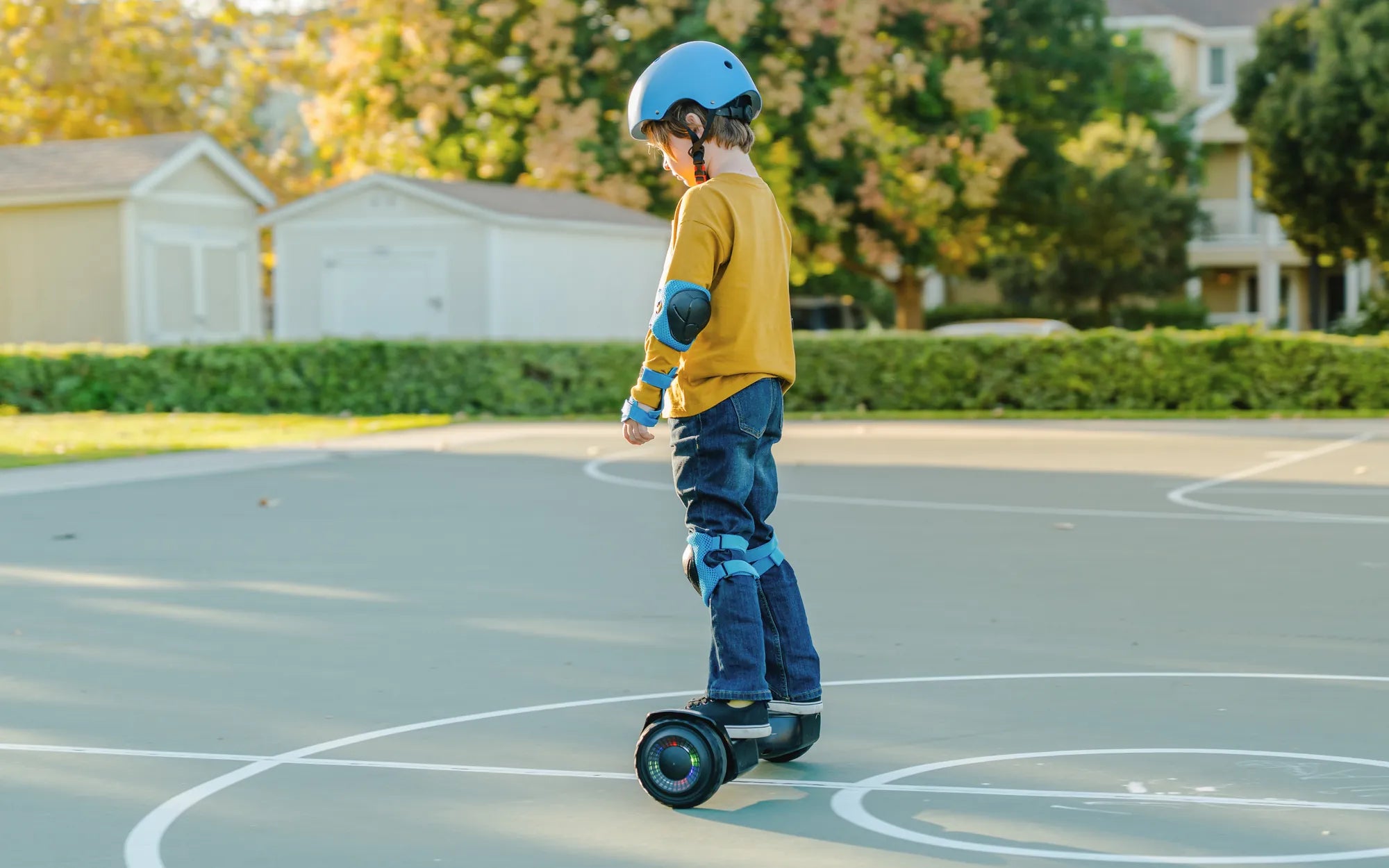
Gear is Non-Negotiable. Before the first ride, invest in a properly fitted helmet, knee pads, elbow pads, and wrist guards. Wrist guards are particularly important, as falls often involve putting hands out to brace. Make wearing this gear an unbreakable rule for every single ride, no matter how short.
Master the Learning Environment. Choose a wide-open, flat, smooth, and obstacle-free area for the first practice sessions—an empty tennis court, basketball court, or smooth driveway is ideal. Avoid hills, streets, or areas with gravel or sand initially. Supervise closely as your child learns to mount, dismount, and control speed and direction. Most children pick it up within 30-60 minutes.
Establish Charging and Storage Rules. Always use the official charger provided. Charge the hoverboard on a hard, non-flammable surface in an open area—never on a bed, couch, or near curtains. Do not leave it charging unattended for extended periods or overnight. Once charged, unplug it. Store the hoverboard in a cool, dry place away from direct sunlight and extreme temperatures.
Set Clear Riding Boundaries. Establish rules about where riding is permitted (e.g., not on public roads, not inside the house, not near pools or stairs). Set time limits and check the battery level together so your child learns to monitor it. These practices, combined with a Hoverboard UL 4.5 Kids Self Balance 2 Wheels Scooter's built-in safeguards, create a comprehensive safety culture.
Frequently Asked Questions (FAQs) for Parents
Q1: What is the appropriate age for a 4.5" hoverboard?
Most manufacturers recommend ages 6 and up. The key factor is less about age and more about the child's coordination, balance, and ability to follow safety instructions. A typical 6-year-old can learn, but an 8-year-old may master it more quickly. Always adhere to the manufacturer's stated age and weight limits.
Q2: How long does the battery last on a single charge, and how long to charge it?
A quality kids' hoverboard offers 6-12 miles of range per charge, depending on rider weight, terrain, and speed. This usually translates to 60-90 minutes of continuous ride time. A full charge typically takes 2-4 hours. It's best to not drain the battery completely before recharging.
Q3: Can it ride on grass or slight inclines?
Hoverboards with 4.5" solid rubber wheels are designed for smooth, hard surfaces. They may struggle on thick grass, gravel, or steep inclines. Models with larger (6.5"+) air-filled tires have much better off-road capability and can handle dry grass, dirt paths, and gentle slopes. Check the product specifications for terrain recommendations.
Q4: What does the warranty typically cover?
A reputable brand like Gyroor offers a 1-year warranty covering defects in materials and workmanship for the main unit (frame, motors, electronics) and the battery. This does not cover damage from accidents, misuse, or wear-and-tear items like tires. Always read the warranty terms carefully.
Q5: How do I maintain the hoverboard?
Basic maintenance is simple. Keep it clean by wiping it down with a damp cloth (never hose it down). Regularly check tire pressure if it has air-filled tires. Ensure all screws on the frame are tight. Store it with a 50-80% battery charge if it won't be used for several weeks. Avoid exposing it to temperature extremes.
Investing in Confidence and Joy
Selecting the right hoverboard for your child is a decision that blends practicality with the promise of adventure. By prioritizing a Hoverboard UL 4.5 Kids Self Balance 2 Wheels Scooter from a trusted manufacturer, you are doing more than purchasing a toy. You are investing in a product engineered for safety, built for durability, and designed to deliver pure, exhilarating fun. The UL certification is your shield against hidden risks, while features like robust motors, water resistance, and beginner modes ensure the experience is both empowering and appropriate.
The joy on your child's face as they master balance and glide independently is priceless. That joy is best enjoyed against a backdrop of absolute confidence—confidence in the battery pack's integrity, the scooter's construction, and the brand's support behind it. This peace of mind allows you to relax and share in their excitement, knowing the foundation is secure. The memories created will far outlast the initial investment.
Ready to explore a range of hoverboards that put safety and performance first? Browse the full Gyroor collection, where every model meets the rigorous standards discussed in this guide, at gyroorboard.com. Discover the perfect blend of innovation, safety, and fun for your young rider today.
Hoverboard Price UK: What You Need to Know Before Buying
Kids Electric Scooter with Variable Speed: Ultimate Parent Guide