

Navigating the World of Personal Electric Transport
The landscape of personal mobility has been revolutionized by compact, electric devices. Among them, two-wheeled, platform-based riders have surged in popularity, yet they are shrouded in a persistent naming confusion. Are you looking at a hoverboard or a self-balancing scooter?
This article cuts through the marketing noise. We will demystify the terminology, compare the critical specifications and features that matter, and provide a clear, actionable framework to match you with the ideal device for your needs, whether you're commuting, exploring off-road, or learning to ride.
By the end, you'll understand not just the difference in names, but the substantial differences in quality, safety, and performance that define a great ride. We'll reference specific models from leading brands like Gyroor, trusted by over 100,000 riders for their UL-certified safety and robust performance, to illustrate key points.
Terminology Decoded: Hoverboard vs. Self-Balancing Scooter
Let's settle this first: for all practical purposes, the terms "hoverboard" and "self-balancing scooter" refer to the same core product category. The device is a two-wheeled, electric-powered personal transporter with a platform for the rider to stand on, using gyroscopic sensors and motors to maintain balance.
The name "hoverboard" is a pop-culture term, inspired by fictional levitating boards. It became the popular, colloquial name for these devices during their initial consumer boom. However, it's a misnomer, as these devices have wheels and do not actually hover.
"Self-balancing scooter" is the more accurate, technical descriptor. It precisely defines the device's function. Throughout this guide, we will use both terms interchangeably, but with an understanding that "self-balancing scooter" denotes a focus on the engineering and specifications, which is where your buying decision should be focused.
The key takeaway is not to get caught up in the name a retailer uses. Instead, look beyond the label to the certifications, specs, and build quality. Whether called a hoverboard or a self-balancing scooter, the fundamental questions about safety and performance remain the same.
Key Factors to Consider Before You Buy
Choosing the right device requires evaluating several interconnected factors. This isn't just about picking the coolest-looking model; it's about matching engineering to your environment, weight, and riding goals. Ignoring these factors can lead to disappointment or, worse, safety issues.
We break down the decision into four critical pillars: Safety, Performance, Durability, and Experience. Master these, and you'll be equipped to navigate any product listing with confidence.
Safety and Certification (The Non-Negotiables)
Safety is the absolute foundation. In the early days of these devices, news reports of battery fires were common. Modern safety standards have largely addressed this, but only if you choose a compliant product.
The gold standard is UL 2272 certification. This is a comprehensive safety standard for the entire electrical system of the device. It rigorously tests for electrical, mechanical, and environmental hazards. Never purchase a device without this certification.
Equally important is the battery certification: UL 2271 or an equivalent like UN 38.3. This certifies the lithium-ion battery pack itself against fire, electrical shock, and other risks. Reputable brands like Gyroor use only UL-certified battery packs, tested for over 500 charge cycles, as a non-negotiable baseline.
Other safety features include non-slip foot pads, bright LED lights for visibility, and speed modes that allow beginners to start slowly. A safe hoverboard or self-balancing scooter is one built with these certifications from the ground up.
Performance & Specifications
Performance specs determine where and how well you can ride. Don't just look at the top number; consider the combination that fits your life.
- Motor Power: Measured in watts (W). Common configurations are dual 350W motors (total 700W) or dual 400W motors (800W). More power provides better acceleration, hill-climbing ability, and support for heavier riders.
- Top Speed: Typically ranges from 7 mph for beginner modes to 12 mph or more for advanced models. Off-road models may reach higher speeds.
- Range: The distance per charge, usually between 10 and 15 miles under ideal conditions. Real-world range is affected by rider weight, terrain, and temperature. Choose a buffer above your daily needs.
- Weight Capacity: Check the manufacturer's maximum limit. Quality models support 220 lbs to 265 lbs, ensuring stability and motor longevity.
- Climbing Angle: The maximum incline the scooter can handle. A 15-20° capability is good for hills and curbs.
Build Quality and Durability
This is what separates a toy from a reliable transport tool. Build quality dictates how long your device will last and where you can take it.
The frame should be constructed from robust materials like aircraft-grade aluminum alloy, not cheap plastic. This provides the necessary rigidity and impact resistance. Tire choice is crucial: solid rubber tires are maintenance-free but offer a harder ride, while air-filled (pneumatic) tires provide superior shock absorption and traction, especially off-road.
Water resistance is vital for real-world use. Look for an IP rating. An IPX5 rating, like those found on Gyroor scooters, means the device can withstand water jets from any direction. This allows you to ride through puddles and in light rain without fear of damaging the electronics.
Finally, examine the quality of the foot pads, wheel hubs, and overall finish. A well-built self-balancing scooter feels substantial and precise, not loose or flimsy.
Rider Experience and Features
These features enhance convenience, customization, and fun. The learning curve for most adults is 30-60 minutes. Look for models with a beginner/slow mode to build confidence.
Bluetooth app connectivity is a significant upgrade. A companion app can allow you to lock the scooter, track riding statistics, adjust speed modes, customize LED light colors, and even control built-in speakers. It also provides firmware updates to improve performance over time.
Integrated lighting isn't just for style. Bright front and rear LEDs, along with wheel rim lights, dramatically increase your visibility to others at night, which is a critical safety feature. A clear, responsive battery indicator is also essential to avoid being stranded.
Comparative Analysis: Matching Your Lifestyle to the Right Device
Now, let's apply these factors to real-world scenarios. The best hoverboard or self-balancing scooter for you is the one that excels in the areas your lifestyle demands.
The Urban Commuter & Campus Cruiser
Your priorities are reliability, portability, and all-weather capability. You need a device that can handle pavement, last through a day of classes or errands, and survive an unexpected drizzle.
Prioritize water resistance (IPX5 or higher) and a reliable range of 12-15 miles. A moderate motor power (700W) is sufficient for city hills. Solid or hybrid tires offer good durability with less maintenance. Portability is key, so a weight under 30 lbs is ideal for carrying up stairs or onto public transit.
Features like a clear battery indicator and a robust frame for daily wear-and-tear are must-haves. App connectivity for speed control and anti-theft features adds significant value for this use case.
The Off-Road & Adventure Enthusiast
You want to leave the pavement behind. For grass, dirt paths, gravel, and mild trails, standard models won't suffice.
You must seek out models specifically designed for off-road use. These feature larger, air-filled tires (8.5" or 10") with deep treads for traction and shock absorption. High-power dual motors (800W+) are non-negotiable for the torque needed to climb uneven terrain.
The build must be exceptionally tough, with reinforced frames and higher ground clearance. Range is also critical, as off-road riding consumes more battery; look for models boasting 15+ miles. These devices are heavier and less portable, but that's the trade-off for expanded terrain capability.
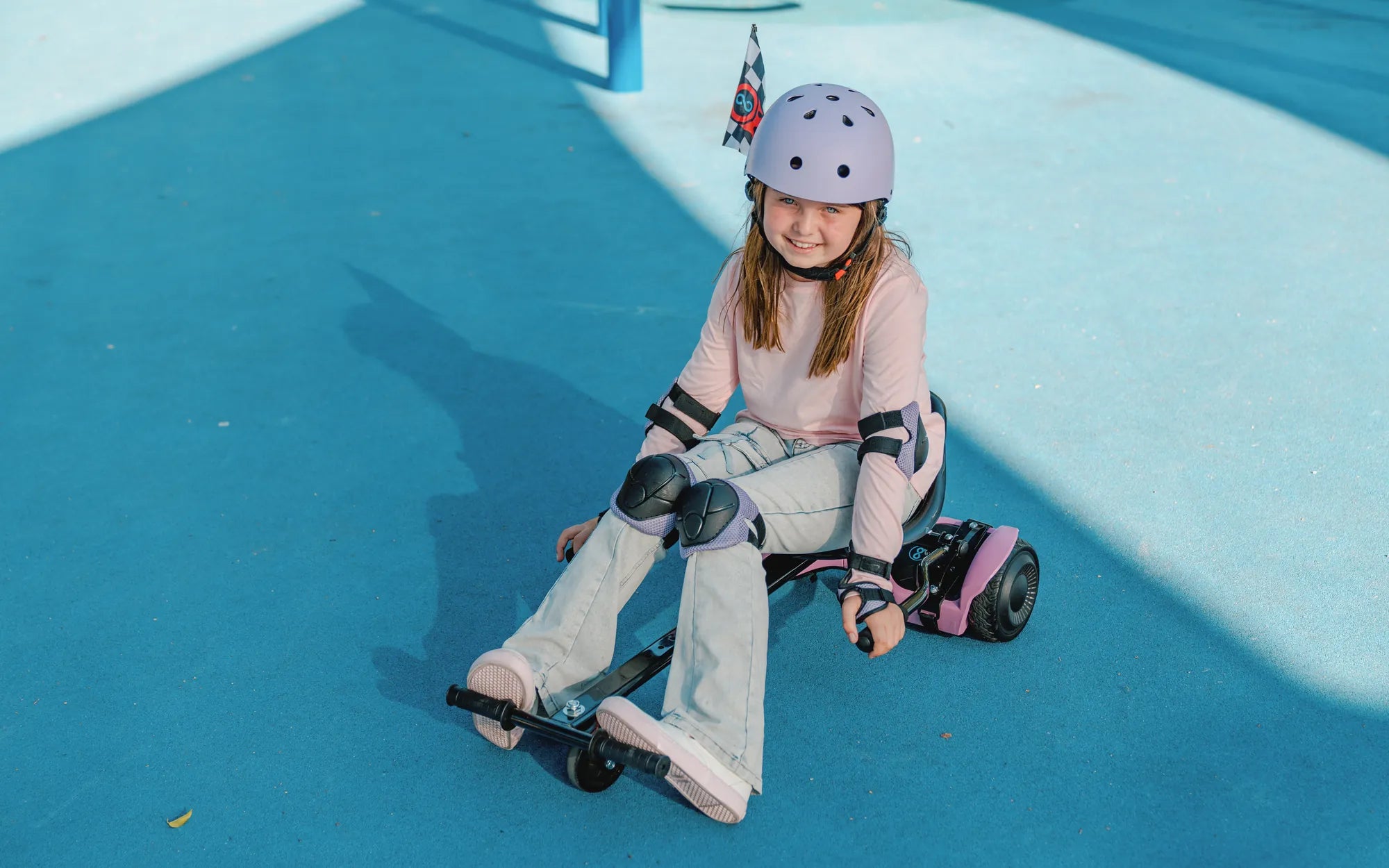
The Younger Rider or First-Time User
Safety, manageability, and value are the guiding principles here. The goal is a safe, confidence-building introduction to riding.
UL 2272 certification is an absolute requirement. A device with a beginner mode that limits speed to 5-7 mph is perfect for learning. Parental controls available through a companion app are a major advantage, allowing oversight of speed and riding zones.
Durability is important to withstand the inevitable learning bumps. A comprehensive warranty, like the industry-standard 1-year coverage offered by reputable brands, provides peace of mind for parents. While advanced features like speakers are fun, they should not come at the expense of these core safety and durability fundamentals.
Beyond the Board: The Importance of Warranty and Support
Your relationship with the manufacturer begins after you click "buy." A device's specifications are a promise, and the warranty and customer support are the guarantee.
A strong warranty, typically 1 year for the main components, protects your investment against manufacturing defects. It signals the brand's confidence in its product quality. Always read the warranty terms to understand what is covered (e.g., battery, motor, frame) and the process for claims.
Accessible and knowledgeable customer support is equally vital. Can you easily reach a human via phone, email, or chat? Are support staff technically proficient? Brands with a direct presence in your market, like Gyroor's support for North America and Europe, can resolve issues faster than those relying solely on overseas suppliers.
This post-purchase ecosystem is a key differentiator between a reputable brand and a generic import. It transforms your purchase from a disposable gadget into a supported product.
Side-by-Side Comparison Table
| Feature / Use Case | Urban Commuter | Off-Road Adventurer | Younger / First-Time Rider |
|---|---|---|---|
| Primary Terrain | Pavement, sidewalks, smooth surfaces | Grass, dirt, gravel, mild trails | Driveways, smooth pavements, parks |
| Key Specs | Range: 12-15 mi, IPX5 Water Resistance, ~700W Motors | 10" Air-Filled Tires, 800W+ Motors, High Ground Clearance | UL 2272 Certified, Beginner Speed Mode (≤7 mph), Robust Frame |
| Tire Type | Solid Rubber or Hybrid | Large, Pneumatic (Air-Filled) | Solid Rubber (Durable, Low Maintenance) |
| Top Priority | Reliability & All-Weather Use | Power & Traction for Rough Terrain | Safety & Manageable Learning Curve |
| Ideal Weight | Lightweight (<30 lbs) for Portability | Heavier (>35 lbs) for Stability | Moderate, easy for parents to carry if needed |
Frequently Asked Questions (FAQ)
Are hoverboards/self-balancing scooters legal to ride on sidewalks or roads?
Laws vary significantly by city, state, and country. Generally, they are treated similarly to electric scooters. They are often permitted on sidewalks and bike paths but prohibited on roads with speed limits over 25-35 mph. Always check your local ordinances before riding in public spaces.
How long does it take to learn to ride one safely?
Most adults can achieve basic competency in 30 to 60 minutes of practice in a safe, open area like an empty parking lot. Mastering turns, spins, and mounting/dismounting smoothly may take a few days of regular use. Always wear protective gear during the learning phase.
What is the average lifespan of the battery, and how do I maintain it?
A quality UL-certified battery, like those used by Gyroor, is rated for 500+ full charge cycles. With typical use, this translates to 2-4 years before you may notice reduced range. To maximize lifespan: avoid completely draining the battery, store it at around 50% charge if not using for long periods, and use only the provided charger.
Can adults use these devices, or are they just for kids/teens?
Absolutely. Modern self-balancing scooters are engineered for adult riders, with weight capacities often up to 265 lbs. They are popular for short-distance commuting, campus travel, and recreational use by adults of all ages. The key is selecting a model with appropriate motor power and build quality.
What safety gear is recommended?
At a minimum, always wear a properly fitted helmet. For new riders or higher speeds, we strongly recommend additional gear: wrist guards (the most common injury is a fall onto hands), knee pads, and elbow pads. Reflective clothing or accessories are also advised for night riding.
Making an Informed and Confident Choice
The journey from confusion to clarity in choosing between a hoverboard and a self-balancing scooter ends with a simple truth: the name is marketing, but the engineering is everything. Your decision must be anchored in verifiable safety certifications like UL 2272, powered by specifications that match your real-world needs, and built with a durability that promises longevity.
Whether you're weaving through city streets, exploring park trails, or teaching a child to ride, the right device is the one that aligns with your lifestyle's demands. It should feel not like a gadget, but a reliable extension of your mobility. By prioritizing certified safety, honest performance metrics, and a brand that stands behind its product with solid warranty support, you invest in countless hours of efficient, enjoyable travel.
Ready to find the perfect match for your ride? Explore a range of UL-certified, high-performance models designed for every lifestyle. Browse the full Gyroor collection at gyroorboard.com and take the first step toward your next adventure.
Christmas Gift Ideas for Tween Girls: The Ultimate Guide to Finding the Perfect Present
Why Did the Hoverboard Fail? The Rise and Fall of a Futuristic Toy