

Introduction: Beyond the Basic Hoverboard
The personal transporter has evolved from a novelty into a sophisticated piece of consumer technology. Today's premium models are defined by integrated smart features that enhance utility, safety, and enjoyment. For the discerning rider, a true hoverboard with Bluetooth and lights represents the ultimate convergence of form and function, transforming a simple commute into a connected experience.
This article will dissect the technology that makes these devices exceptional. You'll learn how Bluetooth connectivity extends beyond speakers to become a diagnostic hub, how advanced lighting systems are crucial for safety, and why underlying certifications are the most important tech features of all. We'll reference engineering from leading brands like Gyroor, trusted by over 100,000 riders for combining innovation with UL-certified safety and IPX5 water-resistant durability.
The Tech-Enthusiast's Checklist: Core Features Explained
A premium hoverboard distinguishes itself through integrated systems that offer tangible benefits. The core appeal of a modern hoverboard with Bluetooth and lights lies in this seamless blend of connectivity, visibility, and performance.
Bluetooth Connectivity: The Command Center
Bluetooth integration serves as the device's nervous system. While streaming music through a built-in speaker is the most visible function, the technology's real value lies in app-based control. A dedicated smartphone application allows riders to lock the board remotely, track ride statistics, adjust sensitivity and speed modes, and monitor battery health in real-time.
This connectivity enables firmware updates, ensuring your hoverboard's performance and safety features can improve over time. It transforms the device from a static product into a platform that evolves, a key consideration for any tech enthusiast investing in personal electronics.
Advanced Lighting Systems: Illuminated Engineering
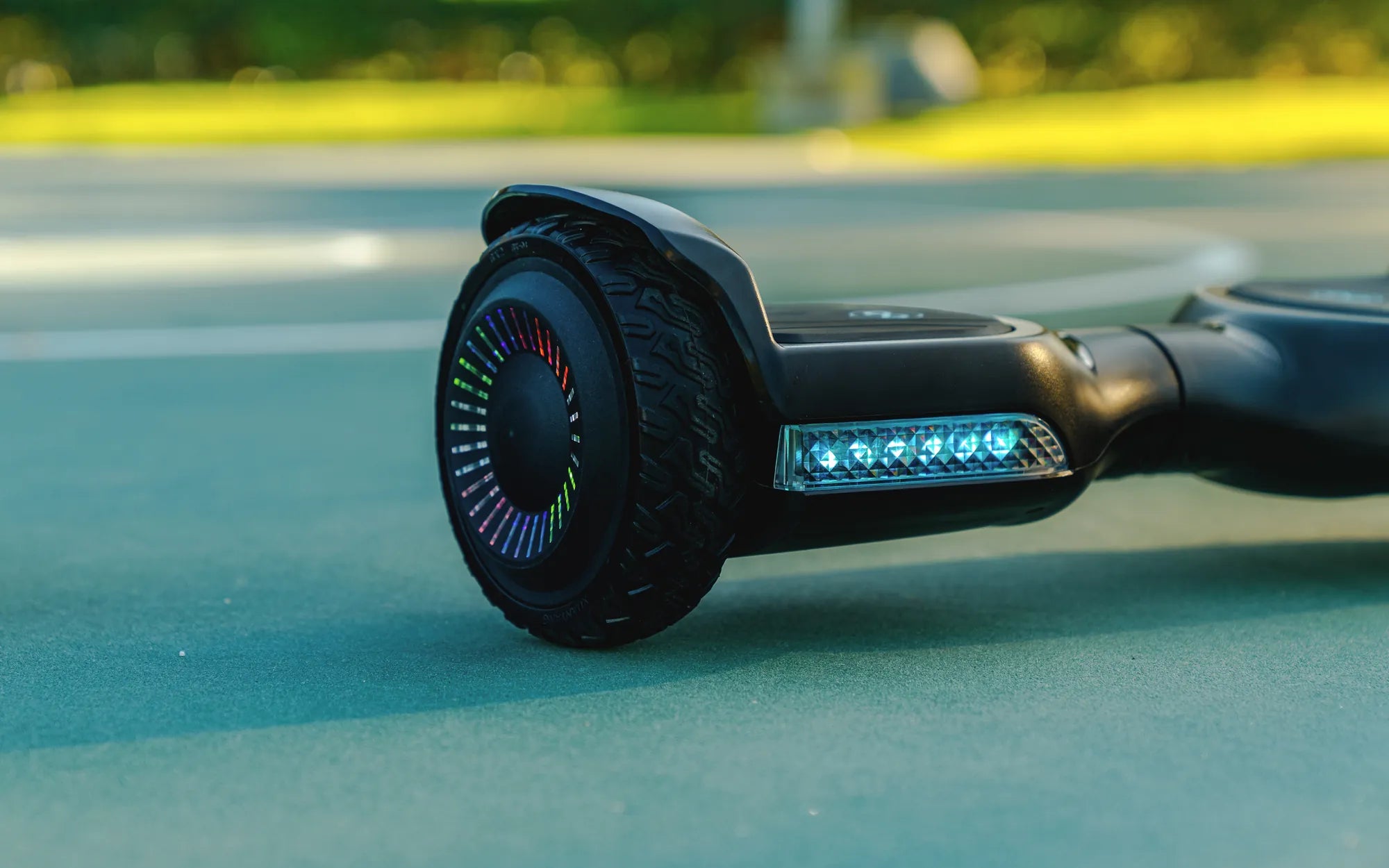
Lighting on a high-end hoverboard is a multi-faceted feature combining safety, legality, and personalization. A comprehensive system typically includes bright LED headlights for forward visibility, ambient underglow for side visibility, and responsive brake lights that activate when slowing down.
This isn't merely aesthetic. For evening or early morning rides, these lights make the rider visible to pedestrians and vehicles, significantly reducing accident risk. Many advanced models offer customizable color schemes and patterns via an app, allowing riders to match their style while maintaining a critical safety function.
Why Safety is the Smartest Tech Feature
For all the appeal of speakers and light shows, the most sophisticated technology in any personal electric vehicle is the safety engineering that prevents failure. A true hoverboard with Bluetooth and lights must be built on a foundation of proven safety standards.
The Non-Negotiable: UL 2272 Certification
UL 2272 certification is the global benchmark for self-balancing scooter electrical systems. It involves rigorous testing of the battery pack, charger, and motor management system for overcharge, short circuit, and temperature extremes. This certification is the primary defense against the thermal runaway incidents that plagued early-generation devices.
Brands that prioritize engineering, like Gyroor, build all models around UL-certified battery packs tested for 500+ charge cycles. This isn't a marketing add-on; it's the fundamental technology that allows you to enjoy advanced features with confidence.
Built for the Real World: IP Ratings and Durability
Technology must withstand real-world conditions. An IPX5 water-resistance rating means the hoverboard's enclosure can withstand low-pressure water jets from any direction. This protects the motherboard, battery, and connectors from splashes when riding on wet pavement or in light rain.
Durability extends to the mechanical design. A robust frame, quality solder points on LED strips, and protected wiring for Bluetooth antennas are all technological considerations that impact longevity. A device that fails after a minor bump or shower has fundamentally failed in its engineering.
Gyroor's Tech-Forward Models: A Comparative Overview
Gyroor's lineup demonstrates how core tech features are adapted for different rider profiles. Each model integrates Bluetooth and lights but prioritizes them within different design philosophies.
| Model | Primary Use Case | Key Tech Features | Max Range* | Motor Power |
|---|---|---|---|---|
| Gyroor S1 | Urban Commuter | Focused LED headlights, App-based speed control, Remote lock | 10 miles | 300W x2 |
| Gyroor Warrior | Off-Road/Terrain | High-lumen all-terrain lights, Ruggedized Bluetooth speaker, Enhanced app diagnostics | 12 miles | 500W x2 |
| Gyroor F1 Pro | Style & Performance | Customizable RGB underglow, Hi-fi speaker, Ride analytics via app | 9 miles | 350W x2 |
*Range varies based on rider weight, terrain, and use of features like lights and speaker.
Model Deep Dive: The Urban Commuter (S1 Series)
The S1 is engineered for pavement efficiency. Its lighting system prioritizes a bright, focused beam for illuminating the path ahead and making the rider visible at intersections. The Bluetooth app integration focuses on practicalities: setting a speed limit for beginners, checking battery status before a trip, and using the remote lock function as a theft deterrent.
Model Deep Dive: The Off-Road Performer (Warrior Series)
The Warrior series builds technology for resilience. The lights are brighter and mounted to handle vibrations from uneven terrain. The Bluetooth speaker is designed with a more robust casing and louder output to compete with outdoor ambient noise. The app provides detailed diagnostics on motor performance, which is valuable for riders pushing the device on hills and trails.
Maximizing Your Connected Ride: Usage & Maintenance Tips
Owning a smart hoverboard requires understanding how to maintain its technological edge. Proper care ensures the lights, Bluetooth, and core systems perform reliably for years.
First, manage your battery via the app. Avoid consistently draining it to 0%. Use the app's battery health monitor and store the board with a charge between 30-60% if not used for extended periods. This maximizes the lifespan of the UL-certified pack.
Second, use features intelligently. Play music at a moderate volume to maintain ambient noise awareness for safety. Customize light patterns for different scenarios—a solid, bright color for night riding is safer than a fast, strobing pattern that can disorient others.
Finally, perform regular check-ups. Use the app's diagnostic functions to check for error codes. Keep the charging port clean and dry, and visually inspect LED strips and speaker grilles for debris. Update the firmware when notifications appear in the app to benefit from performance improvements.
Technical Deep Dive: How the Systems Integrate
The sophistication of a top-tier hoverboard with Bluetooth and lights lies in the integration of its systems. The main control board (MCU) is the central computer, processing gyroscope and pressure pad data to maintain balance.
The Bluetooth module communicates with this MCU, allowing the app to send commands (like change speed mode) and receive data (like battery voltage). The lighting system is often managed by a separate controller that receives signals from the MCU—for instance, triggering brake light patterns when the system detects deceleration.
This interconnectedness is why build quality matters. Poorly shielded wiring can lead to electromagnetic interference, causing Bluetooth dropouts or erratic light behavior. Brands that engineer their own boards, like Gyroor, optimize these interactions for stable performance.
The Future of Connected Personal Transport
The trajectory for smart hoverboards points toward greater integration with the Internet of Things (IoT). Future iterations may feature GPS tracking integrated into the app, geofencing capabilities that limit speed in certain zones, or even connectivity with other smart city infrastructure.
The core features of Bluetooth and lights will become more adaptive. Imagine lights that automatically brighten based on ambient light sensors, or speakers that provide audio navigation cues from a mapped route on your phone. The foundation being built today—reliable connectivity, durable lighting, and safe battery systems—is what will enable these future advancements.
Frequently Asked Questions (FAQs)
Is the Bluetooth connection stable at high speeds?
Yes, in well-engineered models. The key factors are antenna placement, shielding from motor electromagnetic interference, and chipset quality. Models designed for performance, like off-road variants, typically have more robust Bluetooth implementations to maintain stable connections even under vibration and higher speeds.
Can I control the light patterns without the app?
Most models offer basic manual control via a power button or dedicated light button on the board itself (e.g., cycling through preset modes). However, full customization of colors, patterns, and brightness is almost exclusively managed through the companion smartphone application for each brand.
How does using Bluetooth and lights affect the battery range?
Using both features continuously will reduce the total range, typically by 10-20%. The speaker draws more power than the LED lights. For maximum range, use lights for safety but moderate speaker volume. The app's real-time battery percentage is the best tool for managing your trip based on current usage.
Are the electronic components for lights and Bluetooth covered under warranty?
Reputable brands include these components in their standard warranty. Gyroor, for example, covers manufacturing defects in all electronic parts, including LEDs and Bluetooth modules, under its 1-year warranty. Damage from water exposure (if within the IP rating) or physical impact is typically not covered.
What should I do if my hoverboard won't connect to the app?
First, ensure Bluetooth is enabled on your phone and the hoverboard is powered on. Try forgetting the device in your phone's Bluetooth settings and re-pairing. If issues persist, check the manufacturer's website for app updates or firmware updates for the board itself. A hard reset of the hoverboard (via a small pinhole button) can also clear connection glitches.
Your Ultimate Ride Awaits
The search for the perfect personal transporter ends with a device that doesn't force you to choose between excitement and reliability. A properly engineered hoverboard with Bluetooth and lights delivers both: the thrill of a connected, illuminated ride, backed by the assurance of certified safety and durable construction. It represents a smart investment in a mobility platform that enhances daily life.
When you prioritize brands that value foundational engineering, you choose a ride that lasts. You gain the confidence to explore further, personalize your experience, and enjoy the journey, knowing the technology beneath your feet is designed for real-world performance. The ultimate ride is one that connects you to your environment, not just your playlist.
Ready to experience the fusion of smart technology and proven engineering? Browse the full Gyroor collection at gyroorboard.com to find the model that matches your tech enthusiasm and riding ambition.
Scooter for Kids 4 Years: The Ultimate Guide to Choosing the Best Ride
Can You Ride a Hoverboard on Carpet? The Ultimate Guide