

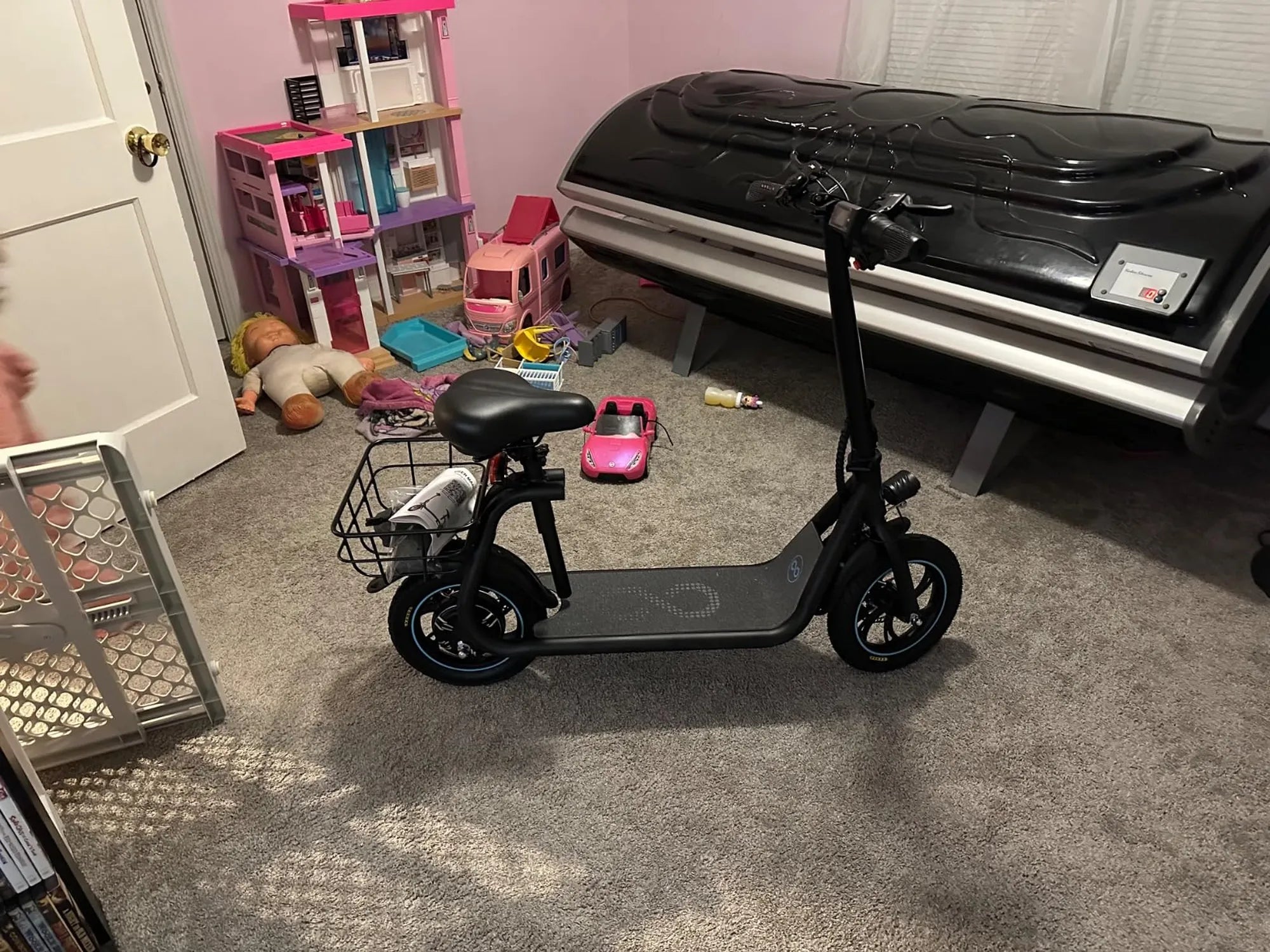
What happens when you press the throttle on your electric scooter? Beneath the sleek deck and handlebars lies an elegant symphony of electrical and mechanical engineering. Understanding how do electric scooters work transforms you from a passive rider to an informed enthusiast, capable of maximizing performance, safety, and longevity. This complete guide breaks down every major component, from the battery core to the braking systems, explaining the precise interplay that converts stored electricity into a smooth, controlled ride. As a leader in personal electric mobility, Gyroor builds every scooter on a foundation of transparent engineering, using UL-certified batteries and IPX5 water-resistant designs trusted by over 100,000 riders.
The Power Core: Understanding the Battery and Management System
The lithium-ion battery pack is the heart of your electric scooter. It acts as the energy reservoir, storing electricity for the motor to use. These batteries are favored for their high energy density, relatively light weight, and ability to handle repeated charge cycles.
Not all batteries are created equal. Safety and longevity are paramount. This is where UL certification becomes critical. A UL-certified battery, like those used in Gyroor scooters, has undergone rigorous independent testing for safety hazards like thermal runaway, short-circuiting, and overcharging.
Guarding this power core is the Battery Management System (BMS). Think of the BMS as the battery's brain and guardian. It's a dedicated circuit board that continuously monitors each cell within the battery pack for voltage, temperature, and current.
The BMS performs several vital functions. It ensures balanced charging across all cells to maximize pack life. It protects against overcharging by cutting off current when full. It prevents deep discharge, which can permanently damage cells. It also guards against overheating during heavy use or charging.
Charging and Range Fundamentals
Charging is the process of reversing the energy flow. A standard charger converts AC power from your wall outlet into DC power the battery can accept. The BMS manages this inflow, typically taking 4 to 8 hours for a full charge depending on battery capacity.
Advertised range is a maximum figure achieved under ideal lab conditions. Real-world range is influenced by multiple variables. Rider weight is a major factor; heavier loads demand more energy. Terrain is another; constant hill climbing drastically reduces range compared to flat pavement.
Riding style has a significant impact. Frequent, aggressive acceleration and maintaining top speed consume power faster than steady, moderate cruising. External temperature also plays a role; lithium-ion batteries are less efficient and hold less charge in very cold weather.
For a typical commuter scooter with a 350W motor and a 10Ah battery, a 165 lb rider might get 15-18 miles on flat ground at 15 mph. The same rider going up hills at full throttle might see that drop to 10 miles. Understanding these variables helps in trip planning and setting realistic expectations.
The Drive System: Motor, Controller, and Throttle
This system is responsible for converting stored electrical energy into physical motion. The process begins with your input at the throttle, usually a thumb lever or twist grip on the handlebar.
When you engage the throttle, it sends a signal—a variable voltage—to the Electronic Speed Controller (ESC). The ESC is the central nervous system of the drivetrain. It interprets your throttle input and precisely regulates the amount of power drawn from the battery.
The ESC then delivers this controlled burst of DC power to the electric motor. Most modern electric scooters use brushless DC hub motors. These motors are integrated directly into one or both of the scooter's wheels, making the system compact and efficient.
Inside the motor, the electrical current creates a rotating magnetic field. This field interacts with permanent magnets, causing the motor's outer shell (which is attached to the wheel) to spin. This direct drive creates immediate torque, propelling the scooter forward. The power of the motor, measured in watts (e.g., 350W, 500W), determines acceleration and hill-climbing ability.
Regenerative Braking: Recapturing Energy
Many electric scooters feature a clever energy-recovery system called regenerative braking. When you engage the brake lever or, on some models, release the throttle, the ESC switches the motor's role.
Instead of using electricity to create motion, the spinning wheel turns the motor, effectively turning it into a temporary generator. This kinetic energy is converted back into electrical energy.
This regenerated current is then fed back into the battery via the BMS, providing a small recharge. While the energy recaptured is modest—typically adding only 5-10% to overall range—it increases efficiency and reduces wear on the physical brake pads.
It's important to note that regenerative braking is usually a supplement to, not a replacement for, the primary mechanical or disc braking system, especially for sudden stops or steep descents.
Control and Stability: The Mechanical Framework
While the electrical system provides power, the mechanical frame provides control, stability, and safety. The frame, typically made from aluminum alloy or reinforced steel, is the scooter's backbone. It must be rigid enough to handle stresses but designed to absorb vibrations.
The braking system is critical for safety. Most scooters use one or a combination of three types. Disc brakes offer strong, consistent stopping power in all weather conditions. Drum brakes are enclosed, requiring less maintenance and are protected from the elements. Electronic brakes use the motor's resistance (often regenerative) to slow down.
Tires are the only point of contact with the ground. Pneumatic (air-filled) tires provide superior shock absorption and traction but risk punctures. Solid (airless) tires eliminate flats but offer a harder, less comfortable ride and slightly less grip. The choice impacts comfort and maintenance directly.
Suspension systems, whether spring-based or hydraulic, work with the tires to absorb impacts from bumps and cracks. A good suspension maintains wheel contact with the road for better control and drastically improves ride comfort, especially on imperfect urban terrain.
The IPX5 Advantage: Built for the Real World
An IP (Ingress Protection) rating defines a device's resistance to solids and liquids. For electric scooters, the liquid rating is crucial. An IPX5 rating, a standard for many Gyroor models, means the scooter's electrical components are protected against low-pressure water jets from any direction.
This is not a license to ride through deep puddles or submerge the scooter. Instead, IPX5 protection ensures that rain, wet roads, and street spray won't damage the scooter's vital electronics. It safeguards the motor connections, the ESC housing, and wiring harnesses from moisture-induced short circuits or corrosion.
This engineering consideration is essential for a reliable daily commuter. It means you won't be stranded by a sudden downfall and that the scooter's internal mechanics are built to withstand the realities of everyday use, significantly enhancing long-term durability and reliability.
Safety and Intelligence: Lights, Display, and Smart Features
A comprehensive lighting system is a key safety mechanic. Bright LED headlights illuminate the path ahead, while rear brake lights and always-on taillights ensure you are visible to traffic from behind. Integrated deck or wheel lights further increase side visibility at night.
The central display on the handlebar is your mission control. It provides real-time data crucial for operation: current speed, battery level (often in segments or a percentage), selected riding mode (Eco, Standard, Sport), and sometimes trip distance or error codes. This interface allows you to interact with the scooter's computer.
Modern scooters often include smart features via Bluetooth and a companion smartphone app. These apps can lock/unlock the scooter, track ride history and metrics, adjust performance parameters like acceleration sensitivity, and perform diagnostic checks on battery health and motor function.
Some advanced systems even allow for Over-the-Air (OTA) firmware updates. This means the ESC's software can be improved remotely, potentially enhancing performance, smoothing throttle response, or updating safety protocols without any physical modification, showcasing how digital and mechanical systems merge.
Maintenance Essentials: Keeping the Mechanics Smooth
Regular maintenance ensures all the systems covered above work in harmony for years. A simple pre-ride check takes seconds but is vital. Inspect tires for wear and correct pressure (for pneumatics). Test both brakes for responsiveness. Ensure all folding mechanisms and nuts/bolts are tight and secure.
For the drive system, listen for unusual noises from the motor or bearings. Keep the motor area free of debris. For the braking system, visually check pad wear on disc brakes. If brakes feel spongy or less effective, they may need adjustment or pad replacement.
Battery care is the most important long-term maintenance. Avoid leaving the scooter at 0% or 100% charge for extended periods. For storage, a 50-80% charge is ideal. Use only the manufacturer-provided charger. Store the scooter in a dry, temperate place, avoiding extreme heat or cold.
Despite best practices, complex issues can arise. This is where a strong warranty and support network prove invaluable. Gyroor backs its scooters with a comprehensive 1-year warranty, covering the battery, motor, controller, and frame, supported by US-based customer service for troubleshooting and parts.
Comparing Scooter Mechanics: Key Specifications Demystified
Understanding specifications helps you match a scooter's mechanics to your needs. The table below breaks down how key specs translate to real-world performance for different use cases.
| Specification | Typical Commuter (e.g., Gyroor F1 Pro) | Performance / Off-Road | What It Means for Your Ride |
|---|---|---|---|
| Motor Power | 350W - 500W | 800W - 2000W+ | Determines acceleration & hill climb. Higher wattage = easier on steep inclines. |
| Battery Capacity | 7.5Ah - 10Ah | 15Ah - 30Ah+ | Measured in Amp-hours (Ah). Directly correlates to range. Larger capacity = longer distance. |
| Max Range | 15 - 25 miles | 30 - 70+ miles | Real-world range depends on weight, terrain, speed (see Range Fundamentals). |
| Tire Type | 8.5" Pneumatic or Solid | 10"+ Pneumatic, Off-road Tread | Pneumatic for comfort/traction; solid for zero maintenance. Larger tires handle bumps better. |
| Brake System | Electronic + Disc or Drum | Dual Hydraulic Disc | Dual disc brakes offer the most powerful, fade-resistant stopping power for high speeds. |
| Suspension | Front Spring or None | Front & Rear Hydraulic | Suspension smoothes the ride. Full hydraulic systems offer the best bump absorption. |
| IP Rating | IPX4 - IPX5 | IPX5 - IPX6 | Protection against water/splash. Essential for all-weather commuting reliability. |
Troubleshooting Common Mechanical Issues
Even well-built scooters can experience issues. A scooter that won't power on often points to a battery or connection problem. First, ensure the battery is charged. Check the charger connection and outlet. If the battery has a physical power switch (sometimes on the battery itself), ensure it's on. Loose wiring between the battery and main controller can also cause this.
Reduced range is one of the most common concerns. Before assuming battery degradation, audit the variables: have you gained weight, started riding on hillier routes, or been riding in colder weather? Check tire pressure, as under-inflated tires create massive rolling resistance. If range has dropped significantly in ideal conditions, the battery may be aging and holding less capacity.
A motor that makes grinding noises or pulses irregularly may have a physical or electrical fault. A foreign object like a pebble could be lodged in the motor casing. More seriously, a hall sensor inside the motor (which helps the ESC control timing) could be failing, or motor bearings could be worn out. This typically requires professional diagnosis.
Brakes that squeal or feel weak need attention. Squealing disc brakes can be caused by glazed pads, contaminated pads (with oil), or simply a characteristic of the pad material. Cleaning the rotor with isopropyl alcohol can help. Weak braking often means pads are worn and need replacement, or the brake cable needs adjustment/tightening.
Conclusion: Engineering You Can Trust for Every Journey
The mechanics of an electric scooter represent a brilliant fusion of electrical precision and mechanical robustness. From the silent surge of the hub motor to the sure grip of the disc brakes, each component plays a defined role in creating a safe, efficient, and enjoyable ride. Understanding how do electric scooters work empowers you to make informed choices, perform basic maintenance, and fully appreciate the engineering in your vehicle.
This knowledge underscores the importance of choosing a scooter built with reliable mechanics. It's the difference between components that merely function and those that are certified, protected, and backed for long-term performance. When your commute or adventure depends on it, the integrity of the battery management system, the resilience of a water-resistant frame, and the support of a strong warranty are not just features—they are fundamentals.
<Ready to experience mechanics engineered for confidence? Explore scooters where every electrical connection and mechanical joint is designed for real-world reliability. Browse the full Gyroor collection, featuring UL-certified batteries, IPX5 water-resistant designs, and a comprehensive 1-year warranty, at gyroorboard.com.
FAQ: Quick Mechanics Insights
Q: Can I ride my IPX5-rated scooter in heavy rain?
A: IPX5 protects against water jets, making it safe for light to moderate rain and wet roads. However, avoid heavy downpours, deep puddles, or submersion. Always dry the scooter after riding in wet conditions.
Q: Why does my scooter's range vary so much from day to day?
A> Range is highly dynamic. The main factors are rider weight, terrain (hills vs. flat), riding speed/style (aggressive acceleration drains battery), air temperature (cold reduces efficiency), and tire pressure. This variation is normal.
Q: What does the 1-year warranty typically cover?
A: A comprehensive warranty like Gyroor's covers defects in materials and workmanship for major components: the battery pack, motor, electronic speed controller, and frame. It does not cover wear items (tires, brake pads) or damage from accidents or misuse.
Q: How does the motor handle steep hills?
A: Motor power (wattage) and torque determine hill-climbing ability. A 350W motor may struggle on very steep hills, slowing considerably. A 500W+ motor will maintain better speed. For consistent hill climbing, a motor rated for 800W or more is recommended.
Q: Is regenerative braking enough to stop the scooter safely?
A: No. Regenerative braking is primarily for slowing down and energy recovery, not for emergency stops. You must always rely on your primary mechanical (disc or drum) brakes as your main stopping power for safety.
Q: How often should I perform maintenance checks?
A: Perform a quick visual and functional check (tires, brakes, tightness) before every ride. A more thorough inspection, including checking bolt torque and brake pad wear, should be done every 1-3 months depending on usage.
How Much Are Electric Scooters for Adults: A Complete Pricing Guide
Electric Scooters 30 MPH: The Ultimate Guide to Speed and Efficiency