


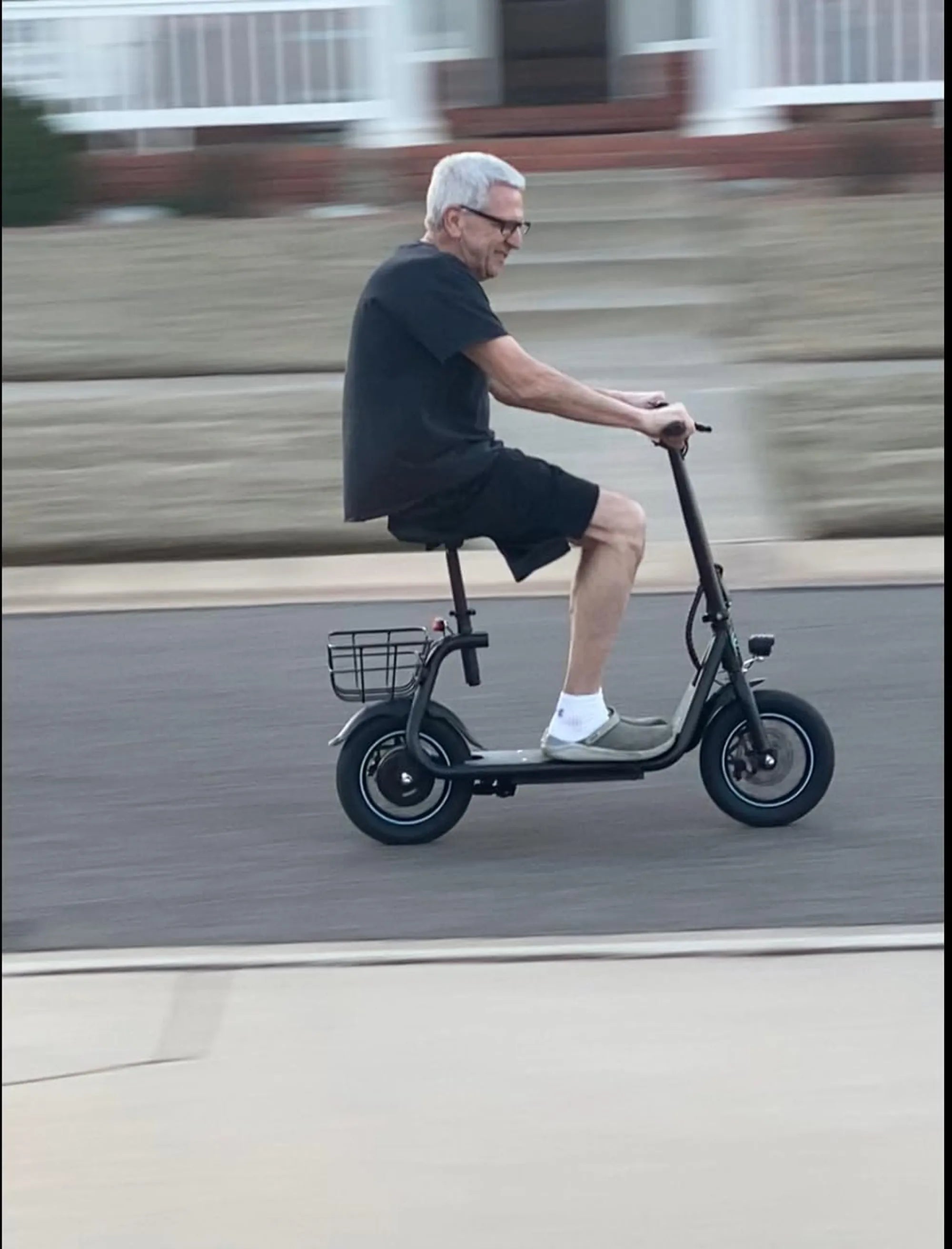
Introduction: Understanding 750W E-Bike Speed
How fast can a 750W ebike go? This is the fundamental question for any rider considering this popular motor size. The short answer is that a 750W electric bike is typically capable of speeds between 20 and 28 miles per hour (32-45 km/h). However, the true top speed you experience is governed by a complex interplay of legal restrictions, engineering design, and real-world conditions.
This power rating represents a sweet spot in the e-bike market, offering a robust blend of acceleration, hill-climbing capability, and efficient cruising speed for both commuting and recreation. It's the engine size that powers many of today's most versatile and popular models.
Understanding the speed of a 750W e-bike requires looking beyond the motor's wattage on paper. We must examine the legal classifications that cap its speed, the physical factors that influence performance, and how reputable manufacturers like Gyroor build these systems for reliability and safety. This guide provides a comprehensive, data-driven breakdown of everything that determines how fast your 750W e-bike will actually go.
The Legal Framework: Speed Limiters and E-Bike Classes
Before discussing physics, we must address the law. In most of North America and Europe, the maximum speed of an electric bicycle is not determined by its motor's potential, but by regulations. Manufacturers install electronic speed limiters to ensure compliance, making legal class the primary governor of your e-bike's top speed.
The three-class system is the standard in the United States and influences designs globally. A 750W motor is most commonly found in Class 3 e-bikes. These models provide pedal-assist up to 28 mph (45 km/h) and often include a throttle that operates up to 20 mph (32 km/h). Some 750W models may be configured as Class 2, which are throttle-assisted and capped at 20 mph.
In the European Union, regulations are generally stricter. E-bikes, or "pedelecs," are typically limited to 250W of continuous power and a pedal-assist cutoff of 25 km/h (15.5 mph). Higher-powered models like 750W e-bikes often fall into a different category, such as S-Pedelecs, which may require registration, insurance, and a helmet, with higher speed allowances.
Gyroor and other responsible brands program their e-bikes' motor controllers with these regional limits in mind. This ensures riders can enjoy the powerful acceleration and torque of a 750W motor while remaining within legal boundaries, protecting both the rider from liability and the manufacturer's warranty status.
Why Speed Limiters Are Non-Negotiable for Safety and Compliance
Tampering with or "derestricting" an e-bike's speed limiter is a critical topic. While it may technically allow a 750W motor to reach speeds of 30-35 mph or more, this action has severe consequences.
First, it instantly voids the manufacturer's warranty, including Gyroor's comprehensive 1-year coverage. Second, it reclassifies the vehicle, potentially making it illegal for use on bike paths, trails, or even roads without proper registration. Most importantly, it compromises safety; bicycle frames, brakes, and tires are not designed for sustained motorcycle-like speeds.
Key Factors That Influence Real-World 750W E-Bike Speed
The rated wattage is just the starting point. Your actual top speed on any given ride is a product of several dynamic variables. Understanding these helps set realistic expectations and maintain optimal performance.
Rider and Cargo Weight: Total load is the most significant variable after legal limits. A 750W motor propelling a 150-pound rider will reach its governed top speed more easily and maintain it on inclines than the same motor carrying a 250-pound rider with cargo. Heavier loads demand more torque, which can reduce the maximum achievable speed, especially on hills.
Terrain and Gradient: On perfectly flat, smooth pavement, a 750W e-bike will consistently hit its limited top speed. Introduce a hill, and speed will drop as the motor dedicates power to climbing. The steeper the grade, the greater the speed reduction. A quality 750W motor, however, is prized for its ability to maintain respectable speeds (e.g., 15-20 mph) on moderate hills where a less powerful motor would struggle.
Battery Charge State and Health: Voltage sag is a real phenomenon. When your battery is below 20% charge, it cannot deliver its full power potential, which may slightly reduce top speed and dramatically reduce acceleration. This underscores the importance of using a high-quality, UL-certified battery pack like those in Gyroor e-bikes, which are tested for over 500 charge cycles to ensure consistent power delivery throughout their lifespan.
Tire Pressure and Type: Under-inflated tires create high rolling resistance, acting as a constant drag on the motor. Keeping tires at the recommended PSI is a simple way to preserve top speed and range. Similarly, knobby, off-road tires create more friction on pavement than slick, commuter-focused tires.
Wind Resistance: Aerodynamics become a major factor above 20 mph. Riding into a strong headwind can significantly reduce your speed, as the motor works harder to overcome the increased air pressure. Your own riding posture also affects this; an upright position creates more drag than a leaned-forward, aggressive stance.
Gyroor 750W E-Bikes: Engineered for Balanced Performance
When a brand like Gyroor designs a 750W e-bike, the goal is not raw, unrestricted speed. The engineering philosophy balances powerful performance with safety, durability, and compliance. This results in a riding experience where the speed feels confident, controllable, and sustainable.
Gyroor integrates its 750W motors with precision-tuned motor controllers. These controllers manage the power delivery to provide smooth acceleration from a stop and consistent assist up to the legal limit. The focus is on ride quality—eliminating jarring "jumps" in power—which is essential for safety in urban environments.
Performance is also tied to core brand differentiators. The UL-certified battery pack is paramount. A poorly made battery can degrade quickly, losing its ability to deliver full voltage and current to the motor, thus robbing you of performance over time. Gyroor's certified packs are built for reliability, ensuring the 750W motor gets the consistent power it needs ride after ride.
Furthermore, the IPX5 water-resistant rating on key components means that a ride in the rain or through puddles won't cause electrical issues that could lead to sudden power loss or motor cut-out. This design integrity ensures performance isn't just a fair-weather promise. Backing it all is the 1-year comprehensive warranty and US-based support, providing peace of mind that your e-bike's performance is protected.
750W vs. Other Motor Sizes: A Performance Comparison
Context is key. Understanding where 750W sits in the spectrum of e-bike motors clarifies its performance profile. The following table compares common motor sizes based on typical use and governed performance.
| Motor Power | Typical Use Case | Approx. Top Speed (Governed) | Hill Climbing Ability | Legal Commonality |
|---|---|---|---|---|
| 250W | Flat urban commuting, light recreation | 15.5 - 20 mph (25 - 32 km/h) | Struggles on moderate hills | Standard in EU, Class 1 in US |
| 500W | General commuting, gentle hills | 20 mph (32 km/h) | Handles mild inclines | Common in Class 2 |
| 750W (Focus) | Versatile commuting, moderate hills, light trails | 20 - 28 mph (32 - 45 km/h) | Good performance on hills | Common in Class 3, some Class 2 |
| 1000W+ | High-performance, off-road, heavy cargo | 28+ mph (45+ km/h)* | Excellent climbing power | Often restricted to private land; may be classified as moped/motorcycle |
*Note: Speeds above 28 mph typically place the vehicle outside standard e-bike classifications in most public areas.
As shown, the 750W motor offers a significant step up in torque and potential speed from 500W models, making it ideal for riders who encounter hills or desire quicker acceleration in traffic. It provides most of the hill-climbing benefit of a 1000W+ motor while remaining firmly within the legal framework of a Class 3 e-bike for public road and path use.
Maximizing Your 750W E-Bike's Performance and Safety
To ensure your e-bike consistently delivers its designed performance, proper maintenance and riding habits are essential. These practices help you safely enjoy the full capabilities of your 750W system.
Regular Maintenance Checks: Keep your tire pressure at the maximum recommended level (found on the tire sidewall) to minimize rolling resistance. Regularly check brake pad wear and ensure your disc brakes are properly adjusted. Powerful acceleration demands confident stopping power. Periodically inspect and tighten bolts, especially on the stem, handlebars, and wheels.
Battery Care for Sustained Power: Avoid consistently draining the battery to 0%. Try to recharge when it reaches 20-30% charge. Store the battery in a cool, dry place and avoid leaving it fully charged on the charger for extended periods (days or weeks). These habits prolong battery life and health, which is directly linked to maintaining full motor performance.
Riding Techniques for Efficiency: Use the appropriate level of pedal assist. Crank the assist to maximum only when you need rapid acceleration or are climbing a hill. On flat terrain, a mid-level assist allows you to contribute with pedaling, extending your range and keeping the motor system cooler. Anticipate stops to use regenerative braking (if equipped) or to coast, saving energy.
Safety Gear is Non-Optional: The speeds attainable by a 750W Class 3 e-bike (up to 28 mph) necessitate proper safety equipment. Always wear a certified bicycle helmet. Consider additional gear like gloves, bright/reflective clothing, and eye protection. Use high-quality front and rear lights, not just to see, but to be seen by other road users.
Frequently Asked Questions (FAQ)
Is a 750W e-bike fast enough for a daily commute?
Absolutely. A 750W e-bike is arguably ideal for commuting. Its ability to comfortably cruise at 20-28 mph means you can often keep pace with urban traffic, reducing trip times significantly compared to a traditional bicycle. The powerful motor also ensures you won't arrive at work sweaty from struggling up hills.
Can a 750W e-bike handle steep hills?
Yes, a 750W e-bike is a capable hill climber. While speed will decrease on a steep gradient, the high torque output will allow you to maintain a steady, reasonable pace (e.g., 10-15 mph) where a lower-wattage motor might bog down. Performance varies with total weight and the specific steepness of the hill.
How does the Gyroor warranty protect my e-bike's performance?
Gyroor's 1-year warranty guarantees that the motor, battery, and controller will perform to their original specifications. If a component fails or underperforms due to a manufacturing defect, their US-based support team will facilitate repairs or replacements. This ensures your 750W e-bike continues to deliver its promised speed and power throughout the warranty period.
What is the real-world range when riding at top speed?
Range and speed have an inverse relationship. Riding consistently at the maximum 28 mph pedal-assist will consume battery power much faster than cruising at 15-20 mph. While a typical 750W e-bike with a large battery might offer 40-50 miles of range at moderate speeds, expect that range to drop by 30-50% if you are using maximum power and top speed continuously.
Is a 750W e-bike suitable for off-road or trail riding?
A 750W e-bike can handle light trails, fire roads, and gravel paths very well, thanks to its high torque. However, for technical, single-track mountain biking, a purpose-built e-MTB with full suspension, specific geometry, and often a mid-drive motor is recommended. Always check local trail regulations, as many natural surface trails restrict or prohibit motorized use, including e-bikes.
Conclusion: The Smart Choice for Powerful, Practical Riding
The question "how fast can a 750W ebike go" reveals a nuanced answer centered on smart engineering and responsible riding. Legally and practically, a well-built 750W e-bike delivers a top speed of 20-28 mph—a perfect balance for the urban commuter or recreational rider who values robust acceleration, confident hill-climbing, and efficient cruising without venturing into illegal or unsafe territory.
True performance extends beyond a number on a display. It's the reliability of a UL-certified battery that delivers consistent power, the confidence of an IPX5-rated build that withstands the elements, and the security of a strong warranty from a trusted brand. Gyroor's approach to 750W e-bikes exemplifies this, focusing on a holistic performance package where speed is just one component of a safe, enjoyable, and durable riding experience.
When you choose a 750W e-bike, you're choosing versatility and capability. You gain the power to transform your commute, explore farther, and tackle varied terrain, all within a framework designed for safety and longevity. It represents the intelligent application of electric assist technology to enhance human mobility.
Ready to experience the balanced performance of a 750W e-bike for yourself? Explore the durable, high-performance, and safety-focused models engineered for real-world riding. Browse the full Gyroor collection at gyroorboard.com and find the perfect electric bike to match your speed and adventure needs.
How Fast is a 1500 Watt Ebike: Speed, Power & Real-World Data
How Fast is a 1500 Watt Ebike: Speed, Power & Real-World Data