


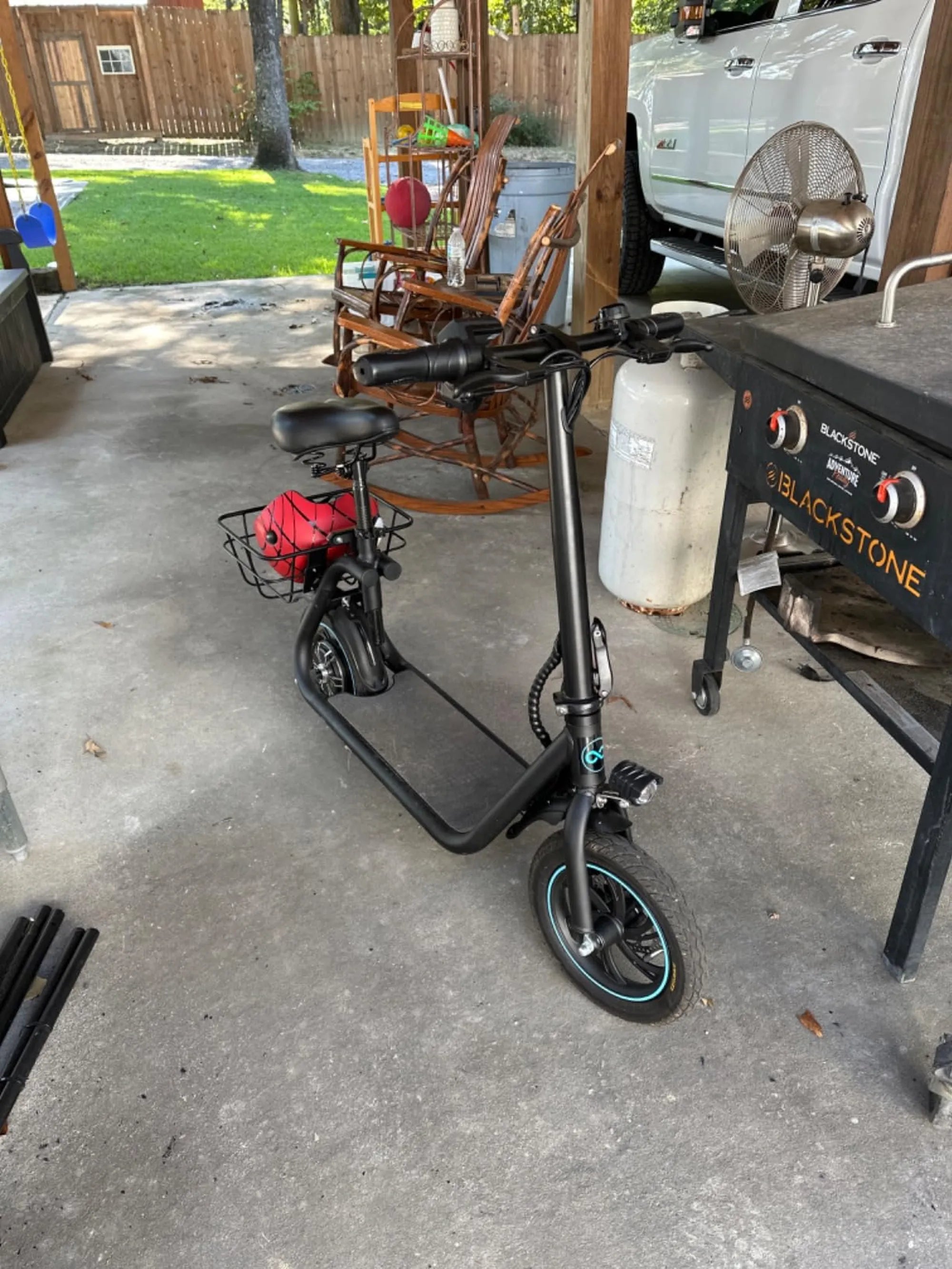
Introduction: Understanding 50cc Scooter Speed and Its Real-World Context
If you're asking 'how fast does a 50cc scooter go,' you're likely evaluating it for urban mobility. A 50cc scooter, defined by its 50-cubic-centimeter engine displacement, is a staple for city commuting, campus travel, and beginner riders. Its appeal lies in a balance of fuel efficiency, manageable power, and often simplified licensing.
This article will provide a definitive answer to the central question of top speed, but more importantly, it will explain the 'why' behind that number. We will dissect the legal frameworks that cap speed, the mechanical and environmental factors that influence real-world performance, and how modern electric alternatives compare. By the end, you'll have a comprehensive understanding to choose the right ride for your needs, whether it's a traditional gas-powered 50cc model or a contemporary electric scooter from a brand like Gyroor.
Understanding the speed of a 50cc scooter is not just about a maximum number on a flat road. It's about understanding its capabilities within a legal and practical ecosystem designed for low-speed, local travel. This knowledge is crucial for safety, compliance, and ensuring your vehicle matches your daily route requirements.
The Legal and Practical Speed Limit of a 50cc Scooter
So, how fast does a 50cc scooter go? For a completely stock, unmodified model from a reputable manufacturer, the realistic top speed range is between 25 and 40 miles per hour (40 to 65 kilometers per hour). Most consumer models cluster in the 30-35 mph (48-56 km/h) range under ideal conditions with an average-weight rider.
This speed ceiling is not arbitrary; it's deeply intertwined with legal classification. In many jurisdictions, including numerous U.S. states, a vehicle with an engine under 50cc and a maximum speed not exceeding 30 mph is legally defined as a 'moped.' This classification is critical because it often allows operation with a standard driver's license (rather than a motorcycle endorsement), lower insurance costs, and sometimes exemption from certain registration fees.
Manufacturers are acutely aware of these regulations. Consequently, many 50cc scooters are intentionally designed and governed to not exceed 30 mph from the factory to qualify for this favorable legal status. Attempting to modify or 'derestrict' a scooter to exceed this limit can not only void warranties and damage the engine but also reclassify the vehicle, requiring a motorcycle license, insurance, and registration.
Therefore, the answer to 'how fast does a 50cc scooter go' is as much a legal answer as a mechanical one. The 30-35 mph benchmark represents a sweet spot of utility and regulatory compliance, making it a perfect fit for city streets with 25-35 mph speed limits, but unsuitable for highways or roads with higher speed traffic.
Key Factors That Influence a 50cc Scooter's Real-World Speed
While engine size sets the baseline, the actual speed you experience on a 50cc scooter is a dynamic result of several interacting variables. Two riders on identical models can report different top speeds based on their specific circumstances. Understanding these factors is key to setting accurate expectations.
Rider and Cargo Weight: The Primary Load Factor
The power-to-weight ratio is paramount on a low-displacement engine. A 50cc engine produces a limited amount of power. Adding more weight—whether from the rider, a passenger, or cargo—directly reduces acceleration and can lower the achievable top speed. A lighter rider may reach or slightly exceed the manufacturer's stated top speed, while a heavier rider or one carrying a backpack might find the scooter struggling on inclines and topping out a few miles per hour lower.
This is a simple physics equation. The engine has to work harder to move more mass, leaving less reserve power for achieving and maintaining high speeds. For optimal performance, it's advisable to stay within the scooter's specified maximum load capacity, which is typically around 200-250 pounds for most 50cc models.
Terrain, Incline, and Environmental Conditions
Top speed is almost always measured on a flat, smooth surface with no wind. Real-world riding is rarely so ideal. Even a gentle uphill incline will cause a significant drop in speed as the small engine fights gravity. A strong headwind acts as a constant hill, creating drag that the scooter must overcome.
Conversely, riding downhill or with a tailwind will allow the scooter to exceed its normal flat-ground top speed. Road surface also matters; rough or soft surfaces like gravel create more rolling resistance than smooth asphalt. When estimating commute times, it's essential to factor in the topography of your route, as a 50cc scooter's speed is highly sensitive to these conditions.
Scooter Maintenance and Mechanical Condition
A poorly maintained scooter will never reach its performance potential. Simple issues can rob the engine of power and efficiency. Under-inflated tires create excessive drag. Worn brake pads that are slightly engaged create constant friction. A dirty air filter chokes the engine of oxygen, while old, degraded transmission fluid (in automatic CVT scooters) causes power loss.
Regular maintenance is not just about reliability; it's about preserving performance. Keeping the scooter in tune—with fresh spark plugs, clean oil, and proper tire pressure—ensures the engine can deliver every bit of its designed power, helping you achieve the best possible speed and fuel economy from your 50cc platform.
Manufacturer Specifications and Model Variations
Not all 50cc scooters are created equal. While displacement is fixed, engineering choices lead to variations. Factors like the carburetor or fuel injection system tuning, the gear ratios in the transmission (CVT), the weight of the scooter itself, and even tire size can create differences between brands and models.
Some models may be tuned for slightly better low-end torque for hill climbing, potentially sacrificing a bit of top speed. Others might be geared for a higher top speed but feel sluggish from a stop. It's important to read specific model reviews and specifications rather than assuming all 50cc scooters perform identically. The advertised top speed from the manufacturer is a useful benchmark, but remember it is measured under controlled, optimal conditions.
50cc Gas vs. Modern Electric Scooters: A Speed and Usability Comparison
For today's urban commuter, the traditional 50cc gas scooter is no longer the only option. Modern electric scooters present a compelling alternative, often matching or exceeding the practicality of their gas-powered counterparts. Let's compare a typical 50cc gas scooter with a comparable electric scooter, such as a Gyroor model with a 500W-750W motor, across several key metrics.
| Feature | Typical 50cc Gas Scooter | Typical 500W-750W Electric Scooter (e.g., Gyroor) |
|---|---|---|
| Top Speed | 25-40 mph (30-35 mph typical) | 19-28 mph (Class 3: Up to 28 mph) |
| Acceleration | Moderate, requires engine RPM build-up | Instant torque, quicker off-the-line acceleration |
| Range | 80-120 miles per tank | 20-40 miles per charge (varies by model/battery) |
| Fueling/Charging | 5 min refuel at gas station | 4-8 hour full charge at home/office |
| Maintenance | High: Oil changes, spark plugs, air filter, belt, transmission fluid | Very Low: Primarily tire pressure, brake checks, battery care |
| Operating Cost | $$ (Gas, oil, frequent maintenance) | $ (Electricity cost is minimal) |
| Noise & Emissions | Audible engine noise, produces exhaust emissions | Near-silent operation, zero direct emissions |
| Licensing (U.S. Example) | Often requires Moped/Motorcycle license/endorsement | Often treated as a bicycle; varies by local law |
As the table shows, while the top speed of a 50cc scooter may have a slight edge, the electric scooter competes strongly in urban zones. The instant electric torque provides snappier acceleration from stoplights, a key advantage in city traffic. The drastically lower maintenance and operating costs of an electric model like those from Gyroor, combined with silent, clean operation, make it a future-focused choice for many commuters.
Safety and Licensing Imperatives at 50cc Speeds
Traveling at 30-40 mph on two wheels demands serious respect for safety. The forces involved in a collision or fall at these speeds can cause severe injury or be fatal. Therefore, comprehensive safety gear is non-negotiable, not optional. A Department of Transportation (DOT)-approved full-face or modular helmet is the single most important piece of equipment. This should be complemented by abrasion-resistant gloves, a armored jacket, and over-ankle footwear.
Licensing and insurance are the legal pillars of safe operation. Requirements vary dramatically by country, state, and even city. As mentioned, many regions use engine displacement (<50cc) AND maximum speed (often ≤30 mph) to classify vehicles as mopeds. However, some areas may require a specific 'M' endorsement on your driver's license or a separate motorcycle license for any motorized two-wheeler.
It is the rider's absolute responsibility to research and comply with local laws before purchasing or operating a 50cc scooter. This includes registration, insurance (liability insurance is often mandatory), and helmet laws. Riding an uninsured or improperly licensed vehicle can result in heavy fines, impoundment of the scooter, and legal liability in the event of an accident. Never assume the dealer's information is complete or up-to-date for your specific location.
Performance Modifications: Risks and Realities
The question of modifying a 50cc scooter to go faster is common. Techniques range from simple 'derestricting' (removing a washer or modifying the exhaust to bypass the factory speed governor) to more complex changes like installing a performance carburetor, cylinder kit, or variator weights. While these can increase top speed and acceleration, they come with significant downsides.
First, modifications almost universally void the manufacturer's warranty. Second, they often push the engine and drivetrain components beyond their designed tolerances, leading to drastically reduced reliability and frequent breakdowns. The increased stress can cause premature engine seizure. Third, and most critically, modifying a scooter to exceed the legal speed limit for its class makes it illegal for road use as a moped, potentially invalidating insurance and leaving you liable if stopped by law enforcement or involved in an accident.
For a reliable, legal, and safe commuter, it is almost always better to choose a scooter whose stock performance meets your needs rather than attempting to modify a smaller one. If you need more speed, consider a legally registered 125cc or 150cc scooter, or a high-performance electric model designed for higher speeds from the outset.
Is a 50cc Scooter the Right Choice for Your Commute?
Determining if a 50cc scooter is 'fast enough' requires a honest assessment of your daily route. It is an excellent solution for specific scenarios: dense urban environments with speed limits of 35 mph or less, short to medium-distance trips (under 10 miles one-way), and routes that avoid steep, sustained hills. They are perfect for navigating city grids, college campuses, and suburban errand runs.
However, if your commute requires merging onto or crossing roads with 45+ mph speed limits, involves long steep grades, or covers distances where the limited speed would significantly lengthen travel time, a 50cc scooter may be a poor fit. In these cases, the constant operation at full throttle is stressful for the engine and the rider, who may feel unsafe in faster traffic.
An electric scooter or e-bike with a 28 mph top speed can be a superior choice in many of these urban scenarios, offering similar pace with better acceleration and lower hassle. For longer or faster commutes, a larger-displacement scooter or an electric moped / motorcycle becomes a more appropriate and safer tool for the job. Always match the vehicle's capability to the demands of the route.
Frequently Asked Questions (FAQ)
Q: Can I make my 50cc scooter go faster?
A: Yes, through modifications like derestricting, tuning, or engine kits, but it is strongly discouraged. This voids warranties, drastically increases mechanical failure risk, compromises safety, and often makes the vehicle illegal for road use under its original classification. It is safer and more reliable to purchase a scooter with the speed you need from the start.
Q: Is a 50cc scooter fast enough for highway use?
A: Absolutely not. A 50cc scooter lacks the power, speed, and stability for safe highway travel. Minimum highway speeds often exceed 45-50 mph, which is beyond the safe capability of a 50cc scooter. Riding one on a highway is extremely dangerous and illegal in most places.
Q: How does a 50cc scooter compare to an e-bike for speed?
A: A Class 3 pedal-assist e-bike, which provides motor assistance up to 28 mph, offers a very comparable urban speed to a 50cc scooter. The e-bike has the added benefits of pedal exercise, typically no licensing requirement, permission on bike paths (check locally), and silent operation. The 50cc scooter may have a longer range per 'fill-up' but requires fuel, licensing, and more maintenance.
Q: What is the average fuel economy of a 50cc scooter?
A> They are highly efficient, typically achieving 80-120 miles per gallon (MPG). This excellent fuel economy is one of their major attractions for cost-conscious commuters, though operating costs are still higher than an electric vehicle when factoring in maintenance.
Q: Do I need a motorcycle license for a 50cc scooter?
A> It depends entirely on your local laws. In many areas, if the scooter is certified as a moped (≤50cc, ≤30 mph), only a standard driver's license is required. However, many jurisdictions require a motorcycle permit, endorsement, or license. You must check with your local Department of Motor Vehicles (DMV) or equivalent authority for definitive, legally binding information.
Making an Informed Choice for Urban Mobility
The question 'how fast does a 50cc scooter go' reveals a vehicle class designed for a specific niche: efficient, low-speed urban travel within a clear legal framework. With a typical top speed of 30-35 mph, it fills the gap between bicycles and larger motorcycles, offering an accessible entry point to motorized two-wheel transport. However, its dependence on gasoline, requirement for regular mechanical maintenance, and noise emissions are drawbacks in the modern era.
For riders seeking a similarly capable urban commuter with lower complexity, instant responsiveness, and zero emissions, modern electric scooters present a powerful alternative. Brands like Gyroor have engineered electric scooters that deliver comparable urban speeds with the advantages of silent operation, minimal maintenance, and significant long-term cost savings. With features like UL-certified batteries for safety, IPX5 water-resistant designs for all-weather reliability, and a robust 1-year warranty backed by a brand trusted by over 100,000 riders, Gyroor scooters are built for real-world commuting.
Whether you choose a traditional 50cc model or an electric scooter, prioritize safety gear, understand your local laws, and select a vehicle whose performance aligns with your actual route. For those ready to explore the convenience and innovation of electric mobility, the journey begins with a trusted partner.
Discover the future of your daily commute. Browse the full collection of high-performance, reliable electric scooters and e-bikes at gyroorboard.com.
Do U Need a Motorcycle License for a Scooter? The Complete 2024 Guide
Do I Need a License to Drive a 50cc Scooter? The Complete Legal Guide