


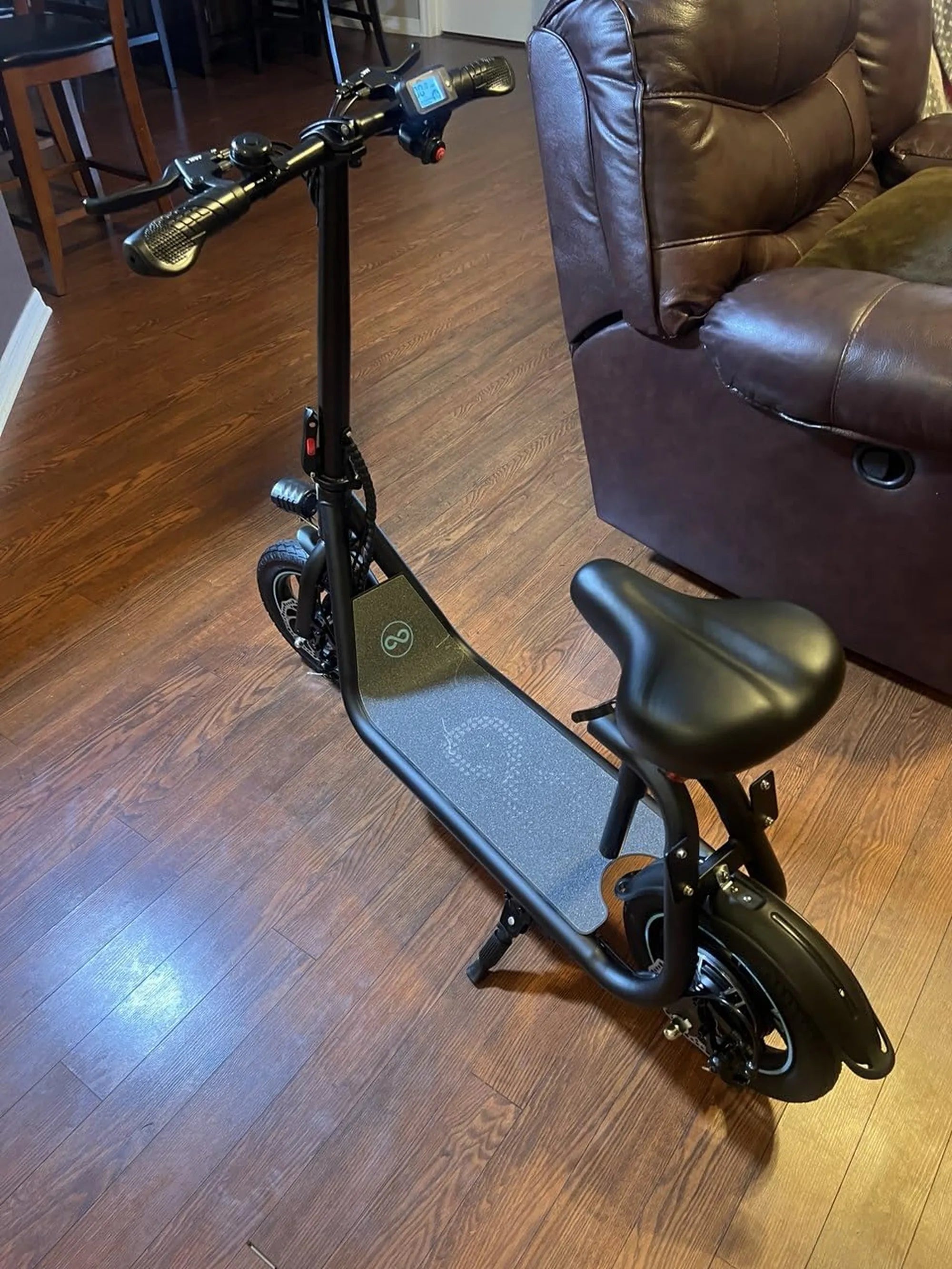
Introduction to 125cc Scooter Performance
How fast is a 125cc scooter? This is a fundamental question for anyone considering this popular class of personal transport. A 125cc scooter occupies a crucial middle ground between the slower 50cc models and larger, more powerful motorcycles. Typically, these machines offer a blend of accessible licensing, fuel efficiency, and performance that makes them a global commuting staple.
This article delivers a comprehensive, data-driven breakdown of 125cc scooter speed. We'll examine the technical limits, real-world variables, and legal frameworks that define their performance. As a leader in personal electric mobility, Gyroor provides a unique perspective, comparing traditional combustion performance to the instant torque and advanced features of modern e-scooters and e-bikes.
Understanding the speed of a 125cc scooter requires more than a single number. It involves analyzing engineering, rider conditions, and intended use. We will explore all these facets to give you a complete picture, helping you decide if this is the right vehicle for your needs or if an electric alternative offers a better solution.
Understanding the Speed Capabilities of a 125cc Scooter
So, how fast is a 125cc scooter in precise terms? The typical top speed range for a standard, unrestricted 125cc scooter is between 55 and 70 miles per hour (88 to 113 kilometers per hour). This range is not arbitrary; it is the result of specific engineering trade-offs focused on reliability, fuel economy, and cost-effective manufacturing.
Most modern 125cc engines are four-stroke, single-cylinder units producing between 9 to 15 horsepower. The power output, combined with the scooter's weight, final drive gearing, and aerodynamic profile, directly determines its maximum velocity. A sportier, lighter model with a tuned engine will approach the upper end of the range, while a heavier, utilitarian maxi-scooter might settle closer to 55-60 mph.
It's critical to distinguish between indicated speed on the scooter's dashboard and true, GPS-verified speed. Most scooter speedometers are optimistic by 5-10%, meaning a display of 65 mph might equate to a true speed of 59-62 mph. This inflation is a common industry practice but is essential to remember for accurate speed assessment.
Legal and Regulatory Speed Limits
In many regions, especially across Europe, the answer to "how fast is a 125cc scooter?" is dictated by law. A2 licensing categories often require scooters in this class to be electronically restricted. A common legal limit is 60 mph (96 km/h), even if the machine is mechanically capable of more.
These restrictions exist because 125cc scooters are frequently the largest category rideable with a standard car license or a simplified motorcycle license. The limit is a safety and regulatory compromise. In the United States, restrictions are less common, allowing scooters to reach their full mechanical potential, provided they meet local vehicle classification and licensing requirements.
Real-World Riding Conditions
Theoretical top speed is one thing; achievable speed on your daily route is another. Real-world conditions significantly impact performance. Riding into a strong headwind can reduce top speed by 5-10 mph. A steep incline will demand more power, slowing the scooter considerably, especially if carrying a passenger or cargo.
Road surface and ambient temperature also play roles. Hot, thin air at high altitudes reduces engine efficiency, while cold, dense air can improve it slightly. A fully loaded scooter with a rider, passenger, and luggage may struggle to reach 50 mph on an incline where it would normally achieve 60 mph solo. Understanding these variables is key to setting realistic expectations.
125cc Scooter vs. Other Transport: A Performance Comparison
Contextualizing the speed of a 125cc scooter is best done through comparison. How does it stack up against other common modes of personal transport? The following table and analysis provide clear benchmarks.
| Vehicle Type | Typical Top Speed | Key Performance Notes |
|---|---|---|
| 50cc Scooter/Moped | 30-40 mph (48-64 km/h) | Limited to city streets; not highway legal. A 125cc offers a major step up. |
| 125cc Scooter | 55-70 mph (88-113 km/h) | Core subject. Capable of highway travel but with limited reserve power. |
| 250-300cc Motorcycle/Scooter | 75-95+ mph (120-153+ km/h) | Significantly more power for confident highway merging and overtaking. |
| High-Performance E-Scooter (e.g., Gyroor Z8) | 25-40 mph (40-64 km/h) | Instant electric torque for rapid 0-20 mph acceleration; ideal for urban zones. |
| Commuter E-Bike (e.g., Gyroor C3) | 20-28 mph (32-45 km/h) (assist) | Pedal-assist extends range; speed is ample for bike lanes and urban roads. |
| Typical City Car | 100+ mph (160+ km/h) | Higher top speed, but average urban traffic flow is 25-45 mph. |
Compared to a 50cc scooter, the 125cc class represents a dramatic increase in capability, transitioning from a neighborhood vehicle to a legitimate commuter tool. Against city car traffic, a 125cc scooter's speed is more than sufficient, and its ability to filter through stationary or slow-moving traffic often makes it faster point-to-point in dense urban environments.
The comparison with electric options is particularly insightful. While a premium electric scooter like the Gyroor Z8 has a lower maximum speed, its acceleration from a stoplight can be startlingly quick due to instant electric torque. For pure urban commuting under 10 miles, the performance difference is negligible, while the benefits of electric—silence, zero direct emissions, and lower cost per mile—become major advantages.
Factors That Influence Your Scooter's Actual Speed
Multiple factors determine where within the 55-70 mph range your specific 125cc scooter will fall. Understanding these allows for better maintenance and realistic performance expectations.
Engine Health and Maintenance
A poorly maintained engine will not reach its designed top speed. Key maintenance items directly affect power output. A clogged air filter starves the engine of oxygen, a dirty or old spark plug causes inefficient combustion, and worn drive belts or incorrect tire pressure create parasitic drag. Regular oil changes, valve clearance checks, and using the correct fuel grade are non-negotiable for preserving speed and engine life.
Scooter Weight and Aerodynamics
Physics is simple: less weight equals faster acceleration and a higher potential top speed. A lightweight sport-style 125cc scooter will be quicker than a heavy maxi-scooter with a full fairing and storage. Aerodynamics also plays a larger role at higher speeds. A rider sitting upright creates significant wind resistance. Tucking in behind the windscreen can add 2-5 mph to the top speed by reducing drag.
Rider Technique and Environmental Conditions
Rider weight is a substantial variable. Adding 50 lbs of rider or cargo weight can reduce top speed by several mph. Environmental conditions are equally important. High altitude reduces engine power due to thinner air. High ambient temperatures can cause the engine to run hot and lose efficiency. The smoothest, most aerodynamic riding posture on a cool, dry day at sea level will yield the highest possible speed.
Is a 125cc Scooter Fast Enough For You? Use Case Analysis
The question isn't just "how fast is a 125cc scooter?" but "is that speed right for my life?" The answer depends entirely on your primary use case.
For Urban and Suburban Commuting
For most urban and suburban commutes, a 125cc scooter is not just fast enough; it is often ideal. Its 55-70 mph capability allows it to comfortably travel on arterial roads with 45-55 mph speed limits. Its small size and agility enable lane filtering (where legal) and easy parking. For trips under 15 miles, especially in congested areas, it can be faster and far more economical than a car.
For Highway or Sustained Rural Use
Here, the answer becomes nuanced. While a 125cc scooter can technically travel on highways, its performance is at its limit. Merging into 70 mph traffic with a top speed of 65 mph is risky, as you have no power reserve for evasive maneuvers or overtaking. Sustained operation at wide-open throttle is stressful for the engine and rider. For occasional, short highway stints, it's feasible. For regular long-distance, high-speed travel, a larger displacement vehicle is safer and more comfortable.
The Eco-Conscious and Tech-Savvy Alternative
This is where brands like Gyroor present a compelling alternative. If your use case is predominantly urban, the top-speed advantage of a 125cc scooter may be irrelevant. A high-performance electric scooter offers more than enough speed for city travel, with transformative benefits. You gain instant torque, near-silent operation, zero tailpipe emissions, and extremely low operating costs.
Gyroor's lineup, trusted by over 100,000 riders, emphasizes safety and reliability with UL-certified batteries and IPX5 water-resistant designs. Features like app connectivity for ride tracking and diagnostics offer a modern ownership experience that traditional scooters lack. For the urban commuter, the question may shift from "how fast is a 125cc scooter?" to "do I need a combustion engine at all?"
Safety Considerations at Speed
Riding any vehicle at its performance limits requires heightened safety awareness. On a 125cc scooter, which operates near its top speed on fast roads, this is critical.
Protective gear is non-negotiable. A full-face helmet, armored jacket, gloves, and sturdy footwear are essential. The scooter's brakes and tires must be in excellent condition, as stopping distances increase dramatically with speed. Understanding the scooter's limitations is key: its acceleration for overtaking is modest, and its stability in strong crosswinds can be challenged due to its relatively light weight.
Rider training is invaluable. A course teaches emergency braking, swerving, and hazard awareness—skills that are even more crucial when your vehicle's performance margin is slim. Regular pre-ride checks of tire pressure, lights, and brakes are simple habits that prevent accidents.
Maintenance Tips to Preserve Performance and Speed
To ensure your 125cc scooter continues to deliver its designed performance, a disciplined maintenance routine is essential. Follow the manufacturer's service schedule meticulously.
Fluids are the lifeblood: change engine oil and filter at recommended intervals. Use the specified oil grade. Check and adjust valve clearances; tight valves rob the engine of power. Keep the air filter clean and the fuel system treated with a stabilizer if the scooter sits unused. Inspect the CVT (Continuously Variable Transmission) belt and rollers for wear, as these directly affect acceleration and top speed.
Chassis maintenance also affects performance. Keep tires properly inflated to the recommended PSI. Under-inflated tires create drag and instability. Ensure brakes are not dragging, and that wheel bearings are smooth. A well-lubricated and adjusted drive chain (if not using a CVT) minimizes power loss. A scooter in top mechanical condition is not only faster but also safer and more reliable.
Frequently Asked Questions (FAQ)
Q1: What is the average real-world top speed for most 125cc scooters?
A: The average real-world, GPS-verified top speed for a standard 125cc scooter is typically between 58-65 mph (93-105 km/h), factoring in speedometer optimism and average conditions.
Q2: Can a 125cc scooter be derestricted to go faster?
A: Some models, particularly in markets with electronic limiters, can be derestricted by modifying the ECU or CDI. However, this often voids the warranty, may be illegal, and can put excessive strain on engine components not designed for sustained higher output.
Q3: Is a 125cc scooter fast enough for highway commuting?
A> It can be used for highway commuting, but with caution. It is sufficient for short stints on highways with speed limits of 60-65 mph. For regular use on 70+ mph interstates, it lacks the power reserve for safe merging and overtaking, making a larger vehicle a better choice.
Q4: How does the speed of a 125cc scooter compare to a 50cc model?
A: The difference is substantial. A 50cc scooter typically maxes out at 30-40 mph and is not highway legal. A 125cc scooter nearly doubles that performance, making it viable for a wider range of roads and longer commutes.
Q5: How does a 125cc scooter's acceleration compare to an electric scooter?
A: From a stop, a high-power electric scooter like the Gyroor Z8 will often out-accelerate a 125cc scooter over the first 20-30 feet due to instant maximum torque. However, the 125cc scooter will have a higher top speed. The electric scooter's acceleration is particularly advantageous in stop-and-go city traffic.
Conclusion: Balancing Speed, Practicality, and Your Perfect Ride
The data provides a clear answer: a 125cc scooter delivers a practical top speed of 55-70 mph, a sweet spot for urban and suburban mobility. It bridges the gap between limited 50cc machines and more demanding motorcycles, offering a balance of performance, efficiency, and accessible licensing that has made it a worldwide success.
However, the ultimate choice depends on your specific needs. If your travels involve frequent high-speed highways, you may desire more power. If your primary domain is the city, the raw top speed of a combustion scooter may be less critical than other factors like cost, convenience, and environmental impact. This is where the electric revolution, led by brands like Gyroor, offers a sophisticated alternative. With robust, UL-certified batteries, advanced features, and more than enough speed for urban adventures, an e-scooter or e-bike presents a compelling, modern solution for the eco-conscious commuter.
Evaluate your routes, priorities, and local laws. Whether you choose the proven efficiency of a 125cc scooter or the innovative, clean performance of an electric model, make an informed decision for your daily journey. Explore the future of urban mobility and browse the full collection of high-performance, reliable electric scooters and e-bikes at gyroorboard.com.
9 Speed Mountain Bike: The Ultimate Guide to Versatile Trail Performance
Need Scooter: The Ultimate Guide to Choosing Your Urban Mobility Solution