


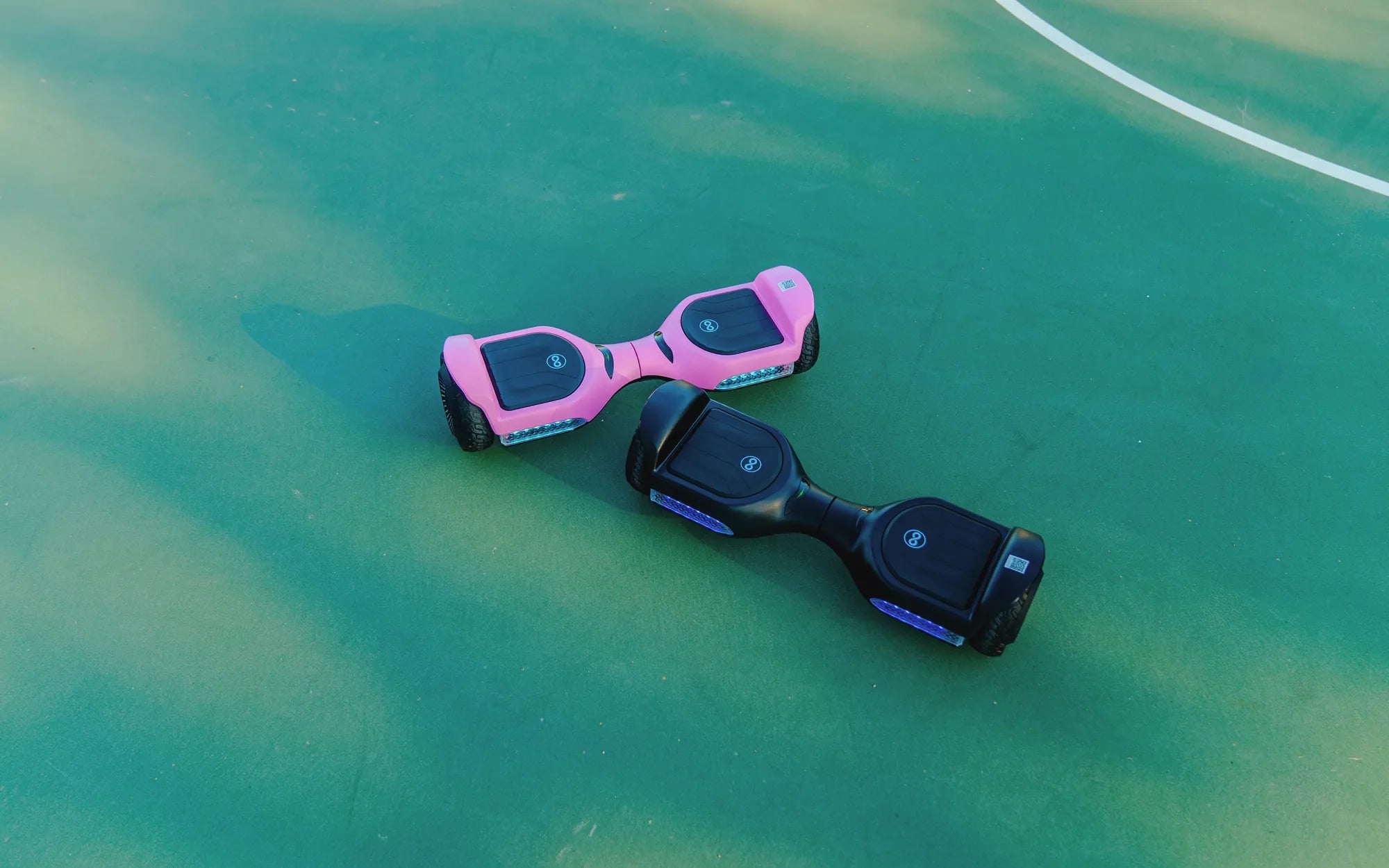
You've just unboxed your new hoverboard, and the first question is immediate: how long does a hoverboard need to charge before that first ride? While the typical answer is 2 to 4 hours for a full charge from empty, the reality is more nuanced. Your specific charging time depends on a precise interplay of battery size, charger power, and environmental conditions. This guide will provide a comprehensive, data-driven breakdown of hoverboard charging. You'll learn the science behind lithium-ion batteries, the factors that accelerate or slow charging, and essential safety protocols. We'll also explore how engineering choices from reputable brands like Gyroor—a leading electric scooter and e-bike brand trusted by over 100,000 riders—ensure charging reliability and long-term battery health.
Understanding Hoverboard Battery Fundamentals
At the heart of every hoverboard is a rechargeable lithium-ion battery pack. These are the same core technology found in smartphones and laptops, prized for their high energy density and rechargeability. Most modern hoverboards use either 36V or 42V battery systems, with capacity measured in Ampere-hours (Ah) or Watt-hours (Wh). This capacity is the fuel tank size, determining your potential ride time.
The battery pack isn't just a collection of cells. It's managed by a Battery Management System (BMS), a critical circuit board that regulates charging and discharging. The BMS prevents overcharging, balances cell voltages, and protects against short circuits. Understanding this foundation is key to grasping why charging practices matter so much for both performance and safety.
The Direct Relationship: Capacity, Charger Output, and Time
Charging time isn't a mystery; it's a simple formula. The primary calculation is: Charging Time (hours) ≈ Battery Capacity (Ah) / Charger Output (A). A charger's output, measured in Amps (A), is the rate at which it can deliver energy to the battery.
Consider a common example. A hoverboard with a 4.4Ah (4400mAh) battery using a standard 2A charger would theoretically take about 2.2 hours to charge (4.4Ah / 2A = 2.2h). In practice, efficiency losses add about 10-20%, making it closer to 2.5 hours. A smaller kids' model with a 2.0Ah battery and a 1A charger would take roughly 2 hours. This formula shows why using the correct, manufacturer-provided charger is non-negotiable for predictable charge times.
Key Factors That Determine Your Hoverboard's Charging Duration
While the capacity/charger formula provides a baseline, several variables can significantly alter your actual charging time. Recognizing these factors helps you diagnose issues and set realistic expectations, moving beyond the generic "2-4 hour" estimate.
Battery Size and Model Specifications
Not all hoverboards are created equal. A compact, beginner-friendly model designed for light use typically houses a smaller battery (e.g., 2.0-2.5Ah). These can charge in 1.5 to 2.5 hours. In contrast, high-performance or off-road adult hoverboards, built for longer range and more powerful motors, are equipped with larger batteries, often ranging from 4.4Ah to 6.0Ah or more.
These larger-capacity batteries, like those in Gyroor's off-road series, naturally require longer charge times—typically 3 to 4.5 hours with a standard charger. The trade-off is substantial: a 6.0Ah battery can provide up to 12-15 miles of range per charge, compared to 6-8 miles from a standard 4.4Ah pack. Always check your specific model's specifications for its battery capacity to understand its charging profile.
Charger Power and Health
The charger is the lifeline to your battery. Charger output ratings commonly range from 1A (slower) to 2A (standard) and even 2.5A or 3A (faster, but less common). Using a higher-amp charger than specified can drastically reduce charge time but poses severe risks of overheating and damaging the BMS. Conversely, a lower-amp charger will safely charge the battery but will take much longer.
Charger health is equally crucial. A damaged or failing charger may deliver inconsistent or reduced current, leading to unexpectedly long charge times. Frayed cables, loose connections, or a faulty AC adapter are common culprits. This is why using the manufacturer's original, UL-certified charger, like those supplied with Gyroor hoverboards, is a critical safety and performance practice.
Battery Age, Health, and Cycle Count
Lithium-ion batteries degrade with use and time. Each full charge and discharge constitutes one cycle. A quality battery, such as the UL-certified packs used by Gyroor tested for 500+ cycles, will maintain over 80% of its original capacity through its lifespan. However, as a battery ages, its internal resistance increases and its maximum capacity decreases.
This degradation has a direct impact on charging. An older battery might appear to charge "faster" because its reduced capacity fills up quicker, but it will also deplete faster, shortening your ride time. In some cases, a severely degraded battery or a failing BMS can cause charging to become erratic or take longer than normal. Monitoring your total ride time per charge is the best indicator of overall battery health.
Ambient Temperature and Charging Environment
Lithium-ion chemistry is highly sensitive to temperature. The ideal charging environment is at room temperature, between 50°F and 77°F (10°C and 25°C). Charging in a cold garage (below 32°F/0°C) can slow the chemical reactions within the battery, significantly increasing charge time and potentially causing lithium plating, which permanently reduces capacity.
Charging in extreme heat (above 95°F/35°C) is even more dangerous. It can lead to overheating, accelerated degradation, and in rare cases, thermal runaway. Always charge your hoverboard in a dry, temperate, and well-ventilated area, away from direct sunlight or heat sources. Never charge immediately after a ride when the battery is warm; allow it to cool to ambient temperature first.
Best Practices for Safe and Efficient Hoverboard Charging
Adopting correct charging habits is the single most effective way to ensure your hoverboard's longevity, safety, and consistent performance. These guidelines are universal but are especially critical for maintaining the integrity of high-performance models.
Always Use the Manufacturer's Original Charger
This cannot be overstated. The provided charger is engineered to work in precise harmony with your hoverboard's specific Battery Management System (BMS). It delivers the exact voltage and current profile for safe, efficient charging. Third-party or generic "universal" chargers may have incorrect voltage settings or lack proper safety certifications, risking overcharging, battery damage, or fire.
Brands like Gyroor design their UL-certified chargers as an integral part of the safety system. Using anything else voids the warranty and introduces significant risk. If you need a replacement charger, purchase it directly from the manufacturer to guarantee compatibility.
Establishing the Ideal Charging Routine
Follow a disciplined routine for every charge. First, plug the charger into the wall outlet before connecting it to the hoverboard. Place the hoverboard on a hard, non-flammable surface like a tile floor or concrete garage floor—never on carpet, a bed, or near curtains. Avoid charging unattended for extreme periods, such as multiple days. While modern BMS systems have overcharge protection, it's a best practice to unplug the charger once the indicator shows a full charge (usually a solid green light on the charger).
For daily use, it's often better to perform partial top-ups rather than always draining to empty and doing a full charge. For example, charging from 30% to 80% is less stressful on the battery than constant 0%-100% cycles. If storing the hoverboard for more than a month, store it with a charge level between 40% and 60% in a cool, dry place.
Maximizing Your Battery's Lifespan
Your charging habits directly dictate how long your battery lasts. Avoid deep discharges to 0% whenever possible; try to recharge when the battery indicator shows one bar remaining. Never store the hoverboard with a completely depleted battery, as this can lead to a state where the BMS can no longer activate, permanently killing the pack.
Approximately once a month, allow the battery to go through a full cycle: discharge it (during a ride) to a low level (around 10-15%) and then charge it fully to 100% without interruption. This helps calibrate the onboard battery meter for accurate charge level readings. Following these practices with a well-engineered product can extend the usable battery life well beyond typical expectations.
Gyroor Hoverboards: Engineered for Charging Reliability and Peace of Mind
Leading brands differentiate themselves through engineering that addresses common user concerns. Gyroor, as a trusted name in personal electric transport, builds specific features into its hoverboards that directly impact charging safety, efficiency, and user confidence.
UL-Certified Battery Packs and Advanced BMS
Every Gyroor hoverboard uses UL 2272 certified battery packs. This certification involves rigorous testing for electrical, mechanical, and environmental safety, including overcharge and short circuit tests. The integrated Battery Management System is a sophisticated circuit that meticulously manages the charging process.
This smart BMS ensures each cell within the pack charges evenly (cell balancing), cuts off power at precisely 100% to prevent overcharging, and monitors temperature. The result is a stable, efficient charge cycle that maximizes battery health over its 500+ cycle lifespan and provides an accurate LED power indicator you can trust.
IPX5 Water Resistance and Component Protection
Gyroor hoverboards feature an IPX5 water-resistant rating. This engineering isn't just for riding through puddles; it critically protects the internal components. The sealed housing prevents moisture and dust from infiltrating the charging port, battery compartment, and control boards.
This protection is vital for long-term charging reliability. Corrosion or moisture damage on internal connectors can lead to increased electrical resistance, causing slow charging, voltage drops, and potential failure. The IPX5 rating ensures the charging system remains clean and dry, contributing to consistent performance year after year.
Comprehensive 1-Year Warranty and Support
Gyroor backs its hoverboards with a 1-year comprehensive warranty covering manufacturer defects, which includes the battery pack and charger. This warranty provides significant peace of mind. If a user experiences abnormally long charge times, a battery that won't hold a charge, or a faulty charger, US-based support is available to diagnose and resolve the issue.
This commitment stands in contrast to generic or uncertified models where battery and charging issues often leave the buyer with no recourse. The warranty underscores the brand's confidence in the quality and durability of its power systems.
Hoverboard Charging Specifications Comparison
| Hoverboard Type / Model Example | Typical Battery Capacity | Standard Charger Output | Estimated Full Charge Time (0-100%) | Key Charging Notes |
|---|---|---|---|---|
| Basic/Kids' Model | 2.0 - 2.5 Ah | 1.0 - 1.5 A | 1.5 - 2.5 hours | Smaller battery, faster charge. Use only original charger. |
| Standard Adult Model (e.g., Gyroor Street) | 4.4 Ah | 2.0 A | 2.5 - 3 hours | Most common configuration. Reliable 2-3 hour window. |
| Performance/Off-Road Model (e.g., Gyroor Off-Road) | 6.0 Ah+ | 2.0 A | 3.5 - 4.5 hours | Larger capacity = longer charge for extended range. |
| Generic/Uncertified Model | Varies (often overstated) | Often mismatched | Unpredictable (2-6+ hours) | High risk. Charger may be under/over-powered, leading to safety hazards. |
Frequently Asked Questions (FAQ)
Can I use a fast charger to reduce my hoverboard's charging time?
No, you should never use a fast charger not specified by the manufacturer. Hoverboard batteries and their BMS are designed for a specific charging current. Using a higher-amp "fast" charger can overwhelm the BMS, cause dangerous overheating, significantly degrade the battery cells, and immediately void your warranty. The charge time is a design feature for battery health.
How do I know when my hoverboard is fully charged?
Most hoverboards use a two-stage indicator. First, the charger itself usually has an LED that is red while charging and turns solid green when complete. Second, the hoverboard's own LED power indicator will often show all bars lit or may display a specific pattern (like a slow pulse). Always consult your user manual for the exact indicator sequence for your model, as designs vary.
Is it bad to leave my hoverboard charging overnight?
While modern hoverboards from reputable brands have BMS overcharge protection, it is not a recommended best practice for long-term battery health and safety. Leaving any lithium-ion device plugged in indefinitely at 100% charge creates slight stress on the battery. For optimal lifespan and as a general safety precaution, charge during waking hours and unplug once fully charged.
Why is my hoverboard taking longer to charge than it used to?
Increased charge time is a common symptom of a few issues: 1) Battery Aging: Normal degradation over hundreds of cycles. 2) Faulty or Wrong Charger: A charger delivering lower current than specified. 3) Extreme Temperatures: Charging in a cold environment. 4) BMS or Connection Issue: Internal problems requiring diagnosis. Start by ensuring you're using the correct charger in a room-temperature environment.
Can I partially charge my hoverboard, or must I always charge to 100%?
You can and should partially charge your hoverboard regularly. Lithium-ion batteries have no "memory effect," so topping up from 40% to 80% is actually less stressful than constant full 0-100% cycles. For daily use, partial charges are ideal. A full 0-100% cycle once a month is sufficient to keep the battery meter calibrated.
Charging Smart for Longer Rides and Lasting Performance
Understanding how long a hoverboard needs to charge is the first step toward becoming a responsible and knowledgeable rider. The standard 2-4 hour window is a useful guideline, but your specific time is dictated by your model's battery capacity, the health of your original charger, and your charging environment. By adhering to best practices—using only the manufacturer's charger, avoiding temperature extremes, and following a smart charging routine—you directly invest in the safety, range, and longevity of your hoverboard.
Choosing a hoverboard from an engineered brand like Gyroor, with its UL-certified batteries, smart BMS, IPX5 water resistance, and strong warranty, provides a foundation of reliability that makes these best practices easy to follow. Your charging habits determine whether your hoverboard remains a dependable source of fun and transport for years or becomes a short-lived novelty. Charge wisely, ride safely, and maximize every journey.
Ready for a hoverboard engineered with charging safety and reliability as a priority? Browse the full collection of UL-certified Gyroor hoverboards, e-bikes, and electric scooters at gyroorboard.com.
Kids Scooter Price: A Comprehensive Guide to Finding the Best Deals
Kids Scooter Price: A Comprehensive Guide to Finding the Best Deals