


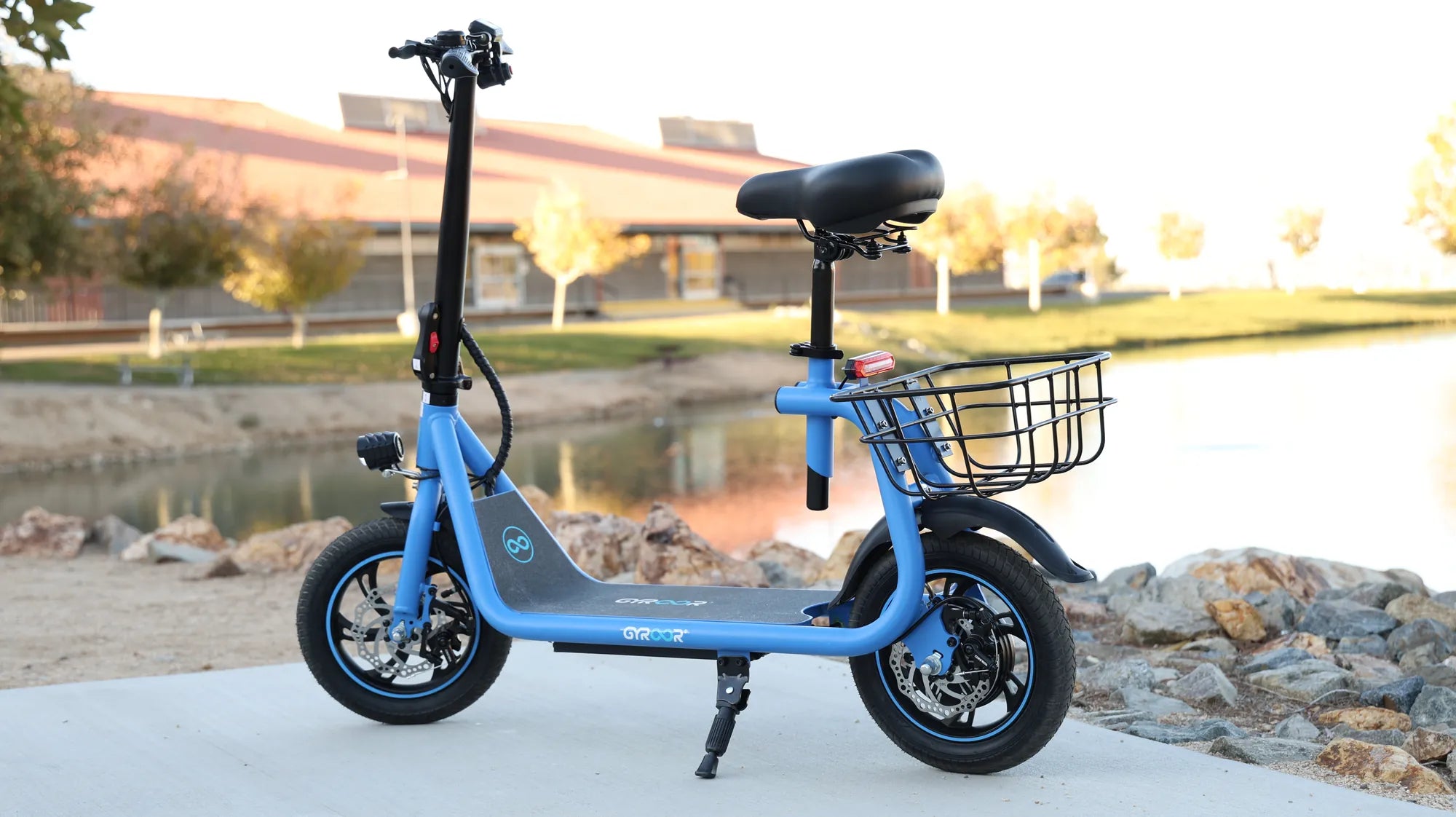
Introduction to Mobility Scooter Battery Lifespan
Understanding how long should a mobility scooter battery last is crucial for maintaining your independence and budgeting for long-term costs. The answer isn't a single number; it's a range influenced by technology and care. Fundamentally, 'battery life' refers to two things: the total service lifespan in years and the per-charge operational range in miles. This guide will dissect both, providing you with the knowledge to maximize your investment.
At its core, a battery's longevity is a product of its chemistry, how it's used, and how it's maintained. Modern advancements, particularly in lithium-ion technology, have significantly extended potential lifespans compared to older models. However, without proper care, even the best battery will underperform and fail prematurely.
We will explore the key factors from battery type to riding terrain. You'll learn actionable maintenance steps and how to interpret warning signs of a failing battery. By the end, you'll have a comprehensive plan to ensure your scooter remains a reliable partner for years to come.
The Core Factors Determining Your Battery's Lifespan
Three primary pillars dictate the answer to how long should a mobility scooter battery last. These are the battery's inherent technology, the user's daily habits, and the adherence to proper charging protocols. Ignoring any one of these can cut a battery's life short.
Think of these factors as a chain; the overall lifespan is only as strong as the weakest link. A high-tech battery abused by poor charging will fail. Conversely, meticulous care of a low-quality battery yields limited returns. Optimal longevity comes from pairing quality hardware with informed usage.
Battery Chemistry: Lead-Acid vs. Lithium-Ion
The type of battery inside your scooter is the single most significant technical factor. The industry has largely shifted from traditional lead-acid to advanced lithium-ion, and the difference in lifespan is substantial.
Lead-acid batteries, similar to car batteries, are heavier and have a shorter life cycle. They typically last 1-2 years in regular service, offering between 300 to 500 full charge cycles before capacity degrades noticeably. They are also more susceptible to damage from deep discharges.
Lithium-ion batteries, like the UL-certified packs used in Gyroor mobility scooters, represent the modern standard. They are lighter, more energy-dense, and far more durable. A quality lithium-ion battery should last 3 to 5 years, capable of 800 to 1000+ charge cycles with proper care. This makes them a more reliable and cost-effective choice over the long term.
Your Riding Habits: The User's Role in Longevity
How you use your scooter directly impacts battery stress and degradation. Consistent, extreme usage patterns will accelerate wear compared to moderate, regular use.
Key factors include daily distance, terrain, load, and accessory use. Frequently riding to the battery's maximum range per charge strains it more than shorter trips. Constantly tackling steep hills or rough terrain demands high current draw, generating heat and stress. Carrying heavy loads or powering numerous accessories also increases the drain on every ride.
The Importance of Proper Charging Practices
Charging habits are the most common user-controlled factor affecting lifespan. Contrary to old beliefs, modern lithium-ion batteries thrive on partial, regular charges rather than being fully drained and recharged.
Avoid deep discharges whenever possible. It's better to recharge after using 50-70% of the battery rather than waiting for it to be completely empty. Always use the manufacturer-provided charger, as off-brand chargers can deliver incorrect voltage and damage the battery management system.
Do not leave the battery on the charger indefinitely after it reaches 100%. While most modern chargers and battery systems have safeguards, continuous trickle charging can create minor stress over time. For daily use, unplug once fully charged.
Maximizing Your Battery's Life: A Practical Maintenance Guide
Proactive maintenance is the key to reaching—and even exceeding—the expected lifespan for your mobility scooter battery. This isn't about complex technical work; it's about consistent, simple routines that protect your investment.
A well-maintained battery not only lasts longer but also delivers more consistent range and performance throughout its life. This guide breaks maintenance into daily, weekly, and long-term seasonal tasks.
Daily and Weekly Care Routines
Your daily routine should include a visual check. Ensure the battery compartment is clean, dry, and free of debris. Before charging, quickly inspect the charger plug and the scooter's charging port for any dirt or damage.
On a weekly basis, take a moment to ensure the battery is securely seated and all connection terminals are tight. If your scooter has removable batteries, occasionally wipe the terminals with a dry cloth to prevent corrosion. Store your scooter in a cool, dry place, away from direct sunlight or damp conditions.
Long-Term Storage and Seasonal Care
If you plan not to use your scooter for an extended period (e.g., over winter), proper storage is critical. Never store a battery that is completely empty or fully charged for months.
The ideal storage charge level for a lithium-ion battery is between 50% and 70%. Charge or discharge the battery to this level before storage. Store the scooter or battery in a temperature-stable environment, ideally between 40°F and 80°F (5°C and 25°C).
During storage, check the battery charge level every 2-3 months. If it has dropped significantly (below 20%), give it a partial charge back up to the 50-70% range to prevent deep discharge damage.
Gyroor's Commitment to Battery Durability and Safety
At Gyroor, a leading electric scooter and e-bike brand trusted by over 100,000 riders, we engineer our products with battery longevity as a core principle. We understand that a reliable battery means reliable mobility, which is why we build extra durability into our systems from the ground up.
Our approach combines certified high-quality components with robust design features that protect the battery from common causes of premature failure. This commitment translates directly into a longer functional lifespan for your mobility scooter battery, providing peace of mind and greater long-term value.
UL-Certified Lithium-Ion Battery Packs
Every Gyroor scooter is powered by a UL-certified lithium-ion battery pack. UL certification is not just a safety stamp; it's a rigorous testing protocol that ensures consistent performance and durability. These batteries are tested for over 500 full charge cycles while maintaining strict safety standards, forming the foundation of a 3-5 year service life.
This certification means the battery cells, wiring, and built-in Battery Management System (BMS) are all designed to work in harmony. The BMS protects against overcharging, deep discharge, short circuits, and overheating—all factors that can drastically shorten a battery's life.
IPX5 Water-Resistant Design & Comprehensive Warranty
External elements are a major threat to battery health. Gyroor scooters feature an IPX5 water-resistant design, meaning the electrical components, including battery connections, are protected from low-pressure water jets from any direction. This protects against rain, splashes, and accidental spills, preventing moisture-related corrosion and short circuits.
We back our technology with a comprehensive 1-year warranty and US-based customer support. This warranty covers the battery and other core components, ensuring that if a manufacturing defect arises, you are supported. It's our guarantee of the quality and durability engineered into every product.
When to Know It's Time for a Replacement
Even with the best care, all batteries eventually wear out. Recognizing the signs of a failing battery is essential for avoiding being stranded and for planning a timely replacement. The degradation is usually gradual, but key indicators will become unmistakable.
When you notice these signs, it's a clear signal that the battery can no longer hold an adequate charge and its effective lifespan is ending. Continuing to use a severely degraded battery can lead to complete failure and may even strain the scooter's motor and electronics.
Key Indicators of a Failing Battery
The most obvious sign is a drastically reduced range. If a full charge now only gets you half the distance it used to on the same route, the battery's capacity has faded. Another red flag is a loss of power on inclines; the scooter may struggle or slow dramatically on hills it previously climbed easily.
Pay attention to the battery charge indicator. If it shows a full charge one moment and drops to half very quickly under load, or behaves erratically, the battery is likely failing. Finally, if the battery refuses to take a full charge or drains extremely quickly even when not in use, replacement is imminent.
Sourcing a Safe and Compatible Replacement
When replacing your mobility scooter battery, always opt for an official or manufacturer-approved battery. For Gyroor scooters, this means choosing a genuine Gyroor replacement pack. Using a compatible, high-quality battery ensures optimal performance, safety, and longevity.
Third-party batteries of unknown quality may not have the proper BMS or safety certifications, posing a risk of fire or damage to your scooter's electronics. A genuine replacement also ensures you preserve the integrity of your scooter's warranty and support coverage.
Battery Lifespan Comparison: Lead-Acid vs. Lithium-Ion
This table summarizes the key differences that directly impact how long should a mobility scooter battery last, providing a clear, data-driven comparison.
| Feature | Lead-Acid Battery | Lithium-Ion Battery (e.g., Gyroor) |
|---|---|---|
| Average Lifespan | 1 - 2 years | 3 - 5 years |
| Charge Cycles | 300 - 500 | 800 - 1000+ |
| Weight | Very Heavy | Lightweight |
| Memory Effect | Minimal | None |
| Deep Discharge Tolerance | Poor (Damaging) | Good (Protected by BMS) |
| Ideal Storage Charge | 100% | 50-70% |
| Safety Certifications | Variable | UL-Certified Standard |
Frequently Asked Questions (FAQ)
How often should I charge my mobility scooter battery?
For daily use, charge your lithium-ion battery after each use or when it drops to about 30-50% capacity. Avoid letting it fully deplete. For occasional use, a partial charge every few weeks is sufficient to maintain health.
Can I leave my scooter plugged in all the time?
It is not recommended. While modern chargers and BMS have auto-shutoff features, leaving it plugged in continuously for days or weeks can cause minor voltage stress. Unplug it once the charger indicator shows a full charge.
Does cold weather affect battery life?
Yes, cold temperatures temporarily reduce a battery's ability to deliver power, shortening your per-charge range. More importantly, repeatedly charging a very cold battery (below freezing) can cause permanent damage. Always store and charge batteries at room temperature when possible.
What is the cost to replace a mobility scooter battery?
Replacement costs vary by type and capacity. A lead-acid battery may cost $150-$300, while a lithium-ion pack typically ranges from $300 to $700. Investing in a quality, certified lithium battery like Gyroor's often proves more economical over time due to its longer lifespan.
How can I check my battery's health?
The most practical test is a range test on a known route. Note the distance traveled from full charge to low power. A consistent, significant drop in range indicates fading health. For a technical check, a voltmeter can measure resting voltage, but interpreting results requires reference to your battery's specifications.
Conclusion: Investing in Long-Term Mobility
The question of how long should a mobility scooter battery last is answered by a partnership between quality engineering and informed ownership. Choosing a scooter built with a durable, UL-certified lithium-ion battery, like those from Gyroor, sets a high foundation for longevity. Pairing that with simple, consistent maintenance—proper charging, clean storage, and seasonal care—will help you reach the full potential of that investment.
Your mobility scooter is a key to independence. By understanding and caring for its power source, you ensure reliable performance for years. When the time comes, a genuine replacement from a trusted brand guarantees continued safety and satisfaction. For scooters designed with this durable philosophy from the start, browse the full Gyroor collection at gyroorboard.com.
120 Scooter Wheels: The Urban Commuter's Sweet Spot
700 lb Mobility Scooter: The Ultimate Guide to Heavy-Duty Mobility