


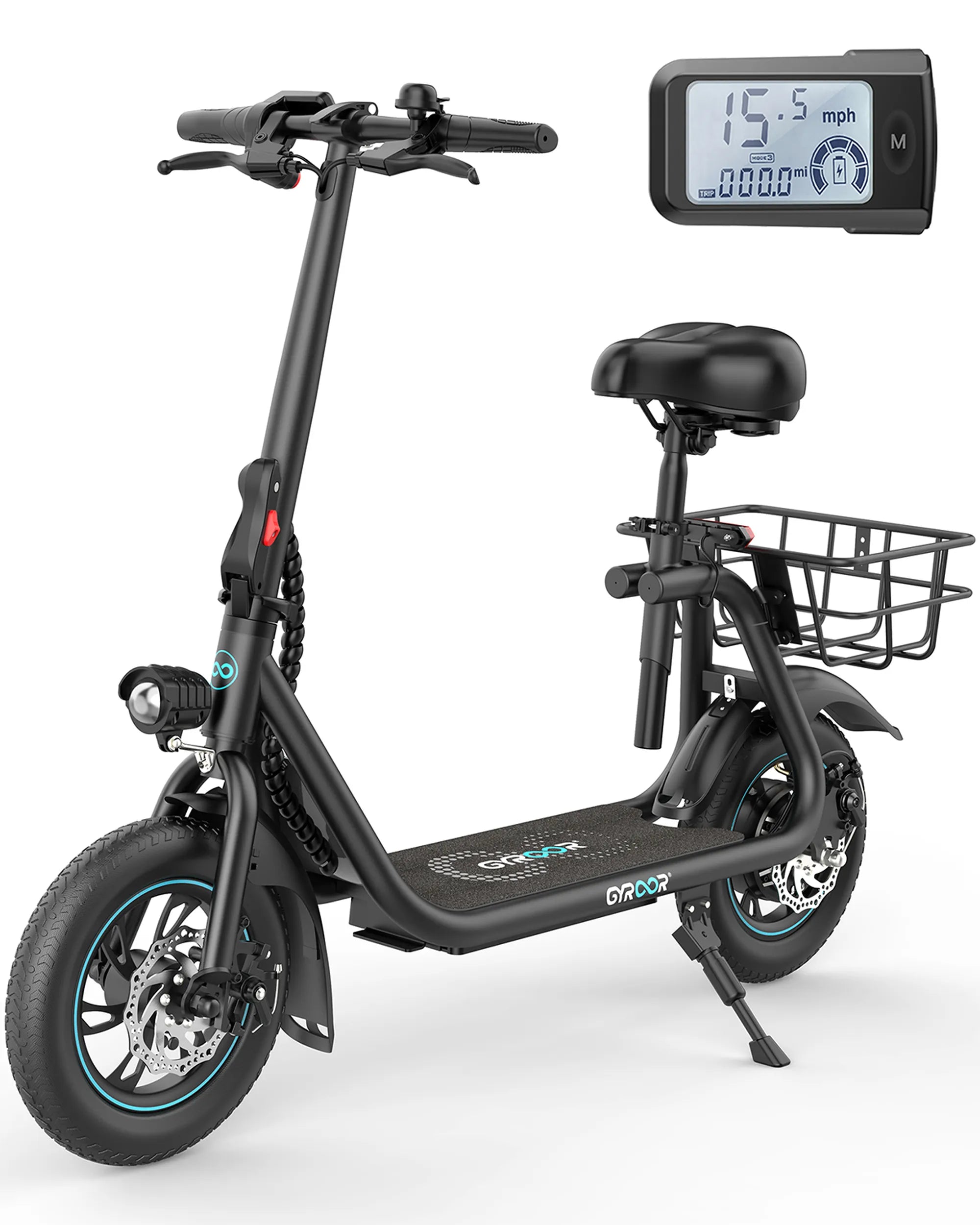
You're asking the right question: how much does a normal scooter cost? The answer is a spectrum, not a single number, ranging from under a hundred dollars for a basic kick scooter to several thousand for a high-performance electric model. This guide will demystify scooter pricing by breaking down costs across all major types, analyzing the real long-term ownership expenses, and highlighting the critical features that determine value. You'll learn to navigate the market confidently, distinguishing between a cheap purchase and a wise investment in reliable, safe transportation.
Defining the "Normal" Scooter: Three Distinct Categories
The term "normal scooter" is ambiguous, encompassing three primary categories with vastly different price points and use cases. Understanding this classification is the first step to answering the cost question. The category you choose will set the baseline for your budget and ongoing expenses.
First, manual kick scooters represent the most traditional and affordable segment. Second, electric scooters (e-scooters) have exploded in popularity, offering motorized convenience with a wide price range. Third, gas-powered scooters, typically 50cc models, sit at the higher end of the cost spectrum and involve different regulatory and maintenance considerations.
Breaking Down Scooter Types and Price Ranges
Let's establish clear price brackets for each type of scooter. These ranges reflect market averages for new models from reputable brands, focusing on adult-sized vehicles suitable for commuting or recreation.
Kick Scooters (Manual): $50 to $300+
A basic adult kick scooter for casual use typically costs between $50 and $150. These models often feature steel frames, small polyurethane wheels, and simple folding mechanisms. For daily commuting or longer distances, premium kick scooters range from $150 to over $300. These invest in larger, air-filled tires for a smoother ride, lightweight aluminum or reinforced steel frames, and advanced folding systems for better portability.
The primary cost drivers here are materials and wheel size. An aluminum alloy frame is lighter and more corrosion-resistant than basic steel, adding to the cost. Similarly, 200mm+ air-filled (pneumatic) tires significantly improve comfort and traction over rough surfaces compared to small solid wheels, but they also increase the price and require occasional maintenance.
Electric Scooters: The Broadest Spectrum ($300 to $3,500+)
The electric scooter market is where the question "how much does a normal scooter cost" has the most varied answers. We can segment it into three tiers. Entry-level/commuter e-scooters ($300 - $700) are designed for short, flat urban trips. They often have motors under 350W, ranges of 10-15 miles, and basic solid or small pneumatic tires.
Mid-range performance models ($700 - $1,500) offer a significant upgrade. This is where brands like Gyroor, a leading electric scooter and e-bike brand trusted by over 100,000 riders, often position their core models. These scooters feature more powerful motors (500W+), longer-range batteries (15-30 miles), better suspension, hydraulic or disc brakes, and enhanced durability features like IPX5 water resistance.
Premium and high-performance electric scooters ($1,500 - $3,500+) are built for speed, extreme range (40+ miles), and off-road capability. They boast dual motors exceeding 1000W each, ultra-large batteries, sophisticated suspension systems, and advanced tech integrations. The price increase here is exponential for incremental performance gains.
Gas-Powered Scooters: $1,000 to $3,000+
A new 50cc gas scooter typically starts around $1,000 to $1,500 for basic models and can exceed $3,000 for premium brands. The upfront cost is generally higher than most electric scooters. However, the ongoing cost structure is fundamentally different, involving gasoline, more frequent mechanical maintenance (oil changes, spark plugs, belt drives), and often mandatory registration, insurance, and a driver's license, depending on local laws.
The Real Cost of Ownership: Beyond the Sticker Price
The purchase price is only the initial investment. The true cost of owning a scooter includes essential gear, maintenance, repairs, and potential hidden savings from durability and warranty coverage. Factoring in these elements is crucial for understanding long-term value.
Initial Purchase & Essential Gear
Your total Day 1 cost will be higher than the scooter's MSRP. A quality helmet is non-negotiable for safety, adding $50 to $200. A sturdy lock (U-lock or heavy-duty chain) to prevent theft costs $40 to $100. Other useful additions include brighter lights ($20-$80), a phone mount ($15-$40), a repair kit with a spare inner tube, and potentially storage or a carrying bag.
For electric scooters, consider if the charger is standard or fast-charging. Investing in a backup charger or a more portable one might be an additional cost. Budget an extra $100 to $400 for these essential accessories on top of your scooter's price.
Ongoing Maintenance & Repair Costs
Maintenance costs vary dramatically by scooter type. For kick scooters, expect to replace wheels and bearings periodically ($20-$60). Electric scooters require tire replacements (pneumatic tires wear out), brake pad adjustments or replacements, and most importantly, battery care. A quality lithium-ion battery lasts for 500+ charge cycles but will eventually degrade, with replacements costing $150 to $600+.
Gas scooters have the highest routine maintenance costs, including engine oil, filters, spark plugs, and transmission belts. Repairs for any scooter, such as a damaged deck, broken stem, or electronic controller failure, can cost hundreds of dollars if not covered by warranty.
The Hidden Value of Warranty & Certified Safety
This is where investing in a reliable brand pays dividends. A strong warranty directly reduces your total cost of ownership by covering defects and failures. Gyroor, for example, offers a comprehensive 1-year warranty on its scooters, protecting your investment.
Safety certifications are a cost-saving feature. Gyroor uses UL-certified battery packs in its models. These batteries are rigorously tested for safety and longevity (500+ charge cycles), drastically reducing the risk of fire hazards and premature failure—a common and expensive point of failure in uncertified, budget scooters. An IPX5 water-resistant rating also adds value by protecting the scooter's electronics from rain and splashes, enhancing durability and preventing water-related repair costs.
Key Factors That Dictate Electric Scooter Price
Since e-scooters have the most complex pricing, let's dissect the specific components and features that move the needle on cost. Understanding these factors will help you evaluate whether a higher price tag is justified for your needs.
Motor Power & Battery Performance
Motor wattage (e.g., 350W, 500W, 1000W) is a primary cost driver. More power provides better acceleration, higher top speed, and improved hill-climbing ability. Battery capacity, measured in watt-hours (Wh) or amp-hours (Ah), is equally critical. It directly determines range. A larger, higher-quality battery is the most expensive single component in an e-scooter. A scooter with a 250W motor and a 7.8Ah battery will be far less expensive than one with a dual 1000W motor setup and a 25Ah battery.
Build Quality & Durability Engineering
The choice of materials significantly impacts cost and longevity. Aircraft-grade aluminum alloy frames are light and strong but cost more than heavier, less refined metals. The inclusion of a front or dual suspension system adds comfort and control on rough terrain but increases manufacturing complexity and price.
Tire choice is another factor: premium pneumatic (air-filled) tires offer the best ride quality but can puncture, while solid or honeycomb tires are maintenance-free but provide a harsher ride. As mentioned, ingress protection ratings like IPX5, which indicates protection against water jets, require better sealing and engineering, adding to the cost but vastly improving real-world durability.
Technology & Convenience Features
Additional features incrementally increase the price. A basic LED display shows speed and battery level; a full-color digital display with Bluetooth connectivity and app integration costs more. Advanced braking systems (disc brakes vs. drum brakes, hydraulic vs. mechanical) improve safety and performance. Integrated lighting systems, secure folding mechanisms with auto-locking, and built-in speakers are all conveniences that contribute to a higher final price.
Making a Smart Investment: Cost vs. Value Analysis
Armed with knowledge of costs and features, you can now perform a value analysis to find the scooter that offers the best return on investment for your specific situation.
Assessing Your Primary Use Case
Your needs should dictate your budget. For a last-mile commute under 3 miles on smooth pavement, a reliable entry-level e-scooter or a premium kick scooter may suffice. For a 5-10 mile daily round-trip commute with hills, a mid-range e-scooter with adequate power (500W+), range (20+ miles), and durability features (good tires, IP rating) is the wise investment. For recreational off-road use or very long commutes, the high-performance tier becomes necessary.
Identifying the Price-to-Performance Sweet Spot
For most urban commuters, the best value is consistently found in the mid-range ($700 - $1,500). This tier avoids the compromises of ultra-budget models (poor safety, short battery life, weak frames) while providing 90% of the performance of premium models at half the cost. Here, you get reliable motors, sufficient range, essential safety features like proper brakes, and build quality designed for daily use. Brands that focus on this segment, like Gyroor, combine UL-certified batteries, robust construction, and a solid warranty to deliver exceptional long-term value.
Where to Save and Where to Splurge
Be strategic with your budget. Do not compromise on battery safety (prioritize certified batteries) or critical braking components. You can often save by forgoing extreme top speeds (25+ mph) if your local laws limit speeds to 20 mph. You might opt for a single motor instead of a dual-motor setup if your route isn't exceptionally hilly. However, splurging on a better battery for more range, a more durable frame, and a water-resistant rating often pays off in reliability and satisfaction over time.
Scooter Price Comparison Table
| Scooter Type | Typical Price Range (New) | Best For | Key Cost Drivers | Estimated Annual Maintenance |
|---|---|---|---|---|
| Basic Kick Scooter | $50 - $150 | Casual recreation, very short trips | Frame material, wheel size/type | $20 - $50 (wheels, bearings) |
| Premium Kick Scooter | $150 - $350 | Fitness, longer urban commuting | Large pneumatic tires, aluminum frame, folding mechanism | $30 - $80 (tires, tubes) |
| Entry-Level E-Scooter | $300 - $700 | Short, flat urban commutes | Motor power (250-350W), battery capacity | $50 - $150 (tires, brake pads, potential battery care) |
| Mid-Range E-Scooter | $700 - $1,500 | Daily commuting with hills, reliability focus | Larger battery, motor power (500W+), suspension, brakes, IP rating | $75 - $200 |
| Premium E-Scooter | $1,500 - $3,500+ | Performance, long-range, off-road | Dual motors, max battery capacity, advanced suspension & tech | $150 - $400+ |
| 50cc Gas Scooter | $1,000 - $3,000+ | Those needing longer range, comfortable with vehicle registration | Engine brand, build quality, features | $200 - $500+ (fuel, oil, parts, insurance) |
Frequently Asked Questions (FAQ)
How much does a normal scooter cost for a beginner?
For an adult beginner, a "normal" scooter that balances safety and usability typically costs between $400 and $900. In the electric category, this buys a reliable entry-to-mid-level model with a stable platform, adequate brakes, and a reputable brand's warranty. For a manual scooter, a $150-$300 premium kick model offers a smooth, low-maintenance start.
Is a more expensive electric scooter worth it?
Yes, up to a point that matches your needs. A more expensive scooter from a reputable brand buys you better build quality, safer components (like UL-certified batteries), longer range, more power for hills, superior ride comfort (via suspension and tires), and often a longer warranty. These factors translate to greater reliability, safety, and lower long-term cost of ownership, making the higher initial investment worthwhile for regular use.
What is the average cost to maintain an electric scooter?
For a mid-range electric scooter used regularly, expect average annual maintenance costs of $75 to $200. This covers tire replacements or repairs (for pneumatic tires), brake pad adjustments, occasional bolt tightening, and keeping the battery properly charged. Major repairs outside of warranty, like controller or motor replacement, can cost significantly more, highlighting the importance of buying a well-built model.
Why are some electric scooters so cheap (under $300)?
Extremely cheap electric scooters often cut critical corners. They may use lower-grade battery cells without safety certifications, weaker motors, poor-quality tires, and fragile frames with inadequate welding. They frequently lack proper waterproofing and come with minimal or no warranty. While the upfront cost is low, the risk of premature failure, safety hazards, and higher long-term cost is substantially greater.
How long should a normal scooter last?
A well-maintained kick scooter can last for many years. A quality electric scooter from a reputable brand, with proper battery care, should provide reliable service for 2-5 years or more. The battery is typically the first major component to degrade, with a lifespan of 500-1000 full charge cycles. A scooter used daily might see battery capacity reduction after 2-3 years, though the scooter itself may remain functional.
Final Recommendations for Your Purchase
Determining how much a normal scooter costs starts with defining your own normal—your daily distance, terrain, and must-have features. Avoid the temptation of the absolute lowest price; it often leads to higher costs and frustration later. Instead, target the mid-range market where value peaks, offering robust performance, certified safety features, and dependable warranties.
Prioritize brands that invest in safety certifications and transparent warranties. For instance, a scooter equipped with a UL-certified battery and an IPX5 rating for water resistance represents a thoughtful design that protects your investment from common failure points. This approach ensures your scooter is a reliable partner for commuting or recreation, not a disposable gadget.
Ready to explore a range of electric scooters built with this value-first philosophy? Browse the full Gyroor collection at gyroorboard.com to find a model that matches your commute, your budget, and your standards for safety and durability.
Cheap Scooter Wheels: The Complete Guide to Value, Safety, and Performance
Electric Trike Adult White for Sale: The Ultimate Guide to Stable, Stylish E-Mobility