



Introduction to Hoverboarding
Learning how to ride a hoverboard for beginners unlocks a world of fun, efficient short-distance travel. A hoverboard, or self-balancing scooter, is a two-wheeled, battery-powered personal transporter that responds to your body's subtle leans and shifts in weight. Its core appeal lies in its intuitive control and the sheer enjoyment of gliding smoothly across pavement.
This guide is designed to take you from complete novice to confident rider through structured, safe steps. Mastery begins with the right mindset and equipment. We emphasize safety and proper technique from the very first lesson to ensure your learning journey is both successful and enjoyable.
Choosing a trustworthy brand is your first critical decision. Gyroor, a leading electric scooter and e-bike brand trusted by over 100,000 riders, builds its hoverboards with beginner safety as a priority. Features like UL-certified batteries, stable platform designs, and reliable warranties provide the secure foundation you need to learn with confidence.
Pre-Ride Essentials: Gear and Setup
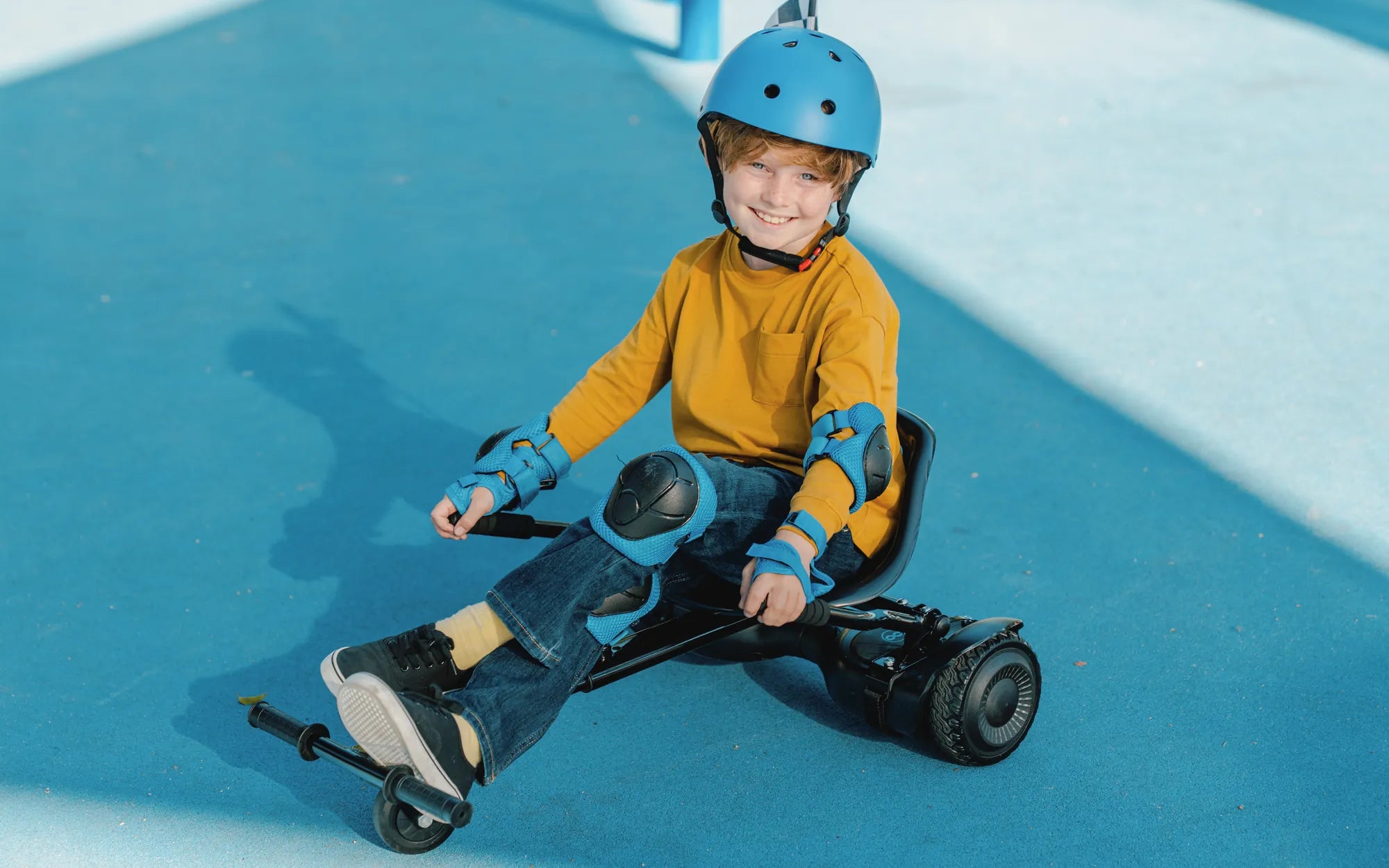
Before you even power on your hoverboard, safety gear is non-negotiable. A certified helmet is the most important piece of equipment, protecting your head from potential falls. Wrist guards are equally vital, as instinct leads us to break falls with our hands.
Knee and elbow pads complete the essential protective set. They cushion impacts and prevent scrapes, allowing you to practice without fear of minor spills. Investing in quality gear is investing in your ability to learn quickly and safely.
Next, prepare your hoverboard. Ensure it is fully charged using the manufacturer's provided charger. Check tire pressure if your model has pneumatic (air-filled) tires; proper inflation is crucial for stability and smooth riding. Inspect the board for any visible damage or loose parts.
Find a large, flat, and obstacle-free practice area. A smooth driveway, empty parking lot, or quiet cul-de-sac is ideal. Avoid public roads, steep hills, or areas with gravel or sand for your initial sessions. Power on the board and wait for the indicator lights to signal it's ready and level.
Mastering the Basics: Mounting, Dismounting, and Balance
The first physical skill in how to ride a hoverboard for beginners is mounting. Always start with the hoverboard turned off and positioned against a wall or next to a sturdy chair or railing you can hold. Place your dominant foot firmly on the footpad, keeping it as close to the wheel as possible for optimal control.
Use your support to stabilize yourself as you smoothly lift your second foot onto the other pad. Your feet should be parallel, roughly shoulder-width apart, and positioned symmetrically. Do not look down at your feet; keep your head up and eyes forward. Engage your core for stability.
You will feel an initial wobble. This is normal. The self-balancing gyroscopes are activating. Focus on distributing your weight evenly on both feet. Slightly bend your knees to act as natural shock absorbers. Hold onto your support until you feel steady and the board stops drifting.
To dismount safely, always come to a complete stop. Look in the direction you wish to step off, typically behind you. Shift your weight to your dominant foot, and in one smooth motion, step backward with your non-dominant foot onto the ground, followed by your dominant foot. Never jump off a moving board.
Step-by-Step Guide to Movement and Control
Finding Your Neutral Stance
The neutral stance is your "home base." It's the balanced position where the hoverboard remains stationary. Stand relaxed with a slight bend in your knees, back straight, and arms out slightly to your sides for balance. Your feet should be flat and parallel.
Practice shifting tiny amounts of weight from your toes to your heels while holding support. Feel how the board wants to move. The goal is to find the precise point where no movement is commanded. Mastering this neutral point is the foundation for all controlled movement.
How to Move Forward and Backward
To move forward, gently and gradually lean your body weight forward onto your toes. Think of it as a subtle press from the balls of your feet, not a dramatic lunge. The more you lean, the faster you will accelerate. Start with tiny leans to inch forward.
To move backward, apply gentle pressure through your heels. Again, the movement is controlled and comes from your ankles and lower legs, not by bending at the waist. To stop, simply ease back into your neutral stance. The board will coast to a stop. Practice going forward and backward in a straight line over short distances.
Mastering Turns and Spinning
Turning is where the fun truly begins. For a gentle, wide turn, apply forward pressure with the foot on the *opposite* side of the direction you want to turn. To turn right, press forward with your left toe. To turn left, press forward with your right toe. The board will carve a smooth arc.
For a sharper turn or a pivot spin, use the toe-heel twist method. To spin clockwise, press your right toe forward and your left heel back simultaneously. For a counter-clockwise spin, press your left toe forward and your right heel back. Practice these movements slowly at first to understand the sensitive response.
How to Stop Safely
The safest way to stop is proactively. Plan your stops well in advance. To decelerate, smoothly reduce the pressure on your toes or heels and return to the neutral stance. Allow the hoverboard to coast to a complete stop under its own resistance.
Never attempt to jump off while the board is still in motion, as this can cause it to shoot out unpredictably. Once fully stopped, execute the practiced dismounting technique. In an emergency, a quicker stop can be achieved by leaning slightly backward (if moving forward) but this should be practiced at low speeds in a safe area first.
Leveling Up: Advanced Maneuvers and Riding Tips
Once you are comfortable with basic movement and turns, you can progress to gentle slopes. Always ascend and descend hills straight on, not at an angle. Lean slightly forward when going up a hill and slightly back when going down, maintaining a controlled, slow speed.
Navigating slight bumps or transitions (like from pavement to a smooth driveway) requires bending your knees more deeply to absorb the shock. Keep a firm but relaxed stance. For different surfaces, note that smooth concrete offers the easiest ride, while rougher asphalt provides more traction but requires more focus.
Professional riders consistently offer these key tips: Always look ahead in the direction you want to go, not down at your feet. Your body naturally follows your gaze. Keep your arms out for dynamic balance, much like a tightrope walker. Start every ride session in an open, obstacle-free area to get re-acclimated.
Practice emergency maneuvers like quick stops and tight turns in a controlled setting. Develop the habit of scanning your path for cracks, potholes, or debris. The more you practice in a safe environment, the more instinctive and safe your riding will become in varied conditions.
Why Choose a Gyroor Hoverboard for Learning?
For beginners, the hoverboard's design directly impacts the learning curve. Gyroor models are engineered with features that build rider confidence. A stable, wider wheelbase and a textured, spacious foot platform provide a solid and secure feeling underfoot, reducing initial wobbliness.
Safety is paramount. Every Gyroor hoverboard uses a UL-certified battery pack, tested for over 500 charge cycles. This eliminates concerns over battery safety issues that can plague lesser-known brands. Coupled with a reliable 1-year warranty, it offers genuine peace of mind.
The acceleration and braking algorithms are tuned for smoothness. This means predictable, gradual responses to your leans, not jerky or overly sensitive movements that can throw a beginner off balance. This predictable control is perhaps the most critical feature for mastering how to ride a hoverboard for beginners.
Durability matters during the learning phase. With an IPX5 water-resistant rating, Gyroor hoverboards can withstand minor splashes from puddles and are resistant to dust. This resilience protects your investment from common beginner riding environments and ensures the board remains reliable as your skills grow.
Hoverboard Comparison: Key Features for Beginners
Choosing your first hoverboard involves comparing key specifications that affect stability, safety, and usability. The following table outlines critical features to consider, with Gyroor's approach highlighted.
| Feature | Why It Matters for Beginners | Gyroor Standard |
|---|---|---|
| Wheel Size (Diameter) | Larger wheels (≥8.5") roll over small cracks and debris more easily, offering a smoother, more stable ride. | 8.5" to 10" air-filled or rubber tires for comfort and stability. |
| Maximum Speed | A moderate top speed (7-10 MPH) is ideal for learning, allowing progression without overwhelming power. | Models typically feature beginner-friendly modes with speeds capped around 7 MPH, with options to unlock higher speeds later. |
| Weight Limit | Must support the rider's weight with a safe margin. Exceeding the limit compromises balance and safety. | Robust construction supports riders up to 220-265 lbs, accommodating most adults and teens. |
| Battery & Range | Longer range allows for extended practice sessions. Certified battery safety is non-negotiable. | UL-certified batteries with ranges from 7 to 12 miles per charge, depending on model. |
| Learning Modes | A dedicated beginner mode restricts speed and softens acceleration, making initial control much easier. | Most models include a beginner/learning mode that is activated by default for first-time use. |
| Build Quality & Warranty | Durable construction withstands the inevitable bumps of learning. A warranty protects your investment. | IPX5 water-resistant design and a reliable 1-year warranty on the vehicle and 6 months on the battery. |
Frequently Asked Questions (FAQ) for Beginners
Q: How long does it take to learn to ride a hoverboard?
A> Most people can achieve basic competency—mounting, dismounting, and moving in a straight line—within 30-60 minutes of focused practice. Feeling fully confident with turns and varied terrain typically takes 3-5 hours of total practice spread over a few days.
Q: Is a hoverboard safe for kids?
A> Safety depends on the child's maturity, coordination, and the specific product. Many models are rated for ages 8 and up. Parental supervision, full safety gear, and strict practice in safe areas are absolutely essential. Always check the manufacturer's recommended age and weight limits.
Q: What is the weight limit, and what happens if I exceed it?
A> Weight limits vary by model, typically from 220 lbs to 265 lbs for standard hoverboards. Exceeding the limit can damage the motors, strain the battery, cause the board to overheat, and critically impair its self-balancing function, making it unsafe to ride. Always choose a board rated for your weight.
Q: Can I ride on grass, gravel, or carpet?
A> Standard hoverboards with smaller, solid wheels are designed for smooth, hard surfaces like pavement and indoor flooring. Riding on rough terrain like grass or gravel is difficult, unstable, and can strain the motors. Some all-terrain models with large, rugged tires are built for such conditions. Short-pile carpet is usually manageable, but thick carpet can interfere with the wheels.
Q: How do I maintain my hoverboard?
A> Regular maintenance is simple but important. Keep it clean and dry. Check tire pressure monthly if applicable. Avoid extreme temperatures and never charge the board immediately after a long ride; let the battery cool first. Store it in a cool, dry place with a partial charge (around 50-70%) if not used for extended periods. Always use the official charger.
Conclusion: Your Journey Starts Here
Mastering your hoverboard is a rewarding skill that combines balance, coordination, and fun. The key to success is a commitment to safety gear, patient practice of the fundamental steps, and choosing a reliable, beginner-friendly board. Progress at your own pace in a secure environment, and don't get discouraged by the initial wobbles—they are a normal part of the process.
With this step-by-step guide on how to ride a hoverboard for beginners, you have the blueprint for a confident start. A well-made hoverboard from a trusted brand like Gyroor, with its emphasis on stable design, certified safety, and smooth control, is the best partner for your journey from novice to proficient rider.
Ready to begin? Equip yourself with safety gear, find your practice space, and take that first step. For a hoverboard built to support every stage of your learning adventure, explore the engineered-for-confidence options available. Browse the full Gyroor collection at gyroorboard.com and find the perfect model to start your ride.
Can You Take a Hoverboard on a Plane? The Ultimate Travel Guide
Purple Electric Scooter for Kids: The Ultimate Guide to Fun and Safety