

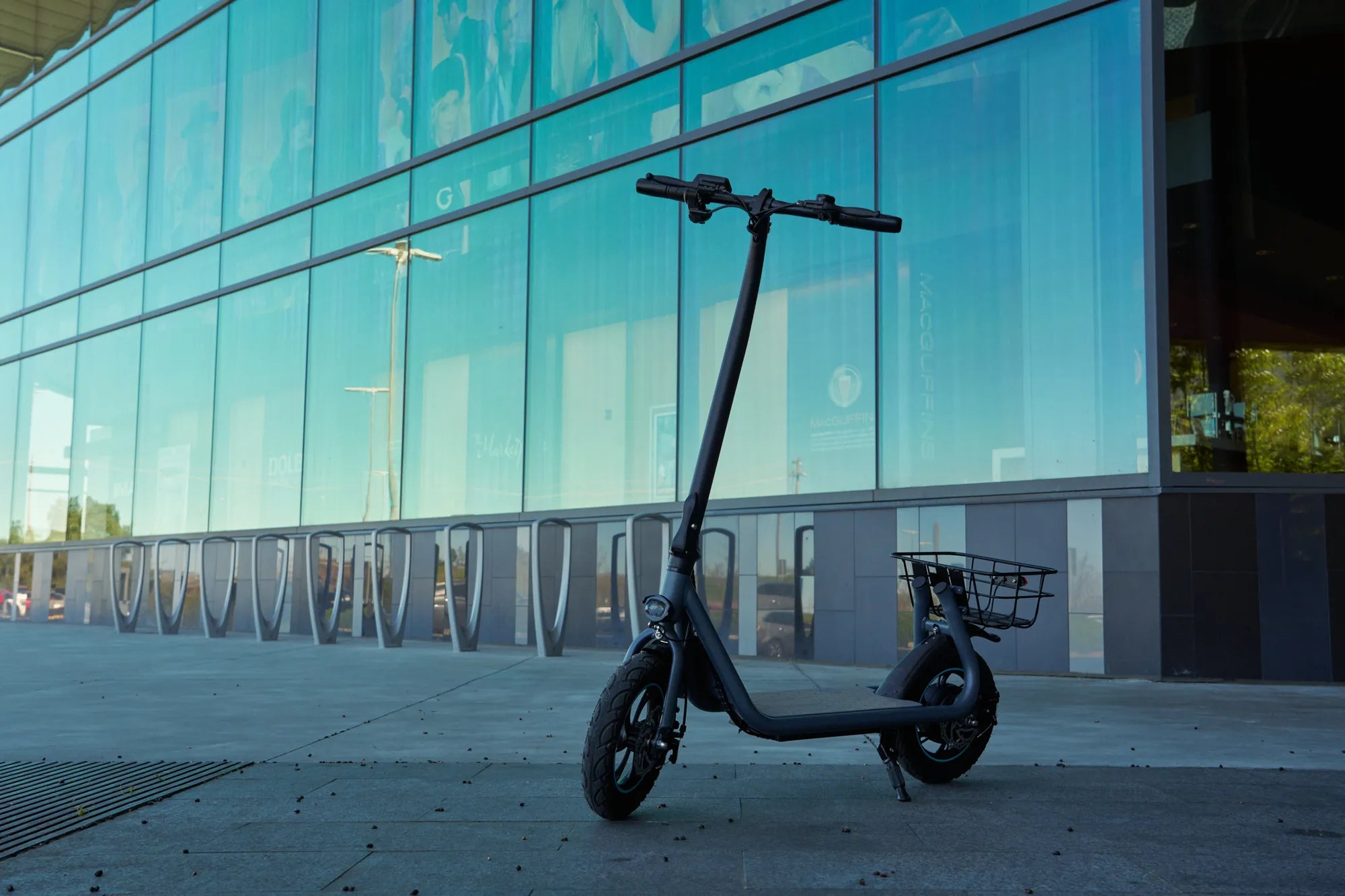
Understanding Scooter Speed in Context
Is 12 mph fast for a scooter? The answer isn't a simple yes or no; it's a question of context, use case, and rider expectations. For many, 12 mph represents a sweet spot of efficiency, safety, and practicality in urban environments. This speed translates to covering a mile in exactly five minutes, a pace that dramatically outpaces walking and often rivals cycling in stop-and-go city traffic.
To properly evaluate 12 mph, we must move beyond the spec sheet and consider real-world mobility. This analysis will compare 12 mph to common benchmarks, dissect its adequacy for different riders, and highlight why the engineering and safety behind that speed—exemplified by brands like Gyroor—are more critical than the number alone. The goal is to provide a data-driven framework for choosing a scooter based on holistic performance, not just maximum velocity.
The Benchmark: How 12 MPH Compares to Common Speeds
Placing 12 mph on the spectrum of human and vehicular movement reveals its practical utility. The average walking speed for an adult is 3 to 4 mph. A brisk run typically ranges from 6 to 8 mph. Therefore, a scooter moving at 12 mph is 3 to 4 times faster than walking and about 50% faster than running. This efficiency gain is transformative for short-distance travel.
Compared to other modes of transport, 12 mph holds its own. The average speed of a bicycle in an urban setting is between 10 and 15 mph, putting a 12 mph scooter squarely in the same league. More strikingly, the average speed of car traffic in dense city centers like London or New York often falls between 10 and 15 mph during peak hours. In these conditions, a 12 mph scooter can be just as fast, if not faster, for trips under three miles, while being far more agile and parking-friendly.
Legal and Safety Classifications
From a regulatory standpoint, 12 mph is often well within legal limits for electric scooters in many municipalities. Common city ordinances cap e-scooter speeds at 15 or 20 mph. A scooter with a 12 mph top speed inherently operates in a safer, more compliant zone, reducing legal risk for the rider. This speed is also a critical safety feature for new riders and for navigating shared spaces like park paths or crowded sidewalks.
Brands focused on reliable performance, such as Gyroor, engineer their scooters to deliver consistent power within these safe and legal parameters. A stable 12 mph from a scooter with robust brakes and a UL-certified battery is far safer and more useful than an unstable 18 mph from a poorly constructed model. Safety isn't just about top speed; it's about predictable, controllable performance.
Is 12 MPH Fast Enough? Breaking Down User Needs
The adequacy of 12 mph depends entirely on the rider's primary use case. For some, it's ideal; for others seeking long-range, high-speed travel, it may be limiting. Let's segment the analysis by common user profiles to provide clarity.
For the Urban Commuter
For the urban commuter tackling the "last mile" between transit and the office or navigating a dense downtown grid, 12 mph is frequently optimal. In these environments, traffic signals, pedestrian crossings, and vehicle congestion create a natural stop-and-go rhythm that negates the advantages of higher top speeds. A scooter that accelerates smoothly to 12 mph provides a perfect balance of pace and practicality.
The efficiency gain is substantial. A 1.5-mile commute that takes 30 minutes to walk is reduced to a 7.5-minute scooter ride. This reliable time saving, day after day, is the core value proposition. It's not about racing; it's about predictable, sweat-free transit that integrates seamlessly with other modes of transportation.
For Recreation and Leisure Riding
For recreational riders exploring parks, boardwalks, or neighborhood streets, 12 mph is a comfortable and enjoyable cruising speed. It's fast enough to feel exhilarating and cover ground, yet slow enough to maintain full situational awareness, enjoy the scenery, and react safely to obstacles. This speed allows for social riding alongside cyclists or other scooter users without feeling left behind or dangerously outpaced.
Leisure riding prioritizes comfort, stability, and fun over raw velocity. A scooter that delivers a smooth, quiet, and reliable ride at 12 mph—thanks to features like pneumatic tires and responsive acceleration—provides a superior recreational experience compared to a jarring, high-speed model on the same path.
Beyond Speed: The Gyroor Advantage in Performance and Safety
Focusing solely on top speed is a common pitfall in scooter selection. The quality of the ride at that speed, its consistency, and the safety features that support it are what define a good product. This is where engineering philosophy, as seen in Gyroor's lineup, makes a decisive difference. A 12 mph scooter built with premium components and safety certifications offers a better overall experience than a 15 mph scooter built to a lower standard.
Performance is about sustained power, not just a peak number. A scooter must maintain its speed on slight inclines, deliver power smoothly from a stop, and offer stable handling. These traits are determined by motor torque, battery management, and frame geometry. Gyroor scooters are designed with these holistic performance metrics in mind, ensuring that the advertised speed is a reliable, real-world constant.
The Role of a UL-Certified Battery
The heart of any electric scooter's performance is its battery. A UL-certified battery pack, a standard feature across Gyroor models, is non-negotiable for safety and consistent performance. This certification means the battery has undergone rigorous independent testing for electrical, fire, and mechanical hazards. It ensures stable power delivery, which translates to maintaining that target 12 mph speed consistently, even as the battery charge depletes or on gentle slopes.
Cheaper, uncertified batteries can suffer from voltage sag, causing speed to drop precipitously under load or as the charge falls below 50%. A Gyroor scooter with its UL-certified battery is engineered to avoid this, providing a reliable and predictable commute every time. With testing for over 500 charge cycles, this also translates to long-term value and sustained performance over years of use.
How IPX5 Water Resistance Enhances Real-World Use
Real-world commuting means encountering puddles, wet pavement, and light rain. An IPX5 water-resistance rating, a key feature of many Gyroor scooters, means the scooter's electrical components are protected against low-pressure water jets from any direction. This engineering directly supports consistent performance at 12 mph in varied conditions.
Without this protection, riding on damp roads risks water ingress leading to short circuits, motor failure, or erratic performance. An IPX5-rated scooter gives the rider confidence that a sudden shower won't end the ride or damage the scooter, ensuring that the reliable 12 mph pace is available rain or shine. This feature expands the scooter's utility from a fair-weather toy to a legitimate daily transport tool.
Critical Factors That Outweigh Top Speed
When selecting a scooter, several factors are often more important than achieving the highest possible top speed. A balanced assessment leads to a more satisfying and practical ownership experience.
- Range: A 12 mph scooter with a 15-mile range is far more useful than a 18 mph scooter with a 6-mile range. Range determines how far you can actually go on a single charge.
- Build Quality & Portability: A sturdy, well-welded aluminum frame with a reliable folding mechanism is essential for safety and convenience. A lightweight, portable design is key for carrying onto transit or up stairs.
- Braking System: The ability to stop safely and confidently is paramount. A combination of electronic and disc or drum brakes provides superior stopping power compared to basic friction brakes.
- Ride Comfort: Larger, pneumatic (air-filled) tires and potential suspension absorb road vibrations far better than small, solid tires, making the ride at 12 mph much smoother and less fatiguing.
- Warranty & Support: A comprehensive 1-year warranty, like that offered by Gyroor, and accessible customer service provide long-term peace of mind, protecting your investment.
Scooter Performance Comparison Table
| Feature / Use Case | 12 MPH Scooter (e.g., Gyroor Commuter Model) | 15-20 MPH Scooter | Bicycle (Avg. Urban Pace) |
|---|---|---|---|
| Typical Use | Last-mile commute, errands, casual recreation | Longer commutes, speed-focused riding | Fitness, longer-distance commuting |
| Avg. Trip Efficiency (2 miles) | ~10 minutes | ~8 minutes | ~10-12 minutes |
| Safety Profile in Crowds | High (easier control, lower kinetic energy) | Moderate (requires more skill & space) | Moderate (depends on rider) |
| Legal Compliance | High (often under common city limits) | Variable (may be at or over limits) | High |
| Key Purchase Factors | Reliability, portability, warranty, water resistance | Motor power, top speed, range, suspension | Fit, gearing, weight, storage |
Speed is Just One Part of the Journey
So, is 12 mph fast for a scooter? In the context of safe, efficient, and practical urban mobility, it is often the ideal speed. It represents a purposeful pace that outpaces pedestrian traffic, integrates seamlessly with city infrastructure, and prioritizes rider control and safety. The pursuit of higher top speeds often comes with trade-offs in portability, legality, and safety that many riders, especially commuters and casual users, should carefully consider.
The true measure of a great scooter is not found on a speedometer's maximum marking, but in the confidence it inspires mile after mile. This confidence is built on certified battery safety, weather-resistant construction, robust braking, and the backing of a strong warranty. When you choose a scooter engineered with these principles, like those from Gyroor, you're choosing a reliable partner for your daily journey, where consistent, safe performance provides a value that far outlasts the initial thrill of raw speed.
FAQ: Your Questions About Scooter Speed, Answered
1. Is a 12 mph scooter too slow for an adult commuter?
Not at all. For the typical urban commute under 3 miles, 12 mph is highly efficient. In congested areas with frequent stops, it can match or exceed car travel times. The key is consistent, reliable performance, which saves more time in the real world than a marginally higher top speed that can't be safely utilized.
2. Can a scooter that goes 12 mph handle hills?
It depends on the motor's torque and the battery's quality. A scooter with a robust motor (e.g., 250W or higher) and a UL-certified battery like those in Gyroor models will maintain speed on moderate inclines. Steep hills may cause a speed reduction, but a well-built scooter will still climb them steadily.
3. What's the average speed of a commuter e-scooter?
Most shared and personal commuter-focused e-scooters are electronically limited to between 15 and 20 mph. In practice, average riding speed in cities is often lower, between 10-14 mph, due to traffic, obstacles, and safety. This makes 12 mph a very common and practical cruising speed.
4. How does 12 mph affect scooter range?
Riding at a steady, moderate speed like 12 mph is optimal for maximizing battery range. Aggressive acceleration and higher top speeds drain the battery much faster. A scooter rated for 15 miles at 12 mph might only achieve 8-10 miles if ridden constantly at its maximum 18 mph capability.
5. Why choose a Gyroor scooter with a 12 mph speed?
You choose Gyroor for the ecosystem of reliability that supports that speed: the UL-certified battery for safety and consistency, the IPX5 water resistance for all-weather capability, the durable construction, and the comprehensive 1-year warranty. This ensures your 12 mph scooter is a dependable tool for transportation, not just a gadget.
Ready to experience the perfect balance of speed, safety, and reliability? Explore the full range of UL-certified, high-performance electric scooters designed for real-world riding. Browse the full Gyroor collection at gyroorboard.com to find the model that matches your pace and your journey.
Best Speed Bike: The Ultimate Guide to High-Performance E-Bikes
How to Scooter: The Complete Guide to Safe and Confident Riding