


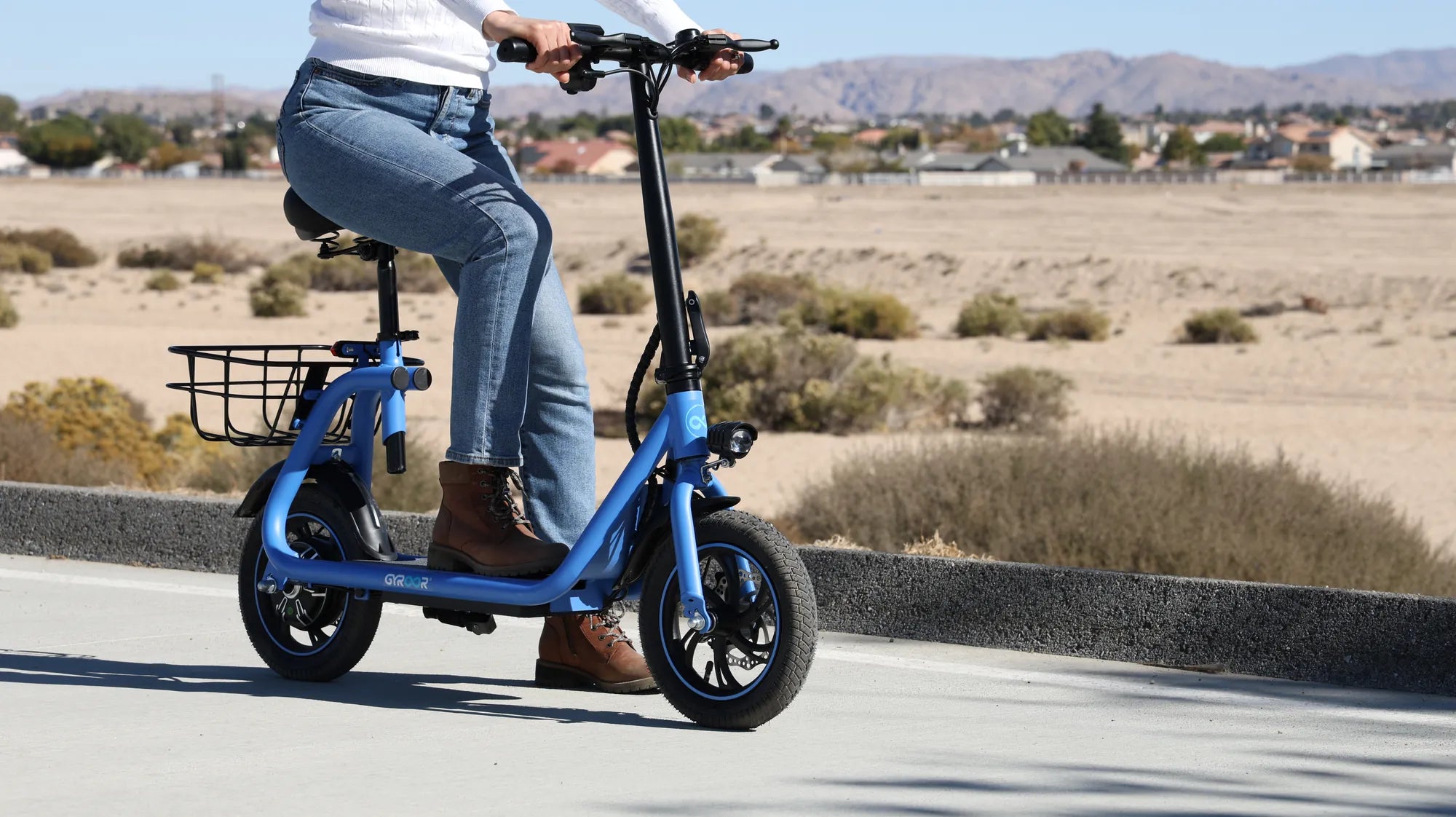
Introduction: Understanding Scooter Speed in the Real World
Is 22 mph fast for a scooter? The answer isn't a simple yes or no. It's a question of context, utility, and safety. For urban commuters, 22 mph represents a significant performance threshold that transforms a scooter from a recreational toy into a legitimate vehicle for daily transportation.
This speed is not an arbitrary number. It's a common cap for many high-quality, road-legal electric scooters designed for adults. Understanding this benchmark requires moving beyond raw velocity to examine practical commute times, regulatory frameworks, and the engineering that makes this speed both accessible and safe.
In this comprehensive analysis, we will dissect what 22 mph truly means for a rider. We'll compare it to other modes of transport, delve into the safety considerations, explore the legal landscape, and examine how leading brands like Gyroor engineer their scooters to deliver reliable, controlled performance at this speed. By the end, you'll have a data-driven perspective to answer the question for your own needs.
The 22 mph Benchmark: What It Means for Your Daily Commute
To gauge if 22 mph is fast, we must place it in the context of urban movement. The average cycling speed in a city is between 12-15 mph. A brisk runner manages about 8 mph. In dense urban cores, car traffic often crawls at 10-15 mph during rush hour, with averages rarely exceeding 25 mph over short distances.
At 22 mph, an electric scooter rider is traveling nearly twice as fast as a cyclist and significantly outpacing congested car traffic. This translates to tangible time savings. A 5-mile commute, which would take an hour to walk, takes about 15-20 minutes by car in traffic, and just under 14 minutes at a consistent 22 mph on a scooter.
This speed creates a 'sweet spot' for urban mobility. It is fast enough to be a practical car replacement for short-to-medium trips, yet slow enough to remain agile in bike lanes and on multi-use paths. It allows riders to keep pace with the natural flow of city traffic without becoming a hazard or requiring excessive road space.
For brands focused on reliable urban transport, like Gyroor, engineering a scooter to consistently and safely hit 22 mph is a primary design goal. It's a speed that maximizes utility while respecting the practical limits of scooter stability, braking distance, and rider control in varied urban environments.
Safety and Control at 22 mph: A Rider's Perspective
Speed perception is relative, but physics is absolute. At 22 mph, a rider is moving at approximately 32 feet per second. This means reaction times, road conditions, and vehicle stability become critically important. For a responsible adult rider, 22 mph is a manageable speed that requires attentiveness but does not demand expert-level skills.
The key to safety at this speed is a combination of rider preparedness and scooter design. A certified helmet is non-negotiable. Protective gear for knees and elbows is advisable, especially for new riders. Awareness of surroundings, defensive riding techniques, and understanding braking distances are essential skills.
From a control standpoint, 22 mph on a well-built scooter feels confident and planted. On a poorly constructed model with a narrow deck, solid tires, and weak brakes, the same speed can feel precarious and unstable. The quality of the ride is directly tied to the engineering behind it.
Gyroor designs its scooters with this equilibrium in mind. Features like wide, textured decks provide stable footing. Dual braking systems (often electronic and disc) ensure controlled stopping power. These elements are not extras; they are fundamental requirements for making 22 mph a safe, everyday speed.
The Role of Build Quality and Features
When traveling at 22 mph, every component of the scooter is under stress. The build quality directly dictates whether that speed feels exhilarating or terrifying. A scooter's frame, suspension, tires, and braking system work in concert to manage forces and maintain control.
A robust, aerospace-grade aluminum alloy frame resists flex and torsion, providing a solid platform. Pneumatic (air-filled) tires, as found on many Gyroor models, offer superior shock absorption and grip compared to solid tires, especially on wet or uneven pavement. This is crucial for maintaining traction during cornering and braking.
Features like IPX5 water resistance ensure that electronics and motors are protected from rain and road spray, preventing sudden failures. The use of UL-certified battery packs, a standard for Gyroor, is perhaps the most critical safety feature, virtually eliminating risks of thermal runaway or fire during the energy demands of maintaining 22 mph.
Ultimately, 22 mph on a premium scooter is a testament to controlled engineering. It's the difference between a vehicle that is merely capable of a speed and one that is designed to excel at it safely and reliably, mile after mile.
Legal and Regulatory Landscape: Why 22 mph is a Common Limit
The prevalence of 22 mph as a top speed for consumer scooters is not accidental; it is deeply intertwined with transportation regulations. In many jurisdictions, particularly in the United States and the European Union, electric scooters and e-bikes are classified based on their maximum assisted speed and motor power.
In the U.S., many states align with a three-class system for e-bikes, which often extends to e-scooters. Class 1 and Class 2 e-bikes have a maximum assisted speed of 20 mph. Class 3 e-bikes can reach 28 mph but may have age restrictions, helmet mandates, and be prohibited from bike paths. A scooter capped at 22 mph often falls into a regulatory gray area that is generally tolerated, similar to a Class 2 device, avoiding the stricter rules of Class 3.
In the EU, the legal limit for an electric scooter to be used without registration, insurance, or a license is typically 25 km/h (about 15.5 mph). However, many higher-performance models are sold with a software limiter that can be adjusted by the user, with 22 mph (35 km/h) being a common 'unlocked' performance tier for private property or regions with more lenient enforcement.
For manufacturers, designing a scooter with a 22 mph maximum is a strategic decision. It offers a compelling performance boost over budget models (often limited to 15-18 mph) while carefully navigating legal frameworks to keep the product accessible to the widest possible audience without requiring special permits.
Comparing Performance: 22 mph on a Gyroor Scooter vs. The Competition
Top speed alone is a hollow metric. The real question is: how well does a scooter perform *at* 22 mph? Performance encompasses range, hill-climbing ability, stability, and braking efficiency. The following comparison highlights key differences when operating at this speed threshold.
| Performance Metric | Typical 22 mph Gyroor Model (e.g., Gyroor S1 Pro) | Average Competitor at Similar Price | Why It Matters at 22 mph |
|---|---|---|---|
| Real-World Range at 22 mph | 18-22 miles | 12-16 miles | Higher efficiency means the scooter can sustain top speed longer, making it viable for longer commutes. |
| Hill Climb Grade (6% incline) | Maintains 18-20 mph | Drops to 12-15 mph | Superior torque preserves momentum on hills, keeping you in the flow of traffic and reducing trip time. |
| Braking System | Dual System (E-ABS + Disc) | Often Single (Disc or Drum) | Redundancy and advanced braking (E-ABS prevents wheel lock) drastically shorten stopping distance, enhancing safety. |
| Deck & Wheel Stability | Wide deck (≥7"), 10" pneumatic tires | Narrower deck, 8.5" solid/honeycomb tires | Larger pneumatic tires and a stable platform improve control and comfort, reducing fatigue at higher speeds. |
| Warranty & Support | 1-Year Comprehensive | 90 Days - 6 Months (limited) | A longer warranty reflects confidence in the scooter's ability to handle the stresses of sustained 22 mph riding. |
As the table illustrates, a Gyroor scooter engineered for 22 mph is built to deliver a holistic performance package. It's not just about reaching the speed; it's about doing so efficiently, safely, and comfortably, with the backing of strong customer support—a commitment trusted by over 100,000 riders globally.
Beyond Top Speed: What Truly Matters for an Electric Scooter
Obsessing over whether 22 mph is fast can distract from the factors that determine daily satisfaction and long-term value. For a commuter, consistent reliability is more important than a theoretical top speed that drains the battery in minutes or feels unsafe to use.
Real-World Range: A scooter that claims 40 miles at 10 mph but only 12 miles at 22 mph has limited high-speed utility. Look for brands that publish realistic range estimates at different speeds. Gyroor's testing, for instance, provides clear expectations for performance under normal riding conditions, including at top speed.
Battery Safety and Longevity: The battery is the heart of the scooter. A UL-certified pack, like those used by Gyroor, is tested for safety, reliability, and longevity (500+ charge cycles). This ensures consistent power delivery to maintain 22 mph throughout the battery's life, not just when it's new.
Ride Comfort and Build Quality: A scooter you dread riding is a scooter you won't use. Features like suspension, pneumatic tires, and ergonomic design combat rider fatigue. IPX5 water resistance means you won't be stranded by a sudden rain shower, a critical feature for a primary commute vehicle.
After-Sales Support: The relationship with a brand begins after purchase. A clear 1-year warranty, accessible customer service, and available replacement parts (like tires and brake pads) are indicators of a company that stands behind its product's performance at 22 mph and beyond.
Frequently Asked Questions (FAQ)
Q: Is 22 mph fast enough for a 10-mile commute?
A: Absolutely. At a consistent 22 mph, a 10-mile commute takes just over 27 minutes of ride time. Factoring in traffic lights and safe riding, it's typically a 30-35 minute trip—often faster than a car during rush hour in many cities. With a scooter offering 20+ miles of real-world range, you can complete the round trip on a single charge with a safety margin.
Q: Can a 22 mph scooter handle hills?
A> It depends on the motor's torque and the rider's weight. A scooter with a high-torque, brushless motor (common in Gyroor's performance models) is designed to tackle moderate inclines (6-10% grade) while maintaining significant speed, perhaps dropping to 16-18 mph. For very steep hills, a reduction in speed is expected, but it should still climb without needing to be pushed.
Q: Do I need a license, registration, or insurance to ride a 22 mph scooter?
A> In most U.S. states and municipalities, no. Electric scooters with a top speed under 20-25 mph are generally treated similarly to bicycles, requiring no license. However, laws are evolving rapidly. It is always the rider's responsibility to check and comply with local regulations, which may include age limits, helmet laws, and rules about where you can ride.
Q: How does 22 mph compare to the speed of an electric bike?
A> They are very comparable. Most Class 1 and Class 2 e-bikes are also limited to 20 mph of motor-assisted speed. A 22 mph scooter offers similar commute times. The choice between the two often comes down to preference: scooters are more portable and nimble in tight spaces, while e-bikes may offer greater comfort for very long distances.
Q: Is it safe for a beginner to start riding at 22 mph?
A> It is advisable for beginners to start in a safe, open area at lower speeds to get accustomed to the scooter's acceleration, braking, and handling. Most quality scooters have multiple speed modes. Starting in a lower mode (e.g., 15 mph) allows a rider to build confidence before engaging the higher performance mode that delivers 22 mph.
The Smart Choice for Practical Urban Mobility
So, is 22 mph fast for a scooter? In the context of efficient, safe, and legal urban transportation, it is optimally fast. It represents the convergence of practical utility, responsible engineering, and regulatory savvy. This speed transforms a scooter from a last-mile solution into a primary-mile vehicle, capable of replacing car trips for countless errands and commutes.
The true measure of a 22 mph scooter is not found on a spec sheet but in daily use: the confidence it inspires on a busy street, the reliability it shows over months of commuting, and the sheer practicality it adds to your life. It's a speed that respects the realities of the city while empowering the rider to move through it with unprecedented freedom and efficiency.
When this performance is delivered by a brand committed to safety, durability, and support—like Gyroor with its UL-certified batteries, IPX5 water resistance, and comprehensive warranty—22 mph becomes more than a number. It becomes the benchmark for intelligent urban mobility. Discover the full range of high-performance, reliably engineered scooters designed to master this perfect pace.
Ready to experience the ideal balance of speed, safety, and utility? Browse the full Gyroor collection of electric scooters and e-bikes, trusted by over 100,000 riders, at gyroorboard.com.
E-Bike Speed Boost: Technical Paths, Critical Risks & Responsible Alternatives
Lightweight 27.5 Inch Mountain Bike: The Ultimate Guide to Agile Trail Performance