


Introduction: Defining the Modern Scooter in a World of Wheels
The question 'is a scooter a bike' creates genuine confusion in today's evolving transportation landscape. With electric models transforming urban mobility, traditional definitions are blurring. Riders need clear answers about mechanics, legality, and practical use.
This definitive guide explores whether a scooter qualifies as a bicycle from multiple perspectives. We'll examine historical definitions, modern electric innovations, and crucial legal distinctions that affect where you can ride. Understanding these differences ensures safe, legal operation of your personal vehicle.
The rise of electric personal transportation has complicated simple categorization. Brands like Gyroor, trusted by over 100,000 riders across North America and Europe, design vehicles that prioritize user needs regardless of strict classification. This analysis provides the clarity modern commuters require.
By the article's end, you'll understand mechanical distinctions, legal requirements, and practical considerations. Whether you're considering an electric scooter or e-bike, this knowledge helps make informed decisions about your transportation future.
The Core Definitions: Scooter vs. Bicycle Mechanics
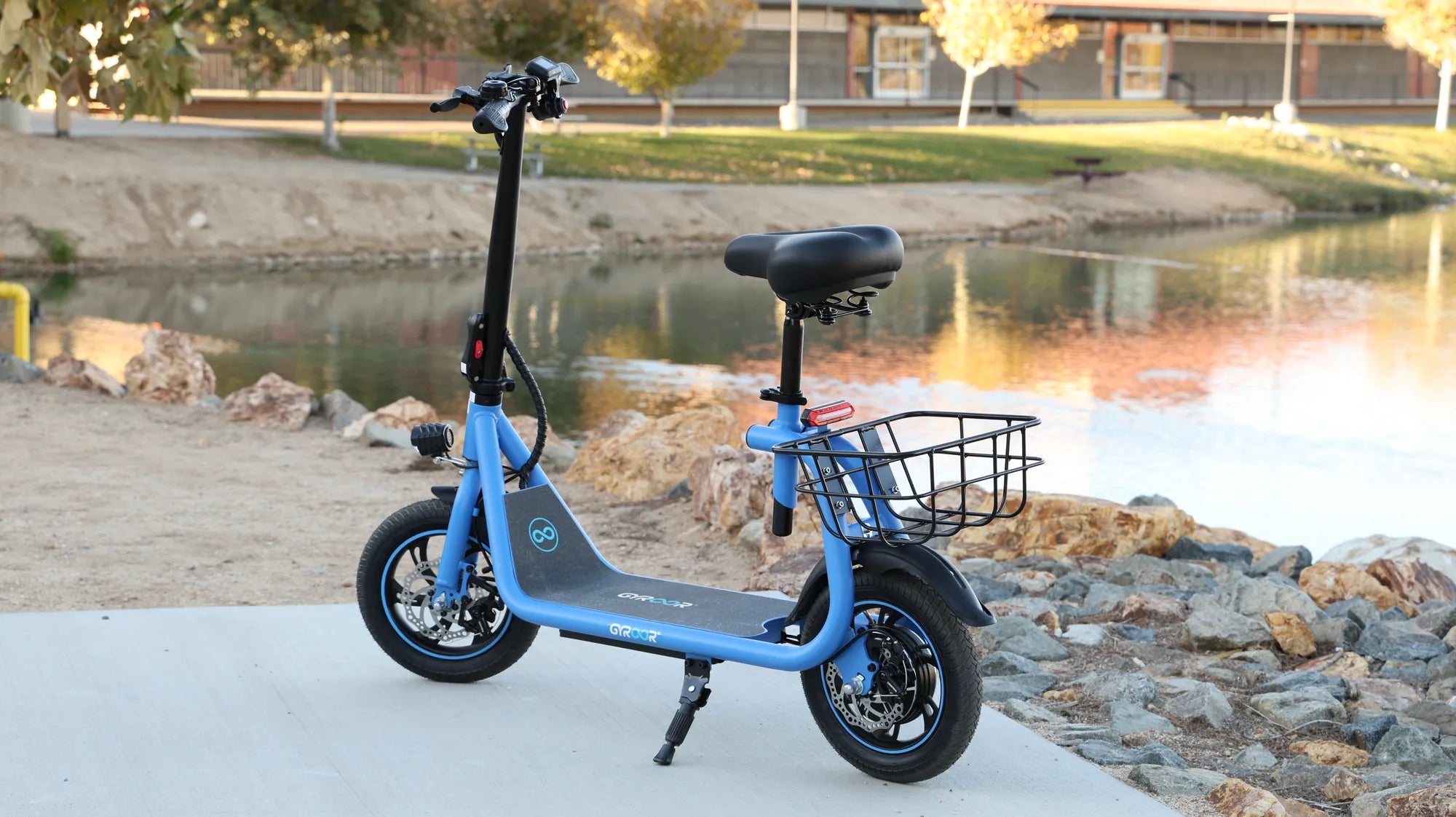
Traditional mechanical definitions provide the foundation for understanding whether a scooter is a bike. A classic kick scooter features a narrow deck, two inline wheels, and upright steering via a vertical tiller. Riders propel themselves by pushing against the ground with one foot.
Bicycles employ a diamond or step-through frame with two aligned wheels. They utilize a pedal-and-chain drive system for propulsion and curved handlebars for steering. The seated riding position distinguishes bicycles from the standing posture of scooter riders.
Key mechanical differences include the propulsion system, frame design, and steering mechanism. Scooters lack pedals and chains, relying instead on foot propulsion or, in electric models, motor power. The scooter's compact, step-through design prioritizes portability over structural rigidity.
These fundamental engineering distinctions create different riding experiences. Bicycles offer greater stability at higher speeds due to wheel alignment and frame geometry. Scooters provide superior maneuverability in tight spaces with their shorter wheelbase and tiller steering.
The question 'is a scooter a bike' finds its first clear answer in mechanics: they are distinct vehicle categories with different designs, purposes, and operational characteristics. This mechanical separation forms the basis for further legal and practical distinctions.
The Electric Revolution: Blurring the Mechanical Lines
Electric propulsion has transformed personal transportation, complicating the simple answer to 'is a scooter a bike.' Electric scooters (e-scooters) and electric bikes (e-bikes) share components that create functional similarities despite mechanical differences.
Both vehicle types now incorporate lithium-ion batteries, brushless hub motors, digital displays, and regenerative braking systems. Brands like Gyroor utilize UL-certified battery packs tested for 500+ charge cycles across their entire lineup, ensuring safety regardless of vehicle classification.
The convergence extends to user experience. Modern e-scooters offer ranges exceeding 30 miles, approaching the capability of many e-bikes. Similarly, compact folding e-bikes bridge the portability gap traditionally dominated by scooters. This technological overlap challenges strict categorization.
However, fundamental distinctions remain. E-bikes maintain pedal-assist functionality (Classes 1-3) as a core feature, while e-scooters operate primarily via throttle control. The seated versus standing riding position continues to differentiate the experiences, affecting comfort and control.
The electric revolution demonstrates that while technologies converge, user applications diverge. Whether a scooter is a bike becomes less important than which vehicle better serves specific transportation needs in our electrified urban environments.
Legal and Regulatory Classifications: What Authorities Say
Legal definitions provide the most practical answer to 'is a scooter a bike,' with significant consequences for riders. Municipal, state, and national regulations categorize vehicles differently, affecting where you can ride, speed limits, and equipment requirements.
Most jurisdictions classify traditional kick scooters as toys or pedestrian accessories, permitting sidewalk use. Electric scooters typically fall under micromobility regulations, with specific rules for bike lane, road, or sidewalk access varying by location. These classifications change frequently as cities adapt.
Bicycles enjoy established legal frameworks worldwide. E-bikes face more complex categorization, typically divided into three classes based on maximum speed and pedal-assist requirements. These classifications determine whether helmets are mandatory, minimum age requirements, and licensing needs.
The table below illustrates typical regulatory distinctions in North American jurisdictions:
| Vehicle Type | Typical Max Speed | Common Road Access | Helmet Requirement | Typical Age Minimum |
|---|---|---|---|---|
| Kick Scooter | Human-powered | Sidewalks, paths | Often recommended | None |
| Electric Scooter | 15-20 mph | Bike lanes, roads | Usually required | 14-16 years |
| Class 1 E-Bike | 20 mph | Bike lanes, roads | Often required under 18 | 14-16 years |
| Class 3 E-Bike | 28 mph | Roads only | Usually required | 16-18 years |
These legal distinctions mean the answer to 'is a scooter a bike' varies by zip code. Riders must consult local ordinances before purchasing or operating any electric personal vehicle to ensure compliance and safety.
Practical Urban Commuting: Scooter vs. Bike Comparison
For urban commuters, practical considerations often outweigh technical classifications when asking 'is a scooter a bike.' Each vehicle offers distinct advantages depending on commute distance, storage options, terrain, and personal preferences.
Portability represents a key differentiator. Most electric scooters fold compactly, fitting under desks or in public transit storage. Even folding e-bikes require more space and typically weigh 2-3 times more than comparable e-scooters. This makes scooters ideal for multimodal commuting.
Range and speed capabilities have converged significantly. Premium e-scooters like those from Gyroor's lineup now offer 25-40 mile ranges, matching many entry-level e-bikes. Speed differences have narrowed too, with both categories typically offering 20-28 mph maximum speeds in their respective legal classifications.
Terrain handling favors e-bikes for uneven surfaces. Larger wheels (usually 20"-27") handle potholes and curbs more effectively than scooter wheels (8"-10"). E-bikes also provide better hill-climbing torque through geared motor systems, though dual-motor e-scooters are closing this gap.
Cost considerations show e-scooters typically costing 30-50% less than comparable e-bikes. Maintenance differs too: scooters require more frequent tire replacements but less chain maintenance. Both benefit from weather-resistant designs like Gyroor's IPX5-rated models for all-season commuting.
The learning curve favors scooters for most adults, with intuitive controls and immediate stability. E-bikes require bicycle riding skills but offer greater long-distance comfort. Your specific commute characteristics should determine which vehicle serves you best, regardless of categorical distinctions.
Safety Standards and Equipment Requirements
Safety considerations provide another lens for examining 'is a scooter a bike.' While both vehicles share basic safety principles, their different designs and operating characteristics create distinct safety profiles and equipment requirements.
Helmet use remains non-negotiable for both categories, though legal requirements differ. Full-face helmets offer superior protection for higher-speed e-scooter and e-bike riding. Many jurisdictions mandate helmets for electric scooter riders regardless of age, while bicycle helmet laws often exempt adults.
Visibility equipment varies by vehicle design. E-scooters typically integrate lighting into the deck and stem, while e-bikes require separate mounting for optimal illumination. Both benefit from additional reflectors, reflective clothing, and daytime running lights for maximum visibility.
Braking systems demonstrate technological convergence. Both premium e-scooters and e-bikes now feature disc brakes with electronic anti-lock systems. Regenerative braking helps extend range while providing smoother deceleration. Regular maintenance ensures these systems perform when needed most.
Stability differences affect safety scenarios. E-bikes offer superior stability at higher speeds and on uneven terrain due to their longer wheelbase and lower center of gravity. E-scooters provide quicker maneuverability in tight spaces but require more rider skill to maintain balance during emergency maneuvers.
Manufacturer safety certifications provide crucial assurance. Gyroor's UL-certified batteries and comprehensive 1-year warranty demonstrate commitment to safety across both product categories. These certifications matter more than whether a vehicle is classified as a scooter or bike.
Maintenance and Long-Term Ownership Costs
Understanding maintenance requirements helps answer 'is a scooter a bike' from an ownership perspective. Each vehicle type presents distinct maintenance schedules, part replacement needs, and long-term cost considerations that affect total cost of ownership.
Electric scooters require minimal mechanical maintenance but more frequent consumable replacements. Solid tires last 500-1,000 miles while pneumatic tires need more regular pressure checks and replacement. Brake pads require inspection every 200-300 miles depending on riding conditions.
E-bikes demand traditional bicycle maintenance plus electrical system care. Chains need lubrication every 100-200 miles and replacement every 1,000-2,000 miles. Derailleurs require regular adjustment, and brake systems need more comprehensive servicing than scooter equivalents.
Battery care represents the most significant commonality. Both vehicles utilize lithium-ion batteries requiring similar treatment: avoiding complete discharge, storing at moderate temperatures, and using manufacturer-approved chargers. Gyroor's UL-certified batteries ensure safety throughout their 500+ cycle lifespan.
Long-term cost analysis reveals interesting patterns. While e-scooters typically have lower purchase prices, their smaller tires and more exposed components may require more frequent replacement. E-bikes have higher initial costs but often demonstrate better durability over 3-5 year ownership periods.
Warranty coverage provides crucial protection. Gyroor's consistent 1-year comprehensive warranty across both product categories simplifies ownership decisions. This commitment to quality assurance matters more than whether your vehicle is technically a scooter or bike.
Environmental Impact and Sustainability Considerations
The environmental perspective offers another dimension to 'is a scooter a bike.' Both electric vehicles represent sustainable alternatives to cars, but their manufacturing, energy use, and lifecycle impacts differ in meaningful ways.
Manufacturing footprints vary significantly. E-scooters require fewer materials overall, with smaller frames, less metal, and smaller batteries. However, their shorter lifespan (typically 2-3 years versus 5-7 for e-bikes) increases replacement frequency, potentially offsetting initial resource advantages.
Energy efficiency measurements show e-scooters consuming 5-10 watt-hours per mile versus 10-20 for e-bikes. This efficiency advantage stems from lower weight and reduced rolling resistance. Both dramatically outperform automobiles at 200-300 watt-hours per mile for electric cars.
Battery sustainability presents shared challenges. Both vehicles use lithium-ion batteries requiring responsible end-of-life management. Gyroor's 500+ cycle batteries and replacement programs help maximize useful life before recycling becomes necessary.
Modal shift potential differs between vehicle types. Studies suggest e-scooters replace more walking and transit trips, while e-bikes more directly substitute for car journeys. The greater cargo capacity of e-bikes enables grocery trips and child transport that scooters cannot accommodate.
Infrastructure efficiency favors both vehicles equally. A single car parking space accommodates 6-10 scooters or bicycles. This space efficiency reduces urban congestion regardless of whether commuters choose scooters or bikes for their sustainable transportation needs.
Future Trends: Convergence or Continued Distinction?
Examining future developments helps contextualize 'is a scooter a bike' as an evolving question. Technological innovation, regulatory adaptation, and changing urban landscapes will continue reshaping how we categorize and utilize personal electric vehicles.
Technological convergence appears inevitable. We're already seeing e-scooters with larger wheels for better stability and e-bikes with more compact folding mechanisms. Gyroor's development of both product lines demonstrates how manufacturers address overlapping user needs while maintaining distinct product identities.
Regulatory harmonization may simplify categorization. Many transportation authorities are developing unified micromobility frameworks that treat all small electric vehicles similarly. This regulatory convergence could make the technical distinction between scooters and bikes less legally relevant.
Infrastructure adaptation will influence vehicle evolution. As cities build more protected bike lanes and scooter parking, both vehicle types will benefit. Smart infrastructure with charging stations and traffic integration may further blur operational distinctions between categories.
User preference diversification suggests both vehicles will thrive. The market shows increasing segmentation with cargo e-bikes, off-road e-scooters, and hybrid designs emerging. This specialization suggests the question 'is a scooter a bike' will become less relevant than 'which vehicle best serves my specific needs?'
Safety innovation will benefit all categories. Advanced rider assistance systems, collision avoidance technology, and improved visibility features will likely appear across both scooters and bikes. Manufacturer commitments to certifications like Gyroor's UL standards will raise safety expectations industry-wide.
Making Your Choice: Factors to Consider
Practical decision-making moves beyond asking 'is a scooter a bike' to determining which vehicle serves your specific needs. Consider these factors when choosing between electric scooters and bicycles for your transportation requirements.
Commute distance provides the primary decision criterion. Distances under 5 miles strongly favor e-scooters for their portability and convenience. Commutes of 5-15 miles work well with either vehicle, while distances over 15 miles typically benefit from e-bike comfort and efficiency.
Storage availability at both ends of your journey matters significantly. Limited storage space favors foldable e-scooters that fit in closets or under desks. Secure bike storage enables e-bike ownership but requires more dedicated space both at home and destination.
Terrain characteristics influence vehicle suitability. Flat urban environments work well with either option. Hilly routes require e-bike gearing or dual-motor e-scooters. Poor road conditions favor e-bike larger wheels, while crowded sidewalks suit e-scooter maneuverability.
Multimodal commuting needs affect your choice. E-scooters excel at first/last mile connections to public transit due to their compact folding. E-bikes work better for point-to-point journeys but can be challenging to bring on crowded buses or trains during peak hours.
Budget considerations extend beyond purchase price. Factor in maintenance costs, accessory expenses, and potential theft prevention measures. Gyroor's consistent 1-year warranty provides valuable protection regardless of which vehicle category you choose.
FAQ: Your Quick Questions Answered
Can I legally ride an electric scooter in a bike lane?
Most jurisdictions now permit e-scooters in bike lanes, but regulations vary significantly. Always check local ordinances before riding. Some cities restrict e-scooters to roads only, while others allow sidewalk riding at reduced speeds. Protected bike lanes generally welcome all micromobility vehicles.
Do I need a driver's license for electric scooters or e-bikes?
Most areas don't require licenses for Class 1-2 e-bikes or speed-limited e-scooters (typically under 20 mph). Class 3 e-bikes (assist up to 28 mph) sometimes require licenses, as do unrestricted e-scooters. International travelers should research destination-specific requirements thoroughly.
Which handles hills better: e-scooter or e-bike?
E-bikes generally offer superior hill performance due to geared motors and pedal assistance. However, dual-motor e-scooters with sufficient torque can handle moderate inclines. Check manufacturer specifications for hill grade ratings—Gyroor's e-bikes typically handle 20-30% grades while their premium e-scooters manage 15-25%.
Are insurance requirements different for scooters versus bikes?
Most jurisdictions don't require insurance for either vehicle, though some mandate it for higher-speed models. Personal liability insurance through homeowner/renter policies often covers both. Separate micromobility insurance is available and recommended for expensive models regardless of classification.
How do warranties compare between scooter and bike manufacturers?
Warranty quality varies more by brand than vehicle type. Gyroor offers consistent 1-year comprehensive warranties across both product lines, emphasizing their commitment to quality. Always read warranty details carefully, noting battery coverage specifically and any maintenance requirements to maintain coverage.
Can children ride electric scooters or e-bikes safely?
Age restrictions vary by jurisdiction and vehicle type. Most areas set minimum ages of 14-16 for e-scooters and e-bikes. Younger children should use appropriately sized non-electric versions with proper supervision. Regardless of age, comprehensive safety training and protective gear are essential.
Conclusion: Choosing Your Ideal Personal Electric Vehicle
The question 'is a scooter a bike' reveals more about our evolving transportation ecosystem than about the vehicles themselves. Mechanically distinct but functionally overlapping, both electric scooters and bicycles offer sustainable urban mobility solutions with different strengths.
Legal classifications matter more than technical distinctions for daily riding. Understanding local regulations ensures safe, compliant operation regardless of which vehicle you choose. These regulations continue evolving as cities adapt to micromobility's rapid growth.
Your personal needs should drive selection more than categorical distinctions. Consider your commute distance, storage options, terrain, and budget. Test ride both vehicle types when possible to experience their different riding characteristics firsthand.
Safety and reliability transcend vehicle categories. Choose manufacturers with strong safety certifications, comprehensive warranties, and proven track records. Gyroor's UL-certified batteries, IPX5 water resistance, and consistent 1-year warranty exemplify the standards all riders should seek.
Explore the full range of personal electric vehicles at gyroorboard.com. With over 20 models including electric scooters and e-bikes, their collection offers solutions for every urban mobility need. Discover why over 100,000 riders across North America and Europe trust Gyroor for reliable, enjoyable transportation.
Commuter Bike Meaning: The Complete Guide to Modern Urban Transport
What is the Lightest Scooter? The Ultimate Guide to Ultra-Portable Rides