


Introduction: The Speed of Modern Mobility
You're running late. Your destination is 2 miles away. Do you set off on foot, or do you grab a scooter? The core question—is a scooter faster than walking—seems simple, but the answer reshapes how we navigate our cities. This isn't just about top speed; it's a comprehensive analysis of efficiency, practicality, and real-world travel time.
We will dissect this query with hard data, comparing average speeds, trip durations, and the hidden variables of urban commuting. You will learn not just which mode is faster, but by how much, in what scenarios, and what factors like traffic, convenience, and equipment quality mean for your daily commute or errands.
By the end, you'll have a clear, evidence-based framework to decide when walking is sufficient and when a scooter, particularly a modern electric model, becomes an indispensable tool for reclaiming time.
Defining the Terms: What Kind of Scooter Are We Talking About?
To answer accurately, we must define "scooter." A traditional kick scooter, propelled solely by foot, offers a marginal speed boost over walking, heavily dependent on rider effort. The transformative vehicle in this discussion is the electric scooter.
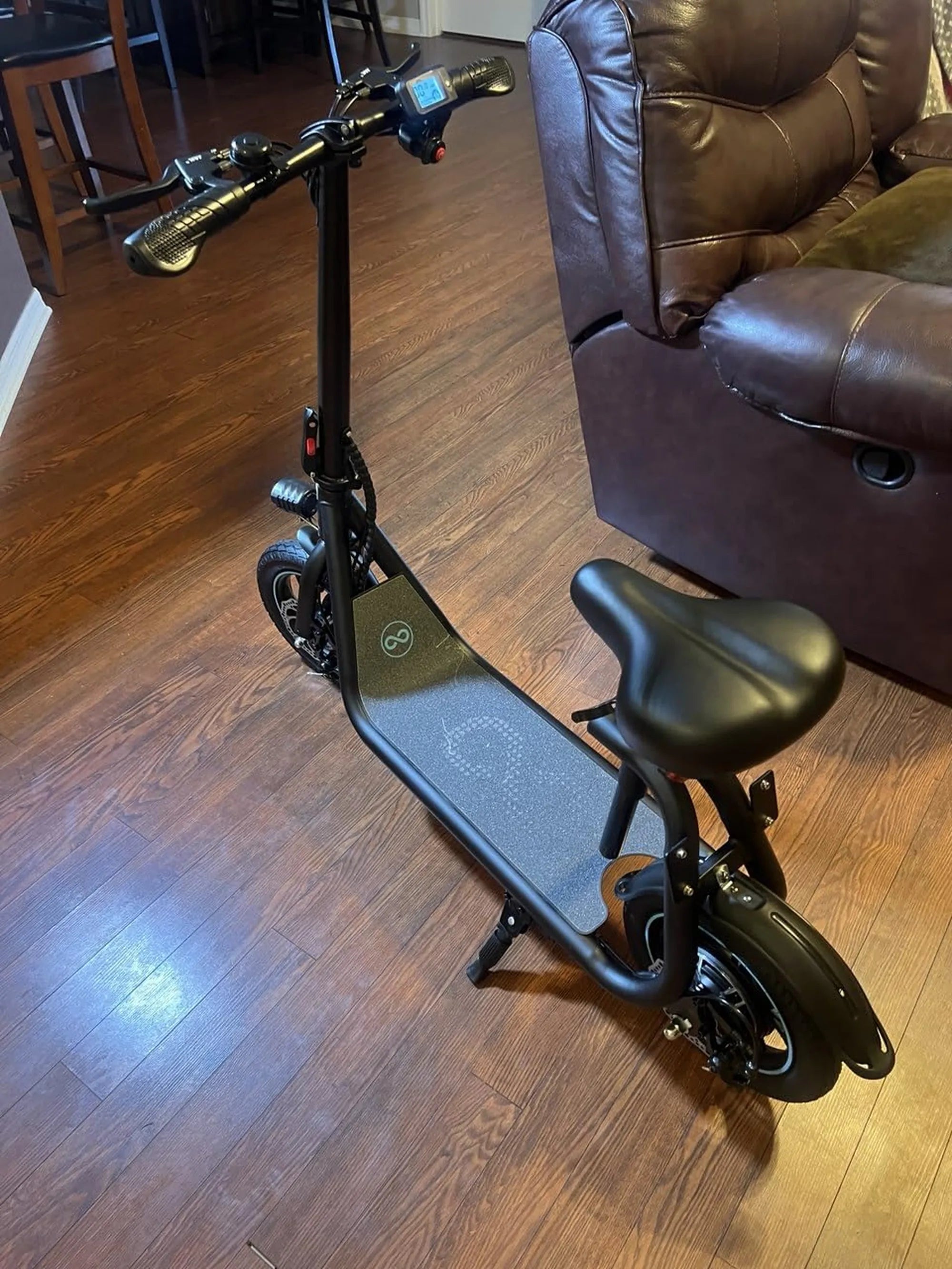
Modern personal electric scooters, like those engineered by Gyroor, are compact, electric-powered vehicles with a deck, handlebars, and a motorized wheel. They are the primary focus for this speed comparison, as they represent a significant technological leap in personal mobility.
Brands like Gyroor have propelled this category forward, offering riders across North America and Europe reliable, performance-oriented models. Understanding this distinction is crucial; we are comparing the sustained, motor-assisted speed of an e-scooter to the biomechanical pace of walking.
The Electric Advantage: How E-Scooters Redefine Speed
The average adult walking speed is 3 to 4 miles per hour (mph). This pace is constant but limited by human physiology and stamina over distance. An electric scooter shatters this ceiling with minimal physical input from the rider.
A typical commuter electric scooter, such as models in the Gyroor lineup, has a governed top speed between 15.5 and 20 mph. More importantly, it delivers instant torque from a stop, accelerating to cruising speed in seconds, a feat impossible while walking.
This mechanical advantage means that for any distance beyond a few city blocks, the is a scooter faster than walking question tilts decisively toward the scooter. The electric motor maintains a consistent pace unaffected by fatigue, making it a tool for efficient, predictable travel.
The Data-Driven Race: A Side-by-Side Speed Comparison
Let's move from theory to concrete numbers. The table below compares estimated travel times for common urban distances, factoring in realistic conditions like traffic lights and pedestrian crossings for a fair assessment.
| Distance | Average Walking Time (3.5 mph) | Average E-Scooter Time (12 mph avg.)* | Time Saved | Efficiency Gain |
|---|---|---|---|---|
| 0.5 miles | ~8.5 minutes | ~4.5 minutes | 4 minutes | ~47% faster |
| 1 mile | ~17 minutes | ~7 minutes | 10 minutes | ~59% faster |
| 2 miles | ~34 minutes | ~12 minutes | 22 minutes | ~65% faster |
| 3 miles | ~51 minutes | ~17 minutes | 34 minutes | ~67% faster |
*Average scooter speed assumes urban riding with stops, not continuous top speed. A 15+ mph scooter in clear conditions would be even faster.
The data is unequivocal. For a common 2-mile commute, an e-scooter saves over a half-hour of travel time compared to walking. This compounding time saving is the core value proposition. The efficiency gain increases with distance, making scooters ideal for trips that are too long to walk comfortably but too short to justify a car.
This quantitative analysis clearly answers is a scooter faster than walking: yes, by a significant and practical margin. The saved time translates directly into more productivity, leisure, or simply less stress during the daily routine.
Beyond Top Speed: The Real-World Factors That Matter
Speedometers tell only part of the story. Real-world trip time, or "door-to-door" efficiency, is influenced by several critical factors beyond maximum mph. Understanding these nuances reveals when a scooter's advantage is maximized or minimized.
The Start-Stop Reality: Traffic, Lights, and Pedestrians
Urban environments are obstacle courses. A walker's pace is steady but slow, unaffected by vehicular traffic but hindered by crowded sidewalks. An e-scooter rider navigates a different set of challenges.
A key advantage for scooters is route flexibility. They can legally use bike lanes in most areas, bypassing standstill car traffic. Their quick acceleration from stoplights allows them to clear intersections faster than the walking signal cycle often permits for pedestrians.
However, responsible riding requires slowing for pedestrians, navigating uneven pavement, and obeying traffic laws. A quality scooter with responsive brakes and suspension, like those built by Gyroor, manages these variables safely, preserving much of the speed advantage over walking in stop-start conditions.
The "Door-to-Door" Efficiency: Convenience and Setup
Total time investment includes preparation. Walking requires zero setup—you simply leave. For scootering, context matters. Shared rental scooters add time for app unlocking and potential location hunting.
A personal electric scooter, especially a portable model designed for last-mile commuting, minimizes this overhead. A rider with a Gyroor scooter can retrieve it from a trunk, unfold it, and be ready to ride in under 15 seconds. This near-instantaneous deployment makes the scooter's speed advantage practical for spontaneous trips.
This convenience factor turns the theoretical speed data into lived reality. When the scooter is as ready-to-go as your walking shoes, its massive time-saving potential is fully realized for daily use.
The Gyroor Edge: How Quality Engineering Maximizes Your Commute
Not all scooters deliver on the speed promise equally. Reliability, safety, and consistent performance are where engineering excellence separates brands. Gyroor's design philosophy directly enhances real-world speed and efficiency.
Speed requires consistent power. A UL-certified battery pack (standard in all Gyroor models) ensures stable voltage delivery for sustained performance, not just a brief burst followed by voltage sag. This means the scooter maintains its advertised speed for more of the ride's duration, making time predictions accurate.
Urban commuting is unpredictable. An IPX5 water-resistant rating means a sudden downpour won't strand you or force a slow, cautious walk home. Your commute continues, preserving those hard-won time savings. Reliability is a key component of effective speed.
Furthermore, a comprehensive 1-year warranty with accessible support provides peace of mind. Knowing your investment in faster mobility is protected allows you to rely on your scooter daily without hesitation, fully integrating it into your efficient lifestyle.
Health, Environment, and Cost: The Broader Equation
While speed is our primary metric, the choice between walking and scootering involves a broader calculus of health, environmental impact, and economics.
Walking is superior for cardiovascular health and calorie burn. An electric scooter requires minimal physical exertion. However, scooting is not entirely passive; it engages core muscles for balance and stability, and it often replaces sedentary car trips, increasing overall daily activity.
Environmentally, both are excellent. Walking has zero emissions. A modern electric scooter, charged on a standard grid, has a minuscule carbon footprint per mile—far less than any motor vehicle. It represents a clean, efficient urban transport solution.
Economically, walking is free. A personal e-scooter has an upfront cost but an extremely low operating expense (fractions of a cent per charge). Compared to the per-mile cost of ride-sharing, public transit fares, or driving, a quality scooter like those from Gyroor pays for itself quickly for regular commuters, making its speed not just a convenience but a cost-saving measure.
Frequently Asked Questions (FAQ)
Is an electric scooter safe at higher speeds?
Safety at speed is a function of vehicle design, rider behavior, and protective gear. A reputable scooter from a brand like Gyroor will feature a robust frame, reliable dual braking systems (electronic and disc or drum), and often front suspension for stability. Always wear a helmet, obey traffic laws, and start at lower speeds to build skill. A well-built scooter is designed to be safe at its rated speed.
How far can I actually go on an e-scooter compared to walking?
Walking range is limited by endurance, typically 3-6 miles for a casual trip before fatigue sets in. An electric scooter extends your efficient radius dramatically. Many commuter models, including several Gyroor scooters, offer ranges of 15 to 25 miles on a single charge. This transforms "walkable" distances into quick, effortless trips and makes destinations 5-10 miles away practically accessible without a car.
What about hills? Does a scooter lose its advantage?
This is where a scooter's motor power is decisive. Walking up a steep hill slows pace significantly. A quality e-scooter with adequate motor torque (e.g., 350W or higher) will maintain a climbing speed of 8-12 mph on most urban inclines, preserving a massive speed advantage over walking. Always check a scooter's hill-climb grade specification (e.g., 15-20%) to ensure it matches your local terrain.
Is a scooter faster than walking in very crowded areas?
In extremely dense, pedestrian-only areas (e.g., a packed festival or narrow market street), walking may be equally fast or faster, as responsible scooter riding requires walking-speed caution. However, for most city sidewalks and bike lanes, a scooter's ability to cruise at 8-12 mph in clear sections means it will still outpace walking over a typical block-by-block journey, even with periodic slowing.
How does weather affect the scooter vs. walking speed comparison?
Inclement weather affects both, but differently. Heavy rain or ice can make both dangerous and slow. However, a water-resistant scooter (with an IPX5 rating like Gyroor's) allows you to ride safely in light rain, maintaining a speed far above a wet, cautious walking pace. For hot or cold days, a scooter provides a faster trip with less exposure to the elements compared to a prolonged walk.
Conclusion: The Verdict on Velocity and Value
The evidence is comprehensive and clear. For any urban distance beyond half a mile, a modern electric scooter is decisively and significantly faster than walking. The time savings are not marginal; they are transformative, turning 30-minute walks into 10-minute rides.
The question is a scooter faster than walking evolves into a broader consideration of value. It's about reclaiming time, reducing commute stress, embracing eco-friendly transport, and expanding your personal mobility radius without dependency on cars or crowded transit. This value is fully realized only with a reliable, well-engineered vehicle designed for daily use.
For those ready to upgrade their urban mobility, the choice in quality is clear. Explore engineering designed for real-world speed and reliability. Browse the full Gyroor collection at gyroorboard.com and find the model that turns your commute from a chore into a fast, efficient, and enjoyable part of your day.
Road Legal Trike: The Ultimate Guide to 3-Wheeled Freedom
Offroad Bike Tires: The Ultimate Guide to Traction, Durability, and Performance