


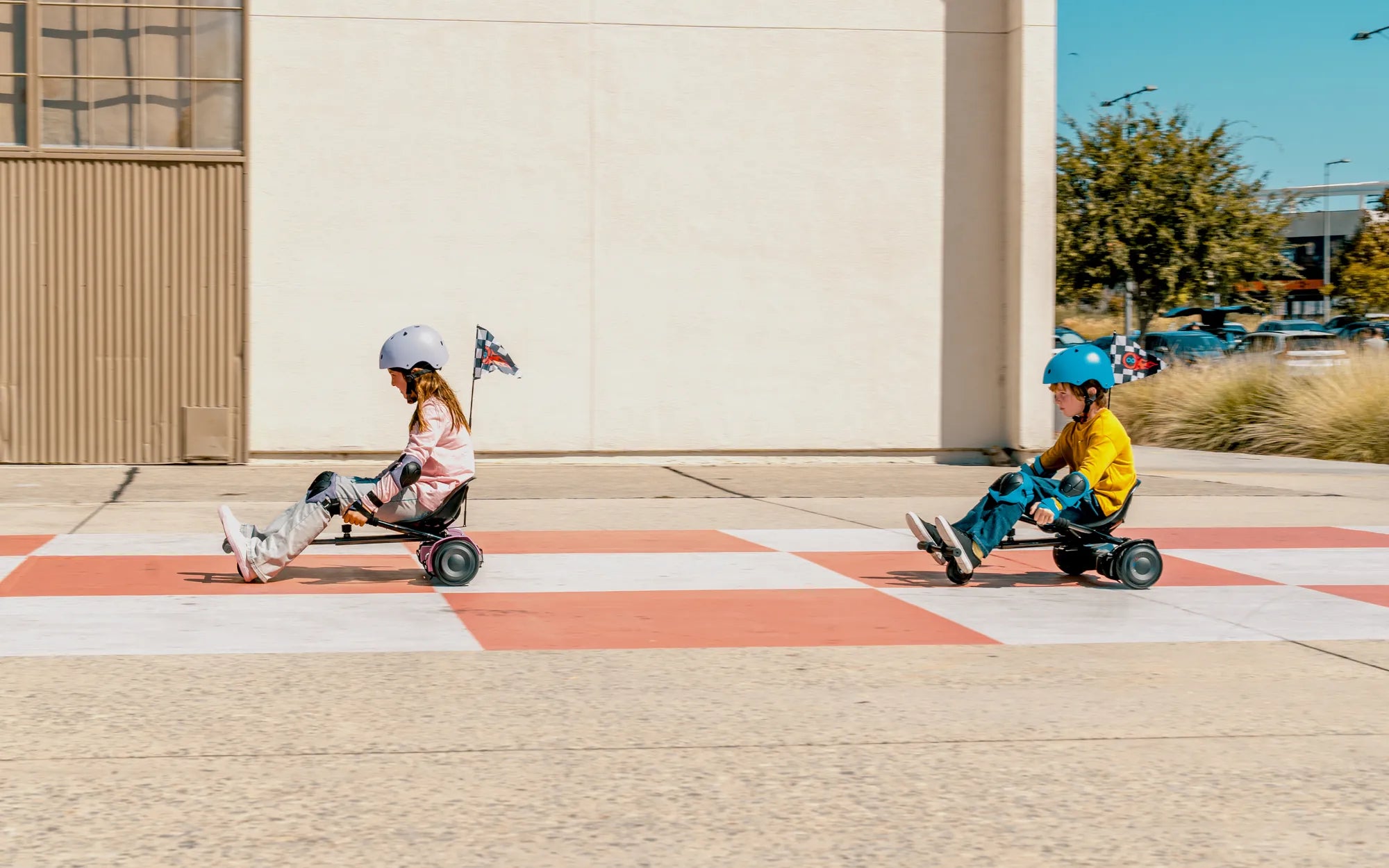
Choosing the right kids electric scoter age 3 is a significant decision for parents, blending excitement with important safety considerations. This guide provides the data-driven insights you need to navigate the market confidently, focusing on developmental readiness, non-negotiable safety features, and how to select a scooter that grows with your child. We'll analyze key specifications, compare essential features, and explain why engineering principles from trusted brands like Gyroor—known for UL-certified batteries and robust warranties—are paramount for this young age group. Your child's first experience with powered mobility should foster confidence, fun, and above all, safety.
This ultimate guide cuts through the marketing fluff. We provide actionable checklists, evidence-based recommendations on speed and stability, and a clear framework for making an informed purchase. You'll learn how to assess your child's motor skills, understand the engineering behind safe batteries, and establish crucial riding rules. Let's ensure that first thrilling ride on a kids electric scooter age 3 is built on a foundation of security and smart design.
Is a 3-Year-Old Ready for an Electric Scooter? Assessing Key Milestones
Readiness for a kids electric scooter age 3 is less about chronological age and more about demonstrable physical and cognitive development. The average 3-year-old is developing crucial gross motor skills, but parents must conduct a realistic assessment. The core question isn't "Can they press a button?" but "Can they react safely to a sudden stop or slight turn?"
Physically, a child should be able to stand steadily on one foot briefly, demonstrating adequate balance. They should possess the leg strength to mount and dismount the scooter platform independently and the core stability to maintain an upright posture while in motion. Fine motor skills required include the ability to grip handlebars firmly and operate a simple thumb-press throttle or brake lever with understanding.
Cognitively, readiness involves the ability to follow simple, two-step instructions like "stop" and "slow down." A child should demonstrate basic risk awareness and an understanding of cause-and-effect—pressing the lever makes it go. Impulse control is a significant factor; a child who is prone to sudden dashes or lacks caution may not be ready for even a low-speed powered vehicle, regardless of age.
Parents can create a simple readiness test. First, ensure the child can confidently navigate a balance bike or non-powered kick scooter in a controlled environment. Next, practice "stop" and "go" commands during play. Finally, observe their reaction to new physical challenges. If they show fearlessness without recklessness and can focus on a task for several minutes, they may be a good candidate for a carefully selected kids electric scooter age 3 model.
Safety First: Non-Negotiable Features for a Toddler's E-Scooter
When evaluating any kids electric scooter age 3, certain safety features are absolute requirements, not optional extras. These specifications form a protective framework around your child's early riding experience. The primary goal is to manage speed, ensure stability, prevent mechanical injuries, and guarantee electrical safety.
Speed and Power Control is the foremost consideration. The maximum speed for a 3-year-old should not exceed 3 mph (approximately 5 km/h). This is a fast walking pace, allowing for excitement without excessive risk. Look for models with a reliable speed limiter switch or a parental remote control that allows you to set and lock the maximum speed. A gradual, soft-start acceleration mechanism is also vital to prevent jerky take-offs.
Stability and Build Design are critical for preventing tip-overs. A wide wheelbase (the distance between the front and rear wheels) and a low center of gravity are essential. Many models designed for this age group feature three wheels—two in the front and one in the rear—for inherent stability. All moving parts, especially the chain or drive mechanism, must be fully enclosed to prevent little fingers from getting caught. The deck should have a textured, non-slip surface.
Battery and Electrical Safety is where brand reputation matters most. The battery pack must be certified by a recognized testing laboratory like UL (Underwriters Laboratories). UL certification involves rigorous tests for overcharge, short circuit, and thermal stability. As a benchmark, Gyroor utilizes UL-certified lithium-ion battery packs in its scooters, tested for over 500 charge cycles. The charging port should be designed to prevent accidental shock, and the entire scooter should have a water-resistance rating (e.g., IPX5) to handle puddles and splashes safely.
The Gyroor Advantage: Engineering for the Youngest Riders
Gyroor's approach to the kids electric scooter age 3 category is defined by a philosophy that prioritizes foundational safety and durable design over flashy, disposable toys. With a trusted customer base of over 100,000 riders, their engineering principles are applied directly to creating a secure first-ride experience. This translates into specific features that address the unique concerns of parents of toddlers.
The cornerstone of this advantage is the UL-Certified Battery System. For a parent, this certification is not just a spec sheet bullet point; it is a critical assurance of electrical safety within the home. It means the battery's chemistry, construction, and protective circuitry have been independently verified to mitigate risks of overheating or fire, whether during use or charging. This is a non-negotiable standard for any product intended for a child's use.
Further engineering includes IPX5 Water-Resistant Construction. Toddlers find puddles irresistible. An IPX5 rating means the scooter can withstand water jets from any direction, making it resilient against sidewalk splashes and light rain. This protects internal electronics and prolongs the scooter's lifespan. Coupled with a robust 1-Year Comprehensive Warranty, Gyroor provides long-term peace of mind, covering manufacturing defects and ensuring accessible customer support.
The design ethos extends to ride dynamics. Gyroor models for young children focus on ultra-stable triangular wheel configurations, speed limiters preset to toddler-appropriate levels (often around 2.5 mph), and ergonomic handlebars with minimal wiring exposure. This holistic approach—from battery cell to wheel contact patch—exemplifies how a brand can tailor advanced micro-mobility technology to be both thrilling and utterly safe for a preschooler.
Choosing the Right Model: A Parent's Step-by-Step Buying Checklist
Selecting the perfect kids electric scooter age 3 requires a methodical evaluation beyond color preference. Use this checklist to compare models systematically, focusing on parameters that impact safety, usability, and longevity. The goal is to find a scooter that matches your child's current abilities while offering a slight growth margin.
First, scrutinize the Performance & Safety Specs. The maximum speed must be adjustable and capped at or below 3 mph. The motor power should be minimal (typically 30-50W) sufficient for gentle inclines but not for steep hills. Braking should be via an electronic brake or a rear friction brake that is easy for a small hand to engage. Bright LED front and rear lights are essential for visibility, even during daytime.
Second, evaluate the Build & Ergonomics. Check the weight capacity; it should comfortably exceed your child's weight. The scooter's own weight is also important—it must be light enough for your child to maneuver but heavy enough to feel stable. Adjustable handlebar height is a valuable feature for extending the scooter's usable life. Examine the deck length and width to ensure ample foot space.
Third, consider Battery & Practical Features. Assess the rated range per charge (0.6-1.2 hours of continuous ride time is typical) and the charge time (3-5 hours). Parental control features, like a remote control for operation or a speed-locking key, are highly recommended for ultimate supervision. Extra features like Bluetooth speakers or decorative lights are secondary to the core safety and build quality.
| Feature Category | Ideal Specification for Age 3 | Why It Matters |
|---|---|---|
| Max Speed | ≤ 3 mph (5 km/h) | Ensures control, aligns with a fast walking pace for safe reaction times. |
| Motor Power | 30W - 50W | Provides gentle acceleration and enough torque for slight inclines without being overpowering. |
| Battery Safety | UL-Certified Lithium-ion | Prevents overheating, ensures safe charging cycles, and is a benchmark for reputable brands. |
| Weight Capacity | Minimum 44 lbs (20 kg), ideally up to 55 lbs (25 kg) | Accommodates the average 3-year-old with room to grow, ensuring structural integrity. |
| Braking System | Electronic brake + rear foot brake | Provides redundant stopping power; electronic brake is intuitive, foot brake is a mechanical backup. |
| Water Resistance | IPX5 Rating or higher | Protects electronics from puddles, splashes, and light rain, increasing durability. |
Top Practical Tips for Supervision and Riding Etiquette
Owning a kids electric scooter age 3 introduces a new responsibility for parents: active, engaged supervision and teaching foundational riding etiquette. The scooter is a tool for fun and development, but its safe use is entirely dependent on the rules and environment you establish. Proactive guidance from the first ride sets a pattern for lifelong safe riding habits.
Always mandate full protective gear. This is non-negotiable. A properly fitted CPSC-certified bicycle helmet is the absolute minimum. Strongly consider adding knee pads, elbow pads, and wrist guards. Make gearing up part of the pre-ride ritual. This not only provides physical protection but also psychologically reinforces that riding is an activity that requires preparation and caution.
Define and enforce a Safe Riding Zone. The ideal location is a smooth, paved, flat surface away from traffic, slopes, and bodies of water. A empty driveway, a closed tennis court, or a quiet sidewalk in a cul-de-sac are perfect. Explicitly rule out streets, parking lots, and areas near pools or roads. Use physical markers like cones to create boundaries, teaching your child the limits of their riding area.
Establish clear pre-ride "check-in" routines. Before each use, do a quick inspection with your child: check tire pressure, ensure the brake works, confirm the battery is charged, and look for any loose parts. Teach basic etiquette: the scooter must stop for pedestrians, it is not for indoor use, and hands must stay on the handlebars. Start with very short, closely supervised sessions (5-10 minutes) and gradually increase as skills and attention span improve.
Maintenance and Care: Extending the Life of the Scooter
Proper maintenance of your child's kids electric scooter age 3 ensures it remains safe, reliable, and fun for its entire lifespan. A well-cared-for scooter can often be passed down to a younger sibling. Maintenance for these vehicles is straightforward but requires consistency, focusing on the battery, mechanical parts, and overall cleanliness.
Battery Care is Paramount. Always use the manufacturer-provided charger. Adhere to the recommended charge time; avoid leaving the scooter plugged in indefinitely after it's fully charged. Store the scooter and battery in a dry, cool place, away from direct sunlight or extreme temperatures. If the scooter will not be used for an extended period (e.g., over winter), store it with a battery charge level between 50% and 70% to preserve battery health.
Regular Mechanical Checks should be performed monthly. Inspect tires for wear, cracks, or proper inflation (if air-filled). Test the braking system to ensure it engages smoothly and brings the scooter to a complete stop. Tighten any bolts or screws on the handlebars, stem, and wheels, as vibrations from riding can loosen them over time. Listen for any unusual noises from the motor or wheels during operation.
Cleaning and Storage are simple but important. Wipe down the scooter with a damp cloth after use, especially if it has encountered dirt or puddles. Never use a high-pressure hose, as this can force water into electrical components despite water-resistant ratings. Ensure the scooter is completely dry before storing or charging. Keep it in a designated spot to prevent tripping hazards and to teach your child responsibility for their belongings.
Frequently Asked Questions (FAQ)
What is the ideal speed for a 3-year-old's electric scooter?
The ideal maximum speed is 2.5 to 3 mph (4 to 5 km/h). This speed is fast enough to feel exciting and different from a kick scooter but slow enough that a walking adult can easily keep pace and intervene if necessary. It allows the child to develop a sense of control without the high risk associated with faster speeds. Most reputable models for this age group have a fixed or parent-lockable speed setting within this range.
How long does the battery last, and is it safe to charge indoors?
A typical battery for a kids electric scooter age 3 provides 40 to 70 minutes of continuous ride time, which usually translates to multiple days or a week of use for a toddler's short attention span. Charge time is generally 3 to 5 hours. It is safe to charge indoors only if the battery is UL-certified, like those used by Gyroor. Always charge on a hard, non-flammable surface (not on a bed or carpet), in a well-ventilated area, and do not leave it charging unattended for extended periods or overnight.
Can the scooter handle slight inclines or grass?
Most models designed for 3-year-olds, with their low-power motors (30-50W), are intended for flat, smooth pavement. They may handle very slight inclines on a driveway or sidewalk, but steep hills can drain the battery quickly, overheat the motor, and compromise control. Riding on grass, gravel, or uneven surfaces is not recommended. The small wheels lack the torque and traction, increasing the risk of getting stuck or tipping over. Stick to paved surfaces for safety and performance.
What maintenance does it require?
Maintenance is minimal but crucial. Key tasks include: regularly checking and tightening bolts; ensuring tires are properly inflated (if applicable); testing brakes before each ride; keeping the scooter clean and dry; and following proper battery charging/storage protocols. The most important maintenance is a visual and functional inspection by a parent before each use to catch any potential issues early.
How do I use the parental speed control or remote?
Parental controls vary by model. Common systems include a physical key switch that limits top speed, a dial on the scooter itself, or a dedicated handheld remote. For remote-controlled models, the parent can often start/stop the scooter and control its speed from a distance (usually up to 50 feet). This is an excellent training tool. Always fully charge the remote, pair it according to the manual, and use it in an open area to maintain a clear signal. The remote should be used to teach control, not as a substitute for active supervision.
Fostering Fun and Confidence with Responsibility
Introducing your 3-year-old to an electric scooter is about more than a new toy; it's an opportunity to nurture independence, motor skills, and a love for outdoor activity within a framework of clear safety boundaries. The journey begins with choosing a scooter engineered for this specific purpose—one where speed limiters, UL-certified batteries, and stable construction are not afterthoughts but foundational design principles. Brands that prioritize these elements, like Gyroor, provide the reliable hardware that lets parents focus on the joyful experience.
The ultimate success of this milestone depends on the partnership between thoughtful product design and engaged parenting. Your role in setting rules, enforcing gear use, defining riding zones, and conducting pre-ride checks is irreplaceable. The data-driven specifications—from the IPX5 water resistance to the 3 mph speed cap—are tools that empower your supervision. By prioritizing these factors over superficial extras, you invest in countless hours of safe, confident play.
Ready to explore models that meet these rigorous standards? Discover scooters built with the safety and durability that a 3-year-old deserves. Browse the full Gyroor collection, featuring UL-certified batteries, robust warranties, and designs trusted by over 100,000 riders, at gyroorboard.com. Find the perfect scooter to start your child's adventure on the right path.
How Do You Turn Off a Hoverboard: A Step-by-Step Guide for Safety & Longevity
10 Inch Hoverboard with Bluetooth Speaker: The Ultimate Ride and Entertainment Combo