

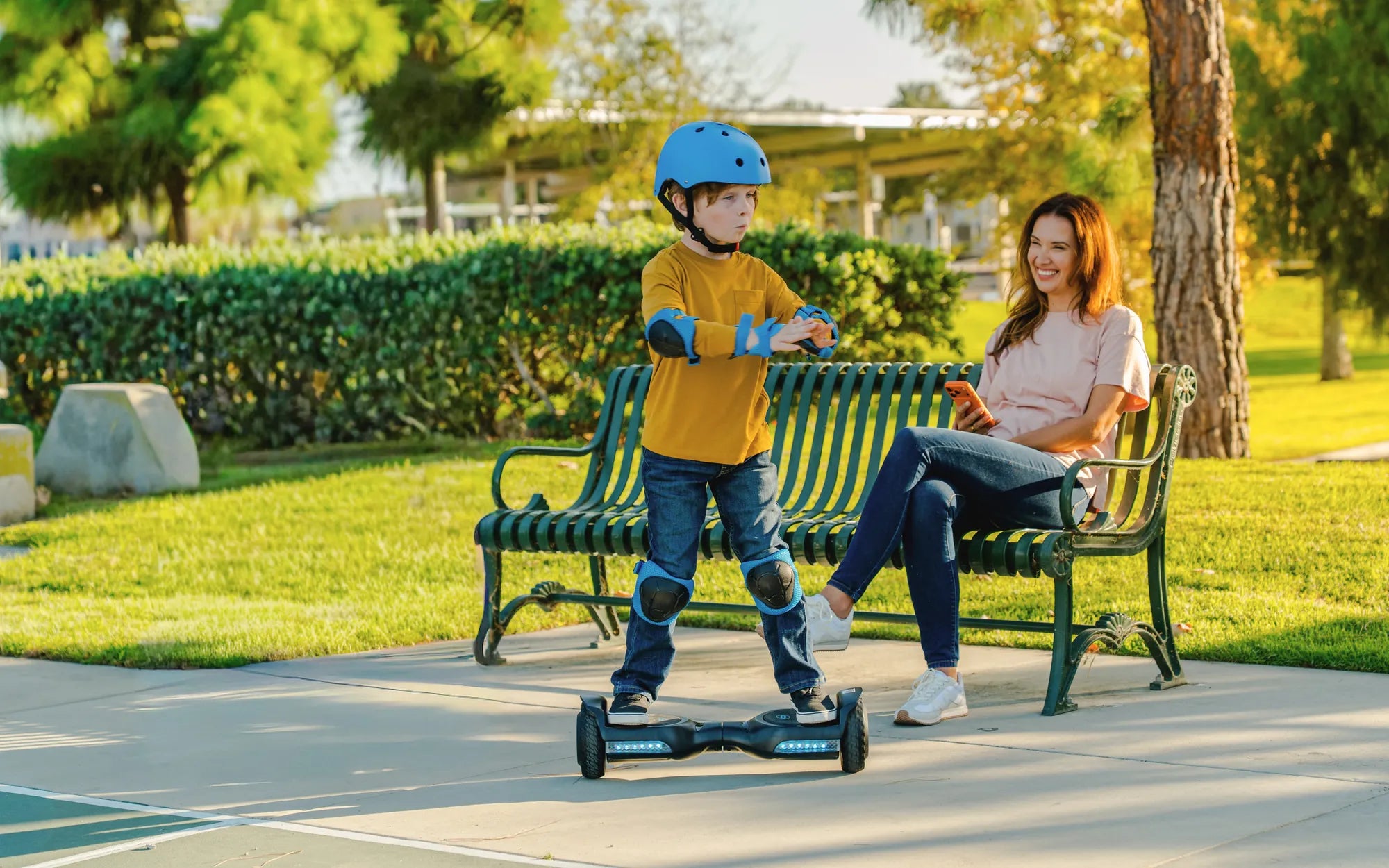
Choosing the right kids electric scooter in Germany involves more than just picking a fun color. It's a decision that intertwines your child's excitement with critical safety standards, specific legal frameworks, and long-term reliability. This guide cuts through the noise, providing German parents with a clear, actionable roadmap. You'll learn how to navigate local regulations, identify non-negotiable safety features, select a model that matches your child's age and environment, and ensure years of safe, joyful riding. Let's empower you with the knowledge to make a confident choice for your family.
Understanding German Regulations for Children's E-Scooters
Germany has a precise and enforceable legal framework for electric scooters, which applies equally to children's models. Ignorance of these rules can lead to fines and, more importantly, unsafe conditions. The core principle is classification: any electric scooter with a motor capable of exceeding 6 km/h is considered a motorized vehicle under the Elektrokleinstfahrzeuge-Verordnung (eKFV).
For children, this creates specific age brackets. Scooters with a maximum design speed of up to 6 km/h are considered toys and are largely unregulated for use on private property. However, the moment a scooter can exceed 6 km/h, it falls under the eKFV. Legally, a child must be at least 14 years old to operate an eKFV-classified scooter on public roads, bike paths, or cycle lanes. There is no legal minimum age for use on private property with owner permission.
This means most kids electric scooters in Germany designed for public use are technically intended for teenagers. For younger children (e.g., ages 6-12), parents must seek models with robust, parent-controlled speed limiters that cap speed at 6 km/h for safe use in parks, driveways, or other controlled, non-public areas. The distinction between a "toy" (under 6 km/h) and a "vehicle" (over 6 km/h) is the most critical legal line for parents to understand.
Furthermore, any e-scooter used on public paths must have operational front and rear lights, reflectors, a bell, and two independent braking systems. While not always mandated for younger children on private land, these features represent the gold standard for safety and should be sought regardless. Adhering to these rules isn't just about compliance; it's the foundation of safe riding practice in the German context.
Key Legal Requirements at a Glance
| Age Group | Max. Speed (Public Use) | Helmet Law | Recommended Riding Zone | Legal Classification |
|---|---|---|---|---|
| Under 8 | ≤ 6 km/h (Toy) | Strongly Recommended | Private Property Only | Toy / Spielzeug |
| 8 - 13 | ≤ 6 km/h (Toy) | Strongly Recommended | Private Property, Supervised Parks | Toy / Spielzeug |
| 14+ | Typically 12-20 km/h* | Mandatory for under 15s | Bike Paths, Cycle Lanes | eKFV Vehicle |
*Must be type-approved for public roads. Speed often limited to 12 km/h for younger teens.
Essential Safety Features for the German Market
Safety transcends legal minimums. The German market, with its high safety consciousness, demands specific features. First and foremost is a reliable, multi-stage speed limiter. For younger riders, a scooter should offer a "beginner mode" locked at 6 km/h, accessible only via a parent PIN or physical key. This ensures the scooter remains a toy until the child demonstrates sufficient skill and maturity.
Braking systems are paramount. A combination of an electronic (e-brake) and a mechanical brake (disc or foot brake) provides redundancy. Wide, air-filled or honeycomb solid tires offer better shock absorption on Germany's often cobbled or uneven bike paths compared to small, hard solid tires. The deck must be long and wide enough for a stable stance, with a pronounced, non-slip surface—crucial for damp conditions.
Visibility is non-negotiable. Integrated front and rear LED lights are essential, not just for legality but for being seen in the low-light conditions common in German autumn and winter. Reflective stickers or side reflectors add another layer of safety. A loud, electronic bell helps alert pedestrians on shared paths.
Finally, look for recognized safety certifications. The GS mark (Geprüfte Sicherheit) is a voluntary German safety certification that goes beyond the mandatory CE mark. A scooter with a GS mark has been tested by an independent institute like TÜV for electrical, mechanical, and thermal safety, offering parents significant peace of mind.
The Importance of UL-Certified Batteries & IPX5 Water Resistance
Battery safety is the most critical component often overlooked. In Germany, where scooters may be stored in apartments or garages, a faulty battery poses a severe fire risk. This is why Gyroor's use of UL 2271 or UL 2272 certified battery packs is a key differentiator. These American standards are globally recognized for rigorous testing of electrical and fire safety, offering a level of assurance that generic, uncertified batteries cannot match.
Similarly, weather resistance is practical for German climates. An IPX5 water-resistance rating means the scooter's electrical components can withstand water jets from any direction. This protects against sudden rain showers, riding through puddles, or even casual cleaning. It prevents internal corrosion and electrical shorts, ensuring the scooter's longevity and reliability through typical German drizzle and damp conditions, making it a feature that directly impacts both safety and durability.
Choosing the Right Model: Age, Skill, and Environment
Selecting a scooter is a balance of your child's physical development, riding skill, and the primary riding environment. For a 6-9 year old beginner, prioritize lightweight models (under 10kg) with a low maximum speed (6-10 km/h), a low deck for easy mounting, and a simple control interface. Stability from a wider wheelbase is more important than range or top speed.
For pre-teens and teenagers (10-14+), factors shift. Motor power (250W-350W) becomes relevant for handling slight inclines. Range (15-25 km) matters for longer rides with friends. Adjustable handlebar height ensures the scooter grows with them. At this stage, the quality of the ride—suspension for comfort, larger wheels (8.5" or 10") for stability—becomes a key consideration for use on German bike paths.
Consider the typical terrain. For smooth city sidewalks and park paths in urban areas like Berlin or Munich, solid honeycomb tires may suffice. For suburban or village settings with rougher patches, models with air-filled tires or even basic suspension will provide a much smoother, safer ride by improving grip and control.
Portability is another practical concern. If the scooter needs to be carried onto public transport or up stairs, a folding mechanism and weight are critical. A 12kg scooter is far more manageable for a parent or teen than a 16kg one. These daily-use factors are as important as the technical specifications on the box.
In-Depth Model Comparison: Balancing Key Factors
To make an informed decision, parents should compare models across a matrix of safety, performance, and practicality. The following framework helps evaluate options based on two common age groups and use cases in Germany.
| Feature / Use Case | Young Rider (7-9 yrs) Private Property / Parks |
Older Child / Teen (12-14+ yrs) Bike Paths & Neighborhood |
Why It Matters in Germany |
|---|---|---|---|
| Ideal Max Speed | 6-10 km/h (PIN-lockable) | 12-20 km/h (adjustable modes) | Ensures age-appropriate control; complies with toy vs. eKFV spirit. |
| Motor Power | 100W-150W | 250W-350W | Sufficient for flat terrain; handles mild German hills safely. |
| Tire Type | 6.5"-8" Honeycomb Solid | 8.5"-10" Air-Filled or Large Solid | Smaller solids are puncture-proof for parks. Larger/air tires absorb Kopfsteinpflaster (cobblestone) vibrations. |
| Braking System | Electronic + Foot Brake | Electronic + Disc or Drum Brake | Redundant braking is critical for sudden stops on shared paths. |
| Weight & Portability | 8-10 kg, folding | 12-15 kg, robust folding | Light enough for parents to carry; teens can manage heavier models. |
| Key Certification | CE, GS Mark (ideal) | CE, eKFV Type-Approval*, UL2271 Battery | GS mark indicates tested safety. Type-approval is mandatory for public road use. |
*For public road use where the rider is 14+.
Maintenance, Warranty, and Long-Term Value
Owning a kids electric scooter is a commitment to regular maintenance. Weekly checks should include tire pressure (for air-filled tires), brake function, and light operation. Monthly, inspect for loose bolts, especially on the handlebar stem and folding mechanisms. Keep the deck clean of mud and debris to maintain grip.
Battery care is crucial for longevity and safety. Adhere to the manufacturer's charging instructions. Avoid leaving the scooter at full charge or completely depleted for extended periods, especially during seasonal storage. Store the scooter and battery in a cool, dry place, away from direct sunlight or freezing temperatures.
This is where a strong warranty becomes invaluable. A comprehensive 1-year warranty that covers the motor, battery, and controller protects your investment. Brands like Gyroor back their products with such warranties, supported by accessible customer service. This means if an issue arises, you have a direct path to resolution, avoiding costly repairs or rendering the scooter unusable.
Long-term value isn't just about upfront cost. It's about durability, safety over time, and support. A slightly higher initial investment in a scooter with a UL-certified battery, IPX5 rating, and a reliable warranty often proves more economical and far safer than replacing a cheaper, failed model every year.
Parental Supervision and Building Riding Etiquette
Your role as a parent extends beyond the purchase. Initial supervision is essential. Start in a safe, empty, paved area like a parking lot. Practice starting, stopping, turning, and using the bell. Enforce helmet use from day one—it should be as non-negotiable as a seatbelt.
Gradually introduce rules of the road, even on private property. Teach them to always be aware of pedestrians, to slow down at intersections and driveways, and to avoid wet leaves or gravel which are common hazards in Germany. Instill the habit of a pre-ride safety check (brakes, lights, tire pressure).
For older teens using scooters on public paths, drill the specific German rules: stay on bike paths (Radwege), use the road only if no path exists and the speed limit is 30 km/h or less, never ride on sidewalks (Gehwege), and always yield to pedestrians. This education is as vital as any safety feature on the scooter itself.
Frequently Asked Questions (FAQ) for German Parents
Ab welchem Alter ist ein E-Scooter in Deutschland erlaubt?
Es gibt kein gesetzliches Mindestalter für die Nutzung auf privatem Grund. Für die Nutzung auf öffentlichen Straßen, Radwegen oder Gehwegen muss der Fahrer jedoch mindestens 14 Jahre alt sein, da das Gefährt dann unter die eKFV fällt. Für jüngere Kinder (z.B. 8-13 Jahre) sind Modelle mit einer auf 6 km/h begrenzten Höchstgeschwindigkeit für den sicheren Gebrauch in Innenhöfen oder Parks geeignet.
Muss mein Kind einen Helm tragen?
Für Kinder unter 15 Jahren ist das Tragen eines Helms auf elektrischen Kleinstfahrzeugen (eKFV) gesetzlich vorgeschrieben. Für jüngere Kinder, die langsamere Scooter (≤6 km/h) auf privatem Gelände nutzen, ist ein Helm zwar nicht gesetzlich Pflicht, wird aber aus Sicherheitsgründen dringend empfohlen. Ein Fahrradhelm nach CE-Norm EN 1078 ist ausreichend.
Dürfen Kinder mit dem E-Scooter auf dem Gehweg fahren?
Nein. Die Nutzung von Gehwegen mit elektrischen Scootern ist generell verboten. Erlaubt sind Radwege, Fahrradstraßen und Schutzstreifen. Falls keine dieser Infrastrukturen vorhanden ist, darf auf der Straße gefahren werden, aber nur, wenn die zulässige Höchstgeschwindigkeit dort 30 km/h oder weniger beträgt. Diese Regelungen gelten für eKFV-zugelassene Scooter.
Was bedeutet die IPX5-Einstufung für den Gebrauch hierzulande?
Die IPX5-Klassifizierung bedeutet, dass die elektrischen Komponenten des Scooters gegen Strahlwasser aus beliebigem Richtung geschützt sind. In Deutschland ist das praktisch, weil der Scooter so regensicher ist und auch das Durchfahren von Pfützen oder das gelegentliche Abspritzen mit dem Gartenschlauch problemlos übersteht. Es beugt Korrosion und Kurzschlüssen vor und erhöht die Langlebigkeit des Scooters im mitteleuropäischen Klima.
Brauche ich eine Versicherung oder ein Kennzeichen für den Kinder-E-Scooter?
Für Scooter, die die 6-km/h-Grenze nicht überschreiten und als Spielzeug gelten, nein. Für alle Scooter, die auf öffentlichen Wegen genutzt werden und unter die eKFV fallen (d.h. >6 km/h), ist eine Haftpflichtversicherung mit einer eVersicherungsplakette absolut Pflicht. Der Versicherer stellt die Plakette aus, die am Scooter angebracht werden muss. Ohne diese besteht kein Versicherungsschutz und das Fahren ist illegal.
Final Recommendations for a Safe and Happy Rider
The journey to finding the perfect kids electric scooter in Germany is defined by a hierarchy of needs: safety certifications first, German legal compliance second, and age-appropriate performance third. Prioritize models with robust safety pedigrees—UL-certified batteries, IPX5 resistance, and GS or comprehensive CE marks. Let these features guide your choice more powerfully than top speed or flashy aesthetics.
Match the scooter's capabilities to your child's world. A 7-year-old needs a stable, slow, and durable toy for the playground. A 13-year-old, soon to be legally able to ride on paths, benefits from a more capable model that teaches responsible operation in preparation for public use. Always pair the scooter with a high-quality helmet and consistent safety education.
Investing in a reputable brand known for quality components and customer support, like Gyroor with its 1-year warranty and proven track record with over 100,000 riders, ultimately provides greater value and peace of mind. It ensures that the scooter is a source of joy and independent exploration, not anxiety or unexpected hazards.
Ready to explore models that align with German safety standards and your child's adventure? Browse the full Gyroor collection, featuring UL-certified, IPX5 water-resistant scooters designed for real-world use, at gyroorboard.com.
Two Wheeler Balancing Scooter: The Future of Personal Urban Mobility
Self Balancing Electric Scooter Price in Malaysia: A Complete Buyer's Guide