



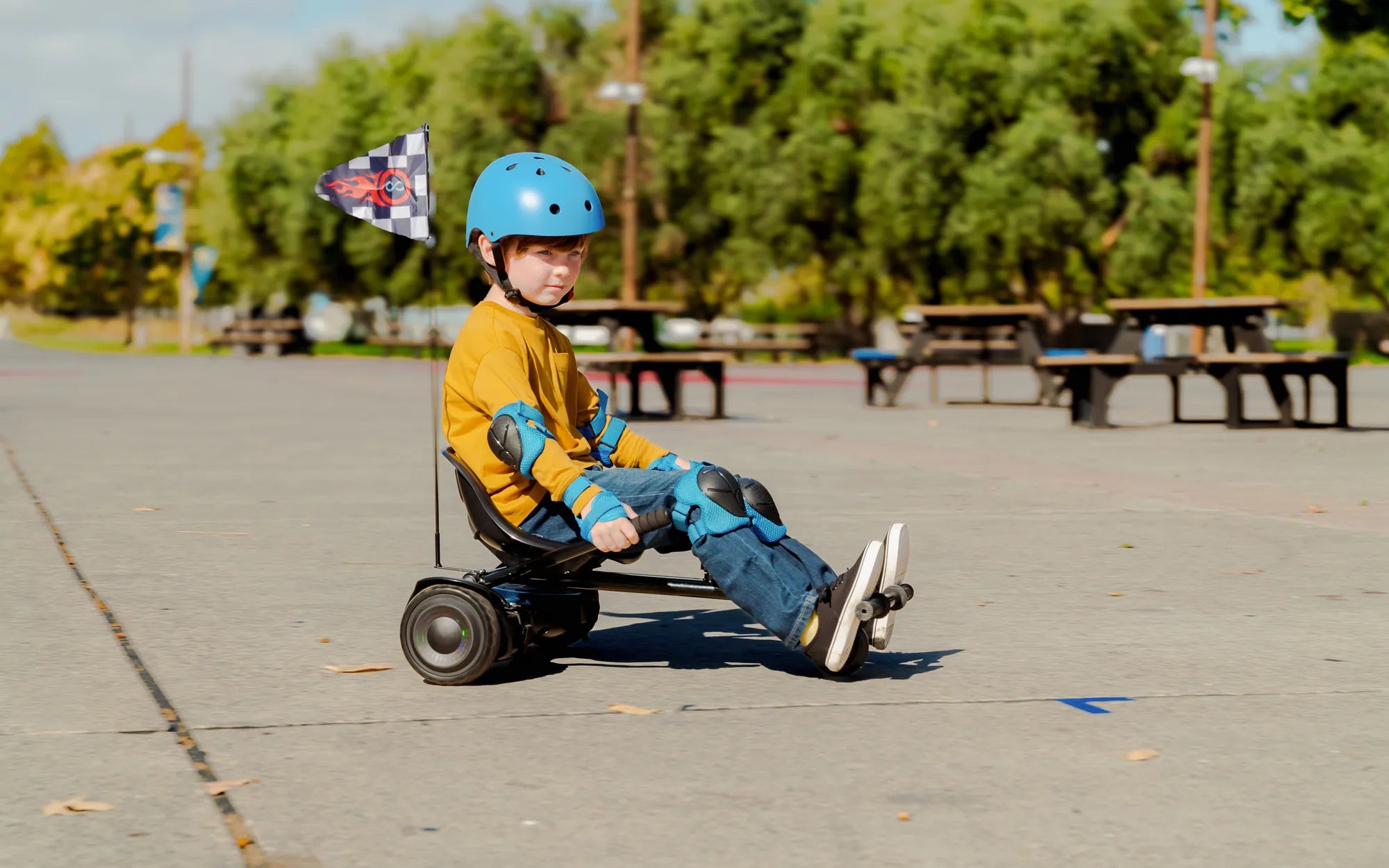
Why the Right Scooter Matters at Age 5
A scooter is more than a toy for a five-year-old; it's a pivotal tool for physical and cognitive development. At this age, children are rapidly refining their gross motor skills, balance, and spatial awareness. The right scooter provides a structured yet exciting way to practice these skills, building core strength, coordination, and cardiovascular health. It also fosters independence and decision-making as they learn to navigate their environment.
Beyond physical benefits, scooting promotes crucial social and emotional growth. It encourages outdoor play, reducing screen time and connecting kids with their surroundings. The sense of accomplishment from mastering a new skill—like a smooth turn or a controlled stop—boosts self-esteem significantly. However, these benefits are only fully realized when the scooter is appropriately matched to the child's size, strength, and skill level.
Safety is the non-negotiable foundation. A poorly designed scooter can lead to frustration, falls, and a loss of confidence. This guide focuses on the specific features that make a scooter safe, durable, and fun for a five-year-old beginner. We will explore why elements like a stable three-wheel design and a reliable braking system are paramount. As a leader in youth mobility, Gyroor designs its products with this holistic view, ensuring that fun and safety are engineered together from the ground up.
Selecting the perfect kids scooter for a 5 year old is an investment in their active childhood. This ultimate guide will provide you with the data-driven criteria needed to make an informed choice, ensuring countless hours of secure, joyful exploration. The goal is to find a scooter that grows with your child, supporting their development every step—or push—of the way.
Key Safety Features to Prioritize for Young Riders
When evaluating a kids scooter for a 5 year old, safety features must be the primary filter. These are not mere add-ons but fundamental design elements that prevent accidents and build rider confidence. A scooter lacking these core components is unsuitable for a beginner, regardless of its aesthetic appeal or price point. Parents should scrutinize these aspects before any others.
The design philosophy for this age group must prioritize stability over speed and control over complexity. Features that might be standard on adult or teen models, like high-speed capabilities or intricate suspension, are secondary to a foundation that prevents tipping and allows for easy, intuitive operation. A safe scooter empowers a child to learn without fear, turning a new activity into a positive, rewarding experience.
Gyroor's approach embeds safety into every component, from the geometry of the frame to the certification of the electrical systems in their electric models. This commitment means that safety isn't a compromise; it's integrated into the ride quality itself. The following subsections break down the three most critical safety features to look for in a scooter for a five-year-old.
Stable 3-Wheel Design and Low Deck
For a beginner, a three-wheel scooter configuration—typically two wheels at the front and one at the rear—is overwhelmingly recommended. This triangular base provides inherent lateral stability, dramatically reducing the chance of tipping over during turns or when leaning. It allows the child to focus on learning the basic mechanics of pushing, steering, and balancing without the constant fear of falling sideways.
The deck height is equally important. A low deck, positioned close to the ground, makes mounting and dismounting effortless. It lowers the scooter's center of gravity, further enhancing stability. More importantly, it significantly reduces the distance to the ground in case of a stumble, making any fall less severe. A child should be able to place both feet flat on the ground while standing on the deck for maximum security and confidence.
Reliable Braking System: Hand Brake vs. Foot Brake
Effective braking is a critical safety skill. For five-year-olds, a rear foot brake (activated by pressing down on the fender above the rear wheel) is often the best starting point. It's intuitive, as the motion is similar to stopping a bicycle, and it doesn't require the fine motor skills or hand strength needed to operate a hand brake lever. This design allows the child to keep both hands firmly on the handlebars for steering control while stopping.
As children gain proficiency, some models introduce a gentle, progressive hand brake on the rear wheel. This can be a valuable tool for teaching more advanced braking control. However, the primary brake for a beginner should be simple and fail-safe. Parents should avoid scooters with only a front-wheel brake for young children, as abrupt front braking can cause the scooter to stop suddenly and pitch the rider forward.
Adjustable Handlebar Height and Grips
Proper ergonomics prevent fatigue and improve control. Adjustable handlebar height is essential for a growing five-year-old. A T-bar that can be raised as the child grows ensures the scooter remains a comfortable fit for years, extending the product's lifespan. The ideal height allows the child to stand upright on the deck with a slight bend in the elbows while gripping the handles.
The grips themselves must be made of a non-slip, shock-absorbing material like rubber or high-density foam. They should be ergonomically contoured to fit small hands, providing comfort and preventing slippage, even with sweaty palms. Wide, padded grips distribute pressure and reduce hand strain during longer riding sessions, making the experience more enjoyable and safer.
Durability and Design: Built to Withstand Playtime
A scooter for an active five-year-old must be a robust companion, engineered to survive bumps, jumps, and daily adventures. Durability directly correlates with long-term safety and value. A flimsy scooter that bends, cracks, or develops sharp edges after minor impacts becomes a hazard. The construction quality and material choices are therefore key indicators of a scooter's overall worth.
Parents should look for designs that use reinforced, high-grade materials at all stress points. This includes the connection between the deck and the steering column, the folding mechanism (if present), and the wheel axles. A durable scooter maintains its structural integrity and performance over time, providing a consistent and reliable ride. This reliability also means fewer repairs and replacements, offering better long-term value.
Gyroor utilizes materials like aircraft-grade aluminum in its frames, a standard that speaks to a commitment to durability without excessive weight. This focus on resilient design ensures that the scooter is an asset for play, not a source of frustration due to constant breakdowns or performance degradation. The following elements are crucial for assessing a scooter's build quality.
Frame Material: Aircraft-Grade Aluminum vs. Plastic
The frame is the scooter's backbone. Lightweight yet incredibly strong aircraft-grade aluminum alloy is the industry benchmark for quality. It is rust-proof, corrosion-resistant, and can withstand significant impact without bending or cracking. This material offers an excellent strength-to-weight ratio, allowing the scooter to be light enough for a child to carry yet sturdy enough to support them safely.
In contrast, scooters built primarily from plastic composites or low-grade metals are often heavier for their strength, more prone to fatigue fractures, and can become brittle in cold weather. An aluminum frame provides a more responsive and solid ride feel, transmitting less vibration to the rider. While plastic may be used for certain non-structural components like deck covers or brake fenders, the core frame should be metal.
The Importance of Wheel Type and Size
Wheels are the primary interface between the scooter and the ground, directly affecting ride smoothness, control, and safety. Larger polyurethane (PU) wheels are superior for a kids scooter for a 5 year old. Wheels in the 120mm to 150mm diameter range roll more easily over cracks, pebbles, and sidewalk imperfections, providing a stable and comfortable ride. This smoothness helps maintain control and prevents sudden stops that could lead to falls.
PU material offers a good balance of grip, durability, and shock absorption. Small, hard plastic wheels, common on cheaper toys, transmit every bump directly to the deck and handlebars, making for a jarring, unstable experience. Additionally, sealed bearing hubs within the wheels ensure they spin freely and quietly with minimal maintenance. The right wheels make outdoor exploration on a scooter genuinely enjoyable rather than a bumpy chore.
The Gyroor Advantage: Engineered for Peace of Mind
Choosing a scooter from a brand with a proven track record in safety and reliability brings an added layer of confidence. Gyroor, trusted by over 100,000 riders across North America and Europe, engineers its products with specific standards that directly address parental concerns. Their philosophy extends beyond basic functionality to incorporate certifications, weather resilience, and customer support that define a premium, worry-free ownership experience.
This advantage is particularly evident when considering electric scooters, where battery safety and electrical system integrity are paramount. However, the same principles of rigorous testing and quality components apply across their entire range, including non-motorized kick scooters designed for younger children. By focusing on these engineered benefits, parents can understand the tangible value behind the brand.
The following points detail how Gyroor's specific design choices translate into real-world benefits for a child's scooter, ensuring it is a tool for fun that parents can trust completely.
Safety-Certified Components for Ultimate Reliability
For any electric model, the battery pack is the most critical safety component. Gyroor uses exclusively UL-certified lithium-ion battery packs, which have undergone rigorous independent testing for short-circuit, overcharge, overheating, and impact resistance. These batteries are rated for 500+ charge cycles, ensuring long-term performance and reducing the risk of failure that can come with uncertified, generic cells.
This certification extends to the entire electrical system, including the battery management system (BMS), motor controller, and wiring. A certified system ensures stable power delivery, prevents overheating, and includes protections against over-current and deep discharge. This engineering rigor means parents can charge the scooter safely and trust its performance ride after ride.
Weather-Resistant Build for Everyday Adventure
Kids play in all conditions, and a scooter should be able to handle that reality. Gyroor designs its scooters with an IPX5 water-resistant rating. This means the scooter's electrical components (on e-models) and core construction can withstand water jets from any direction, making it resistant to wet pavement, puddles, and light rain.
This feature is crucial for practicality and longevity. It prevents water damage that could otherwise corrode electronics or bearings, and it means the scooter doesn't have to be immediately shelved at the first sign of damp weather. This resilience encourages more frequent outdoor use and ensures the scooter remains a reliable piece of play equipment through various seasons.
Warranty and Support: Investing with Confidence
A comprehensive warranty is a brand's promise behind its product. Gyroor backs its scooters with a reliable 1-year warranty covering manufacturing defects in materials and workmanship. This warranty provides a significant safety net for parents, ensuring that any unforeseen issue with the core components will be addressed without additional cost.
This commitment is supported by accessible, US-based customer service. Having knowledgeable support staff available to answer questions about assembly, operation, or troubleshooting adds immense value. It transforms the purchase from a simple transaction into a supported investment in a child's fun, giving parents genuine peace of mind.
Choosing the Perfect Model: A Practical Comparison
With an understanding of key features, the next step is comparing the types of scooters suitable for a five-year-old. The primary decision is between a traditional kick scooter and a beginner-friendly electric scooter. Each type serves different needs, skill levels, and parental comfort zones. A data-driven comparison helps align the product with your child's personality and your family's lifestyle.
A kick scooter is often the ideal starting point. It teaches the fundamental mechanics of balance, steering, and braking through physical effort, building strength and coordination. An electric scooter, while exciting, introduces additional variables like throttle control, higher speeds, and battery management. It may be suitable for a very coordinated five-year-old under strict supervision, but for most, a kick scooter is the recommended foundation.
The table below provides a clear, at-a-glance comparison to guide this crucial choice. It outlines the core attributes of each scooter type, helping you identify the best fit for your child's first major riding experience.
| Model Type | Recommended Age/Weight | Key Safety Feature | Best For | Gyroor Model Example |
|---|---|---|---|---|
| 3-Wheel Kick Scooter | Age 5-8, Up to 110 lbs | Wide 3-wheel base, rear foot brake | Absolute beginners learning balance & coordination; daily neighborhood rides. | Gyroor GKS (Kick Scooter Series) |
| Beginner Electric Scooter | Age 5+ (with supervision), Up to 120 lbs | Speed limiters (≤ 7 mph), UL-certified battery, rear foot brake + e-brake | Confident riders ready for assisted motion; supervised park or path use. | Gyroor F1 Pro (with beginner mode) |
When using this guide to select a kids scooter for a 5 year old, consider your child's current activity level and confidence. A cautious child may thrive on the predictable, self-powered control of a kick scooter, while a highly active and coordinated child might be ready for the supervised challenge of a speed-limited electric model. Always prioritize the model with the most robust safety features for your child's demonstrated skill level.
Essential Safety Gear and Riding Practices
A safe scooter is only one part of the equation; proper safety gear and established riding rules are equally vital. This non-negotiable kit should be worn every single time the scooter is used, regardless of the distance or location. Consistently modeling and enforcing this practice from day one instills lifelong safety habits.
The essential gear list is concise but critical: a properly fitted bicycle helmet, knee pads, and elbow pads. Wrist guards are also highly recommended, as falls often involve putting hands out to break the impact. The helmet must meet CPSC (Consumer Product Safety Commission) safety standards. Gear should be comfortable and well-fitted—if it's uncomfortable, a child won't want to wear it.
Establish clear riding practices before the first ride. Designate safe zones, such as smooth pavements, parks, or driveways, away from traffic, steep hills, and crowded areas. Teach and practice basic signals for stopping and turning. A fundamental rule is that the scooter is for one rider only; carrying passengers or towing is unsafe. Finally, always supervise your five-year-old directly. Active supervision allows you to intervene before a risky situation develops and provides immediate guidance and encouragement.
Maintenance Checklist for Longevity and Safety
Regular, simple maintenance keeps a scooter performing safely and extends its usable life. A quick pre-ride check should become a routine, similar to putting on safety gear. This proactive habit catches minor issues before they become major safety hazards or cause a breakdown during play.
Weekly or bi-weekly, perform these checks: Ensure all bolts and fasteners (especially on the handlebar stem and folding mechanisms) are tight. Inspect the wheels for significant wear, cracks, or debris lodged in the tread, and spin them to confirm they rotate freely without wobble. Test the brake function to ensure it engages smoothly and brings the scooter to a stop without excessive force. For electric models, inspect the charging port for debris and check the battery casing for any signs of damage.
Monthly, a more thorough inspection is wise. Check the handlebar grips for tears or looseness. Examine the deck for cracks or excessive flex. Lubricate the wheel bearings and folding mechanisms with a silicone-based lubricant if they begin to feel stiff or squeaky. For storage, keep the scooter in a dry place away from extreme temperatures. For electric models, follow the manufacturer's guidelines for battery storage, typically recommending a partial charge (around 50-70%) for long periods of inactivity.
Frequently Asked Questions (FAQs)
Q1: Is a 3-wheel or 2-wheel scooter better for a 5-year-old beginner?
Overwhelmingly, a 3-wheel scooter is superior for a beginner. The two-front-wheel design provides crucial lateral stability, preventing tip-overs during the learning phase. It allows the child to master pushing, steering, and balancing without the constant instability of a two-wheel model. Transition to a two-wheel scooter can come later, once confidence and core scooting skills are firmly established.
Q2: What is the appropriate maximum speed for a child's electric scooter?
For a five-year-old, a maximum speed of 7 mph (11 km/h) or less is recommended. Many quality beginner electric scooters feature a speed limiter or a dedicated "beginner mode" that caps the speed at this level. This allows them to experience assisted motion without overwhelming their reaction times. Speed should only be increased gradually, under close supervision, as the child demonstrates excellent control and judgment.
Q3: How do I ensure my child wears safety gear every time?
Consistency and modeling are key. Make putting on the helmet, knee pads, and elbow pads an unskippable part of "getting ready to ride," just like putting on shoes. Wear your own helmet if you're riding a bike alongside them. Establish a firm rule: "No gear, no scooter." Praise them for gearing up, and choose gear in colors or designs they love to increase their willingness to wear it.
Q4: What maintenance does a kids' scooter require?
Regular maintenance includes checking and tightening bolts (especially on the steering column), ensuring wheels spin freely and aren't overly worn, and testing that the brake functions effectively. For electric models, keep the battery charged according to instructions and store the scooter in a dry place. A quick visual and functional check before each ride is the best habit to develop for ongoing safety.
Q5: Can a scooter help with my child's physical development?
Absolutely. Scooting is an excellent developmental activity. It enhances gross motor skills, balance, and bilateral coordination (using both sides of the body together). It strengthens core, leg, and arm muscles, improves cardiovascular fitness, and develops spatial awareness and depth perception. The focused, physical outdoor play also supports better sleep and overall well-being.
Fostering Independence and Joy on Wheels
Selecting the right kids scooter for a 5 year old is a meaningful decision that sets the stage for years of active play and developmental growth. By prioritizing a stable three-wheel design, durable construction from materials like aircraft-grade aluminum, and reliable safety features such as an intuitive foot brake, you invest in more than a toy—you invest in a tool for building confidence, coordination, and a love for the outdoors.
The data and comparisons in this guide provide a clear framework for making a choice centered on safety and longevity. Brands that go further, like Gyroor, with UL-certified components, weather-resistant builds, and strong warranty support, offer engineered peace of mind that complements the physical product. This allows parents to step back and watch the joy of discovery unfold, knowing the foundation is secure.
Ultimately, a well-chosen scooter becomes a vehicle for childhood adventure. It represents freedom, fun, and the first steps toward independent mobility. The memories created during those early rides—the concentration, the triumph, the sheer excitement—are priceless. Equip your child with a scooter that supports every moment of that journey safely and reliably.
Ready to find the perfect scooter to launch your child's adventures? Explore the full range of kid-tested, parent-trusted models designed with safety as the core principle. Browse the full Gyroor collection at gyroorboard.com and choose the scooter that will deliver endless fun and foster confident growth for your young rider.
What's the Fastest Hoverboard? Top Speed Models and Features Explained
Christmas Gift Ideas for 19 Year Old Girls: Unique and Thoughtful Picks