



Introduction to Scooter Safety and Age Guidelines
Choosing the right scooter for your child is a decision that balances fun, development, and safety. The core question for many parents is, "Lehuo what age can kids use a scooter?" While brands like Lehuo offer models for various stages, the answer is less about a specific birthday and more about your child's unique readiness. This guide provides a data-driven, developmental-stage framework to help you make an informed choice.
We will move beyond marketing age ranges to examine the physical, cognitive, and emotional milestones that truly indicate scooter readiness. From first pushes on a three-wheeler to responsible e-scooter riding, understanding these stages is key to fostering confidence and preventing accidents. This article will equip you with a practical checklist, safety data, and clear comparisons.
You will learn how to assess your child's balance, coordination, and risk awareness. We'll also highlight critical safety features that transcend brand names, including the importance of UL-certified batteries and robust construction. The goal is to ensure scooter riding is a joyful and safe part of your child's active play.
Understanding Developmental Milestones: More Than Just a Number
Age labels on scooter boxes are a starting point, not a definitive rule. A child's readiness hinges on a combination of gross motor skills, cognitive development, and emotional maturity. Rushing a child onto a scooter they cannot physically control is a primary cause of falls and loss of confidence.
Key physical indicators include developed gross motor skills for running and jumping, sufficient leg strength for kicking and pushing, and core stability for maintaining balance. Cognitive readiness involves the ability to understand and follow safety instructions, assess basic risks (like avoiding driveways), and focus on the task at hand without immediate distraction.
Emotional maturity is often overlooked but critical. It encompasses a child's ability to handle minor frustrations, such as a wobbly start, and their respect for rules like wearing a helmet. A child who impulsively runs into the street may not be ready for a two-wheel scooter, regardless of age.
By observing your child in active play, you can gauge these milestones better than any age chart. Can they stop on command during a game? Do they listen carefully when given multi-step instructions? These everyday behaviors are strong predictors of scooter readiness.
The 2-5 Year Old Range: Kick Scooters and Micro-Mobility Basics
For toddlers and preschoolers, the scooter experience is about foundational skill-building in a ultra-safe context. This age group is best suited to three-wheel scooters, specifically designs with two wheels in front for enhanced stability. These models teach the basic mechanics of steering, leaning, and pushing without the immediate challenge of balancing on two wheels.
The ideal scooter for this stage is lightweight, with a low deck height so the child can easily place both feet flat on the ground. Handlebar height should be adjustable to align with the child's belly button, ensuring an ergonomic and controlled posture. Speed is not a factor; durability and stability are paramount.
Supervised practice should occur in completely enclosed, smooth, flat areas like a driveway or empty tennis court. The focus is on mastering the "kick-and-glide" motion and learning to steer around gentle obstacles. At this stage, the scooter is a tool for developing coordination, not transportation.
Parents should look for models with wide, sturdy wheels (often PU) that can handle small cracks and debris. While some Lehuo models cater to this age, the principles of stability and adjustability are universal. Every session must be accompanied by a properly fitted helmet.
The 6-9 Year Old Range: Transitioning to Two Wheels and More Speed
This is the core age group for mastering the traditional two-wheel kick scooter. Children here have typically developed the necessary balance, coordination, and leg strength for more dynamic riding. They are ready to graduate from the stability of three wheels to the agility of two.
Key features for this stage include a sturdy, adjustable handlebar system that can grow with the child, a responsive hand-operated rear brake (a crucial safety upgrade from foot-dragging), and larger, air-filled or high-rebound PU wheels for a smoother ride on sidewalks and park paths. The deck should be longer and wider for a more confident stance.
Riding environments can expand to include quiet sidewalks with direct parental supervision, always avoiding roads and complex traffic. This is the time to ingrain critical safety habits: scanning for driveways, yielding to pedestrians, and understanding terrain changes. Their increased speed and capability require proportional increases in vigilance.
This stage also introduces basic maintenance awareness. Teaching a child to check that the handlebars and folding mechanisms are secure before riding fosters responsibility. Brands that prioritize durability in their construction, like Gyroor with its robust frames and reliable components, become valuable here as the scooter faces more active use.
The 10+ Year Old Range: Electric Scooters and Advanced Riding
For pre-teens and teenagers, interest often shifts to electric scooters. Here, the question of age becomes intertwined with legal regulations, significant maturity, and physical strength. Many municipalities set minimum ages of 12, 14, or 16 for legal e-scooter use on public paths, which must be the first factor parents check.
Maturity is the non-negotiable prerequisite. Riding an e-scooter requires constant hazard assessment, respect for speed, and strict adherence to traffic laws. The child must demonstrate consistent responsibility in other areas of life before operating a motorized vehicle. Physical strength is also key, as e-scooters are heavier and require more force to brake safely and control at higher speeds.
Critical safety features for any youth e-scooter include a UL-certified battery system (like those used by Gyroor, ensuring safety from fire risk), multiple braking systems (electronic and disc or drum), a speed limiter that can be set by a parent, and bright front and rear lights. Water resistance (IPX5 or higher) is also essential for real-world conditions.
Supervision evolves rather than disappears. Initial practice should be in vast, empty lots. Parents must ensure their child masters braking distances and handling at different speeds before any community riding. Choosing a reputable brand known for safety engineering and reliable warranties is perhaps most critical at this stage.
Key Safety Features and Parental Checklist by Age Group
Safety is a combination of protective gear and scooter engineering. Regardless of brand or age, this checklist forms the foundation of safe riding.
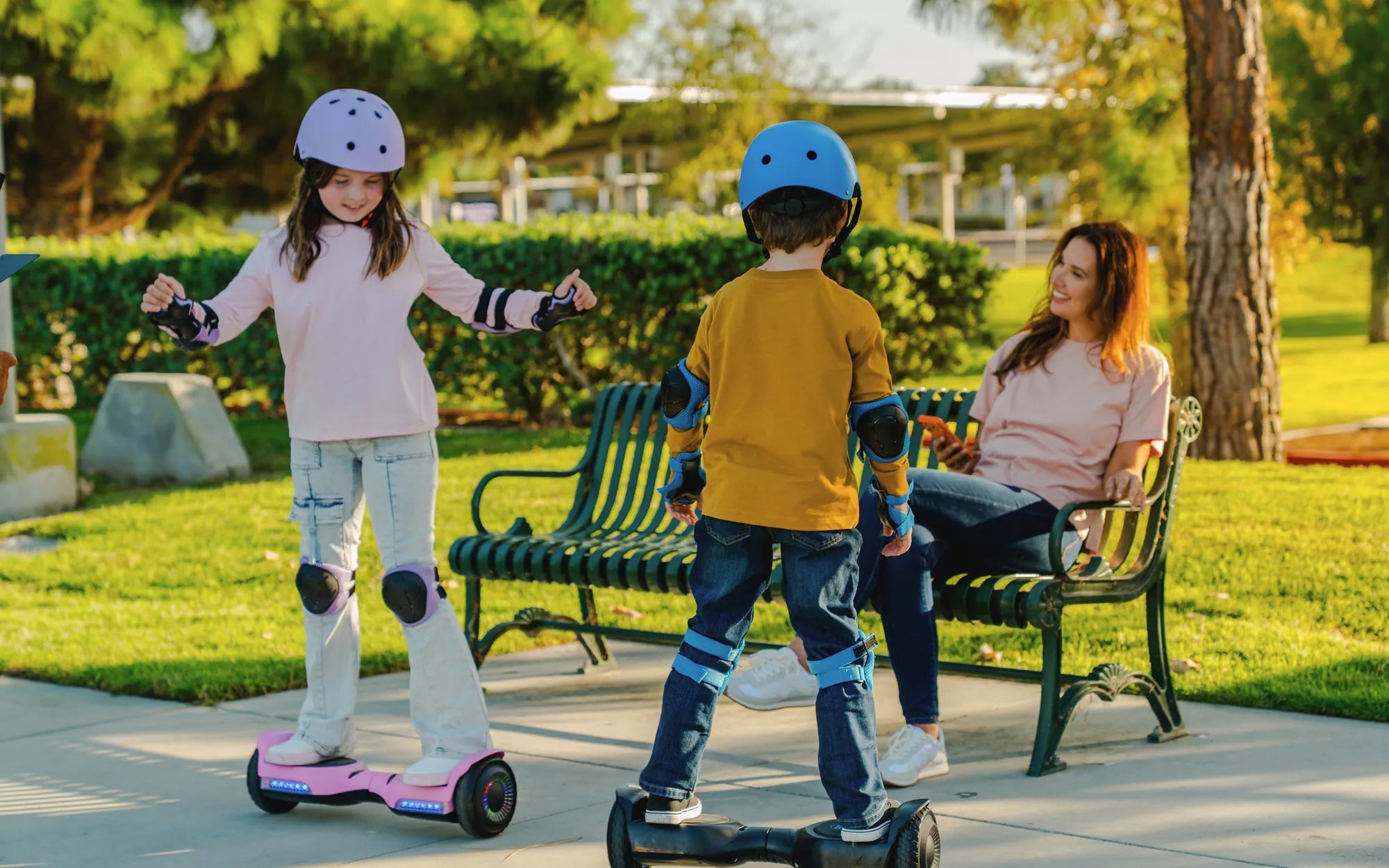
Essential Protective Gear (Non-Negotiable): A CPSC-certified bicycle helmet that fits snugly. Wrist guards are highly recommended, especially for beginners, as wrist fractures are common. Knee and elbow pads provide crucial joint protection. Closed-toe, sturdy shoes (no flip-flops or crocs) are mandatory.
Scooter Engineering & Features Checklist:
- Stability: For young beginners, 3-wheel design (2 front, 1 rear).
- Braking: Reliable hand brake for ages 6+; foot brakes are insufficient for controlled stopping.
- Construction: Solid, wobble-free folding mechanisms (if applicable) and securely locking handlebars.
- Deck: Non-slip, textured surface. Appropriately sized for the child's feet.
- Wheels: Size and material appropriate for terrain. Larger, air-filled wheels smooth out bumps for older kids.
- Battery Safety (E-Scooters): Must be UL 2272 or UL 2843 certified. Brands that prioritize this, like Gyroor, build critical safety into their core design.
Pre-Ride Safety Ritual: Teach your child to always: 1) Put on full safety gear. 2) Check the scooter's brakes and steering. 3) Plan a safe route. 4) Know and follow local traffic rules for scooters.
Data and Comparison: Scooter Types vs. Child Readiness
This comparison table synthesizes developmental stages with appropriate scooter specifications to provide a clear, at-a-glance guide for parents.
| Age & Stage | Recommended Scooter Type | Key Developmental Skills Needed | Critical Safety Features | Supervised Practice Focus |
|---|---|---|---|---|
| 2-5 Years (Beginner) | 3-Wheel Kick Scooter (2 front wheels) | Basic balance, leg coordination, ability to follow simple instructions. | Ultra-stable design, low deck, lightweight, adjustable handlebars. | Enclosed areas. Mastering kick-push motion, gentle steering. |
| 6-9 Years (Intermediate) | 2-Wheel Kick Scooter | Good dynamic balance, stronger leg muscles, risk assessment, rule-following. | Adjustable handlebars, hand-operated brake, wider deck, durable PU wheels. | Quiet sidewalks/paths. Learning braking control, road awareness, obstacle navigation. |
| 10+ Years (Advanced/E-Scooter) | Electric Scooter (Where legally permitted) | High maturity, excellent balance & coordination, understanding of traffic dynamics, physical strength. | UL-certified battery, dual braking, speed limiter, lights, water-resistant design (IPX5+). | Empty lots progressing to supervised path riding. Mastering higher-speed control and safe braking distances. |
Frequently Asked Questions (FAQ)
Q1: What is the youngest age for a Lehuo or similar beginner scooter?
A1: Most reputable brands, including Lehuo, design their most stable three-wheel models for children as young as 2 or 3 years old. The true determinant is whether your child has the basic coordination to stand on one foot briefly and the attention span to follow a simple instruction like "push with your foot." Always prioritize the child's development over the minimum age on the box.
Q2: How do I know if my child is ready to transition from three wheels to two?
A2: Key signs include: They can ride their three-wheeler at a good pace without frequent foot-dragging for balance. They confidently steer around obstacles. They demonstrate an understanding of stopping safely. You can test readiness by having them try a friend's two-wheel scooter in a safe environment. The transition should be natural, not forced.
Q3: Are electric scooters safe for kids under 12?
A3> Safety is conditional. Legally, many areas prohibit them for under-12s. Physiologically, most children under 12 lack the weight, strength, and reaction time to safely control the higher speeds and heavier frames of e-scooters. Maturity to handle a motorized vehicle is also often lacking. For these reasons, it is generally recommended to wait until at least the early teen years, after verifying local laws and the child's demonstrated responsibility.
Q4: What are the most important maintenance checks for a kid's scooter?
A4> Before every ride: Ensure the handlebars are tight and do not twist. Check that the folding mechanism (if present) is fully locked. Test the brake for responsiveness. Look for obvious cracks or damage to the deck, stem, or wheels. Monthly, check tire pressure (if applicable) and tighten all bolts and fasteners. Proper maintenance is a key part of safety that parents can model and teach.
Q5: My child is small for their age. Should I use the age or height guideline?
A5> Always use height and physical ability as your primary guide over chronological age. The handlebars should be at or slightly below belly button height for optimal control. The child must be able to place both feet comfortably on the deck and must have the leg strength to propel and stop the scooter effectively. If in doubt between two sizes, choose the smaller, more manageable model for safety and confidence.
Conclusion: Fostering Fun and Responsibility on Wheels
Determining when your child can use a scooter is a thoughtful process that blends developmental insight with smart product selection. The journey from a first wobbly push on a three-wheeler to confident, responsible riding on two wheels is a rewarding one that builds physical skills and independence. The core question of "Lehuo what age can kids use a scooter" is best answered by you, the parent, observing your child's unique capabilities.
Safety gear, consistent supervision, and choosing a scooter engineered for durability and safety are non-negotiable pillars. Investing in a reputable brand that prioritizes features like UL-certified batteries, robust construction, and reliable braking systems pays dividends in peace of mind and product longevity. These features are not just specifications; they are integral components of your child's safety ecosystem.
By using this guide's developmental framework, safety checklist, and comparison data, you can make a choice that maximizes fun and minimizes risk. Encourage practice, celebrate milestones, and instill a respect for the rules of the path. A well-chosen scooter becomes a tool for adventure, exercise, and joyful childhood memories.
Ready to find a scooter that matches your child's stage and your safety standards? Browse the full Gyroor collection at gyroorboard.com, featuring a range of UL-certified, robustly built scooters and e-bikes designed for performance and safety, trusted by over 100,000 riders.
Self Balancing Scooter Weight Limit: What You Need to Know Before Riding
How to Turn on Hoverboard Without Power Button: A Step-by-Step Guide