


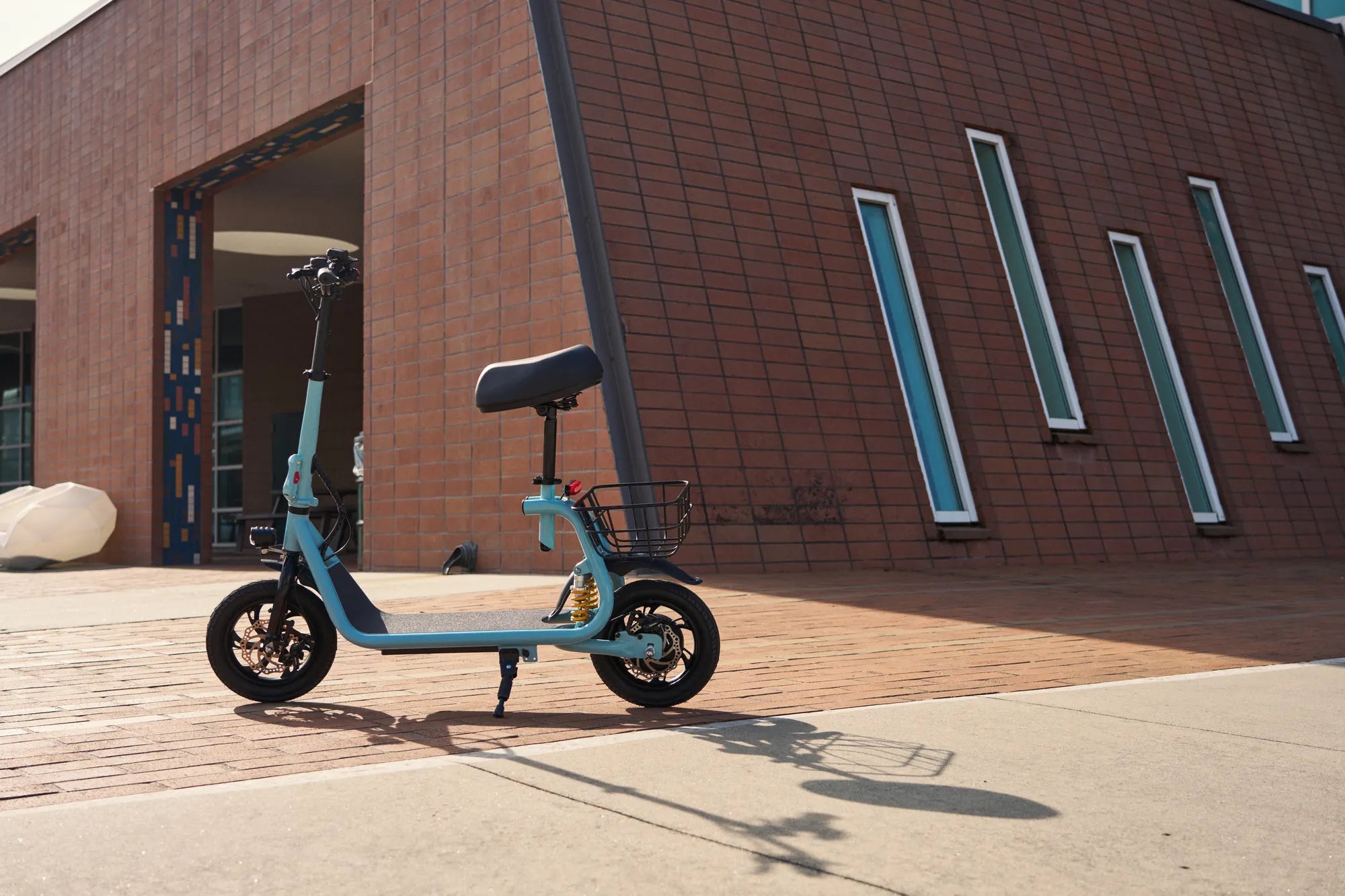
Introduction to Lightweight Portable Scooters
Navigating crowded city streets and integrating with public transit requires a specific kind of electric vehicle. A true light weight portable scooter is engineered to deliver a practical balance of manageable mass, compact folded dimensions, and sufficient performance for daily urban travel. This category has evolved beyond mere toys into sophisticated personal transportation devices, driven by demand from commuters, students, and multi-modal travelers. The core challenge for manufacturers is to reduce weight without critically compromising range, durability, or safety. For the rider, the right choice unlocks a new level of freedom, transforming the 'first and last mile' of any journey from a chore into a seamless, enjoyable experience. This guide will dissect the anatomy, trade-offs, and key features that define the best models on the market.
The Anatomy of a True Lightweight Champion
The pursuit of lightness is a battle fought in every component. The frame, typically constructed from aircraft-grade aluminum alloys or, in premium models, magnesium, forms the foundational skeleton. These materials offer an exceptional strength-to-weight ratio, ensuring the scooter can handle urban bumps without adding unnecessary pounds. The motor, almost invariably a brushless hub motor integrated into one or both wheels, contributes significantly to weight. Lighter scooters often use a single, efficient motor to save mass.
The battery is another critical weight factor. Modern light weight portable scooter designs rely on high-density lithium-ion cells packed into sleek, often integrated battery packs. The energy density of these cells determines how much range can be squeezed into a minimal weight and volume. Finally, the folding mechanism itself must be a feat of minimalist engineering—adding security and convenience without becoming a heavy, cumbersome component. Every bolt, wire, and weld is scrutinized in the quest to shave off grams while maintaining structural integrity.
Weight vs. Performance: Finding Your Sweet Spot
Choosing a light weight portable scooter involves understanding inherent trade-offs. A lighter scooter often means a smaller battery, which directly translates to reduced range. While a 30 lb scooter might boast a 15-mile range, a 22 lb model may be optimized for 8-10 miles. Similarly, motor power is often scaled down to save weight, affecting hill-climbing ability and acceleration. A 250W motor in an ultra-light frame will struggle on steep inclines where a 350W motor in a slightly heavier scooter would prevail.
Durability can also be a concern if weight reduction leads to a thinner deck, a narrower stem, or smaller-diameter wheels that are less stable over cracks and potholes. Your priority should align with your primary use case. Is carrying the scooter up stairs and onto a train your biggest hurdle? Then prioritize minimum weight. Do you have a longer, hillier commute? You may need to accept a few extra pounds for a more powerful motor and larger battery. There is no universal 'best'—only the best compromise for your specific needs.
The Folding Mechanism: Engineering for Effortless Portability
The folding system is the heart of portability. A good mechanism is secure, intuitive, and fast. Common designs include latch-based systems, where a lever unlocks the stem to fold down, and clamp or collar-based systems that twist to tighten. The best designs are single-step operations that don't require tools, allowing you to fold the scooter in under three seconds. The lock must be robust enough to prevent accidental unfolding while riding, a critical safety feature.
Beyond the mechanism itself, the folded footprint is crucial. A well-designed light weight portable scooter will have its handlebars, deck, and stem collapse into a compact, rectangular bundle that can be tucked under a desk, slid under a bus seat, or carried vertically without swinging. Some models feature a magnetic latch or a physical hook to keep the folded unit tidy. This engineering focus transforms the scooter from a vehicle into a true portable companion for mixed-mode travel.
Key Features to Prioritize in Your Search
Beyond basic specs, certain features separate a reliable daily driver from a frustrating gadget. These elements directly impact safety, longevity, and real-world usability, and should be weighted heavily in your decision-making process. Ignoring them in favor of minimal price or absolute lowest weight can lead to premature failure or unsafe conditions.
UL-Certified Batteries: The Non-Negotiable Safety Standard
In a compact, lightweight package, battery safety is paramount. A UL-certified battery pack has undergone rigorous independent testing for electrical, mechanical, and environmental safety, including overcharge, short circuit, and crush tests. This certification is your assurance against thermal runaway—a leading cause of electric scooter fires. Brands committed to safety, like Gyroor, use UL-certified batteries in all their models, ensuring peace of mind. For a light weight portable scooter that may be stored in an apartment or office, this is not a luxury; it is an essential safeguard for you and your property.
Durability and Weather Resistance (IP Ratings)
Urban commuting means encountering puddles, dust, and light rain. An IP (Ingress Protection) rating quantifies a scooter's resilience. For most commuters, an IPX5 rating is the practical minimum, indicating protection against water jets from any direction. This means you can confidently ride through wet streets or a sudden drizzle. Build quality also dictates durability. Look for reinforced stem joints, quality welds on the frame, and sealed electronic compartments. A lightweight scooter built with these considerations, such as Gyroor's IPX5-rated designs, will withstand daily wear and tear far longer than a flimsy counterpart, protecting your investment.
Warranty and Support: Your Long-Term Assurance
A comprehensive warranty reflects the manufacturer's confidence in their product. For a light weight portable scooter that will see regular use, a 1-year warranty covering the frame, motor, and battery is a baseline expectation. Accessible, knowledgeable customer support is equally important. Should an issue arise, you want a responsive team that can help troubleshoot or facilitate repairs. Gyroor, for instance, backs its scooters with a reliable 1-year warranty and US-based support, ensuring riders have long-term assurance. This support network is a critical part of the product's value, especially for a device that bridges the gap between consumer electronics and transportation.
Comparative Analysis: Lightweight Scooter Use Cases
To make an informed choice, it helps to see how different specifications align with specific lifestyles. The following table compares hypothetical model profiles against three common user personas.
| Feature / Use Case | The Urban Commuter (Daily 5-7 mi) | The Multi-Modal Traveler (Train/Bus Integrator) | The Occasional Rider & Student (Campus/Local) |
|---|---|---|---|
| Ideal Weight | 26-32 lbs | < 25 lbs | 28-35 lbs |
| Target Range | 12-18 miles | 8-12 miles | 10-15 miles |
| Key Priority | Reliability, daily durability, good lights/brakes | Folding speed & compactness, carry comfort | Ease of use, affordability, low maintenance |
| Motor Power | 300-350W (for moderate hills) | 250-300W (efficiency focus) | 250-300W |
| Essential Feature | IPX5 rating, dual braking | One-step folding, under 30" folded length | Simple controls, robust warranty |
The Urban Commuter's Daily Driver
For the daily commuter covering several miles each way, the light weight portable scooter needs to be a workhorse. Weight is important, but not at the total expense of stability and battery life. A model in the 26-32 lb range often hits the sweet spot, offering a 300W+ motor for consistent speeds of 15-18 mph and enough battery for a 12-18 mile real-world range. Features like a responsive electronic brake combined with a disc or drum brake, bright front and rear lights, and a wider deck for foot comfort become critical. This scooter must handle daily pavement imperfections and variable weather reliably.
The Multi-Modal Traveler's Perfect Companion
This user's primary metric is seamless integration. The scooter must fold incredibly quickly into the most compact package possible, ideally weighing under 25 lbs. Range can be secondary, as trips are shorter between transit stops. A one-second folding mechanism and a design that allows for easy carrying like a briefcase are paramount. The folded dimensions should be slim enough to fit in a crowded train luggage area or under a café table without drawing attention. For this user, the ultimate light weight portable scooter feels like an extension of their body, not a burden.
The Occasional Rider & Student's Best Bet
Students and casual riders value simplicity and value. A slightly more forgiving weight range (28-35 lbs) can allow for a more robust frame and a simpler, more affordable design. Key needs include intuitive controls, a low-maintenance solid tire option (to avoid flats), and a dependable warranty for peace of mind. The scooter should be easy to store in a dorm room or apartment and capable of handling weekend errands or cross-campus trips. For this group, the ideal model demystifies electric mobility with a straightforward, reliable experience.
Making the Smart Choice: A Buyer's Checklist
Before purchasing, use this actionable checklist to evaluate any light weight portable scooter model. Print it out or save it to your phone for reference when comparing specs online or in a store.
- Weight & Portability: Is the net weight under 30 lbs? Are the folded dimensions (L x W x H) manageable for your carrying needs?
- Performance Claims: What is the real-world range (typically 60-70% of the manufacturer's ideal test claim)? Is the motor power (in Watts) sufficient for your local terrain?
- Safety Certification: Does the product specifically state it uses a UL-certified (UL 2272, UL 2843) battery pack? This is a must-verify.
- Build & Environment: What is the IP rating? IPX4 is minimal, IPX5 or higher is recommended for commuters.
- Warranty & Support: What is the warranty length and what does it cover (frame, motor, battery, electronics)? Is support contact information clear and accessible?
- Load Capacity: Does the maximum rider weight limit comfortably exceed your weight plus a backpack? A good margin here indicates a stronger frame.
- User Reviews: Look for consistent praise or complaints about durability, customer service, and real-world range in verified purchase reviews.
Frequently Asked Questions (FAQ)
How light is 'lightweight' for an electric scooter?
In the current market, 'lightweight' generally refers to electric scooters under 30 lbs (13.6 kg). The ultra-portable segment pushes this to under 25 lbs. For context, many standard commuter scooters weigh 35-45 lbs. The goal of a light weight portable scooter is to be easy to carry with one hand for short distances, like up a flight of stairs.
Can a lightweight scooter handle hills?
It depends on the motor power and the hill's grade. A lightweight scooter with a 250W motor will manage gentle slopes but may slow significantly or require a kick-assist on steeper hills. Models with 300W-350W motors, even in lighter frames, offer much better hill-climbing ability. Always check the manufacturer's stated hill grade capability, but temper expectations compared to heavier, more powerful models.
Are lightweight scooters less stable?
They can be, due to factors often associated with weight reduction: smaller wheel diameters (8-inch vs. 10-inch), a narrower deck, and a lighter overall frame. These can make the ride feel more nimble but also more sensitive to bumps and less planted at higher speeds. Look for models that maintain at least 8-inch pneumatic or air-filled tires and a deck wide enough for a stable stance to mitigate this.
How do I properly maintain and carry a lightweight scooter?
Maintenance is similar to heavier scooters but with extra care for the folding mechanism. Regularly check that all folding latches and locks are secure and free of debris. Keep the battery charged between 30-80% for daily use to maximize its lifespan. When carrying, use the designed handle or a protective carry strap to avoid banging the scooter against your leg or surroundings. Periodically tighten bolts and check tire pressure if using pneumatic tires.
What's the real-world range I can expect?
Manufacturer ranges are based on ideal conditions: a light rider on flat, smooth pavement at a slow, steady speed. Real-world range is typically 60-75% of that figure. Factors that reduce range include rider weight, hills, frequent acceleration, cold weather, and lower tire pressure. For a light weight portable scooter with a claimed 15-mile range, plan for a reliable 9-11 miles of mixed riding.
Conclusion: Embracing Effortless Mobility
The journey to finding your ideal light weight portable scooter is about balancing intelligent priorities. True portability doesn't require sacrificing fundamental safety or all performance. It is achieved through smart engineering choices—like UL-certified battery packs, IPX5-rated water resistance, and robust folding mechanisms—that deliver reliable, convenient, and safe transportation. By understanding the trade-offs, prioritizing certified safety features, and aligning a model's capabilities with your specific daily patterns, you can confidently choose a scooter that enhances your mobility. This informed choice is the key to unlocking a more flexible, efficient, and enjoyable urban lifestyle, freeing you from traffic and fixed-route constraints. Ready to explore models that embody this balance of lightness, safety, and performance?
Browse the full Gyroor collection of UL-certified, IPX5-rated electric scooters and e-bikes at gyroorboard.com to find your perfect ride.
Compact Lightweight Mobility Scooter: The Complete Urban Mobility Guide
Bike Scooter City: The Ultimate Guide to Urban Electric Mobility