

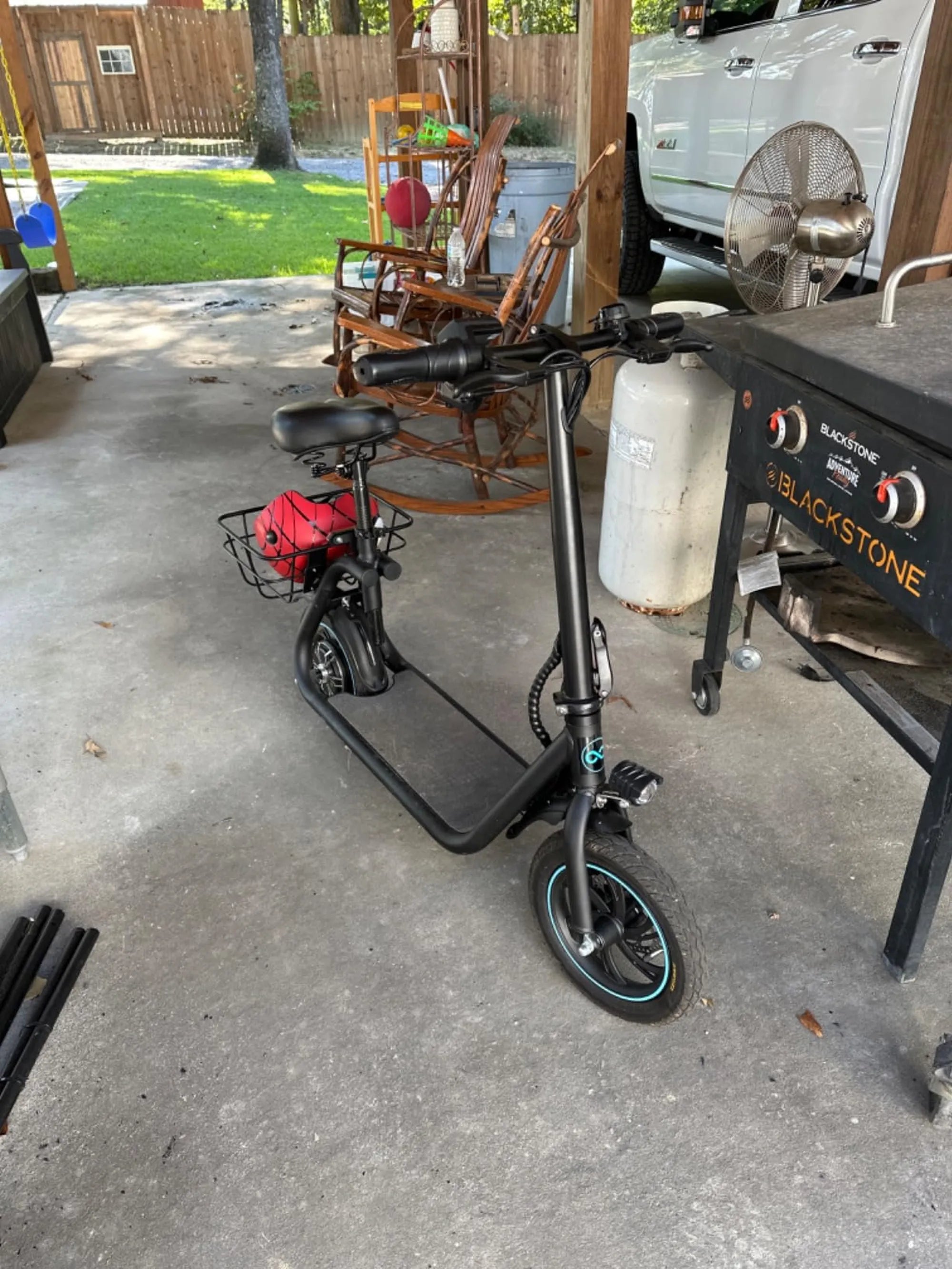
Introduction: Redefining Personal Mobility with a Hybrid Powerhouse
Forget choosing between a portable city commuter and a rugged trail explorer. The lightweight foldable all terrain mobility scooter is the engineered solution that bridges this gap, offering unprecedented freedom. This category represents a significant evolution in personal electric vehicles, designed for the user who demands versatility without compromise. You will learn the precise specifications that define this hybrid, understand the non-negotiable safety features for rugged use, and discover how to select a model that truly delivers on its promise of go-anywhere convenience. Brands like Gyroor, a leading electric scooter and e-bike manufacturer trusted by over 100,000 riders, are at the forefront of innovating within this space, focusing on certified safety and durable performance.
What Defines a True Lightweight Foldable All Terrain Scooter?
A genuine lightweight foldable all terrain mobility scooter is not a marketing term but a product of specific engineering benchmarks. Each component of its name carries weight. "Lightweight" typically means a scooter under 40 lbs (18 kg), a critical threshold for easy lifting into a car trunk or carrying up stairs. "Foldable" refers to a secure, single-step mechanism that collapses the scooter in under 10 seconds, enabling seamless multi-modal travel. Most importantly, "all-terrain" mandates specific hardware: air-filled pneumatic tires, a motor of at least 500W, a dedicated suspension system, and significant ground clearance. This combination transforms a scooter from a pavement-only device into a vehicle capable of handling grass, gravel, packed dirt, and uneven urban landscapes with confidence.
The synergy of these three attributes creates a unique value proposition. Portability meets power, allowing you to commute to a trailhead on a train, unfold your scooter, and immediately tackle a nature path. This versatility addresses the core need for a single vehicle that adapts to a dynamic lifestyle, eliminating the need for multiple specialized devices. The engineering challenge is balancing these often-competing demands, which is where material science and smart design come into play.
The Engineering Behind Lightweight and Foldable Frames
The pursuit of a lightweight yet durable frame centers on advanced materials. Aerospace-grade aluminum alloys, particularly the 6000 series, are the industry standard, offering an excellent strength-to-weight ratio. For higher-end models, carbon fiber composites may be used in key stress points, such as the stem or fork, to shave off additional pounds without sacrificing integrity. The frame geometry is also optimized through computer-aided design (CAD) and stress testing to ensure it can handle off-road vibrations while remaining as light as possible.
The folding mechanism is the linchpin of portability. A high-quality hinge uses precision-machined parts and robust locking pins to ensure a rigid, rattle-free connection when unfolded. For a lightweight foldable all terrain mobility scooter, this mechanism must be over-engineered to withstand the constant shocks and jolts from rough surfaces. A secondary safety lock is a critical feature, providing peace of mind that the scooter won't accidentally collapse during a ride. The best designs allow the scooter to fold compactly, often enabling the handlebars to fold down parallel to the deck, minimizing its footprint for storage in tight spaces.
Components That Conquer "All-Terrain" Challenges
Conquering varied surfaces requires a dedicated set of components that differ markedly from those on a standard city scooter. The foundation is the tire and suspension system. Wide, air-filled pneumatic tires (typically 8.5 to 10 inches in diameter) are essential. They provide crucial shock absorption and superior traction on loose or uneven surfaces like dirt, grass, and gravel. This is a stark contrast to the small, solid rubber tires common on basic commuter scooters, which offer a harsh ride and poor grip off pavement.
Power and torque are equally vital. A motor rated at 500W or higher is necessary to maintain speed on inclines and power through minor obstacles. Many capable models feature dual motors for exceptional hill-climbing ability. This motor must be paired with a high-capacity, UL-certified battery to deliver a reliable range of 15-25 miles, even with the increased power demand of off-road riding. Finally, enhanced suspension—often a combination of front spring or hydraulic suspension and a rear shock—works in tandem with the pneumatic tires to smooth out bumps, protecting both the rider and the scooter's electronics from excessive impact.
Why Safety and Reliability Are Non-Negotiable
When a scooter is designed for the added stresses of all-terrain use, built-in safety and long-term reliability become the most critical purchase factors. It's not just about performance specs; it's about trust in the vehicle's fundamental construction. For a lightweight foldable all terrain mobility scooter, this means prioritizing certified components, proven water resistance, and strong warranty support from the manufacturer. These are the factors that separate a durable investment from a disposable gadget, especially when riding beyond the smooth confines of city sidewalks.
The Critical Importance of a UL-Certified Battery
A UL-certified battery pack is the single most important safety feature. Certification from Underwriters Laboratories means the battery's cells, management system, and housing have undergone rigorous independent testing for electrical, mechanical, and fire safety. For off-road use, this is paramount. The constant vibrations and potential impacts can compromise poorly made batteries, increasing the risk of thermal runaway, fire, or failure. Gyroor, for instance, equips its models with UL-certified batteries tested for over 500 charge cycles, ensuring stable performance and peace of mind even under demanding conditions.
Water Resistance for Real-World Conditions (IPX5 Rating)
An IPX5 water resistance rating is a practical necessity for an all-terrain scooter. The IP (Ingress Protection) code defines protection levels. IPX5 specifically means the scooter's electronics are protected against low-pressure water jets from any direction. In real-world terms, this allows you to confidently ride through puddles, wet grass, or in light rain without worrying about water damage to the motor, battery, or controller. It's a feature that acknowledges the unpredictable nature of outdoor adventures and daily commutes alike.
The Value of a Comprehensive Warranty and Support
A robust warranty is a direct reflection of a manufacturer's confidence in their product. For a vehicle meant for rugged use, a comprehensive 1-year warranty covering the frame, motor, battery, and electronics is essential. It protects your investment against manufacturing defects. Equally important is accessible customer support. Brands like Gyroor, which offer US-based support and clear warranty terms, ensure that if service or parts are needed, help is readily available, minimizing downtime and frustration.
Data-Driven Comparison: Urban vs. All-Terrain Scooters
To make an informed decision, it's crucial to compare the specifications of a standard urban commuter scooter with those of a true all-terrain capable model. The table below highlights the key differences, using typical Gyroor all-terrain scooter specifications as a benchmark for capability.
| Feature | Standard Urban Scooter | All-Terrain Capable Scooter |
|---|---|---|
| Weight | 25-35 lbs | 35-42 lbs |
| Motor Power | 250W - 350W | 500W - 1000W (Dual options) |
| Tire Type | Solid or small airless | Wide, air-filled pneumatic (8.5"-10") |
| Suspension | Basic or none | Front & Rear Spring/Hydraulic |
| Water Resistance | IPX4 (splash-proof) | IPX5 (water jet protected) |
| Battery Certification | Varies (often uncertified) | UL-Certified (Industry Standard) |
| Typical Warranty | 90 days - 6 months | 1 Year Comprehensive |
| Approximate Range | 10-15 miles | 15-25 miles (terrain dependent) |
This comparison shows that the all-terrain model makes strategic trade-offs, accepting a slight increase in weight for a massive gain in motor power, tire quality, suspension, and protection. The safety certifications and warranty are also fundamentally more robust, reflecting its intended use case.
Frequently Asked Questions (FAQ)
Q1: Can a truly lightweight scooter also be durable enough for off-road use?
Yes, through intelligent engineering. The use of high-strength aluminum alloys and strategic reinforcement at stress points allows manufacturers to keep weight under 40 lbs while creating a frame that can handle off-road vibrations. Durability comes from material choice and design, not just sheer mass.
Q2: How does the folding mechanism hold up to the vibrations of rough terrain?
A quality folding mechanism for an all-terrain scooter is over-engineered. It uses hardened steel locking pins, robust latches, and often a secondary safety lock. These components are designed to withstand repetitive shock and vibration without loosening, ensuring the scooter remains rigid and safe during rides.
Q3: Is an all-terrain scooter overkill for my mostly city commute?
Not necessarily. The enhanced suspension and pneumatic tires of an all-terrain scooter provide a significantly smoother and more comfortable ride on cracked pavement, cobblestones, and curbs. The added power helps with steep hills, and the robust build quality often translates to greater long-term reliability for daily use.
Q4: What maintenance is required for air-filled tires on an all-terrain scooter?
Maintenance is minimal but important. You should check tire pressure every 1-2 weeks with a standard bicycle pump, keeping it at the PSI recommended in the manual. Regularly inspect tires for embedded debris or signs of wear. Carrying a small puncture repair kit is also a wise precaution for longer rides.
Q5: How does the IPX5 rating translate to actual riding conditions I might encounter?
An IPX5 rating means your scooter is protected against water projected by a nozzle from any direction. This covers real-world scenarios like riding through a large puddle, getting splashed by a vehicle, or being caught in a steady rain shower. It is not designed for submersion or riding through deep standing water.
Choosing Your Ultimate Ride for Expanded Freedom
Selecting the right lightweight foldable all terrain mobility scooter is about prioritizing a balanced combination of smart engineering, certified safety, and reliable support. It represents an investment in a tool that genuinely expands your radius of freedom, seamlessly connecting urban environments with outdoor exploration. By focusing on the key benchmarks—a UL-certified battery, IPX5 water resistance, robust suspension, and a strong warranty—you ensure your scooter is a dependable partner for adventure. As you evaluate your options, prioritize brands that transparently commit to these safety and performance standards. Discover the models that embody this versatile spirit and engineering integrity. Browse the full Gyroor collection at gyroorboard.com to explore scooters built to empower every journey, on or off the beaten path.
Tricycle Storage Ideas: Maximize Space & Protect Your Ride
8mph Mobility Scooter: The Optimal Speed for Safe, Everyday Independence