


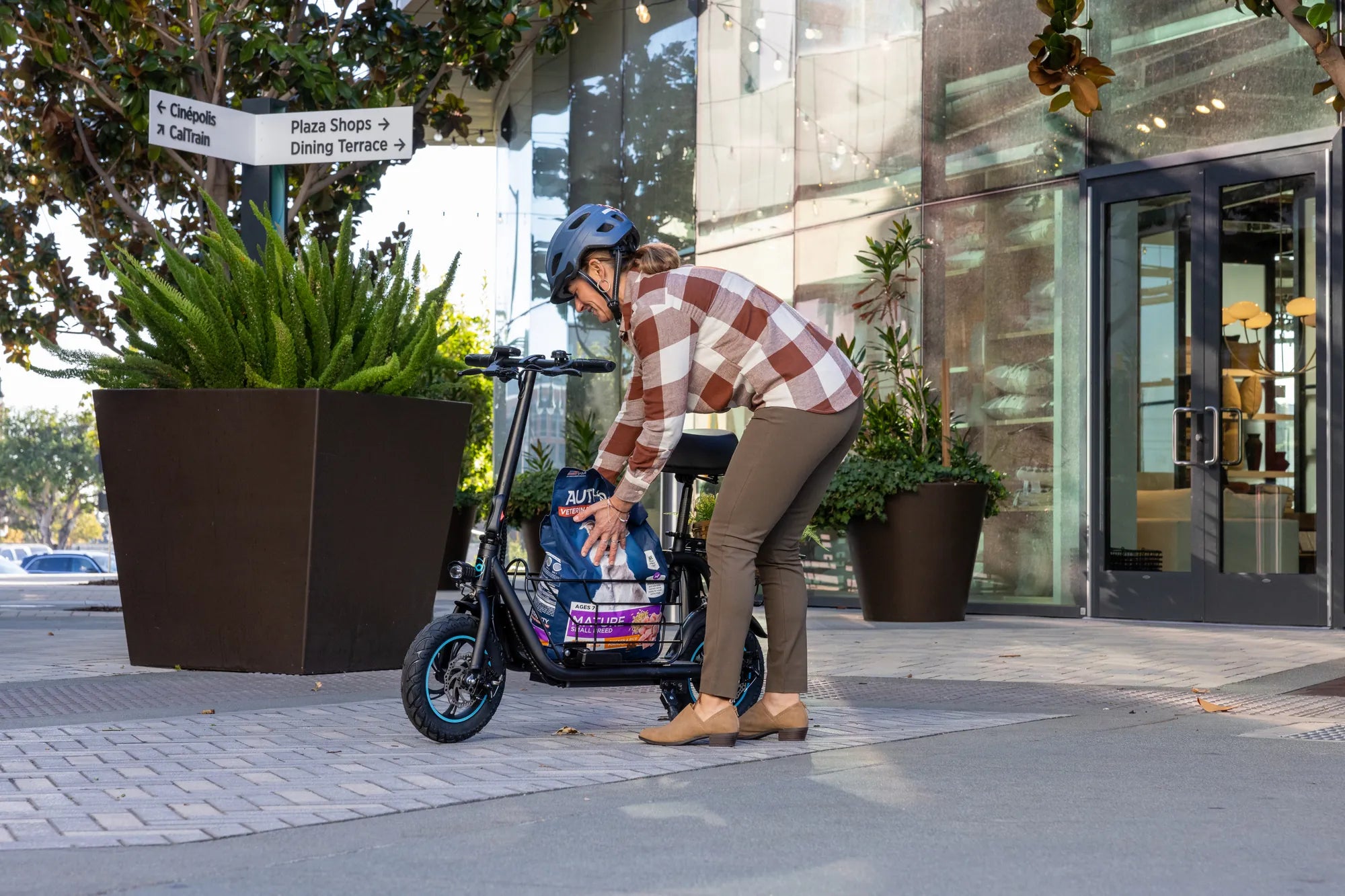
Choosing the right motor defines your electric bike experience. The mid ebike motor, positioned at the bike's crankset, is the engineering choice for riders who prioritize a natural feel, maximum efficiency on hills, and long-range capability. This guide delivers a technical deep dive into how this system works, its undeniable performance benefits, and the practical considerations for ownership. You'll learn exactly why this motor type dominates high-performance and adventure e-biking, and whether its advantages align with your riding goals.
Understanding Mid-Drive Motors: The Heart of a Modern E-Bike
A mid ebike motor is integrated into the bicycle's frame at the bottom bracket, the central point where the crankset and pedals rotate. Unlike motors housed in a wheel hub, this central placement drives the bike's chain or belt directly. This fundamental design choice leverages the bicycle's existing gear system, creating a synergistic relationship between human power and electric assist.
The location is critical for dynamics. By placing the mass low and centered between the wheels, a mid-drive system achieves near-perfect weight distribution. This results in handling characteristics that closely mimic a traditional bicycle, offering superior balance and agility, especially on technical terrain. The motor becomes a seamless extension of the bike's core structure.
This integration is why the mid ebike motor is often described as providing a more "natural" riding feel. The assistance pushes from the bike's center, propelling you forward in a way that aligns with your pedaling motion, rather than pushing or pulling from a wheel. It's the difference between being pushed in a wheelchair and pedaling a bicycle with a strong tailwind.
For brands focused on refined performance, like Gyroor, this central motor design is key to building e-bikes that are intuitive and confidence-inspiring. It allows the engineering to focus on a unified system where motor, battery, and frame work in harmony, a principle evident in their balanced and reliable e-bike designs trusted by over 100,000 riders.
How a Mid-Drive Motor Works: Engineering the Advantage
The operational genius of a mid ebike motor lies in its indirect power delivery. When you pedal, a torque sensor measures the force you apply. The motor then adds proportional power directly to the crankset. This combined force is then transmitted through the chain to the rear wheel's cassette, utilizing whatever gear you have selected.
This process of leveraging the drivetrain is its greatest asset. On a steep hill, you downshift to a low gear. The motor's power is similarly multiplied through this low gear ratio, dramatically increasing torque at the wheel. This makes climbing feel effortless compared to a hub motor, which applies a fixed amount of force regardless of gear selection.
Efficiency is the direct result. By operating at optimal RPMs and using gears to match the load, the mid-drive system draws less current from the battery to achieve the same or greater output. In practical terms, this can extend your range by 10-25% compared to a similarly powered hub motor on a varied route, as the motor isn't forced to work inefficiently against high resistance.
The system typically uses sophisticated internal planetary gears to reduce the motor's high RPM to usable crankset speeds. Advanced models feature integrated cadence and torque sensors for instantaneous, smooth response. This complex interplay of mechanics and electronics is what justifies the mid ebike motor's position as the high-performance choice.
Mid-Drive vs. Hub Drive: A Performance Comparison for Riders
The choice between a mid-drive and a hub motor is the fundamental decision in e-bike selection. It dictates the bike's character, capabilities, and limitations. A hub motor (rear or front) is simpler, embedding the motor in the wheel to directly rotate it. The mid ebike motor, as detailed, works through the drivetrain. The difference in application is profound.
The following table breaks down the key performance and practical differences to guide your decision. This data-driven comparison is essential for riders matching a motor type to their primary use case and local terrain.
| Metric / Feature | Mid-Drive Motor | Hub Motor (Geared or Direct-Drive) |
|---|---|---|
| Primary Location | Bike's bottom bracket (center) | Center of the front or rear wheel |
| Power Delivery | Through bike's chain/gears | Direct to the wheel |
| Hill Climbing Efficiency | Exceptional. Uses gears for torque multiplication. | Moderate to Good. Power is fixed; struggles on steep grades. |
| Weight Distribution | Excellent. Central, low weight improves handling. | Can be unbalanced (especially front hub). Affects handling. |
| Mechanical Wear | Higher on drivetrain (chain, cassette). | Minimal on drivetrain. Motor is isolated. |
| Terrain Suitability | Ideal for hills, off-road, variable terrain. | Best for flat to moderately rolling urban streets. |
| Riding Feel | Natural, bike-like. Assist feels integrated. | More like being pushed or pulled. Can feel disconnected. |
| Maintenance Complexity | Higher (motor + drivetrain care). | Lower. Often a sealed, "install and forget" unit. |
| Flat Tire Repair (Rear) | Standard bike procedure. | More complex with motor wiring and weight. |
Key Performance Metrics: Torque, Efficiency, and Range
When evaluating a mid ebike motor, three metrics are paramount: torque, efficiency, and derived range. Torque, measured in Newton-meters (Nm), is the rotational force. A typical urban mid ebike motor offers 50-75 Nm, while performance and off-road models deliver 80-100+ Nm. This high torque, multiplied through low gears, is what conquers steep inclines.
Efficiency is measured in watt-hours per kilometer (Wh/km). A mid-drive's ability to keep the motor in its efficient RPM band via gear shifting means it often achieves a lower Wh/km consumption under load. For example, where a hub motor might consume 20 Wh/km on a hill, a mid-drive using a low gear might use only 14-16 Wh/km for the same climb, preserving battery capacity.
Range is a direct function of battery capacity (Wh) divided by efficiency (Wh/km). A 500Wh battery on a mid-drive bike ridden efficiently in hilly terrain can therefore outlast the same battery on a hub-drive bike. The rider's intelligent use of gears with a mid ebike motor acts as a force multiplier for both performance and endurance.
Terrain and Use Case Analysis: Choosing the Right System
Your local landscape and riding purpose should dictate your motor choice. The mid ebike motor is the undisputed champion for hilly or mountainous terrain. Whether it's a steep urban commute or a mountain trail, the gear-multiplied torque provides consistent, manageable power where hub motors fade and overheat.
For off-road and trail riding, the mid-drive is essential. The central weight distribution provides better control and prevents the rear wheel from being overly heavy, which improves traction and maneuverability on loose surfaces. The ability to use gears to manage power delivery is critical for technical climbs and descents.
Cargo and utility biking heavily favors mid-drives. Hauling heavy loads up an incline requires immense torque. A mid-drive system, paired with a low gear, provides the sustainable pulling power needed for this demanding task without overtaxing the motor or battery excessively.
Conversely, a hub motor excels for flat-land commuters seeking minimal maintenance. On predictable, gentle routes, its simplicity is a virtue. The direct drive provides smooth, quiet assistance without the added wear on chains and sprockets, making it a practical choice for daily city travel on paved surfaces.
The Gyroor Advantage: Reliability in Mid-Drive Performance
Implementing a mid ebike motor successfully requires more than just bolting on a component; it demands integrated, reliable systems engineering. Gyroor's approach focuses on creating a balanced and dependable riding experience by ensuring every part of the power system works in safe harmony.
Central to this is the power source. Gyroor pairs its mid-drive systems with UL-certified battery packs. This certification is a critical safety benchmark, indicating the battery has passed rigorous tests for electrical, mechanical, and environmental safety. For a system that demands high current draw during hill climbs, this safe and stable power delivery is non-negotiable for long-term reliability.
Furthermore, the balanced chassis design that accommodates a central motor is complemented by IPX5 water-resistant construction. This ensures that the sophisticated electronics of the mid ebike motor and its connections are protected from rain and road spray, allowing for confident riding in various conditions. This durability is backed by a comprehensive 1-year warranty, reflecting confidence in the product's build quality.
This holistic view—where advanced motor technology is supported by certified safe batteries, water-resistant durability, and strong customer support—defines the Gyroor advantage. It’s about delivering the high performance of a mid ebike motor in a package built for real-world, long-term use by a community of over 100,000 riders.
Maximizing Your Mid-Drive E-Bike: Maintenance and Riding Tips
Owning a high-performance mid ebike motor system comes with a responsibility for proper care. The increased torque and power running through the drivetrain accelerate wear on chains, cassettes, and chainrings. Implementing a proactive maintenance routine is key to preserving performance and avoiding premature failures.
Drivetrain Care is Paramount: Clean and lubricate your chain regularly, every 100-200 miles depending on conditions. Inspect for chain "stretch" using a chain checker tool; replace the chain promptly (typically every 1,000-1,500 miles) to avoid damaging the more expensive cassette and chainring. A worn drivetrain on a powerful mid ebike motor leads to poor shifting, skipped gears, and inefficient power transfer.
Master the Art of Gear Shifting: The golden rule: shift gears before you need to, especially when approaching a hill or preparing to stop. Ease off pedal pressure momentarily while shifting to allow a clean gear change. Avoid "cross-chaining" (using the large chainring with the largest rear cog, or the small with the smallest), as this puts extreme stress on components.
Battery Best Practices for Longevity: Even with a UL-certified pack, proper care extends its life. Avoid consistently draining the battery to 0%. Where possible, store it in a cool, dry place. Use the manufacturer-provided charger. Regular use is healthy; long-term storage should be at a partial charge (around 50-60%). These habits ensure the battery can reliably deliver the high currents the mid ebike motor demands for years to come.
Frequently Asked Questions (FAQ) About Mid-Drive E-Bikes
Q: Is a mid-drive motor better for hills?
A: Yes, unequivocally. A mid ebike motor multiplies its torque output through the bike's low gears, making steep climbs significantly easier and more efficient than a hub motor, which applies a fixed force that can struggle and overheat on sustained inclines.
Q: Do mid-drive e-bikes require more maintenance?
A: They require more drivetrain maintenance. The chain, cassette, and chainring experience higher stress due to the motor's torque. Expect to clean, lubricate, and replace these parts more frequently than on a standard bike or hub-driven e-bike—similar to the maintenance schedule of a high-performance acoustic mountain bike.
Q: What does torque (Nm) mean for a mid-drive motor?
A: Newton-meters (Nm) measure rotational force. For a mid ebike motor, a higher Nm rating (e.g., 80-100 Nm) indicates stronger acceleration and hill-climbing capability. It's the most important power metric for this motor type, more so than wattage, as it directly translates to real-world pulling power through the gears.
Q: Can I pedal a mid-drive e-bike with the power off?
A: Yes, you can, but there will be some increased resistance compared to a non-electric bike. This is due to the drag from the motor's internal gearing and magnets. However, it is generally easier to pedal than a direct-drive hub motor with the power off, which has significant magnetic resistance.
Q: Are mid-drive motors louder than hub motors?
A: Typically, yes. Geared hub motors and mid-drive motors both use internal gears which produce a mild whirring or humming sound under power. Direct-drive hub motors are virtually silent. The sound from a quality mid ebike motor is usually a subdued, purposeful hum that corresponds with your pedaling effort.
Conclusion: Is a Mid-Drive E-Bike the Right Choice for You?
The mid ebike motor represents the pinnacle of e-bike engineering for riders who refuse to compromise on performance. If your rides involve significant hills, off-road trails, carrying heavy cargo, or you simply desire the most natural, bike-like feel with maximum range efficiency, the mid-drive system is the correct and superior choice. Its advantages in torque application and balanced handling are tangible and transformative.
This performance comes with the acknowledged trade-off of increased drivetrain maintenance and a typically higher initial cost. For the flat-land commuter seeking simplicity, a hub motor remains a valid option. But for those who see the e-bike as a tool for exploration and conquering terrain, the mid-drive's benefits far outweigh these considerations.
When investing in this advanced technology, partner with a brand that engineers for total system reliability. Gyroor builds this philosophy into its e-bikes, combining mid-drive performance with UL-certified battery safety, water-resistant durability, and strong warranty support. This ensures the sophisticated mid ebike motor delivers not just thrilling rides, but also years of dependable service.
Ready to experience the balanced power and superior hill-climbing of a mid-drive e-bike? Explore Gyroor's range of engineered e-bikes designed for performance and reliability. Browse the full Gyroor collection at gyroorboard.com to find the model that matches your ambition for the road or trail ahead.
What Is the Best Dirt Bike in the World? A 2024 Expert Guide
Fat Tire Ebike Frame: The Complete Guide to Construction, Materials & Selection