



Introduction: Why a Mini Hoverboard is the Perfect First Ride for Your 3-Year-Old
Selecting a mini hoverboard for 3 year old is about more than just a toy; it's an investment in your child's motor skill development, balance, and outdoor confidence. These specialized devices are engineered for tiny feet and beginner abilities, offering a controlled introduction to self-balancing technology. Unlike standard models, a true toddler hoverboard prioritizes safety and gentle learning curves above all else.
This ultimate guide will equip you with everything you need to know. We will dissect the critical safety features that are non-negotiable, provide a detailed buyer's checklist, and outline a proven training protocol. Our goal is to transform the selection process from overwhelming to informed, ensuring you choose a ride that delivers fun without compromising on security.
Understanding the mechanics and safety standards is paramount. A well-chosen mini hoverboard can foster incredible coordination and a sense of independence in a young child. However, this potential is only unlocked when the device is matched with proper supervision, protective gear, and a structured learning environment.
We will reference industry benchmarks and specific features from leading brands, such as Gyroor, known for their commitment to UL-certified batteries and robust construction. By the end of this guide, you'll be ready to make a confident purchase and start a safe, joyful riding journey with your toddler.
What Makes a Hoverboard "Mini" and Toddler-Safe?
A mini hoverboard for 3 year old is distinctly different from models designed for older children and adults. The "mini" designation encompasses specific physical and performance parameters tailored to a preschooler's size and capabilities. It's not merely a smaller version; it's a purpose-built tool for early childhood development and safe exploration.
The core differentiators are size, speed, and control philosophy. The deck is significantly narrower and shorter, allowing a 3-year-old to place their feet comfortably without an exaggerated, unsafe stance. Weight limits are typically between 44 to 66 pounds, ensuring the board's motors and frame are appropriately calibrated for a light rider.
Most importantly, the maximum speed is deliberately limited. While adult hoverboards can reach 10 mph or more, a toddler-safe model will have a top speed governed between 2 to 4 mph. This is often coupled with a beginner or training mode that further reduces sensitivity and speed, allowing the child to master balance without the risk of sudden, uncontrolled acceleration.
Finally, the construction materials and design prioritize durability and fall mitigation. Padded bumpers, rounded edges, and a lower center of gravity are common features. These design choices help absorb impacts and make the board more forgiving as a child learns the fundamentals of weight distribution and movement.
Key Safety Features to Look For (Non-Negotiables)
When evaluating any mini hoverboard for 3 year old, certain safety features are absolute requirements. These are the benchmarks that separate a reputable product from a potentially hazardous one.
UL-Certified Battery: This is the most critical component. The battery pack should be certified by UL (Underwriters Laboratories) or an equivalent recognized body. This certification involves rigorous testing for overcharge protection, short-circuit prevention, and thermal stability, drastically reducing fire risk. Brands like Gyroor use UL-certified battery packs tested for over 500 charge cycles as a core safety standard.
IP Water Resistance Rating: Look for a minimum of IPX4, with IPX5 being ideal for real-world use. An IPX5 rating means the board can withstand water jets from any direction, protecting the electronics from puddle splashes or wet pavement. This prevents short circuits and enhances the board's longevity and all-weather usability.
Non-Slip Foot Pads and Padded Bumpers: The foot pads must have a textured, grippy surface to keep small, possibly sneaker-clad feet firmly in place. Integrated, soft padded bumpers around the wheel hubs and deck edges help protect both the board and your child (and your furniture) from scrapes and bumps during learning.
LED Lights for Visibility: Front, rear, and wheel LED lights are essential for low-light conditions. They make your child visible to others and also add an element of fun. Additionally, lights often indicate battery status and mode selection, providing useful feedback to parents.
The Importance of Age-Appropriate Speed and Control
The gyroscopic sensors and motor response in a toddler hoverboard must be calibrated for a beginner's tentative movements. An overly sensitive board can be frightening and dangerous, leading to falls and a loss of confidence.
A speed limiter capping the maximum velocity at around 3-4 mph is essential. This pace is fast enough to feel exciting but slow enough for a supervising adult to walk alongside comfortably. Some advanced models offer dual or triple speed modes via a companion app or button, allowing you to lock the board at its slowest setting (e.g., 2 mph) until your child demonstrates mastery.
The control algorithm should be designed for smooth, gradual acceleration and deceleration. Jerky starts and stops are a sign of poor engineering. The board should respond predictably to subtle leans, giving the child a sense of direct agency over their movement. This builds confidence and reinforces the cause-and-effect of weight shifting.
This gentle control scheme, combined with a low top speed, transforms the hoverboard from a daunting gadget into an accessible tool for developing proprioception—the body's ability to sense its position and movement in space. It’s about progressive challenge, not instant thrills.
How to Choose the Best Mini Hoverboard: A Buyer's Checklist
Navigating the market requires a systematic approach. Use this checklist to evaluate every potential mini hoverboard for 3 year old candidate, ensuring no critical detail is overlooked.
1. Verify Safety Certifications: Confirm the battery has UL, CE, or RoHS certification. Do not compromise on this. Check the product manual or website for explicit statements; vague claims are insufficient.
2. Assess Speed Settings and Limits: Ensure the maximum speed is 4 mph or less. Prefer models with a dedicated beginner mode that can be locked to prevent accidental switching to a higher speed.
3. Evaluate Build Quality and Design: The board should feel sturdy, not flimsy. Check for the presence of padded bumpers, non-slip foot pads, and a finish that can withstand scrapes. The wheels should be made of durable, high-grip rubber.
4. Review Warranty and Customer Support: A reputable brand will stand behind its product. Look for at least a 1-year warranty on the board and 6 months on the battery. Accessible customer service for troubleshooting is crucial. Gyroor, for instance, offers a reliable 1-year warranty, reflecting confidence in their product's durability.
5. Consider Battery Life and Charge Time: For a 3-year-old, 30-60 minutes of continuous ride time is typically sufficient. Charge time should be under 3 hours. Ensure the charger itself is safety-certified.
6. Check Weight and Portability: The board should be light enough for you to carry easily (usually under 10 lbs) but robust enough to support your child's weight with a safety margin.
By methodically applying these criteria, you filter out substandard products and focus on those engineered for genuine safety and longevity, ensuring your investment is sound.
Comparing Top Models: What Sets the Leaders Apart?
While specific model names change, the leading brands differentiate themselves through a commitment to verified safety, robust construction, and thoughtful features for the learning phase. Below is a comparison of key factors parents should consider.
| Feature | Industry Standard (Reputable Brand) | Premium Benchmark (e.g., Gyroor-class) | Why It Matters for a 3-Year-Old |
|---|---|---|---|
| Battery Certification | CE / RoHS | UL-Certified | Highest standard for fire and electrical safety, proven through independent testing. |
| Max Speed | 4 mph | 2.5 mph (Beginner Mode), up to 4 mph | Lockable slow mode allows for foundational skill building without risk. |
| Water Resistance | IPX4 (Splash-proof) | IPX5 (Water Jet Resistant) | Greater protection against puddles and wet grass, expanding play environments. |
| Deck & Frame | Plastic composite | Reinforced polymer with padded bumpers | Enhanced durability against drops and collisions; bumpers protect child and surfaces. |
| Control System | Basic gyroscopic | Advanced gyro with smooth start/stop algorithm | Prevents jerky movements, creating a predictable and confidence-inspiring ride. |
| Warranty | 90 days | 1 year comprehensive | Indicates manufacturer confidence and provides long-term peace of mind. |
Leaders in the space, such as Gyroor, often integrate these premium benchmarks into their design philosophy. They don't just make a small hoverboard; they engineer a mini hoverboard for 3 year old with specific developmental and safety milestones in mind. The difference lies in the depth of testing and the inclusion of features that actively manage risk during the learning process.
The Parent's Guide to Safe Hoverboard Training
Success with a mini hoverboard hinges on a patient, structured introduction. Rushing this process can lead to frustration or falls. Follow this step-by-step method to build your child's skills and confidence safely.
Step 1: Familiarization & Balance (Powered OFF). Place the board on a flat, carpeted surface or grass where it won't roll. Help your child step onto it, holding both their hands. Let them practice simply standing on the board, finding their center of gravity, and getting comfortable with the feeling under their feet. This can be a game in itself.
Step 2: Assisted Gliding (Powered ON, Beginner Mode). Move to a smooth, open pavement area. Turn the board on and ensure it's in the slowest speed mode. Stand facing your child, holding both their hands. Gently guide them to lean forward ever so slightly to move, and lean back to stop. Your support should be about balance, not pulling them. Practice going in a straight line for short distances.
Step 3: Independent Straight-Line Riding. As they gain confidence, transition to holding just one hand, then eventually walking beside them with your hands ready but not holding. Encourage them to look ahead, not down at their feet. Celebrate small successes. The goal here is a slow, controlled ride of 10-20 feet without assistance.
Step 4: Mastering Turning and Stopping. Turning is achieved by applying slight pressure forward with one toe and back with the other. Demonstrate this slowly. Practice stopping by coming to a complete, balanced halt before stepping off. Always emphasize stopping first, then dismounting by stepping one foot back onto the ground.
This entire process may take several short sessions over days or weeks. Keep sessions brief (10-15 minutes) and positive, ending before frustration sets in. The hoverboard should always feel like a fun challenge, not a chore.
Essential Safety Gear: Helmet, Pads, and Proper Attire
Protective gear is not optional; it is a fundamental part of the riding experience. Proper equipment mitigates the risk of injury from inevitable tumbles during the learning phase.
Helmet: A CPSC-certified bicycle or multi-sport helmet is mandatory. It must fit snugly, sitting level on the head and covering the forehead. The strap should be fastened securely with only room for one or two fingers between the strap and the chin.
Knee and Elbow Pads: These are crucial for protecting the joints most likely to impact the ground. Ensure they have hard plastic caps and fit securely without sliding. Wrist guards are also highly recommended, as instinct leads to putting hands out during a fall.
Footwear and Clothing: Closed-toe shoes with flat, grippy soles (like sneakers) are essential. No sandals, crocs, or flip-flops. Clothing should be comfortable and not loose enough to get tangled in the wheels. Long pants and sleeves can provide additional scrap protection.
Making gear a non-negotiable rule from day one establishes a critical safety habit. Let your child help choose their helmet or pads in a favorite color to increase their willingness to wear them.
Setting Ground Rules and Choosing Riding Locations
Clear boundaries and a controlled environment are as important as the gear itself. Establish these rules before the first ride and enforce them consistently.
Golden Rules: 1. Always wear all safety gear. 2. Never ride near streets, driveways, stairs, or pools. 3. An adult must be present and watching. 4. No riding in the rain or on wet surfaces (even with water resistance). 5. One rider at a time.
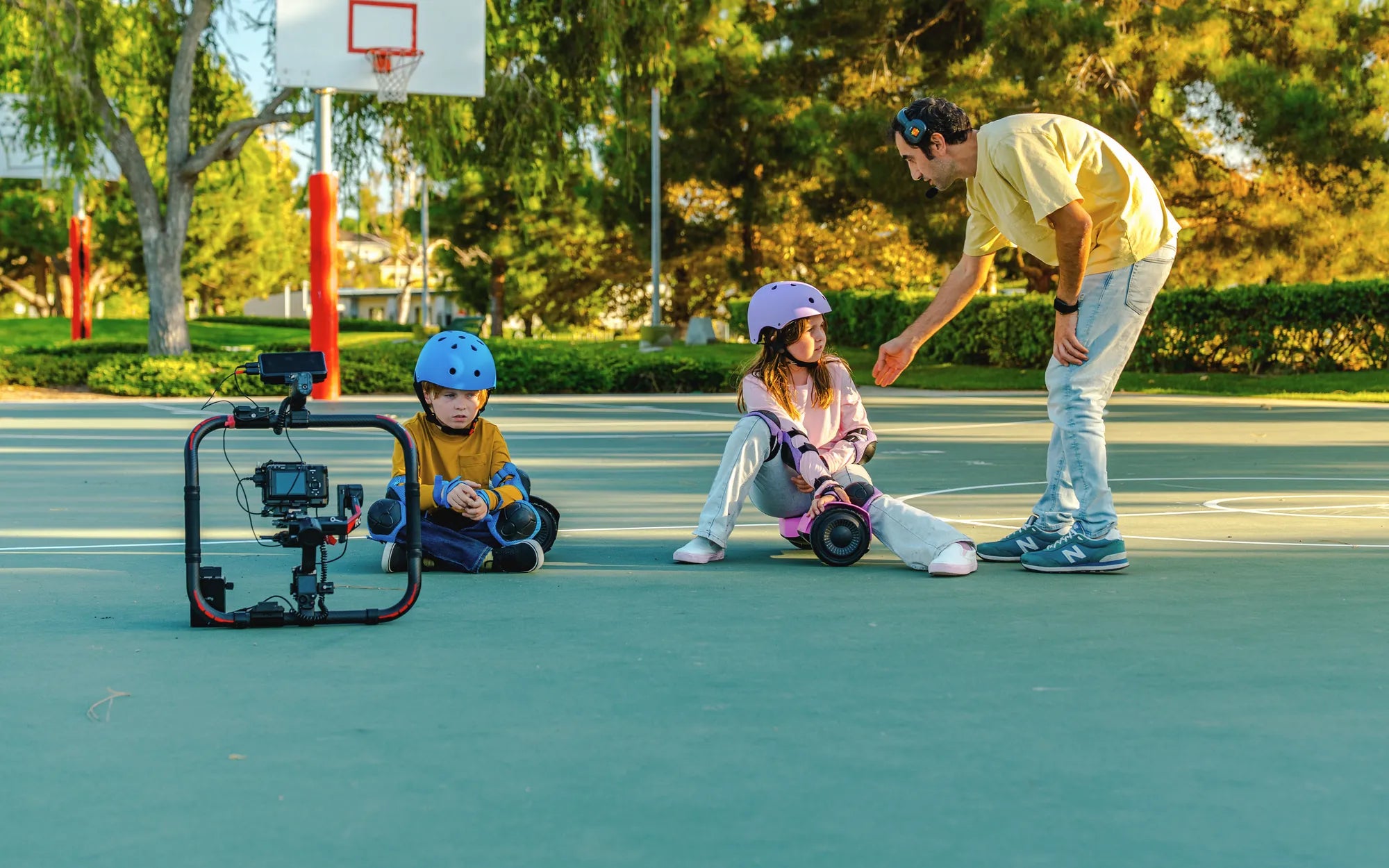
Ideal Practice Locations: Start in the safest possible environment. A smooth, level driveway (with the garage door closed to block access to the street), an empty tennis or basketball court, a school playground on a weekend, or a wide sidewalk in a quiet cul-de-sac are perfect. Indoors, a long hallway or clear space with hard flooring can work, provided there are no sharp corners or fragile items nearby.
Locations to Avoid: Steep hills, gravel paths, crowded parks, areas with vehicle traffic, and uneven terrain like cobblestones or grass (unless the board is specifically rated for all-terrain use). The goal is to minimize variables that could cause a loss of control.
By controlling the environment, you control the risk. This allows your child to focus entirely on mastering the board's controls without external hazards.
Maintenance and Care for Long-Lasting Fun
Proper maintenance ensures your mini hoverboard for 3 year old remains safe and functional for its entire lifespan. These simple routines are quick and prevent most common issues.
Pre-Ride Safety Check: Before each use, quickly inspect the board. Check for any loose parts, cracks in the body, or debris stuck in the wheels. Ensure the foot pads are clean and dry. Verify that the battery indicator shows adequate charge—avoid running the battery completely flat.
Battery Charging & Storage: Always use the provided, certified charger. Charge the board on a hard, non-flammable surface away from direct sunlight and flammable materials. Do not leave it charging unattended for extended periods or overnight. For long-term storage (over a month), charge the battery to about 50-60% and store in a cool, dry place.
Cleaning and Care: Wipe down the board with a slightly damp cloth after use, especially if it's been on dusty or slightly damp ground. Never hose it down or submerge it, even with an IPX5 rating. For wheels, remove pebbles or string that may have wrapped around the axles. The IPX5 water resistance is a safety feature against splashes, not a license for reckless exposure.
Tire Maintenance (if applicable): Some mini hoverboards use air-filled tires. Check the pressure monthly with a small gauge, inflating to the PSI specified in the manual. Proper inflation ensures optimal battery life, a smoother ride, and better control. Solid rubber tires require no inflation but should be checked for wear and tear.
Following these steps leverages the built-in durability of a well-made board. The water-resistant design and robust construction of brands like Gyroor are engineered to withstand kid-level use, but simple care extends that longevity significantly.
Frequently Asked Questions (FAQs)
Q1: Are mini hoverboards actually safe for a 3-year-old?
A: Yes, when you select a model built specifically for toddlers with essential safety features: a UL-certified battery, a speed limit under 4 mph, and a beginner mode. Safety is further ensured by mandatory protective gear (helmet, pads), constant adult supervision, and training in a controlled environment. The risk is managed through product selection and parental oversight.
Q2: How long does the battery last on a single charge, and how long does it take to charge?
A: For a mini hoverboard, expect 30 to 60 minutes of continuous ride time on a full charge, which is ample for a young child's attention span. Charging time typically ranges from 1.5 to 3 hours. Always follow the manufacturer's charging instructions precisely to preserve battery health.
Q3: Can it be used indoors?
A> Many can, provided you have a large, clear space with hard flooring (like laminate, vinyl, or sealed concrete). Ensure the area is free of clutter, sharp corners, and fragile items. Carpet can sometimes be too grippy for the wheels to turn easily. Start indoors only during the very first balance-familiarization steps with the power off.
Q4: What is the typical weight limit, and what happens if it's exceeded?
A: Most mini hoverboards for 3-year-olds have a weight limit between 44 and 66 lbs. Exceeding this limit can strain the motors, damage the frame, drain the battery excessively fast, and make the board unstable and unsafe to ride. Always adhere to the manufacturer's specified limit.
Q5: What does the warranty usually cover, and how do I get support if something goes wrong?
A: A good warranty, like Gyroor's 1-year coverage, typically protects against defects in materials and workmanship for the main board, with a shorter period (e.g., 6 months) for the battery. It does not cover damage from accidents, misuse, or neglect. For support, contact the brand's customer service via the website or manual. Reputable brands have accessible support channels and clear warranty claim processes.
Confidence on Wheels – Investing in Safe Adventures
Choosing the right mini hoverboard for 3 year old is a decision that balances excitement with responsibility. It's about providing a tool for adventure, growth, and joy, all within a framework of uncompromising safety. The key lies in prioritizing verified certifications, age-appropriate engineering, and a commitment to supervised, structured learning.
The dividends of this investment are clear: the proud smile of a child mastering a new skill, the improved balance and coordination that translate to other activities, and the shared experience of playful, outdoor fun. A well-chosen board from a trusted manufacturer is built to be a companion through these early milestones.
Brands that have earned the trust of over 100,000 riders, like Gyroor, do so by embedding safety into their design DNA—from UL-certified battery packs to IPX5 water-resistant construction. This engineering philosophy provides the peace of mind that allows the fun to flourish.
Your journey starts with informed selection, continues with patient training, and results in countless hours of confident exploration. Equip your young rider with the right board, the right gear, and the right knowledge. Watch as they discover not just how to ride, but the joy of movement and the confidence that comes from achieving a new challenge.
Ready to find the perfect, safety-first ride for your child? Browse the full collection of certified and durable mini hoverboards and scooters designed for young learners at Gyroor. Explore models built with the features discussed in this guide at gyroorboard.com.
Christmas Gift Ideas for Girls: Unique and Thoughtful Presents She'll Love
Hoverboard for Teenager: The Ultimate Guide to Fun and Safety