


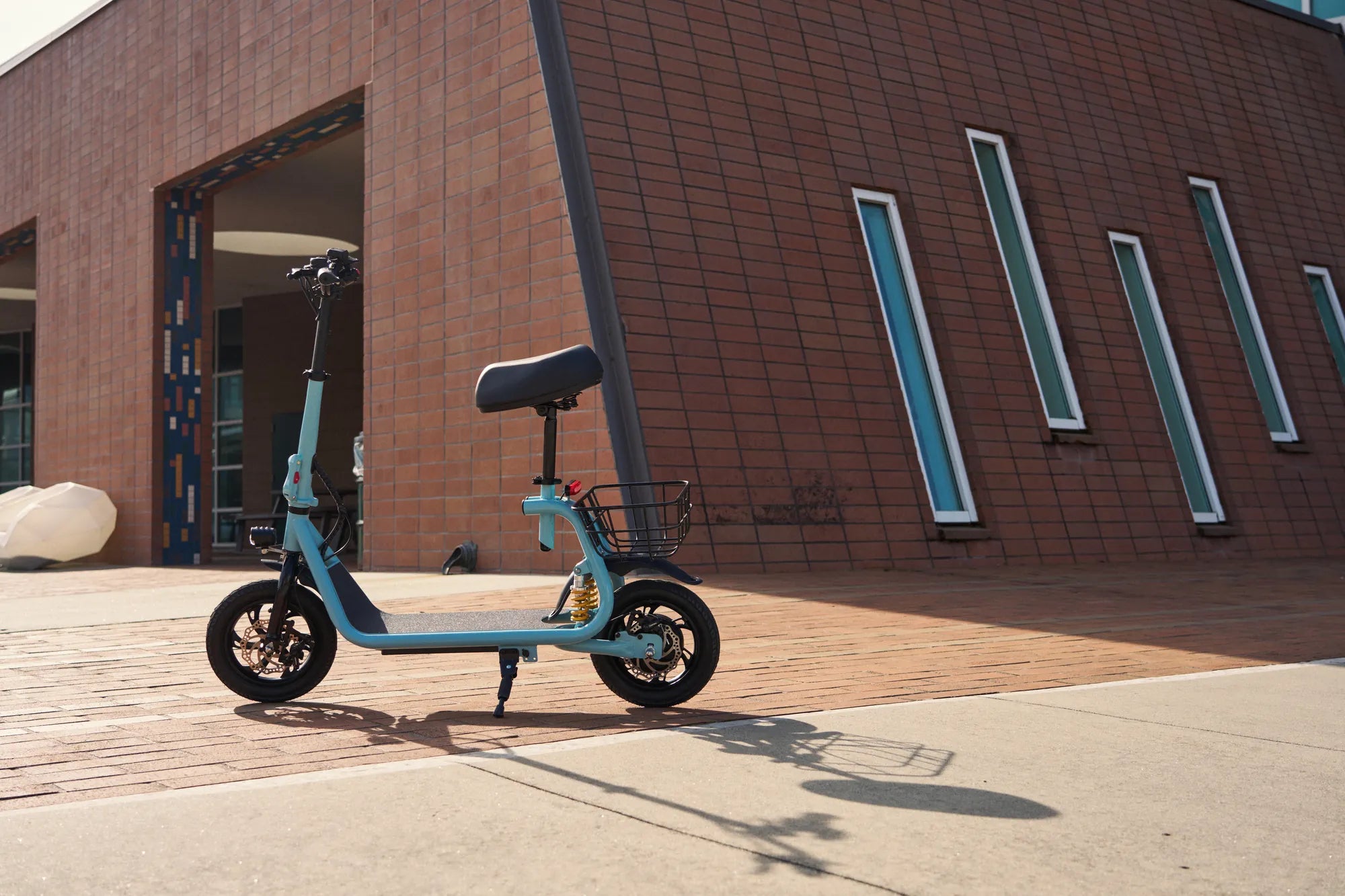
Introduction: The Rise of Personal Mobility and the Need for Power
For over 100,000 riders across North America and Europe, personal electric mobility devices like scooters and e-bikes have transformed daily commutes and errands. The true enabler of this freedom, however, isn't just the vehicle itself—it's access to a reliable mobility scooter charging point. This guide provides a comprehensive, data-driven look at charging infrastructure, strategic planning to conquer range anxiety, and essential safety practices. You will learn where to find power, how to use it responsibly, and why the foundation of stress-free travel is a scooter engineered for reliability, like those from Gyroor with their UL-certified battery systems.
Understanding Mobility Scooter Charging Points: More Than Just an Outlet
A mobility scooter charging point is any accessible electrical outlet compatible with your device's charger. While this often means a standard 110V/120V (North America) or 220V/240V (Europe) wall socket, the concept extends to dedicated public stations. The universal nature of charging is a key advantage; most mobility scooters and electric scooters use a proprietary charger that plugs into a common household outlet. However, compatibility hinges on voltage and amperage. Using a charger not specified for your region's voltage can cause severe damage.
The search for a charging point is less about specialized hardware and more about location, etiquette, and planning. Unlike the networked electric vehicle (EV) charging stations with specific connectors like J1772 or CCS, a mobility scooter charging point is far more ubiquitous but less formally mapped. This makes user knowledge and strategy paramount. The core requirement is simply a safe, legal, and considerate way to access mains electricity for a few hours.
The Anatomy of a Standard Charger
Understanding your charger demystifies the process. A typical charger consists of three main components: a standard AC plug, a transformer/rectifier unit, and a DC output connector that locks into your scooter's charging port. The transformer's crucial job is converting high-voltage alternating current (AC) from the wall into low-voltage direct current (DC) for the battery. Quality chargers, like those supplied with Gyroor scooters, include built-in safety features such as overcharge protection, short-circuit prevention, and temperature monitoring to ensure battery health across 500+ charge cycles.
Where to Find Mobility Scooter Charging Points: A Strategic Guide
Locating a mobility scooter charging point requires a blend of research, observation, and courtesy. The most reliable strategy involves identifying venue types that are public-facing, encourage longer visits, and have a vested interest in customer accommodation. Planning your route around these potential power sources can transform a potentially anxious journey into a confident one.
Public Spaces and Commercial Venues
Many public and commercial spaces are excellent, often underutilized, sources for a charge. Always prioritize asking staff for permission, which is both courteous and often leads to a better, safer outlet location.
- Shopping Malls & Large Retail Stores: Customer service desks or seating areas in food courts often have accessible outlets. These venues expect longer dwell times.
- Libraries & Community Centers: These are prime locations, designed for extended stays. Outlets are plentiful near study carrels or lounge areas.
- Cafes & Restaurants: While buying a coffee or meal is a good practice, many have outlets near seating. Avoid peak hours when table turnover is critical.
- Public Transit Hubs & Airports: Increasingly equipped with dedicated charging stations or workstations with integrated power. Check waiting areas and customer service zones.
- Parks & Recreational Areas: Look for covered pavilions, public restroom facilities, or outdoor entertainment stages which may have exterior-grade outlets.
Private Residences and Adaptive Planning
Home charging is your primary and most controlled mobility scooter charging point. Install your charger near a dedicated outlet, avoiding the long-term use of extension cords which can overheat. For visits to friends or family, communicate your needs ahead of time. When booking vacation rentals, filter for "accessible" properties or contact the host directly to confirm outlet availability in a secure space like a garage or covered porch. This proactive approach ensures you're never stranded.
Charging Etiquette, Safety, and Best Practices
Using a public mobility scooter charging point comes with a responsibility to be safe, considerate, and discreet. Adhering to good practices ensures these resources remain available and fosters positive perceptions of personal mobility users.
Safety First: Protecting Your Scooter and the Grid
Electrical safety is non-negotiable. Always use the manufacturer-provided charger. Third-party or generic chargers may not have the correct voltage regulation or safety cut-offs, risking battery damage or fire. This is why brands like Gyroor insist on UL-certified battery packs and compatible chargers. Inspect cords for fraying or damage before each use. Never charge a scooter in direct rain or snow unless the outlet and connection are fully weather-protected. Avoid charging on flammable surfaces and do not leave the scooter unattended for excessively long periods in unsecured public areas.
Being a Considerate User
Etiquette is about respect for others and the space you're using. A golden rule: never unplug another device to charge your own. If in a high-demand area like an airport, charge only as much as needed to reach your next destination, freeing the point for others. Keep your charging cable neatly routed to avoid creating a trip hazard. Always leave the area as you found it, or better. A positive interaction, like thanking a store manager, helps ensure the next rider is also welcomed.
Planning Your Journey: Charging Points and Range Anxiety
Range anxiety—the fear of running out of battery—is the primary psychological barrier to confident electric mobility use. It is defeated not by a larger battery alone, but by strategic planning centered around known mobility scooter charging point locations.
Calculating Your Real-World Range and Buffer
Manufacturer-stated range is a maximum achieved under ideal laboratory conditions. Your real-world range is affected by rider weight, terrain (hills drastically reduce range), tire pressure, temperature, and use of features like headlights. For a 300-lb capacity scooter with a 48V 15Ah battery, real-world range might be 18-25 miles, not 30. The critical strategy is to plan trips using only 70-80% of your known real-world range, maintaining a 20-30% safety buffer. This buffer is your margin for error, detours, or an unavailable charging point.
Tools and Strategies for Locating Power
While no universal app maps every standard outlet, a multi-pronged approach works best. Use Google Maps or Apple Maps to scout your route for libraries, cafes, and malls—then call ahead to confirm outlet accessibility. Some EV charging apps like PlugShare have a filter for "Standard Outlet (NEMA 5-15)." Physical reconnaissance is also valuable; note outlet locations during your regular travels. For reliable daily use, establishing a network of 3-4 verified charging points along your common routes provides immense peace of mind.
Comparison of Mobility Solutions and Charging Needs
Choosing the right device directly impacts your charging strategy. Here’s a data-driven comparison of common personal electric vehicles.
| Device Type | Typical Battery Capacity | Average Real-World Range | Full Charge Time* | Charging Point Needs | Best Use Case |
|---|---|---|---|---|---|
| Compact Electric Scooter (e.g., Gyroor F1 Pro) | 36V 10Ah | 15-20 miles | 4-6 hours | Frequent top-ups; ideal for urban errands with cafe stops. | Last-mile commute, urban exploration, campus travel. |
| High-Performance E-Scooter (e.g., Gyroor GX1) | 48V 15Ah | 25-35 miles | 6-8 hours | Overnight home charging; occasional public top-up for long trips. | Longer commutes, delivery riders, suburban travel. |
| Folding E-Bike (e.g., Gyroor C3) | 48V 10Ah | 30-40 miles (with pedal assist) | 4-6 hours | Less frequent charging; pedal assist extends range, reducing point dependency. | Mixed terrain, recreational trails, carrying cargo. |
| Traditional Mobility Scooter (3-Wheel) | 24V-48V 20Ah+ | 15-25 miles | 8-10 hours | Primarily home-based overnight charging; requires planned destinations for long outings. | Stable, lower-speed mobility for shopping, parks, and neighborhood travel. |
*Charge times vary based on charger amperage (e.g., a 2A charger is slower than a 4A charger).
FAQ: Your Mobility Scooter Charging Questions Answered
Can I use an electric vehicle (EV) charging station for my mobility scooter?
Almost universally, no. EV stations like Level 2 (J1772 connector) or DC Fast Chargers use different connectors, significantly higher voltage (240V+), and specialized communication protocols. Your scooter's charger is designed for a standard 110V/120V outlet. Attempting to force an adapter or modify your setup can cause catastrophic damage to the battery and electronics, voiding warranties and creating a serious safety hazard.
How long does a full charge usually take?
Charge time depends on battery capacity (measured in Amp-hours, Ah) and charger output (Amps, A). A simple formula: Battery Ah / Charger A = Hours. A 10Ah battery with a 2A charger takes about 5 hours. Most consumer scooters take between 4 to 8 hours for a full charge from empty. For daily use, you rarely need a full charge; a 1-2 hour top-up can often replenish enough for local trips.
What should I do if I can't find a charging point?
First, don't panic. Enter a nearby business like a grocery store, pharmacy, or bank and politely explain your situation—many will assist. As a last resort, use a rideshare or taxi that can accommodate your scooter. For future preparedness, consider investing in a portable backup power station (solar generator) that includes a standard AC outlet, ensuring you always have a personal, mobile mobility scooter charging point.
Does weather affect charging or using public points?
Yes, profoundly. Never charge your scooter in the rain or snow unless the outlet, charger, and scooter port are completely dry and protected. Moisture can cause short circuits, electric shock, and permanent damage. This highlights the importance of a scooter's build quality. Models with a high Ingress Protection rating, such as an IPX5 water-resistant design like several in Gyroor's lineup, offer crucial protection against accidental splashes during travel, though charging should still always occur in dry conditions.
Can I leave my scooter charging overnight?
At home, with a quality charger that has automatic shut-off at 100%, it is generally safe. Modern smart chargers, including those from reputable brands, switch to a maintenance "trickle charge" mode once full. However, for long-term battery health, it's often recommended to unplug once the charge indicator shows full. In a public setting, leaving your device unattended overnight is strongly discouraged due to theft risk and the need to free the outlet for others.
Conclusion: Empowering Your Journey with Confidence
Mastering the world of mobility scooter charging point access is the final step in claiming true independence on an electric scooter or e-bike. It combines practical knowledge—knowing where to look and how to ask—with technical understanding of your vehicle's needs and limits. This guide underscores that the most effective strategy blends careful planning with the use of dependable equipment engineered for real-world conditions. The confidence to explore further starts with a scooter built on a foundation of safety certifications like UL, durability features like IPX5 water resistance, and the backing of a comprehensive warranty. Ready to power your adventures with a trusted partner? Browse the full Gyroor collection at gyroorboard.com to find the perfect electric scooter or e-bike designed for reliability, performance, and peace of mind on every journey.
UAE Dirt Bike: The Ultimate Guide to Desert & Mountain Off-Roading
Best E-Bike Company: A 2024 Guide to Safety, Quality, and Value