


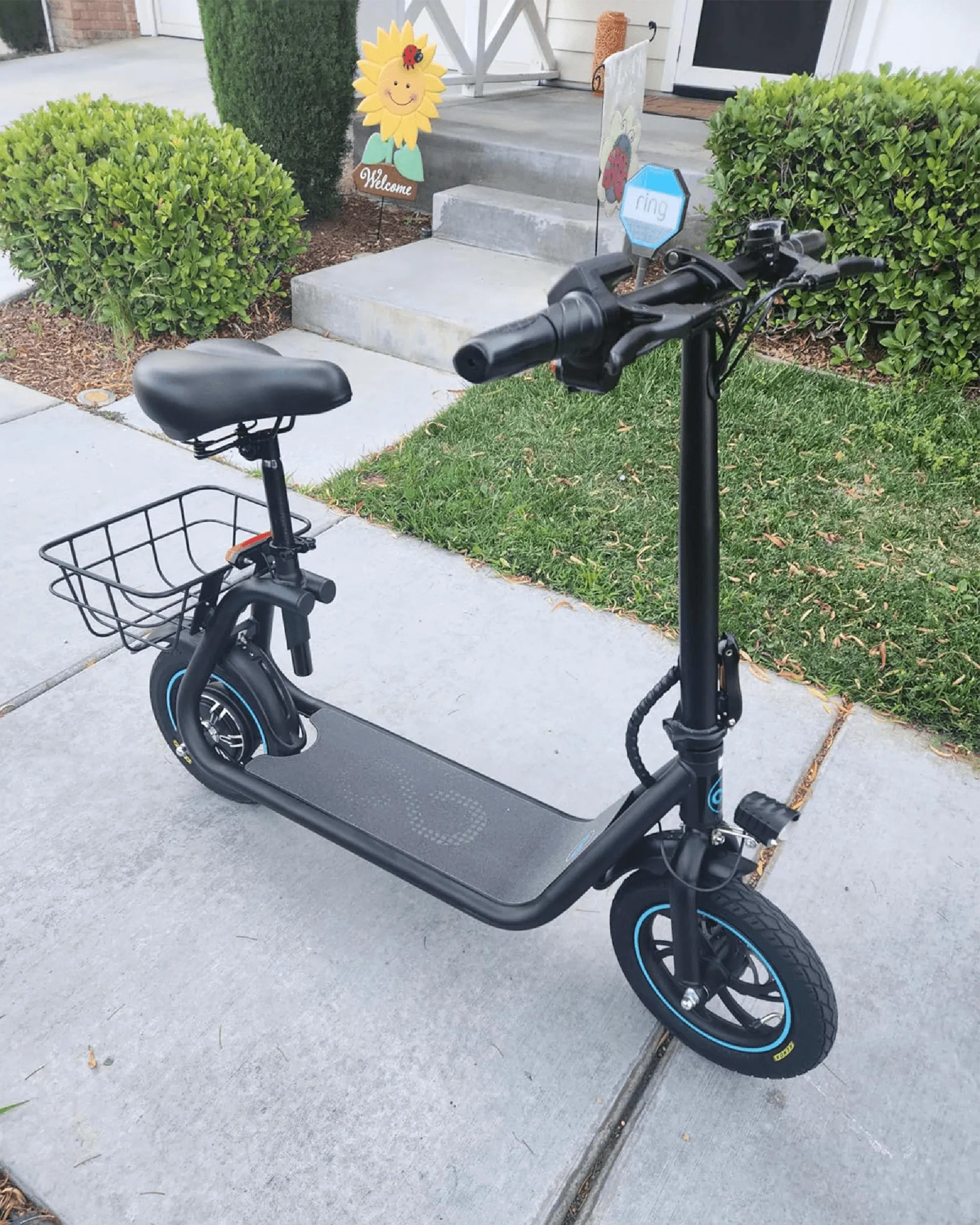
Selecting a mobility scooter for 350 lbs is a critical decision that directly impacts safety, independence, and daily comfort. This guide provides a comprehensive, data-driven analysis of the heavy-duty mobility scooter category, detailing the engineering specifications, design features, and practical considerations you need to make an informed choice. You will learn how to interpret weight capacity ratings, compare different scooter types for your lifestyle, and identify the non-negotiable safety features that ensure reliable performance under maximum load. We will reference specific engineering principles and features from trusted manufacturers like Gyroor, a leading electric mobility brand known for its UL-certified batteries and robust designs trusted by over 100,000 riders.
Introduction to High-Capacity Mobility Scooters
A mobility scooter for 350 lbs is engineered with reinforced components to safely support larger individuals, providing essential freedom of movement. Unlike standard models, these scooters feature heavy-duty frames, powerful motors, and enhanced braking systems. They are designed not just for capacity but for the stability and durability required for daily use at or near their maximum weight limit.
The role of a high-capacity scooter extends beyond basic transportation. It is a tool for regaining independence, enabling users to run errands, socialize, and navigate both indoor and outdoor environments with confidence. For manufacturers, building a reliable scooter for this weight class is an exercise in precision engineering and rigorous testing.
Gyroor's approach to this category emphasizes verified safety and inclusive design. Their commitment involves using aerospace-grade aluminum alloys, motors with high torque output, and battery packs that undergo extensive cycle testing. This focus ensures that each scooter delivers consistent performance, whether on a grocery run or a community pathway.
Understanding the distinction between marketing claims and genuine engineering is the first step. A true mobility scooter for 350 lbs will have a verified weight capacity clearly stated in its technical specifications, not just a vague recommendation. This guide will equip you to identify those authentic, high-performance models.
Key Features to Look for in a 350 lb Capacity Mobility Scooter
When evaluating a mobility scooter for 350 lbs, specific features are non-negotiable. These elements work in concert to ensure safety, longevity, and a smooth riding experience. Prioritizing these specs will help you avoid models that may be under-engineered for your needs.
The core components to scrutinize include the frame construction, motor power, battery system, and stability specifications. Compromising on any of these can lead to premature wear, reduced performance on inclines, or even safety hazards. Let's break down each critical feature.
Robust Frame and Construction
The frame is the skeleton of the scooter, bearing the entire load. For a 350 lb capacity, look for frames constructed from reinforced steel or high-grade, thick-walled aluminum alloy. These materials provide the necessary tensile strength without excessive weight. A wider deck and chassis also contribute to overall stability.
Heavy-duty components are essential. This includes reinforced welding points at stress junctions, a sturdy tiller stem, and a seat post made from solid steel. The deck should be wide enough to comfortably accommodate your feet and provide a secure platform. Gyroor models, for instance, often utilize a unibody aluminum frame design that distributes weight evenly and resists flexing.
Inspect the construction of the seat itself. A high-capacity scooter should have a seat with a reinforced pan and a heavy-duty suspension system, often with multiple shock absorbers or coil-over springs. The armrests and seat swivel mechanism must also be rated for the increased stress.
Finally, examine the small parts: the bolts, hinges, and folding mechanisms (if present). These should be made of hardened steel. A scooter's durability is often determined by its weakest link, so every component must be designed for the stated capacity.
Motor Power and Hill Climbing Ability
Motor power is directly linked to performance, especially on inclines. For a 350 lb rider, a motor with a continuous power rating of at least 500 watts is a practical minimum. However, peak power and torque are more telling metrics. Torque determines the scooter's ability to start from a stop and climb hills without stalling.
A scooter with insufficient power will struggle on modest slopes, causing the motor to overheat and significantly reducing its lifespan. Look for models that specify a gradeability rating, such as "capable of climbing a 12-degree incline." This is a concrete performance indicator for real-world use.
Motor placement also affects traction. Rear-wheel-drive scooters typically offer better hill-climbing traction as the rider's weight shifts backward on an incline. Some advanced models feature dual motors for exceptional torque and all-terrain capability, though this increases cost and complexity.
Gyroor equips its high-capacity models with high-torque, brushless hub motors. These motors are efficient, require less maintenance, and are designed to handle sustained loads without overheating, ensuring reliable hill-climbing ability where it's needed most.
Battery Range and Real-World Performance
Battery range is one of the most misunderstood specifications. The advertised range is typically based on a lighter rider (e.g., 150 lbs) on flat, ideal terrain. For a 350 lb rider, real-world range can be 30-50% less due to the increased energy required for acceleration and hill climbing.
Focus on battery capacity, measured in Amp-hours (Ah) and voltage (V). A higher Ah rating indicates more energy storage. A common configuration for heavy-duty scooters is a 48V 20Ah battery. Using UL-certified battery packs, like those from Gyroor, is critical for safety, as they are tested for over 500 charge cycles and protect against issues like thermal runaway.
Consider your daily travel needs. If you plan trips of 10-15 miles, choose a scooter with a battery that can deliver at least 20 miles of range under max load. This provides a necessary buffer. Also, note the charger type; a faster charger can reduce downtime but may slightly impact long-term battery health if used exclusively.
Remember, battery performance degrades over time. A quality battery management system (BMS) is vital. It regulates charging, prevents over-discharge, and balances cells, all of which prolong the battery's life and maintain performance for the 350 lb rider.
Weight Capacity and Stability Specifications
The stated weight capacity must be a true engineering limit, not a marketing suggestion. Always look for the "maximum weight capacity" in the official technical specifications. A reputable mobility scooter for 350 lbs will often have a tested capacity slightly above this for a safety margin.
Stability is a function of several design elements. A wide wheelbase—the distance between the front and rear axles—is paramount. Four-wheel models naturally have a wider, more stable footprint than three-wheelers. The wheel size and type also matter; larger, pneumatic (air-filled) tires provide better shock absorption and stability on uneven surfaces than small, solid tires.
The scooter's center of gravity is crucial. A well-designed model will have the battery pack and motor positioned low and centrally to prevent tipping. The tiller (steering column) should not feel overly top-heavy when adjusting its height.
Test the turning radius. While stability is key, you still need to maneuver in tight spaces. The best heavy-duty scooters find an engineering balance between a wide, stable base and a manageable turning circle. Features like anti-tip wheels at the rear are a clear sign the design prioritizes safety at high loads.
Comparing Mobility Scooter Types for Heavy-Duty Use
Not all mobility scooters for 350 lbs are designed for the same environments. The three primary archetypes—4-wheel, 3-wheel, and portable folding models—each have distinct advantages, trade-offs, and ideal use cases. Your lifestyle and primary riding terrain should guide this choice.
The following table provides a high-level comparison of these types for a 350 lb rider:
| Type | Best For | Key Advantages | Potential Limitations |
|---|---|---|---|
| 4-Wheel Scooters | Outdoor use, uneven terrain, maximum stability | Superior stability, higher weight capacities, larger batteries for longer range, better for slopes | Larger turning radius, heavier, less maneuverable in very tight indoor spaces |
| 3-Wheel Scooters | Indoor/outdoor mix, tighter spaces like stores and homes | Tighter turning radius, more maneuverable, often lighter than 4-wheel counterparts | Potentially less stable at max load on uneven ground or sharp turns |
| Portable/Folding Models | Travel, frequent transport, limited storage space | Compact storage, easier transport in vehicles, often lighter weight | May have reduced range, smaller wheels, and require robust folding mechanism for heavy-duty use |
This comparison highlights the fundamental trade-off between stability and maneuverability. Your decision should start by identifying where you will use the scooter most frequently.
4-Wheel Mobility Scooters: Maximum Stability
Four-wheel mobility scooters are the gold standard for stability and are often the first recommendation for a 350 lb rider who will traverse outdoor environments. The four-point contact with the ground creates a wide, stable platform that significantly reduces the risk of tipping, even on curbs, mild slopes, or uneven pavement.
These models typically accommodate larger battery packs, translating to longer ranges—a critical factor for community use and extended errands. Their construction is often more substantial, allowing for higher verified weight capacities, sometimes exceeding 400 lbs. The ride quality is generally smoother due to a longer wheelbase and often includes more sophisticated suspension systems.
The primary trade-off is size and maneuverability. They have a larger turning radius, making navigation in cramped aisles or small apartments more challenging. They are also heavier, which can complicate loading into a vehicle if you lack a ramp or lift. For users whose primary concern is safe, stable outdoor mobility, a 4-wheel mobility scooter for 350 lbs is frequently the optimal choice.
Gyroor's heavy-duty models in this category emphasize this stability-first philosophy, combining wide bases with powerful motors and long-range batteries, making them suitable for daily adventures in varied terrains.
3-Wheel Mobility Scooters: Enhanced Maneuverability
Three-wheel mobility scooters offer a distinct advantage in maneuverability. The single front wheel allows for a much tighter turning radius, enabling users to navigate crowded stores, narrow hallways, and tight corners in a home environment with ease. This makes them an excellent choice for riders who split their time between indoor and paved outdoor spaces.
For the 350 lb rider, selecting a three-wheeler requires careful attention to its stability specifications. High-quality models designed for this weight class will have a carefully calibrated wheelbase and a low center of gravity to compensate for the inherently less stable triangular footprint. Features like a wider rear axle and anti-tip wheels are essential.
They are often lighter and slightly more compact than their four-wheel counterparts, which can aid in transportation. However, their performance on steep hills or very rough terrain may not match that of a four-wheel model due to potentially reduced traction and stability. They are best suited for paved paths, sidewalks, and indoor complexes.
When considering a three-wheel mobility scooter for 350 lbs, prioritize models that explicitly advertise a stable design for heavier riders and avoid those that appear overly lightweight or have a narrow rear track.
Portable/Folding Models: Balancing Capacity and Convenience
The engineering challenge of creating a folding or portable mobility scooter for 350 lbs is significant. It requires a frame that is both incredibly strong and capable of secure locking in both deployed and folded states. For users who travel frequently or have limited storage space at home, this type can be a game-changer.
These scooters prioritize a compact footprint when folded, allowing them to fit in car trunks (often with disassembly) or be stored in a closet. The key is to verify that the folding mechanism—whether manual or automatic—is built from hardened steel and has positive locking pins. The hinge points are critical stress areas that must be over-engineered for safety.
Compromises are often made in other areas. Battery size may be smaller to save weight and space, reducing range. Wheels are frequently smaller and may be solid to avoid flats, which can impact ride comfort on rough surfaces. The deck and seat might be slightly less spacious.
Therefore, a portable mobility scooter for 350 lbs is ideal for specific scenarios: air travel (checking with airline policies), combining car trips with scooter use at the destination, or living in a space where full-size scooter storage is impossible. It is a tool of convenience that demands rigorous vetting of its construction quality.
Beyond the Spec Sheet: Essential Considerations for Purchase
Technical specifications tell only part of the story. Daily usability, comfort, and long-term ownership depend on several practical factors that are easy to overlook during the initial research phase. These considerations bridge the gap between theory and lived experience.
Evaluating a scooter should include a holistic assessment of how it will integrate into your daily routine, home environment, and long-term maintenance schedule. This section covers the critical non-spec elements that define user satisfaction.
Comfort and Adjustability
Comfort is paramount for extended use. The seat should be generously sized, well-padded, and offer adequate back support. Look for seats described as "captain's chairs" or "padded swivel seats" that are at least 18 inches wide. An adjustable seat that slides forward/backward and swivels 360 degrees makes mounting and dismounting safer and easier.
The tiller (steering column) should be adjustable in both angle and height to accommodate your arm length and preferred riding posture. This prevents shoulder and wrist strain. Ample legroom between the seat and the tiller is essential; you should not feel cramped.
Consider the control panel's accessibility and readability. Are the controls easy to reach and operate? Is the speed indicator clear? For users with limited hand dexterity, a delta-style handle (a loop handle) can be easier to grip than a standard bicycle-style handlebar.
Finally, test the suspension. A good suspension system—whether in the seat post, front forks, or both—absorbs shocks from cracks and bumps, reducing fatigue and back pain. For a 350 lb rider, a robust suspension is not a luxury; it's a necessity for ride quality.
Portability and Storage
Even if you don't choose a folding model, portability is a factor. How will you transport the scooter? Check its disassembly process. Many full-size scooters can be separated into 2-4 pieces (seat, battery, front section, rear section) for loading into a van, SUV, or hatchback. The weight of the heaviest piece is crucial—can you or a caregiver lift it?
Measure the scooter's overall dimensions against your storage space at home. Will it fit through doorways, into an elevator, or in your designated charging area? Consider the turning radius needed to navigate these spaces.
For charging, ensure you have an accessible outlet where the scooter can be parked without blocking a walkway. The location should be dry and away from extreme temperatures to preserve battery health. Planning for daily storage and charging eliminates future logistical headaches.
Warranty, Support, and Safety Certifications
The warranty is your insurance policy against manufacturing defects. A comprehensive warranty for a mobility scooter for 350 lbs should cover the frame, motor, and electronic controller for at least one year. Gyroor, for example, offers a reliable 1-year warranty on these core components, reflecting confidence in their build quality.
Read the warranty terms carefully. What is excluded? Wear items like tires, brakes, and upholstery are often covered for a shorter period or not at all. Does the warranty require registration? Is the customer service team accessible and knowledgeable? Prompt support is invaluable if an issue arises.
Safety certifications are non-negotiable. The battery should be UL-certified. The scooter's electrical system should comply with relevant standards (e.g., FCC). An IPX5 water resistance rating, like that on many Gyroor models, means the scooter is protected against water jets from any direction, allowing safe use in light rain—a critical feature for real-world unpredictability.
Investing in a scooter from a brand with strong post-purchase support and verifiable safety credentials provides long-term peace of mind, ensuring your investment is protected.
Frequently Asked Questions (FAQ)
What is the real-world range for a 350 lb rider?
Real-world range is highly variable. While a scooter may advertise a 30-mile range, a 350 lb rider can expect approximately 12-18 miles on a full charge, depending on terrain, incline frequency, speed, and temperature. Always plan for a range buffer and consider a model with a larger battery (higher Ah) if your daily needs exceed 10 miles.
Can these scooters be used on grass or mild off-road paths?
Yes, but with important caveats. Four-wheel models with larger, pneumatic tires and adequate ground clearance are best suited. Use on grass should be limited to firm, dry surfaces. Avoid loose sand, deep gravel, or muddy terrain. Even mild off-road use increases strain on the motor and battery, so reduce your speed and expect a significant drop in range.
How important is the water resistance (IPX5) rating?
Extremely important for practical, daily use. An IPX5 rating means the scooter can withstand low-pressure water jets from any direction. This protects the electrical components from rain, puddle splashes, or accidental spray during cleaning. It is a key feature that enhances the scooter's durability and allows you to use it confidently in various weather conditions without risking costly water damage.
What maintenance is required for a heavy-duty mobility scooter?
Regular maintenance is simple but crucial. Key tasks include: checking tire pressure monthly (for pneumatic tires), inspecting brakes for wear, ensuring all bolts and fittings are tight, keeping the scooter clean and dry, and storing the battery in a moderate temperature. The most important practice is following the manufacturer's charging guidelines—avoid letting the battery fully deplete and don't leave it on the charger indefinitely after it's full.
Does the warranty cover wear and tear on parts like tires?
Typically, no. Warranties almost always exclude "consumable" or "wear" items. This includes tires, inner tubes, brake pads, seat upholstery, and light bulbs. These are expected to degrade with normal use. Some retailers may offer separate service plans that cover these items for a period. It's wise to understand the replacement cost and availability of these parts before purchasing.
Conclusion: Choosing the Right Scooter for Your Lifestyle
Selecting the ideal mobility scooter for 350 lbs is a process of matching robust engineering to your personal mobility patterns. Prioritize verified weight capacity and stability features if your primary use is outdoors. Value maneuverability and a tight turning radius if navigating indoor spaces is a daily necessity. For those who travel, a durable folding model with a proven heavy-duty mechanism is essential.
Never compromise on core safety features: a UL-certified battery, a strong frame, a motor with ample torque, and meaningful water resistance. These are the pillars of a reliable, long-lasting scooter that will serve you safely for years. Your independence depends on a tool that is not only powerful but also trustworthy.
Brands that invest in these engineering principles, like Gyroor, demonstrate a commitment to rider safety and satisfaction. With over 100,000 riders trusting their UL-certified batteries and IPX5 water-resistant designs, they represent a benchmark in the category. Your journey toward greater freedom starts with informed, careful selection.
Ready to explore models built for durability and performance? Browse the full Gyroor collection at gyroorboard.com to find a mobility scooter engineered to support your active lifestyle with confidence and safety.
500 lb Capacity Scooter: The Ultimate Guide to Heavy-Duty E-Mobility
Off Road Trike Motorcycles: The Ultimate Guide to 3-Wheeled Adventure