



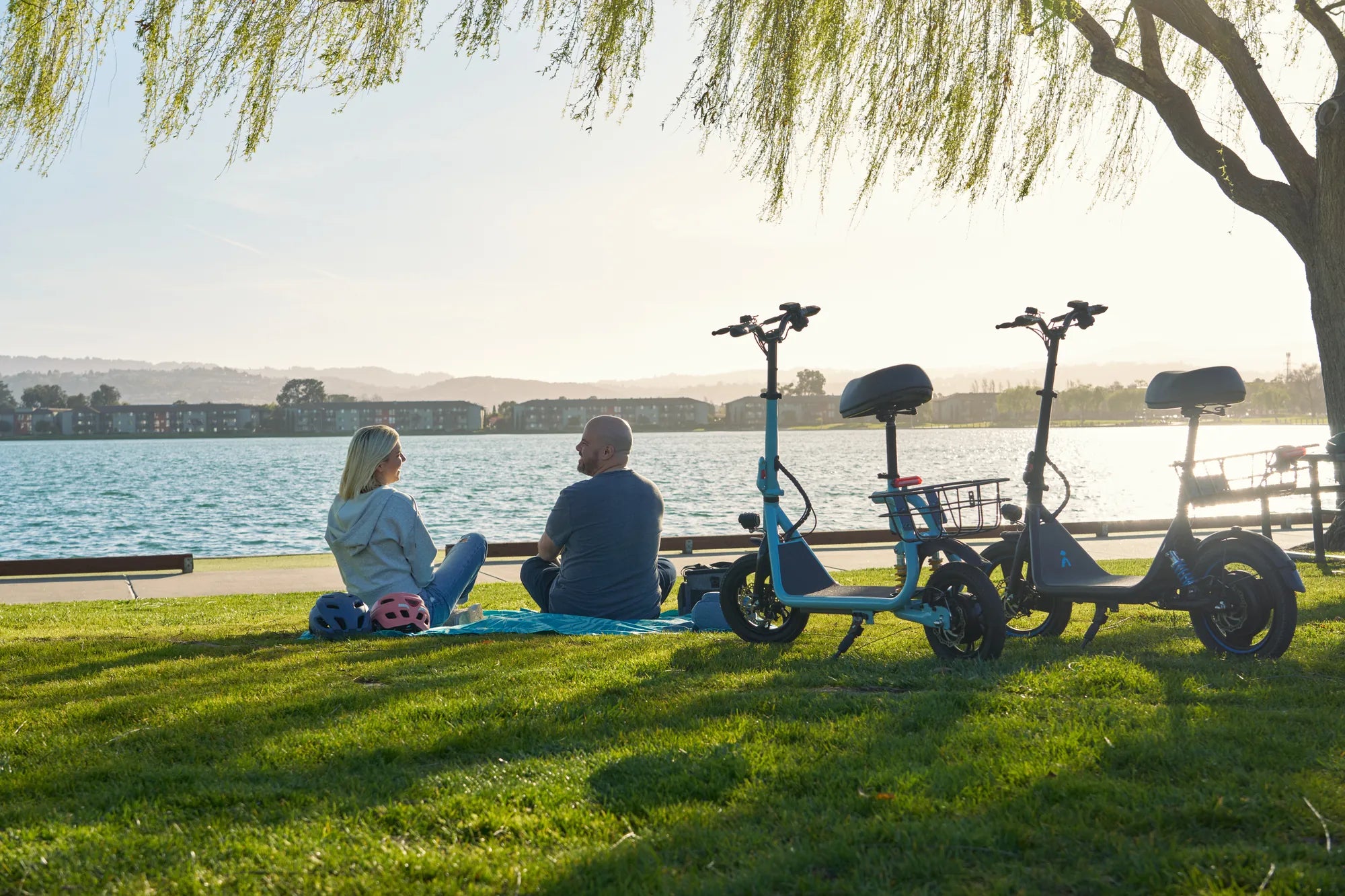
Embracing Freedom and Safety with Outdoor Scooters for Seniors
An outdoor scooter for elderly individuals is far more than a simple vehicle; it's a key to independence, social engagement, and the simple joy of being outside. For seniors facing mobility challenges, navigating uneven sidewalks, park paths, or a trip to the local store can feel daunting. A well-designed electric mobility scooter bridges this gap, transforming limited movement into expansive freedom.
This guide will provide a detailed, data-driven analysis of what makes an outdoor scooter safe, comfortable, and reliable for senior riders. You will learn how to evaluate critical features from wheel configuration to battery certification. We will also explore why brands like Gyroor, with over 100,000 riders globally, engineer specifically for the confidence of older adults, prioritizing safety features that allow for worry-free exploration.
The goal is to empower you with knowledge. Choosing the right outdoor scooter for elderly family members or for yourself is an investment in quality of life. It requires moving beyond basic specifications to understand how design directly impacts stability on real-world terrain and provides peace of mind through robust warranties and proven components.
Key Considerations When Choosing an Outdoor Scooter for Seniors
Selecting an outdoor scooter for elderly riders involves a careful assessment of needs that prioritize safety and ease of use over raw speed or power. The ideal model must compensate for potential reductions in strength, balance, and reaction time, offering a stable, intuitive, and comfortable riding experience. This decision impacts daily independence, making it crucial to focus on engineering built for real-world conditions.
The primary use case defines many requirements. Will the scooter be used for leisurely rides on paved park trails, trips to the grocery store, or navigating community events? Each scenario demands a scooter with adequate range, terrain capability, and storage options. An outdoor scooter for elderly users must be versatile enough to handle mild slopes, sidewalk cracks, and occasional damp pavement without compromising security.
Weight capacity and scooter weight itself are two distinct but vital metrics. The weight capacity must comfortably exceed the user's weight, including any carried items, to ensure structural integrity and motor performance. The scooter's own weight, however, impacts portability—whether it can be disassembled for car transport or is intended to be a dedicated outdoor vehicle. Balancing these factors is key.
Finally, consider the user's physical capabilities. Can they easily mount and dismount? Are the controls within comfortable reach and easy to understand? A scooter that feels intuitive from the first use reduces the learning curve and builds immediate confidence, which is the foundation of safe and frequent use. The right outdoor scooter for elderly riders feels like a natural extension of their mobility.
Stability and Wheel Configuration
Stability is the non-negotiable foundation for any outdoor scooter for elderly riders. It begins with the wheelbase and tire design. A wider wheelbase—the distance between the centers of the front and rear wheels—dramatically increases lateral stability, reducing the risk of tipping during turns. For outdoor use, a longer wheelbase also improves handling over minor bumps and uneven surfaces.
Tire choice is equally critical. Large, pneumatic (air-filled) tires, typically 8.5 inches or 10 inches in diameter, provide essential shock absorption. They smooth out vibrations from cracks, cobblestones, and gravel, protecting the rider's spine and joints. This contrasts sharply with small, solid rubber tires common on indoor models, which transmit every bump directly to the user and offer poor traction on loose or wet surfaces.
The number of wheels is a fundamental design choice. Three-wheel scooters offer a tighter turning radius, excellent for navigating crowded spaces or narrow paths. Four-wheel models provide superior stability, especially on slopes or uneven ground, making them the preferred choice for those who prioritize a rock-solid feel. Both configurations for an outdoor scooter for elderly use must have a low center of gravity, often achieved by placing the heavy battery pack low in the frame.
Suspension systems, while not universal, are a premium feature that enhances comfort and control. A basic spring or more advanced hydraulic suspension on the front or rear wheels works in tandem with pneumatic tires to dissipate impact energy. This engineering detail is a clear indicator of a scooter built for active outdoor use, ensuring a planted, comfortable ride even on less-than-perfect pavement.
Comfort and Adjustability
Comfort directly correlates to how long and how often a senior will use their scooter. It starts with the seat. A high-quality outdoor scooter for elderly users features a generously padded, contoured seat with ample width and depth. A high-back seat with lumbar support is essential for maintaining proper posture and reducing fatigue on longer journeys, such as a trip through a botanical garden or to a distant park bench.
Adjustability personalizes the fit. The seat should adjust both in height and fore/aft position, while the tiller (the steering column) should offer telescopic or angle adjustment. This allows the rider to find a position where their feet rest flat on the footboard, their back is supported, and their hands fall naturally on the controls. An ergonomically correct position prevents strain and ensures full control.
The ride quality itself is a component of comfort. As mentioned, pneumatic tires and suspension are paramount. Additionally, the footboard should be spacious and covered with a non-slip material. Armrests, preferably padded and adjustable, provide additional support and a sense of security. For an outdoor scooter for elderly riders, these features combine to create a cockpit that feels secure and comfortable for extended periods.
Finally, consider environmental comfort. Does the scooter offer optional accessories like a weather canopy for sun or light rain protection? Is there a storage basket or compartment within easy reach? These elements transform the scooter from a mere transporter into a practical, enjoyable vehicle for daily life and leisure, encouraging regular use and social interaction.
Safety Features and Ease of Control
Safety in an outdoor scooter for elderly users is engineered through intuitive design and redundant systems. The control mechanism is the primary interface. A simple thumb-lever or paddle for acceleration and braking is ideal, requiring minimal hand strength and offering precise, variable control. This is far safer and less intimidating than a twist-grip throttle, which can be harder to modulate for those with arthritis or reduced dexterity.
Lighting and visibility are critical for safety, even during daytime rides. Bright LED headlights illuminate the path ahead in low-light conditions, while automatic running lights increase the scooter's visibility to others. Integrated brake lights and turn signals (often with audible indicators) are essential features for communicating intentions to pedestrians and vehicles, making the rider predictable and seen.
The braking system must be reliable and easy to activate. Many quality outdoor scooters employ an electromagnetic (regenerative) braking system that slows the scooter when the throttle is released, supplemented by a mechanical disc or drum brake for positive stopping power. This two-system approach ensures a safe, gradual stop in all conditions. Anti-tip wheels at the rear are another common safety feature.
The control panel should be simple, uncluttered, and easy to read. A clear display showing speed, battery level, and lighting status is sufficient. Avoid overly complex digital dashboards with unnecessary information. The ultimate goal is for the operation to become second nature, allowing the rider to focus on their environment and enjoy the journey without anxiety over the controls.
Battery Range and Practical Use
Battery range is often the first specification reviewed, but it must be understood in context. A manufacturer's stated range (e.g., 15-25 miles) is typically a best-case scenario on flat, smooth terrain with a lightweight rider. Real-world range for an outdoor scooter for elderly use is affected by hills, frequent stops and starts, rider weight, tire pressure, and even ambient temperature.
A practical approach is to estimate daily needs and then double them. If a senior's typical daily route to the park, store, and back home totals 3 miles, a scooter with a 10-mile real-world range provides a comfortable buffer. This prevents "range anxiety" and ensures the battery isn't consistently drained to zero, which extends its overall lifespan. Planning for less than full capacity is a key part of practical use.
Beyond range, battery safety and longevity are paramount. This is where certification matters most. A UL-certified battery pack, like those used in all Gyroor models, has undergone rigorous independent testing for electrical, mechanical, and fire safety. It is engineered to prevent overcharging, short-circuiting, and thermal runaway. For a senior rider or their family, this certification is a critical indicator of a responsible, safety-first brand.
Charging convenience is also a factor. A removable battery allows for easy charging indoors without bringing the entire scooter inside. Look for batteries that can complete a full charge in 4-8 hours. A long-lasting battery rated for 500+ charge cycles (like Gyroor's) represents years of reliable service, making the investment in a quality outdoor scooter for elderly mobility a long-term solution.
Why Gyroor Scooters Are Engineered for Senior Confidence Outdoors
Gyroor's design philosophy directly addresses the unique needs of senior riders, translating the general considerations of stability and safety into specific, reliable engineering. With a trusted community of over 100,000 riders, Gyroor focuses on building confidence through durability, certified safety, and comprehensive support. This approach makes their scooters a standout choice for an outdoor scooter for elderly individuals seeking worry-free independence.
The brand's extensive lineup of 20+ models includes specific mobility scooters designed from the ground up for comfort and control, not adapted from commuter-focused designs. This senior-first mindset is evident in features like wide, padded seating, intuitive thumb controls, and stable four-wheel configurations. It’s engineering that respects the user's need for security without compromising on the freedom to explore.
Gyroor’s commitment extends beyond the product to the ownership experience. The standard 1-year comprehensive warranty on the vehicle and battery provides significant peace of mind, covering manufacturing defects and performance issues. This warranty, backed by accessible customer support, ensures that a senior's mobility solution is protected, making the initial investment secure and justifiable for the long term.
Ultimately, choosing a Gyroor scooter means selecting a partner in mobility. The combination of UL-certified batteries, IPX5 water-resistant construction, and ergonomic design creates a product that seniors can trust in real-world conditions. This trust is the foundation upon which true independence is rebuilt, allowing riders to reclaim their outdoor spaces with assurance and joy.
Built for Real-World Terrain: IPX5 and Durability
Outdoor use is unpredictable. A sudden drizzle, a damp morning path, or puddle splashes should not end a ride or damage the scooter. This is where Gyroor's IPX5 water-resistance rating becomes a crucial feature for an outdoor scooter for elderly riders. The IPX5 designation means the scooter's electrical components are protected against water jets from any direction, making it resilient against light rain and wet conditions.
This engineering specification directly impacts usability and longevity. A senior can confidently plan a trip without constantly checking the weather radar, knowing a brief shower won't cause a malfunction. It also protects the scooter from common hazards like sprinkler overspray or damp grass. This durability reduces maintenance worries and reinforces the scooter's role as a reliable daily tool, not a fair-weather novelty.
The frame construction complements this weather resistance. Gyroor utilizes high-strength steel or aluminum alloys in their mobility scooter frames, designed to withstand the vibrations and stresses of outdoor pavement. Robust fenders protect the rider and the scooter's mechanics from road debris. Every aspect is considered for durability, ensuring the scooter remains a dependable companion through seasons of use.
For families, this durability translates to value. An investment in a rugged, water-resistant outdoor scooter for elderly family members is protected against common environmental factors that could sideline a less robust model. It’s an investment that promises consistent performance, ensuring the scooter is ready to go whenever the rider is, fostering spontaneous outings and sustained mobility.
Safety from the Ground Up: UL-Certified Batteries
The battery is the heart of an electric scooter, and its safety is non-negotiable, especially for senior users who may charge the scooter in their home. Gyroor's commitment to safety is unequivocally demonstrated by its use of UL-certified lithium-ion battery packs across its entire lineup. This certification is not a marketing buzzword; it is evidence of passing some of the most stringent independent safety tests in the world.
UL certification involves testing for overcharge, short circuit, abnormal charging, forced discharge, and impact. Batteries that pass are far less likely to experience thermal runaway—a dangerous chain reaction leading to fire. For an older adult living independently or in a community setting, this certification provides immense peace of mind to both the rider and their loved ones. It is a fundamental feature of a responsible outdoor scooter for elderly users.
These certified batteries are also engineered for performance and longevity. Rated for 500+ full charge cycles, they are designed to retain capacity over years of regular use. This means the practical range of the scooter remains consistent, preventing the frustration of a rapidly diminishing travel radius. Consistent performance is key to maintaining a routine and the independence that comes with it.
When comparing scooters, the presence of a UL certification should be a primary filter. It reflects a manufacturer's commitment to safety over cost-cutting. Gyroor’s decision to standardize this feature underscores their brand promise: to deliver mobility solutions that empower without compromising on the fundamental requirement of safety for their riders, particularly the elderly.
Peace of Mind Riding: The 1-Year Comprehensive Warranty
A warranty is a promise of reliability and a safety net for the owner. Gyroor's standard 1-year comprehensive warranty on its mobility scooters is a strong statement about the quality and durability of its products. This warranty typically covers the frame, motor, controller, and battery against defects in materials and workmanship, providing full repair or replacement services.
For a senior purchaser, a robust warranty mitigates the fear of a costly, unexpected repair. The mechanical and electrical systems of an outdoor scooter for elderly riders are complex, and knowing that the manufacturer stands behind them for a full year allows the user to focus on enjoying their mobility rather than worrying about potential breakdowns. It transforms a purchase from a risk into a secure investment.
The value is amplified by accessible customer support. A warranty is only as good as the service behind it. Gyroor's support structure is designed to assist owners efficiently, providing clear guidance for troubleshooting and facilitating repairs. For seniors who may not be technically inclined, this supportive, hassle-free service model is essential for a positive long-term experience with their scooter.
This comprehensive coverage also speaks to the brand's confidence in its own engineering. By offering a substantial warranty, Gyroor signals that its products are built to last and perform as advertised. For families helping an elderly relative choose an outdoor scooter, this warranty offers a tangible layer of financial and practical security, ensuring the chosen solution will serve reliably as a key tool for independence.
Comparing Scooter Types: Mobility Scooters vs. Electric Kick Scooters
Understanding the fundamental categories is essential before selecting an outdoor scooter for elderly use. The term "scooter" can refer to two very different vehicles: traditional electric mobility scooters and stand-up electric kick scooters. Their design, purpose, and suitability for seniors are worlds apart. The following table provides a clear, data-driven comparison to guide the decision.
| Feature | Outdoor Mobility Scooter (e.g., Gyroor C1 Series) | Electric Kick Scooter |
|---|---|---|
| Primary User | Seniors or individuals with mobility limitations seeking stable, seated transport. | Younger, agile commuters and urban travelers. |
| Seating & Posture | Padded, swivel seat with high backrest and armrests for full support. | Standing only; requires continuous core engagement and balance. |
| Stability & Wheels | Very High. 3 or 4 wheels, wide wheelbase, large pneumatic tires (8.5"-10"), low center of gravity. | Moderate to Low. 2 small wheels (8"-10"), solid or air-filled, high center of gravity. |
| Terrain Handling | Pavement, packed trails, mild slopes, sidewalk cracks. Built for varied outdoor surfaces. | Smooth pavement only. Vulnerable to cracks, gravel, and uneven surfaces. |
| Ease of Use & Learning | Very Easy. Simple thumb-lever controls, seated operation, intuitive forward/reverse. | Requires good balance, coordination, and practice to accelerate, brake, and turn safely. |
| Safety Features | Comprehensive: Headlights, brake lights, turn signals, anti-tip wheels, electromagnetic brakes. | Basic: Often just a headlight and rear reflector. Braking can be abrupt. |
| Best For | Leisurely rides, shopping errands, visiting friends, navigating community events. | Short, fast point-to-point trips in urban environments with perfect infrastructure. |
| Portability | Often disassemblable or foldable for car transport; not for carrying. | Designed to fold and be carried or rolled alongside. |
As the table illustrates, an electric kick scooter is fundamentally unsuited for the vast majority of elderly riders. Its requirement for standing balance, quick reflexes, and tolerance for vibration makes it impractical and unsafe for those with mobility or stability concerns. The standing posture alone can be exhausting and risky over any distance.
Conversely, a dedicated mobility scooter is engineered precisely to address these concerns. The seated position eliminates fatigue and fall risk. The multi-wheel stable platform inspires confidence. The controls are simplified and accessible. When searching for an outdoor scooter for elderly use, the category is clear: a seated electric mobility scooter designed for outdoor durability is the only appropriate choice for safety, comfort, and independence.
FAQ: Outdoor Scooters for Elderly Riders
Q: Are outdoor mobility scooters difficult to learn to use?
A: Not at all. Models like those from Gyroor are designed for intuitive operation. They feature simple thumb-lever acceleration and braking, straightforward forward/reverse switches, and easy-to-read displays. Most users become comfortable with basic operation within minutes, and full confidence develops over a few short rides in a safe, open area.
Q: Can I take my mobility scooter on public transportation or in a car?
A> Many modern outdoor scooters are designed for portability. Key features to look for include a lightweight frame, a quick-disconnect battery for easier lifting, and a frame that folds or can be easily disassembled into major components (often with tools provided). Always check the specific model's weight and disassembly process, and contact your local transit authority for their scooter policy.
Q: What regular maintenance does an outdoor scooter require?
A> Maintenance is minimal but important. Primary tasks include: keeping the battery charged (avoiding complete discharge), checking and maintaining proper tire pressure in pneumatic tires, and keeping the scooter clean, especially after riding in wet or dusty conditions. Periodically check for loose bolts or connections. Gyroor's 1-year warranty covers major component failures, providing additional security.
Q: Is it safe to ride a scooter in the rain?
A> Scooters with an IPX5 water-resistance rating, like Gyroor's outdoor models, are protected against light rain and water splashes from all directions. This means you can confidently ride in a drizzle or on damp paths. However, they are not submersible and should not be ridden through deep puddles or heavy downpours. Always exercise caution, reduce speed on wet surfaces, and ensure lights are on for visibility.
Q: How do I know what weight capacity or range I need?
A> Always choose a scooter with a weight capacity that exceeds your total weight (including clothing and any items you'll regularly carry) by a margin of 20-30%. This ensures performance and longevity. For range, map out your typical daily or weekly trips and calculate the total distance. Choose a scooter whose real-world range (estimate 60-70% of the advertised maximum) is at least double that distance to ensure you never run out of power and to promote battery health.
Rediscover Independence with the Right Outdoor Scooter
The journey to reclaiming outdoor freedom begins with an informed choice. An outdoor scooter for elderly individuals is a powerful tool that can dramatically enhance quality of life, but its value is unlocked only when the scooter's design aligns perfectly with the rider's need for safety, comfort, and reliability. Prioritizing features like a stable wheelbase, UL-certified batteries, and a comprehensive warranty is not just about specifications—it's about investing in confidence.
Brands that engineer with the senior rider in mind, such as Gyroor, demonstrate their commitment through tangible features: IPX5 weather resistance for real-world conditions, ergonomic seating for all-day comfort, and intuitive controls that reduce the learning curve to nearly zero. These are the hallmarks of a product designed not just for mobility, but for empowered, worry-free living.
Ultimately, the right scooter does more than transport a person from point A to point B. It reopens a connection to community, nature, and personal agency. It encourages social visits, leisurely park rides, and the simple pleasure of running an errand independently. This restoration of autonomy is the true measure of a successful mobility solution.
Ready to explore models built on these principles of safety, durability, and senior-focused design? Browse the full Gyroor collection, including their range of UL-certified, outdoor-ready mobility scooters, at gyroorboard.com. Take the first step toward a more active, connected, and independent lifestyle today.
How Heavy is a Scooter: The Complete 2024 Guide
Easy Fold Scooter: The Ultimate Guide to Portable Urban Mobility