



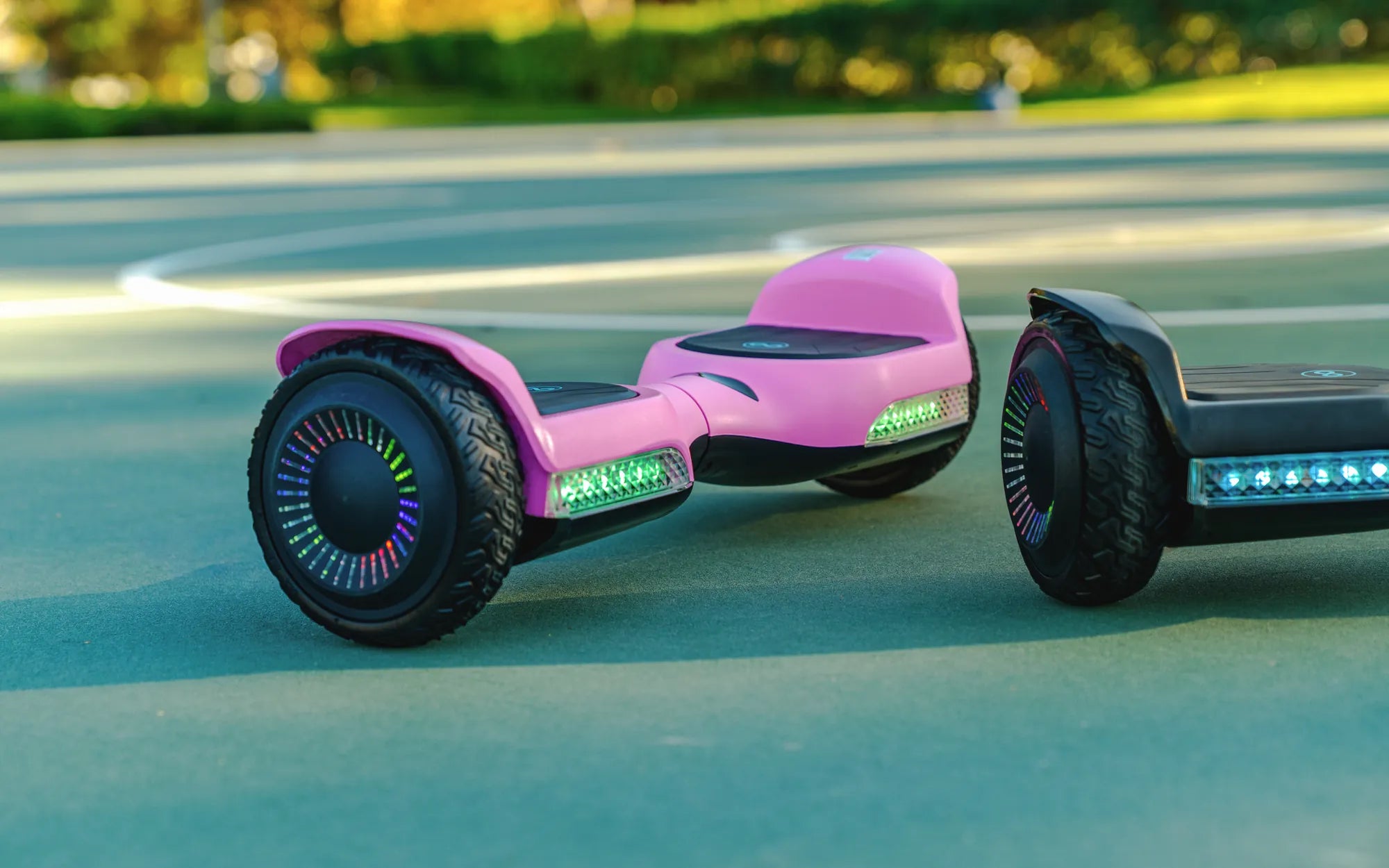
Redefining Affordable Urban Mobility
Finding a really cheap self balancing scooter is about more than just a low price tag; it's about unlocking accessible, efficient, and eco-friendly personal transportation. This guide cuts through the noise to show you how to identify scooters that offer genuine value, blending affordability with the essential safety and durability needed for real-world use. We'll explore what 'cheap' truly means, what features you can't afford to skip, and how to avoid the pitfalls of substandard products.
For many, a self-balancing scooter represents a first step into micro-mobility, perfect for last-mile commuting, campus travel, or recreational fun. The goal is to find a model that gets you riding reliably without a prohibitive investment. Brands like Gyroor have demonstrated that you can offer UL-certified safety, water-resistant designs, and dependable performance at a price point that makes sense for budget-conscious riders.
This isn't a search for the absolute lowest cost, but for the optimal intersection of price, safety, and functionality. By the end of this guide, you'll know exactly how to navigate the market, prioritize features, and invest in a scooter that won't let you down. Let's begin by defining what 'really cheap' actually means in practical terms.
What Does "Really Cheap" Actually Mean? Defining Value vs. Cost
The term 'really cheap' in the self-balancing scooter market typically refers to an entry-level price range of $150 to $300. At this point, you are accessing functional mobility, but critical distinctions in build quality, safety, and longevity separate a valuable deal from a disposable gadget. The initial cost is just one part of the equation; the total cost of ownership is what defines true affordability.
Lower prices often correlate with specific trade-offs. You might encounter smaller 6.5-inch wheels less suited for rough terrain, motors with 250W to 300W of power adequate for flat surfaces but not steep hills, and ranges capped at 6-8 miles per charge. The key is to ensure these compromises don't extend to the fundamental safety systems, particularly the battery pack and electrical controls.
Value, therefore, is measured by what you get for your money: a scooter that works reliably for its intended purpose and lasts. A $200 scooter with a UL-certified battery and a one-year warranty represents exponentially more value than a $150 scooter with an uncertified battery and no support. The latter isn't cheap; it's a liability.
Understanding this distinction protects you from false economies. The most affordable path to reliable mobility is to buy a well-made product once, not to replace a broken or unsafe one repeatedly. This mindset shifts the search from the 'cheapest' to the 'most responsibly priced' option that meets core standards.
Key Features to Prioritize in a Budget Self-Balancing Scooter
When budget is a primary concern, strategic prioritization is essential. You must identify which features are non-negotiable for safety and basic utility, and where you can accept simpler specifications. Focusing on these core pillars will ensure your investment is sound.
Safety First: UL-Certified Batteries and Build Quality
The battery is the heart of any electric vehicle and the single most critical safety component. A really cheap self balancing scooter must never cut corners here. Insist on a UL 2272 certified battery pack. This certification means the battery cells, circuitry, and housing have undergone rigorous testing for electrical, mechanical, and environmental safety, drastically reducing fire risk.
Brands committed to safety, like Gyroor, build this certification into all their models, including affordable ones. Beyond the battery, examine the overall build quality. The deck should be solid without excessive flex, the shell should be made of impact-resistant ABS plastic, and the footpads should provide secure grip. These elements work together to prevent accidents caused by mechanical failure.
Core Performance: Motor Power, Range, and Weight Capacity
Performance expectations must be realistic for the price. For most budget models, dual 250W motors provide adequate power for riders up to 220 lbs on flat to moderately sloped terrain. This is sufficient for neighborhood rides or smooth urban pathways. A combined 500W output is a good benchmark for entry-level stability and torque.
Range is directly tied to battery quality and capacity. Expect 6 to 10 miles on a single charge for most affordable scooters. This is ideal for short commutes or recreational use. Always check the manufacturer's tested weight capacity and be honest about your own weight; exceeding it will strain the motors, reduce range, and shorten the scooter's lifespan.
Durability on a Dime: IP Ratings and Warranty
Durability is what transforms a purchase from a short-term novelty into a long-term tool. An IPX4 or, better yet, IPX5 water-resistance rating is invaluable. An IPX5 rating, like those found on Gyroor scooters, means the unit can withstand water jets from any direction, allowing you to confidently ride through puddles or light rain.
Equally important is the warranty. A comprehensive one-year warranty that covers the battery, motor, and frame is a sign the manufacturer stands behind their product. It protects your investment from premature defects. A cheap scooter with no warranty is a gamble; a reasonably priced scooter with a strong warranty is a calculated, low-risk investment.
The Smart Buyer's Checklist: How to Spot a Good Deal vs. a Scam
Navigating online marketplaces and obscure brands requires a disciplined approach. Use this actionable checklist to separate legitimate offers from potential scams or dangerously substandard products.
First, verify safety certifications. The product description or manual must explicitly mention UL 2272 certification for the self-balancing scooter system. Do not accept vague claims like 'safe battery' or 'tested to high standards.' Look for the specific certification. Second, research the brand's reputation. Do they have a professional website? Are there verified customer reviews on independent platforms? Brands like Gyroor have established trust through thousands of customer reviews and clear support channels.
Third, scrutinize the seller. Buying from the manufacturer's official site or an authorized retailer (like Amazon, where Gyroor sells) is safer than third-party sellers with no history. Fourth, examine the warranty and return policy in detail. A 30-day return policy and a 1-year warranty are strong indicators of legitimacy. Finally, beware of prices that seem too good to be true. A scooter priced at $99 is almost certainly using uncertified, dangerous components and offers zero customer support.
Beyond the Price Tag: Calculating Total Cost of Ownership
The purchase price is merely the entry fee. To understand the real cost of a really cheap self balancing scooter, you must consider its entire lifespan and potential additional expenses. This analysis often reveals that spending slightly more upfront saves significant money and hassle over time.
Consider two scenarios: Scooter A costs $150, has no brand reputation, an uncertified battery, and a 90-day warranty. Scooter B costs $250, is from a known brand like Gyroor, has a UL-certified battery, IPX5 rating, and a 1-year warranty. Scooter A has a high probability of battery degradation within 6-8 months, potentially requiring a $80+ replacement. If a motor fails outside the short warranty, repair costs could exceed the scooter's original value, making it a disposable item.
Scooter B, with its certified battery, is designed for 500+ charge cycles, meaning years of use before noticeable capacity loss. Its durable build and water resistance reduce failure risk. The warranty covers major components for a full year. The total cost of ownership for Scooter B is essentially its $250 price tag. For Scooter A, the total cost could easily reach $230+ ($150 + $80 battery) for a shorter, less safe usage period.
This calculation extends to your time and safety. A broken scooter means downtime and inconvenience. An unsafe scooter poses a real risk. Investing in a reliable model from the start is the most economical and sensible choice for affordable mobility.
Comparison: Budget Scooter Features vs. Real-World Needs
This table illustrates how typical specifications of affordable self-balancing scooters map to practical user needs, helping you align your priorities with what's available on the market.
| Feature | Typical Budget Spec | What It Means for You | Priority for Commuting | Priority for Recreation |
|---|---|---|---|---|
| Battery Certification | UL 2272 (Mandatory) | Fundamental safety; prevents fire hazard. Non-negotiable. | Critical | Critical |
| Motor Power | Dual 250W (500W total) | Enough for flats & mild slopes. May struggle on hills >15°. | High | Medium |
| Range | 6-10 miles | Suitable for short trips (2-3 miles each way). Plan for charging. | High | Medium |
| Max Speed | 7-10 mph | Pace of a brisk run. Safe for sidewalks and shared paths. | Medium | High |
| Weight Capacity | 220 lbs | Accommodates most adults. Exceeding it damages scooter. | High | High |
| Water Resistance | IPX4 or IPX5 | IPX5 handles puddles/light rain. Essential for all-weather readiness. | Critical | High |
| Wheel Size | 6.5" or 8.5" | Larger wheels (8.5") handle bumps and cracks better. | High | Medium |
| Warranty | 1 Year Comprehensive | Protects against manufacturing defects. Look for battery coverage. | High | Medium |
Frequently Asked Questions (FAQ) About Affordable Self-Balancing Scooters
Q: Are cheap self-balancing scooters safe for adults?
A: They can be safe if, and only if, they meet key safety standards. The most important is UL 2272 certification for the entire electrical system, especially the battery. Always verify this certification exists. A reputable budget brand will proudly display this certification, as it's the baseline for safe operation.
Q: How far can I really go on a budget model?
A: Under optimal conditions (flat terrain, moderate speed, rider near the weight limit), you can expect 6 to 10 miles on a full charge. Real-world factors like hills, frequent acceleration, and colder temperatures will reduce this range. This makes them ideal for short commutes (under 3 miles one-way), campus travel, or neighborhood leisure rides.
Q: Is water resistance important for a cheap scooter?
A> Absolutely. An IPX5 rating is one of the best value-adds for an affordable model. It means the scooter can withstand low-pressure water jets from all directions. This protects the internal electronics from rain, puddles, and wet roads, dramatically increasing the scooter's durability and practicality for daily use. Never ride an uncertified scooter through water.
Q: What's the most important thing to look for in a warranty?
A: Coverage for the battery and motor, and a brand with accessible customer support. A one-year warranty that specifically includes the battery pack and dual motors indicates the manufacturer has confidence in these core components. Ensure the brand has a clear support channel (email, phone) based in your region for hassle-free claims.
Q: Can I find a reliable self-balancing scooter under $300?
A> Yes, it is possible. The key is to focus on established brands that offer entry-level models with core safety features. For example, Gyroor offers models in this range that include UL-certified batteries, IPX5 water resistance, and a full one-year warranty. This provides a reliable, safe experience without the premium price tag of high-performance models.
Your Path to Affordable, Reliable Fun and Commuting
The journey to finding a really cheap self balancing scooter that doesn't compromise ends with informed, value-driven decisions. It's clear that true affordability is defined by safety, durability, and manufacturer support, not just the lowest sticker price. By prioritizing UL-certified batteries, realistic performance specs, water resistance, and a solid warranty, you secure a tool for mobility that will serve you well.
Brands like Gyroor have paved the way, proving that responsible engineering and safety certifications can be accessible. Their commitment to UL standards, IPX5 ratings, and comprehensive customer support across a range of price points shows that you don't have to pay a premium for peace of mind. This allows you to step into the world of micro-mobility with confidence.
Remember, the right scooter can transform short trips, reduce your carbon footprint, and inject fun into your daily routine. The investment is not in a toy, but in a practical, efficient, and enjoyable mode of personal transport. Use the checklist, understand the total cost of ownership, and choose a partner in mobility that stands behind its product.
Ready to explore models that blend genuine value with uncompromising safety? Browse the full Gyroor collection at gyroorboard.com to find the perfect, reliable self-balancing scooter for your needs and budget.
Hoverboard for Girls Cheap: The Ultimate Guide to Affordable Fun and Safety
What Age Can Kids Use Scooter: A Parent's Guide to Safe Riding