


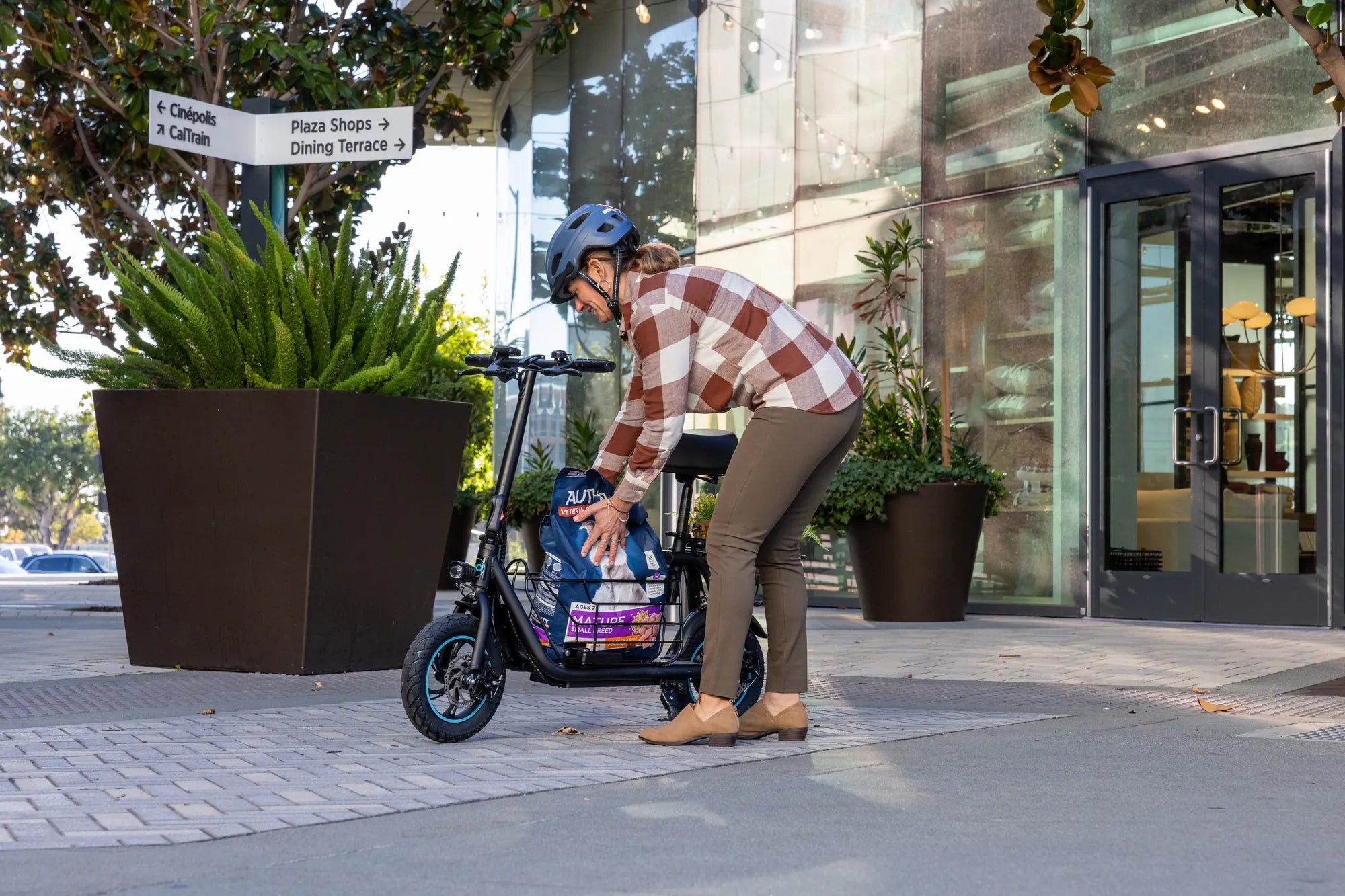
Introduction to Senior Mobility and Electric Scooters
Maintaining independence and staying connected are fundamental to a high quality of life for seniors. A ride on scooter for elderly individuals represents more than just a vehicle; it's a tool for empowerment. These electric scooters bridge the gap between walking limitations and the need to run errands, visit friends, or simply enjoy the outdoors.
The right electric scooter can transform daily routines, reducing reliance on others for transportation. This guide is designed to cut through the marketing noise and provide a factual, data-driven look at how to select a scooter that prioritizes safety, comfort, and reliability. We will explore the key engineering and design features that matter most for senior riders.
Brands that have earned trust in this space, like Gyroor, focus on these core principles. With over 100,000 riders across North America and Europe, Gyroor's commitment to UL-certified batteries and robust construction offers a benchmark for what seniors and their families should look for in a mobility solution.
Key Considerations for Choosing a Senior Electric Scooter
Selecting a ride on scooter for elderly users is a decision that demands careful evaluation of several interrelated factors. It is not a purchase based solely on price or top speed. The primary goal is to find a scooter that extends freedom without compromising on safety or ease of use.
Every senior has unique physical capabilities and lifestyle needs. A rider who plans to use the scooter for short grocery trips in a flat, urban area has different requirements than someone who wants to cruise longer park pathways. Understanding these personal use cases is the first step in narrowing down the options.
The following sections break down the non-negotiable elements into three core categories: Safety, Comfort, and Practicality. A model that excels in all three areas is likely to provide a positive and sustainable mobility experience for years to come.
Safety Features as the Top Priority
When evaluating a ride on scooter for elderly riders, safety is the paramount concern that overrides all others. The scooter's fundamental design must inspire confidence and stability. A wide wheelbase and a low center of gravity are critical engineering features that prevent tipping during turns or on uneven surfaces.
The braking system is equally vital. Look for models with dual braking systems, such as a combination of electronic (regenerative) braking and a mechanical disc or drum brake. This redundancy ensures stopping power is available even if one system is compromised. Bright, integrated LED lighting—a headlight, taillight, and brake light—is essential for visibility during dawn, dusk, or overcast days.
Additional safety components include an audible bell or horn to alert pedestrians and a robust kickstand that securely holds the scooter when parked. The single most critical safety component, however, is the battery. A UL-certified battery pack, like those used in Gyroor scooters, has undergone rigorous independent testing for fire and electrical safety, providing irreplaceable peace of mind.
Comfort and Ease of Use
If safety ensures the ride is secure, comfort determines whether the ride is enjoyable and sustainable. Ergonomics are key. An adjustable tiller (handlebar) allows riders of different heights to find a natural, upright riding posture that doesn't strain the back or shoulders. A padded, slightly contoured deck provides stable footing.
The controls must be intuitive. Throttle and brake levers or buttons should require minimal pressure to operate. A clear, easy-to-read digital display that shows speed, battery level, and riding mode is far superior to basic indicator lights. Many seniors benefit from starting on a model with a dedicated beginner or eco mode, which limits top speed for a gentler learning curve.
Finally, consider the ride quality. Larger air-filled tires (8.5 inches or more) and a suspension system (spring or hydraulic) absorb vibrations from cracks and bumps in the pavement, making the journey smoother and less fatiguing on the joints compared to scooters with small, solid tires.
Portability and Storage
Practicality extends beyond the ride itself to how the scooter integrates into daily life. For seniors who may need to transport the scooter in a car trunk for appointments or vacations, weight and foldability are decisive factors. Lightweight aluminum frames are preferable, with a one-step folding mechanism that doesn't require excessive bending or strength.
Some advanced models feature a folding handlebar and collapsible stem, creating a remarkably compact package. It's important to check the folded dimensions against your car's storage space. For apartment dwellers, this compact form is also crucial for easy storage in a closet or corner without becoming an obstacle.
It's a balance: ultra-portable scooters may sacrifice some comfort features like large tires or suspension. Understanding this trade-off is essential. A slightly heavier, more feature-rich scooter might be the perfect choice if it will primarily be used from a home garage and rarely transported.
The Gyroor Advantage: Engineered for Confidence
In a market filled with options, Gyroor has distinguished itself by building electric scooters that directly address the core concerns of safety-conscious riders, including seniors. Their approach is rooted in engineering reliable performance rather than chasing extreme specifications. This philosophy results in products that foster genuine confidence.
With a product range of over 20 models, Gyroor's design principles consistently emphasize stability, intuitive control, and durable construction. For an elderly rider, this translates to a vehicle that feels predictable and solid. The brand's 4.5/5 average customer rating across North America and Europe reflects a track record of satisfying users who prioritize dependability in their daily commute or leisure rides.
The following advantages are not just marketing claims but tangible design and policy decisions that significantly impact the user experience for a senior.
Unmatched Safety with UL-Certified Batteries
The battery is the heart of an electric scooter, and its safety cannot be an afterthought. Gyroor's commitment to using only UL-certified battery packs in their scooters sets a critical industry standard. UL certification means the battery's cells, circuitry, and housing have been tested by Underwriters Laboratories for risks like overheating, short-circuiting, and fire.
This is particularly important for a ride on scooter for elderly users, which may be stored indoors or charged overnight. An uncertified battery represents a latent hazard. Furthermore, these certified batteries are rated for 500+ charge cycles, ensuring long-term capacity and performance stability, so the scooter's range remains consistent over time.
Built to Handle Real-World Conditions (IPX5)
Daily errands don't stop for a light drizzle or a wet street. Gyroor scooters are built with an IPX5 water-resistance rating. This engineering specification means the scooter's electrical components are protected against low-pressure water jets from any direction.
In practical terms, an IPX5 rating allows a rider to confidently navigate damp roads, ride through occasional puddles, or get caught in a brief rain shower without fear of immediate damage or electrical failure. This reliability is essential for a primary mobility device, ensuring a planned trip to the park or store isn't derailed by imperfect weather.
Peace of Mind with a 1-Year Warranty & Support
A comprehensive warranty is a signal of a manufacturer's confidence in its product. Gyroor backs its scooters with a 1-year warranty covering manufacturing defects, which provides significant financial protection. For a senior rider or a family member making the purchase, this warranty reduces the perceived risk of a major, unexpected repair cost.
Equally important is the accessibility of customer support. Having access to knowledgeable, US-based support teams for troubleshooting, ordering genuine parts, or getting advice is invaluable. It ensures that help is readily available in a familiar language and time zone, making ownership far less daunting for those who are not technically inclined.
Practical Guide: Getting Started Safely
Once the ideal ride on scooter for elderly needs is selected, the focus shifts to safe adoption and use. A structured approach to the first rides can build confidence and establish good habits that last. Rushing into traffic or onto challenging terrain is a recipe for a negative experience.
This guide emphasizes a gradual, methodical process. It is designed to be shared with the new rider, serving as a checklist for themselves or a caregiver to follow. The goal is to transform initial apprehension into comfortable mastery, ensuring the scooter becomes a trusted companion for independence.
Pre-Ride Checklist and Safety Gear
Before every ride, a quick inspection takes less than a minute but is crucial for safety. Develop a routine: check that tire pressure is adequate (for air-filled tires), test the brakes at a very low speed to ensure they engage smoothly, and confirm the battery has sufficient charge for the planned journey. Visually inspect for any loose bolts or damage.
Personal protective equipment (PPE) is non-negotiable. A properly fitted bicycle helmet is the most important item. For beginners, consider adding elbow and knee pads to protect against falls during the learning phase. Wear sturdy, closed-toe shoes with good grip, and avoid loose clothing that could catch on the scooter.
Finding Safe Riding Environments
The first 5-10 hours of riding should occur in controlled, low-risk environments. An empty school parking lot on a weekend, a smooth, wide bike path during off-peak hours, or a quiet cul-de-sac are ideal starting points. These spaces offer plenty of room to practice maneuvers without the pressure of cars, cyclists, or crowded sidewalks.
It is also essential to understand local regulations. Laws governing where electric scooters can be ridden—sidewalks, bike lanes, or roads—vary significantly by city and state. A quick check with local municipal websites or police non-emergency lines can clarify the rules and prevent fines or unsafe situations.
Mastering the Controls and Building Confidence
Begin by simply standing on the scooter with it powered off, getting a feel for the balance and the deck space. Then, power it on in its slowest speed mode (often called Eco or Beginner mode). Practice gentle acceleration and using the brake to come to a complete stop, focusing on smooth, gradual inputs.
Once starting and stopping feel comfortable, practice wide, slow turns in both directions. Use the bell or horn to ensure it's functioning and to get accustomed to its location. Gradually increase the speed mode only when you feel completely in control at the current level. Short, frequent practice sessions are more effective than long, exhausting ones.
Comparison of Scooter Types for Senior Riders
Not all electric scooters are created equal. The table below compares three common configurations—Ultra-Portable, Commuter, and Stability-Focused—against key criteria important for senior riders. This data can help match a scooter's strengths to an individual's primary use case and physical needs.
| Feature / Scooter Type | Ultra-Portable (Last-Mile) | Commuter / Comfort | Stability-Focused (3-Wheel) |
|---|---|---|---|
| Primary Use Case | Short trips, combining with public transit, easy storage. | Longer errands, recreational rides, daily commute. | Riders seeking maximum stability at low speeds, beginners with balance concerns. |
| Typical Weight | 26-35 lbs | 40-55 lbs | 45-60 lbs |
| Wheel & Suspension | Smaller solid tires (8"), minimal suspension. | Larger air tires (10"), front or dual suspension common. | Three air-filled tires, often with a rear dual-wheel design for balance. |
| Max Range | 10-15 miles | 20-40 miles | 15-25 miles |
| Top Speed | 15-18 mph | 19-25 mph | 12-18 mph |
| Ideal For Senior Who... | Needs a lightweight, carriable option for very short distances. | Values smooth ride quality and range for extended outings. | Prioritizes a confident, stable platform above all else, especially at lower speeds. |
Maintenance and Care for Longevity
Proper maintenance ensures your ride on scooter for elderly riders remains safe, reliable, and performs well for its entire lifespan. Basic care is straightforward and does not require advanced mechanical skills. Establishing a simple monthly and quarterly routine can prevent most common issues.
Regularly check and maintain correct tire pressure according to the manufacturer's recommendation. Under-inflated tires reduce range, make steering harder, and increase the risk of pinch flats. For scooters with air tires, a small bicycle pump with a pressure gauge is an essential accessory. Also, periodically inspect tires for embedded debris or excessive wear.
Keep the scooter clean by wiping it down with a damp cloth. Avoid high-pressure hoses, which can force water into electrical components despite water-resistance ratings. Check that all bolts, especially those on the folding mechanism, handlebar, and stem, are tight. A periodic check with the included hex keys can prevent components from loosening due to vibration.
Battery care is critical for longevity. Avoid letting the battery fully discharge for extended periods. If storing the scooter for more than a month, charge the battery to about 60-80% and store it in a cool, dry place. Use only the manufacturer-provided charger to avoid damaging the battery management system.
FAQ: Electric Scooters for Seniors
Q: What is the typical weight capacity for a senior electric scooter?
A: Most quality scooters designed for adults have a weight capacity between 220 and 300 pounds. It is imperative to choose a model whose maximum capacity exceeds the rider's weight plus any anticipated cargo (like a grocery bag). Exceeding the limit compromises safety, stability, and battery life.
Q: How far can an electric scooter go on a single charge?
A: Advertised range is based on ideal conditions (light rider, flat terrain, slow speed). Real-world range for a senior rider is typically 60-75% of the advertised figure. For example, a scooter rated for 25 miles might reliably achieve 15-18 miles. Factors like rider weight, hills, temperature, and frequent stopping/starting significantly impact range.
Q: Is charging the scooter difficult?
A>No, charging is one of the simplest aspects. It involves plugging the provided charger into a standard wall outlet and connecting it to the scooter's charging port, similar to charging a laptop or phone. Many models feature removable batteries, allowing you to take the battery indoors to charge without bringing the entire scooter inside.
Q: Can I use an electric scooter indoors?
A: It is not recommended. Electric scooters are designed for outdoor surfaces like pavement and asphalt. Using them indoors poses risks: they can damage hardwood, tile, or carpet floors; their turning radius is often too wide for hallways; and acceleration/braking indoors is hazardous. They are best considered outdoor mobility aids.
Q: What if I have significant balance issues?
A>Consult with your physician before considering any electric scooter. For mild balance concerns, a 3-wheel scooter design offers superior stability. However, electric scooters require the rider to stand and maintain balance. They are not a substitute for prescribed mobility aids like medical scooters, power chairs, or walkers for individuals with substantial balance impairments.
Conclusion: Embracing a New Chapter of Independence
A thoughtfully chosen ride on scooter for elderly individuals can profoundly impact daily life, restoring a sense of autonomy and the simple joy of movement. The journey to finding the right scooter is anchored in prioritizing verified safety features like UL-certified batteries, seeking comfort through ergonomic design, and choosing a brand that stands behind its product with robust support.
This investment in mobility is an investment in continued engagement with the community and the world outside one's front door. By following the practical steps for safe initiation and routine maintenance, the scooter becomes a reliable partner for countless errands, visits, and exploratory rides. The data and comparisons provided here aim to empower that decision with clarity and confidence.
The freedom to move on your own terms is invaluable. If you're ready to explore how a well-engineered electric scooter can enhance independence, we encourage you to review specifications with a critical eye toward safety and comfort. Browse the full Gyroor collection at gyroorboard.com to see models built with the reliability and peace of mind that senior riders deserve.
Best Lightweight 20 Inch Bike: The Ultimate Guide to Portability & Performance
Best Travel Scooter for Adults: The Ultimate Guide to Portable Electric Freedom