



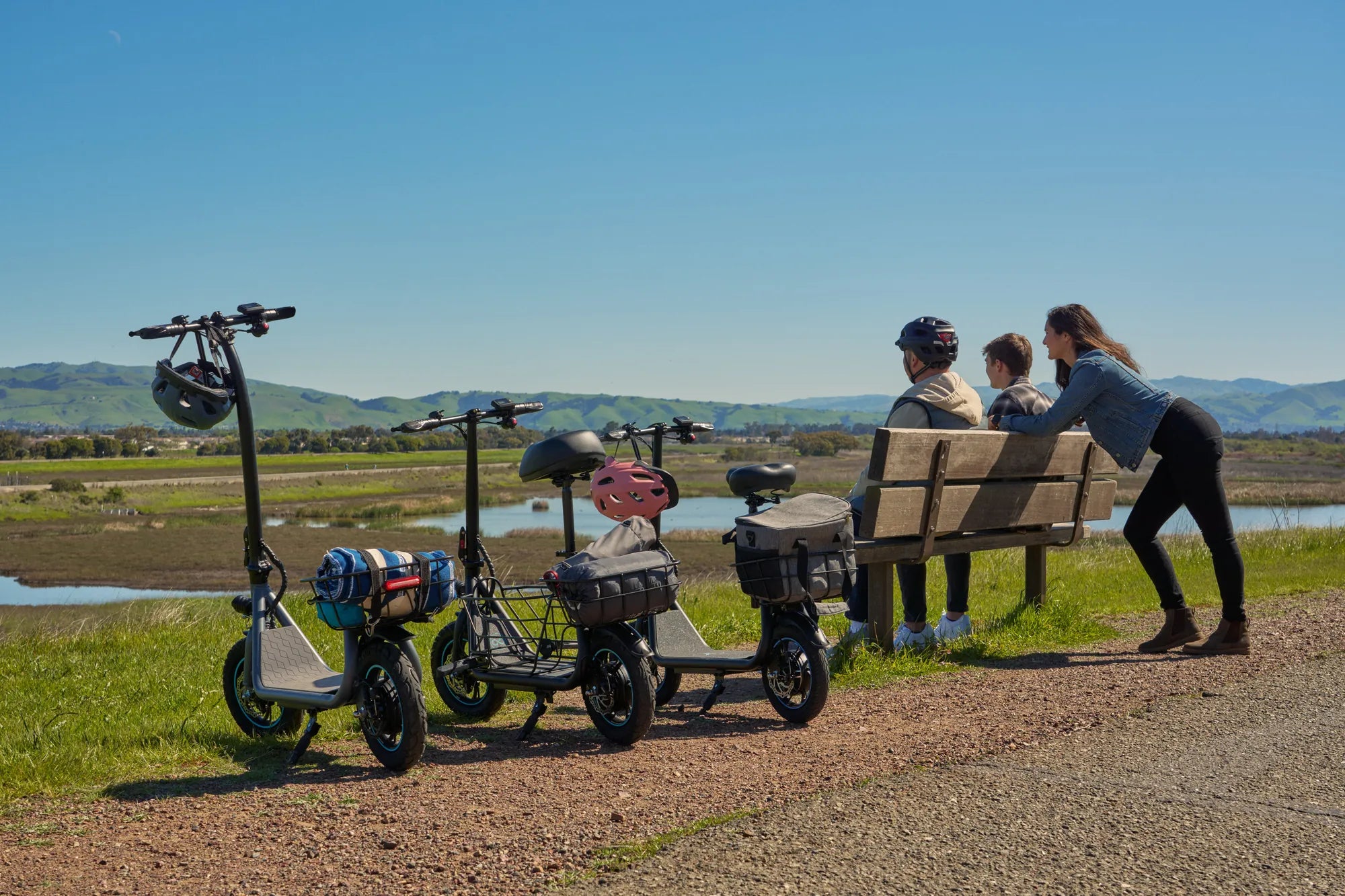
Introduction to Electric Scooter Basics
Mastering the art of riding and controlling electric scooters for beginners unlocks a new dimension of urban mobility and fun. This complete guide is designed to transform apprehension into confidence, providing a structured, safety-first approach to your first rides and beyond. We will cover everything from essential gear and fundamental controls to advanced maneuvering and scooter maintenance, ensuring you build a solid foundation for responsible riding.
The popularity of personal electric vehicles has surged, with e-scooters offering an efficient solution for last-mile commuting and recreational exploration. For new riders, the initial experience should prioritize safety and skill development over speed. A trusted brand like Gyroor, known for its UL-certified batteries and IPX5 water-resistant designs, provides a reliable platform for learning, trusted by over 100,000 riders. This guide leverages that engineering philosophy to teach you how to ride smart from day one.
Pre-Ride Preparation: Safety and Setup
Your journey begins before you ever press the throttle. Proper preparation is the single most effective way to prevent accidents and ensure a positive riding experience. This phase involves gearing up correctly, understanding your machine, and performing a vital safety inspection.
Essential Safety Gear: Your Non-Negotiable Armor
A certified helmet is the most critical piece of safety equipment. Look for a CPSC (Consumer Product Safety Commission) certified bicycle or multi-impact helmet that fits snugly. This alone dramatically reduces the risk of head injury. Knee and elbow pads are equally important for beginners, as low-speed falls are common while learning balance and control.
Sturdy, closed-toe shoes with good grip are mandatory—never ride in sandals or flip-flops. Padded gloves protect your hands during a fall and improve grip on the handlebars. For visibility, consider a reflective vest or clothing, especially if you plan to ride at dusk or dawn. Investing in this gear is investing in your well-being.
Understanding Your Scooter's Controls and Dashboard
Familiarize yourself with every button and lever while the scooter is powered off. Locate the power button, typically held for 2-3 seconds to turn on. Identify the throttle control (usually a thumb lever or twist grip on the right handlebar) and the brake levers. Most scooters have a mechanical brake (disc or drum) and often an electronic regenerative brake activated by a lever or the throttle release.
The central display shows key data: speed (in mph or km/h), battery level, riding mode (e.g., Eco, Standard, Sport), and sometimes trip distance or light status. Understanding this dashboard is crucial for monitoring your speed and remaining range. The bell or horn and light controls (front and rear) are also essential for communication and visibility.
The 60-Second Pre-Ride Safety Checklist
Develop a routine check before every ride. First, inspect tire pressure and condition; under-inflated tires affect handling and range, while visible wear or damage is a safety hazard. Squeeze the brake levers to ensure they engage firmly and the cables/hydraulics are intact. Test the lights and bell to confirm they are operational.
If your scooter has a folding mechanism, check that all locking pins or latches are fully secured and there is no play. Finally, verify your battery has sufficient charge for your intended trip—it's best practice not to regularly drain it below 20%. This quick ritual ensures your scooter is in safe, working order.
Mastering the Fundamentals of Riding
With gear on and scooter checked, it's time to learn the physical skills. Find a large, empty, flat parking lot or similar paved area free of traffic and obstacles for your first practice sessions.
Mounting, Stance, and Finding Your Balance
Start by standing next to the scooter with it powered off. Place your dominant foot firmly on the deck, positioned for stability, typically pointing slightly forward. Use your other foot to give a gentle push, just as you would with a kick scooter, and practice gliding and balancing on one foot. This builds muscle memory for balance without the complication of acceleration.
Your riding stance is critical: feet should be shoulder-width apart or slightly staggered, one ahead of the other, with knees slightly bent. This athletic, centered posture lowers your center of gravity, improves stability, and allows you to absorb bumps. Keep your back straight and look ahead, not down at your feet.
Starting, Accelerating, and Braking Smoothly
Begin in a low-power mode (often called Eco mode). With your dominant foot on the deck and your other foot ready to stabilize, gently press the throttle with your thumb. The key is progressive, smooth input—avoid jerking it to full power. Start with very short, controlled accelerations to get a feel for the motor's power delivery.
Braking is arguably more important. Practice slowing down and stopping using gentle, progressive pressure on the brake lever(s). If your scooter has both a front and rear brake, learn to apply them simultaneously or favor the rear brake slightly to avoid pitching forward. Practice coming to a complete, controlled stop while maintaining your balance.
Turning and Basic Maneuvering Techniques
For low-speed turns, simply steer the handlebars in the direction you want to go while leaning your body slightly into the turn. Always look through the turn toward your exit point—your body and scooter will follow your gaze. For stability, keep your weight centered over the deck.
At higher speeds (above ~10 mph), you will use a technique called counter-steering: to turn right, you apply a slight, momentary push forward on the *left* handlebar. This initiates a lean, and the scooter will turn right. Practice large, sweeping turns first before attempting tighter maneuvers. Set up cones or markers to practice gentle slalom patterns, improving your control and comfort with steering inputs.
Navigating Different Terrains and Conditions
Once you're comfortable in a controlled environment, you'll encounter varied real-world conditions. Adapting your technique is key to maintaining safety.
Riding on Pavement and City Streets
Always obey local traffic laws, which often treat e-scooters similarly to bicycles. Ride in bike lanes where available. On roads without bike lanes, ride in the direction of traffic, as far to the right as is safe. Be hyper-aware of your surroundings: watch for opening car doors, pedestrians stepping into your path, and vehicles turning across your lane.
Use hand signals to indicate turns or lane changes. Scan ahead for road hazards like potholes, sewer grates, gravel, and wet leaves, which can cause loss of traction. Approach curbs at a near-perpendicular angle if you must go over them, and reduce speed. Defensive riding—assuming others don't see you—is your best strategy.
Handling Slopes: Inclines and Declines
Climbing hills drains the battery faster and reduces speed. Maintain a steady, moderate speed before the incline; a running start helps. Be prepared for reduced climb power in lower battery states. Avoid stopping partway up a steep hill, as restarting may be difficult.
Descending is where caution is paramount. Use your brakes intermittently to control speed—do not "drag" them continuously, as this can overheat and fade disc brakes. Apply firm, steady pressure, release, and reapply. Shift your weight slightly back on the deck for better stability. Never descend a hill at a speed you're not comfortable braking from.
Wet Weather and Low-Light Riding
Riding in the rain significantly increases risk. Traction is reduced, braking distances are longer, and visibility is impaired. If you must ride in wet conditions, slow down dramatically, avoid sharp turns, and steer clear of painted road markings, metal surfaces, and manhole covers, which become extremely slippery. A scooter with a good IPX5 water-resistant rating, like many Gyroor models, offers protection against water splashes from all angles, but it is not a submarine—avoid deep puddles.
For low-light conditions, using your lights is non-negotiable—they are for being seen as much as for seeing. Ensure your front and rear lights are on at dusk, dawn, night, or in rain. Supplement with reflective clothing or accessories. Your ability to see obstacles is reduced, so lower your speed and increase your following distance.
Electric Scooter Performance & Maintenance 101
Understanding your scooter's capabilities and caring for it properly ensures longevity, safety, and consistent performance.
Understanding Real-World Range, Speed, and Battery Life
Advertised range is a maximum figure achieved under ideal lab conditions. Real-world range is affected by rider weight, terrain (hills), wind resistance, temperature (cold reduces battery efficiency), tire pressure, and riding style (frequent hard acceleration). A 20-mile advertised range may translate to 12-15 miles for an average rider in a hilly city.
To maximize battery lifespan, avoid regularly draining it to 0%. Try to recharge when it drops to 20-30%. Similarly, you don't need to always charge to 100%; occasional 80-90% charges can reduce long-term stress. Store your scooter in a cool, dry place, and avoid leaving it at full charge for extended periods (weeks).
Basic Maintenance for Longevity and Safety
A simple weekly or pre-ride check goes a long way. Use the checklist from Section 2.3. Monthly, inspect for loose bolts, particularly on the stem, handlebars, and folding mechanisms, and tighten them with the provided tools. Keep the scooter clean by wiping it down with a damp cloth; avoid high-pressure hoses which can force water into electronics despite an IPX5 rating.
Regularly check brake pads for wear and ensure the braking system is responsive. Inspect tires for embedded debris or wear patterns. For air-filled tires, maintain the recommended PSI. Proper care not only extends the scooter's life but also ensures it remains safe to operate. The robust build and IPX5 rating of quality scooters reduce maintenance headaches from everyday environmental exposure.
Warranty and Knowing When to Seek Professional Servicing
A comprehensive warranty, like Gyroor's reliable 1-year warranty, provides peace of mind against manufacturing defects. Register your product upon purchase. Understand what is covered (typically frame, motor, battery, controller) and what is considered wear-and-tear (tires, brake pads).
Seek professional servicing for issues beyond basic maintenance: persistent electrical faults, brake system bleeding or major adjustments, motor or controller problems, or any structural concerns like a cracked frame or stem. Attempting complex repairs without expertise can void your warranty and create safety hazards.
Choosing Your First Electric Scooter: A Data-Driven Comparison
Selecting the right scooter is foundational to a good experience. Key specifications directly impact usability, safety, and suitability for your needs.
| Use Case & Rider Profile | Key Priorities | Recommended Specs | Gyroor Model Example |
|---|---|---|---|
|
First-Time Learner / Short Commutes Lightweight, emphasis on safety and ease. |
Stability, smooth controls, portability, reliable brakes. | Motor: 250W-350W Range: 10-15 mi Speed: ≤15 mph Weight: < 30 lbs Brakes: Dual (E-ABS + Disc) |
Gyroor F1 Pro: Emphasizes a stable, smooth ride with essential safety features, perfect for building confidence. |
|
Daily Urban Commuter Moderate distance, mixed terrain, need for reliability. |
Real-world range, hill climb ability, durability, water resistance. | Motor: 500W+ Range: 20+ mi Speed: 20-25 mph IP Rating: IPX5 Suspension: Front or Dual |
Gyroor F2: Offers robust power for hills, IPX5 rating for all-weather capability, and a suspension for comfort on varied pavement. |
|
Performance & Longer Adventures Experienced beginner seeking more power and distance. |
High torque, extended range, superior braking, advanced features. | Motor: 800W+ Peak Range: 30+ mi Speed: 25+ mph Brakes: Hydraulic Disc Features: App connectivity |
Gyroor F3 Pro: Delivers high performance with a focus on control and advanced safety systems for the rider ready to explore further. |
Frequently Asked Questions for New Riders
Q: Do I need a license, insurance, or registration to ride an e-scooter?
A: Laws vary significantly by city, state, and country. In many US jurisdictions, e-scooters with motors under 750W and speeds capped at 20 mph do not require a driver's license, registration, or insurance for adult riders. However, some cities mandate helmet use and have age restrictions (often 16+). Always check your local Department of Transportation or city government website for the most current regulations.
Q: How do I safely carry my scooter on public transportation?
A> First, check the transit authority's rules. When allowed, fold your scooter securely before boarding. Be mindful of others—carry it in a way that doesn't block aisles. Some riders use a carrying strap for easier handling. Ensure the scooter is powered off and, if possible, the brake is engaged or the wheel is locked to prevent it from rolling.
Q: What should I do if I get a flat tire?
A> For solid or airless tires, a flat isn't an issue. For pneumatic (air-filled) tires, you have options: 1) Use a portable tire repair kit (sealant/injector) for small punctures. 2) Replace the inner tube, which requires tools and mechanical skill. 3) For a major tear or if you're not comfortable with repairs, take it to a professional bike or scooter repair shop. Carrying a small portable air pump can help you temporarily reinflate a slow leak.
Q: Is it safe to ride my e-scooter in the rain?
A> While scooters with a high IPX5 water resistance rating are engineered to withstand heavy water splashes from any direction, riding in the rain is inherently riskier due to reduced traction and visibility. If you must ride, do so with extreme caution: reduce speed, avoid sharp maneuvers, and stay away from slippery surfaces. Never submerge any part of the scooter, and dry it off after your ride.
Q: How can I maximize the lifespan of my scooter's battery?
A> Follow the "20-80 rule" when possible: avoid discharging below 20% and don't always charge to 100%. Store the scooter in a temperate environment (avoid extreme heat or freezing cold). Use the manufacturer-provided charger. Allow the battery and scooter to cool down for 30 minutes after a long ride before charging. These practices can help maintain battery health over hundreds of charge cycles.
Building Confidence and Riding Responsibly
Mastering riding and controlling electric scooters for beginners is a rewarding process that opens up your city. The core principles remain constant: start slow in a safe environment, make pre-ride checks a non-negotiable habit, and always wear your protective gear. Your skills will develop naturally with consistent, mindful practice. Confidence comes from competence, built through mastering the fundamentals outlined in this guide.
Equally important is your role as a responsible member of the transportation ecosystem. Know and follow local laws, respect pedestrians and other road users, and park your scooter considerately, never blocking sidewalks or access points. Your choice of vehicle matters; opting for a brand with certified safety features like UL-certified batteries and a robust warranty provides a foundation of reliability that lets you focus on the ride itself.
The journey from novice to confident rider is filled with the thrill of newfound freedom and efficiency. By prioritizing safety, understanding your machine, and respecting your environment, you ensure that every journey is a positive one. Now, with the knowledge from this complete guide, you're ready to power on and explore.
Ready to start your journey with a scooter built for safety and reliability? Browse the full Gyroor collection, featuring UL-certified batteries, IPX5 water-resistant designs, and a reliable 1-year warranty, at gyroorboard.com.
Electric Scooters Savannah: The Ultimate Guide to Eco-Friendly Commuting
Electric Scooters Savannah: The Ultimate Guide to Eco-Friendly Commuting