



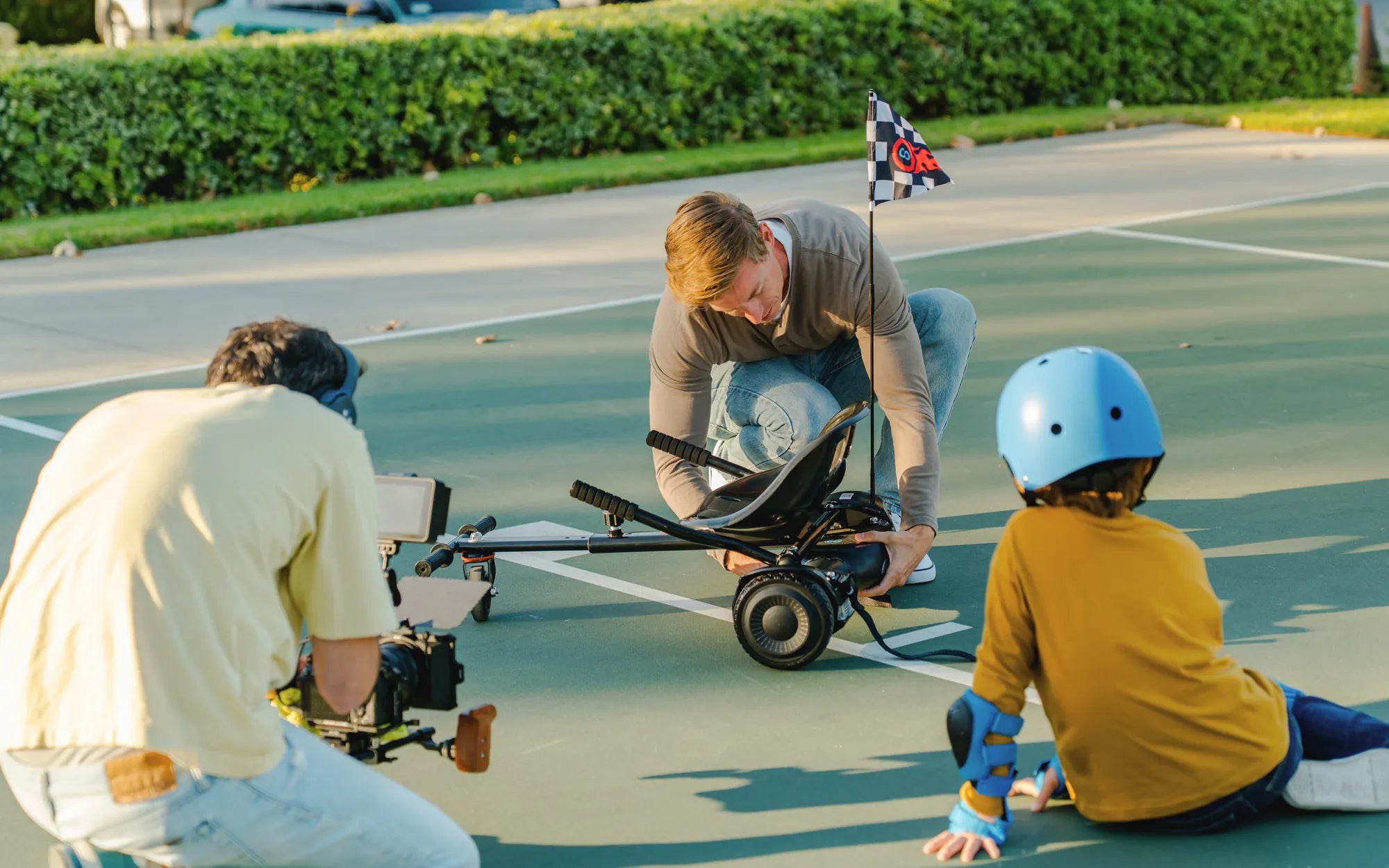
Introduction: Embracing the Hoverboard Revolution
Mastering the art of riding a hoverboard transforms it from a novelty into a legitimate tool for personal mobility and recreation. This self-balancing electric scooter offers a unique blend of fun and function for short urban commutes, park exploration, and skill development. The journey from wobbly beginner to confident rider is systematic, built on a foundation of safety, proper technique, and understanding your machine. This guide provides the complete roadmap, leveraging insights from leading electric rideable brands like Gyroor, trusted by over 100,000 riders for their UL-certified safety and reliable performance.
Getting Started: Safety First and Finding Your Balance
Your first glide begins long before you step on the board. A comprehensive pre-ride check is non-negotiable. Ensure the battery is adequately charged, tire pressure is correct for your model, and there are no visible cracks or damage to the body or wheels. If your hoverboard has a companion app, verify the firmware is up to date for optimal performance and safety.
Investing in proper safety gear drastically reduces injury risk and builds confidence. Essential equipment includes a certified multi-impact helmet, wrist guards, and knee and elbow pads. Wrist guards are particularly crucial, as falls often involve instinctive hand placement.
The Fundamentals of Stance and Posture
Mount your hoverboard on a flat, stable surface next to a wall or railing for support. Place one foot firmly on its corresponding footpad, keeping your weight centered. Use your support to stabilize yourself as you smoothly bring your second foot onto the board. The optimal stance is athletic: knees slightly bent, back straight, head up looking forward, and arms out to your sides for balance.
Avoid leaning your upper body; movement is controlled by subtle pressure shifts through your feet and ankles. Stiff, straight legs are a common mistake that reduces control. Practice mounting and dismounting repeatedly until it feels natural before attempting to move.
Mastering Core Maneuvers: From Basic Glides to Confident Control
Begin by practicing forward and backward movement in a straight, open area. To move forward, apply gentle, even pressure on the balls of your feet and your toes. To move backward, apply pressure through your heels. Start with tiny movements, focusing on smooth acceleration and deceleration. The goal is muscle memory, not speed.
Once you can travel straight lines with control, introduce turning. A gentle turn is initiated by applying more pressure through the toes of one foot (to turn in that direction) or the heel of one foot (to turn the opposite way). Practice large, gradual arcs before attempting tighter turns. Stopping smoothly is simply the reverse of accelerating: gradually relieve foot pressure until the board comes to a complete halt.
Navigating Different Terrains and Obstacles
Different surfaces demand adapted techniques. Smooth pavement is ideal for learning and high-efficiency gliding. Sidewalks require caution for cracks and seams; approach them at a right angle. Grass and packed dirt offer more resistance, requiring slightly more power and a wider stance for stability.
For small obstacles like curb cuts or minor bumps, bend your knees more to act as suspension and maintain a steady speed. Avoid loose gravel or sand. For models with appropriate ingress protection, like Gyroor's IPX5 water-resistant designs, light puddles and damp conditions are manageable, but avoid standing water and heavy rain.
Advanced Techniques and Riding for Utility
After mastering basic navigation, you can explore advanced skills. Riding "switch" (with your non-dominant foot forward) improves overall balance and control. Practice sharper, more aggressive carves by combining deeper leans with controlled speed. For hills, always check your model's specified grade capability; ascend and descend slowly, in a straight line, with your weight adjusted slightly forward for ascents and back for descents.
For practical use, plan commuter routes that use bike lanes or smooth paths. Be hyper-aware of pedestrian and vehicle traffic. Use a backpack to carry items, keeping your hands free. For recreation, practice figure-eights and slalom courses to refine control. Regular, brief practice sessions are more effective than occasional, long ones.
Hoverboard Specs & Performance: What the Data Means for Your Ride
Understanding specifications directly translates to ride quality and capability. Motor power, measured in watts (W), determines torque for acceleration and hill-climbing. Dual 300W motors are a common standard for adult riders. Battery capacity, measured in watt-hours (Wh), dictates range; a 36V 4.4Ah battery (≈158Wh) may offer 7-12 miles per charge depending on weight and terrain.
Wheel size and material are critical for comfort. Larger air-filled (pneumatic) tires, often 8.5 or 10 inches, absorb bumps better than smaller solid tires. Always prioritize models with safety certifications. Gyroor's use of UL-certified battery packs, tested for 500+ charge cycles, is a key benchmark for reliability and fire safety, ensuring the performance you rely on.
| Specification | Typical Range | Impact on Ride | Consideration for Mastery |
|---|---|---|---|
| Motor Power (per motor) | 250W - 350W | Higher wattage improves hill climb and acceleration from stop. | Essential for tackling varied urban terrain confidently. |
| Battery Capacity (Wh) | 120Wh - 200Wh | Directly determines maximum range per charge. | Dictates commute planning and practice session length. |
| Wheel Size & Type | 6.5" Solid - 10" Pneumatic | Larger, air-filled tires provide superior shock absorption. | Critical for comfort and control on rougher surfaces. |
| Max Load Capacity | 44 lbs (20 kg) - 265 lbs (120 kg) | Must accommodate rider weight plus any carried items. | Exceeding limits severely compromises safety and board longevity. |
| IP Rating (Water/Dust) | IPX4 - IPX5 | IPX5 rating allows riding on wet surfaces and in light rain. | Expands riding opportunities and provides peace of mind. |
Hoverboard Care, Maintenance, and Troubleshooting
Regular maintenance ensures safety and extends your hoverboard's lifespan. After riding on wet or dirty surfaces, wipe down the board with a damp cloth. Never use a high-pressure hose. Store the board in a cool, dry place away from direct sunlight and extreme temperatures. Adhere to proper charging practices: use only the provided charger, do not leave it plugged in indefinitely, and avoid charging immediately after a ride while the battery is hot.
Monthly, inspect tires for wear, cuts, or punctures. Check all screws and housing for tightness. Listen for unusual noises from motors or wheels. If your board has a companion app, install firmware updates promptly as they often include performance optimizations and safety improvements.
For common issues, a systematic approach helps. If the board won't power on, check the charge level and connections. If it feels unbalanced or drifts, perform a calibration on a level surface (consult your manual). Reduced range often indicates a battery nearing the end of its life cycle or being used in very cold conditions. For persistent technical problems, contact the manufacturer's support. Gyroor's 1-year warranty and US-based customer service provide a direct channel for resolving such issues.
Frequently Asked Questions (FAQ)
Q: What's the average learning curve for riding a hoverboard?
A>Most adults can achieve basic balance and straight-line movement within 30-60 minutes of focused practice. Confidence with turns, stops, and varied terrain typically develops over several hours of total practice spread across a few days.
Q: Can I ride a hoverboard in the rain?
A>It depends on the model's IP (Ingress Protection) rating. A rating of IPX5, like many Gyroor models, means it is protected against water jets from any direction, making it safe for riding through puddles and in light rain. Never submerge any hoverboard or ride in heavy downpours.
Q: How do I know when the battery is low?
A>Most boards have clear LED battery indicators on the footpads or via a companion app. The board will also typically beep and may tilt the footpads back slightly to slow you down as a final warning. Plan your rides to end with at least 20% charge remaining.
Q: What is the legal status of hoverboards in my city?
A>Laws vary widely. Generally, they are not allowed on public roads but may be permitted on sidewalks, bike paths, or private property. Always check your local municipal and state regulations before riding in public areas. Helmets are often legally required for minors.
Q: What should I do if my hoverboard starts beeping?
A>Beeping is an error or warning signal. Common causes include low battery, an unbalanced platform (requiring calibration), overheating, or a fault. Immediately slow down and stop safely. Refer to your user manual to interpret the beep pattern (e.g., number of beeps) and follow the recommended troubleshooting steps.
Conclusion: The Journey from Novice to Confident Rider
Mastering your hoverboard is a rewarding process that unlocks a new dimension of personal mobility. The path is built on the non-negotiable foundation of safety gear and pre-ride checks, followed by progressive skill practice. Understanding your device's specifications empowers you to use it to its full, safe potential, while simple maintenance ensures it remains a reliable partner for your glides. Choosing a responsibly engineered hoverboard from a brand like Gyroor, with its focus on UL-certified safety and rider support, provides the confidence to fully enjoy the journey from tentative first steps to fluid, controlled mastery of your glide.
Ready to start your journey? Browse the full Gyroor collection of UL-certified electric scooters, e-bikes, and hoverboards at gyroorboard.com to find the perfect ride for your adventures.
Christmas Gift for Girls 12: The Ultimate Guide to Delightful Presents
Christmas Gift for Girls 12: The Ultimate Guide to Delightful Presents