



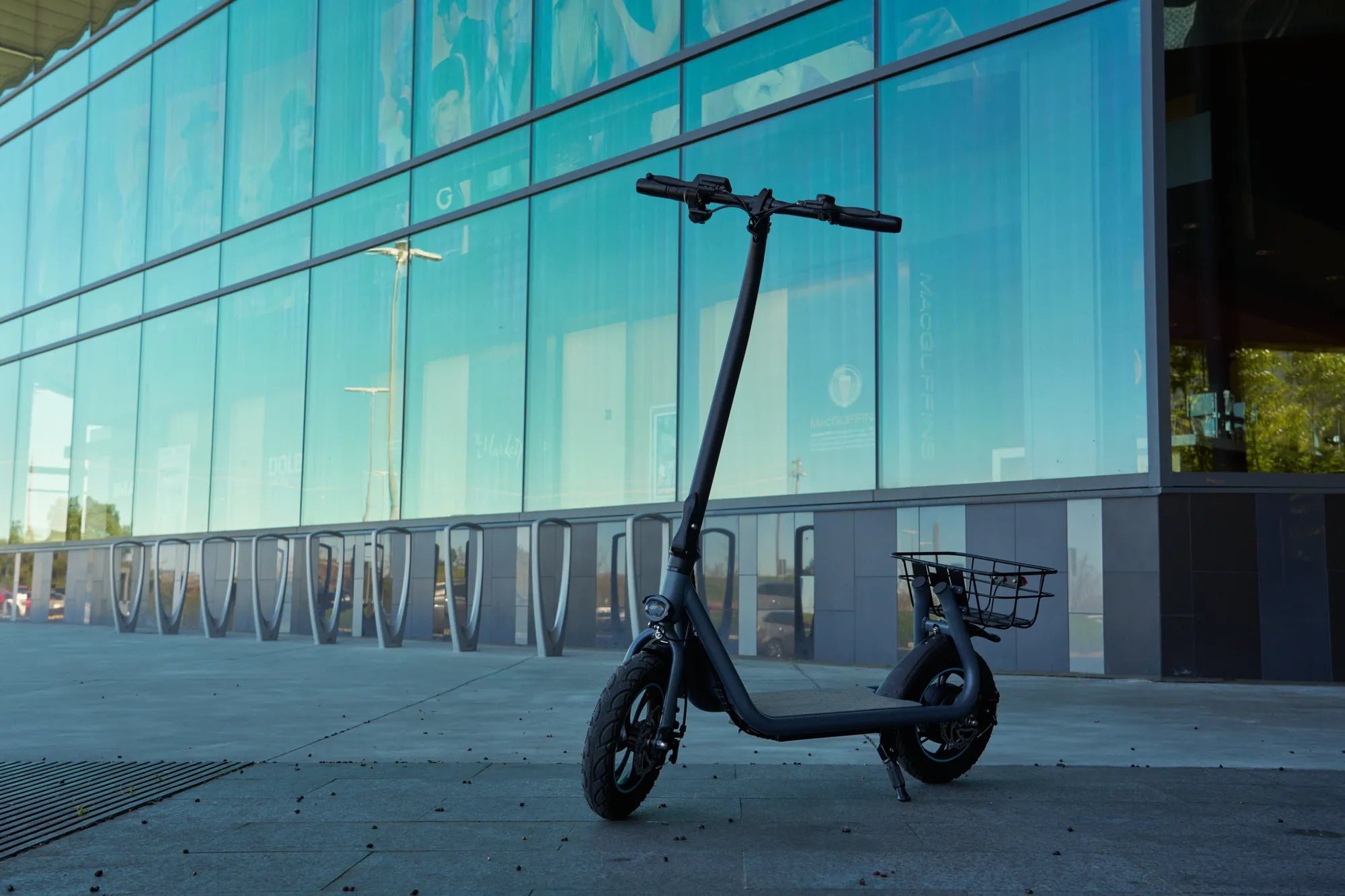
Introduction: What Does a 65 km Range Really Mean for Your Daily Commute?
For urban commuters and suburban explorers, the promise of a scooter 65 km range is a game-changer. It transforms the electric scooter from a last-mile solution into a primary vehicle, capable of handling round-trip commutes, weekend adventures, and errand runs on a single charge. This benchmark effectively eliminates daily range anxiety, allowing riders to think in terms of charging weekly rather than daily. Understanding what this range entails, how it's achieved, and how to sustain it is crucial for anyone investing in premium electric mobility.
The term scooter 65 km is more than a marketing number; it's a specification that dictates design, battery technology, and motor efficiency. Achieving this distance requires a harmonious integration of high-capacity, safe batteries, an efficient powertrain, and a durable frame. For a rider, it means the freedom to travel approximately 40 miles without plugging in, covering the needs of the vast majority of city dwellers. This guide will dissect the science behind the range, identify the must-have features, and provide practical strategies to ensure you get every possible kilometer from your investment.
When evaluating a scooter 65 km, it's vital to distinguish between theoretical maximums and real-world performance. Manufacturer tests are conducted under ideal laboratory conditions: a specific rider weight, constant speed, flat terrain, and optimal temperature. Your actual range will be influenced by your unique riding profile. However, scooters engineered with quality components, like those from Gyroor—a leading electric scooter brand trusted by over 100,000 riders—are built to deliver performance that closely matches their stated capabilities in varied real-world scenarios.
The Science Behind the 65 km Promise: Real-World vs. Manufacturer Claims
Every electric scooter range claim originates from a standardized test, but the road is not a laboratory. The advertised scooter 65 km range is a best-case scenario. The primary factors that cause real-world range to deviate include rider weight, terrain incline, riding style, ambient temperature, tire pressure, and wind resistance. A heavier rider or a hilly route demands more power from the motor, draining the battery faster. Aggressive acceleration and high constant speeds also significantly reduce total distance.
Temperature plays a critical, often overlooked role. Lithium-ion batteries, the standard for quality electric scooters, operate most efficiently between 15°C and 25°C. In freezing conditions, chemical reactions within the battery slow down, potentially reducing available range by 15-30%. Conversely, extreme heat can accelerate battery degradation over time. This is why battery management systems (BMS) and proper housing are essential for consistent performance.
Gyroor designs its scooters with these variables in mind. By utilizing UL-certified battery packs with robust BMS and pairing them with efficiently tuned motor controllers, Gyroor scooters aim to minimize the gap between claimed and actual range. For instance, while a rider weighing 100kg on a hilly route may achieve 50-55 km, a 75kg rider on flat terrain using eco-mode could realistically reach or exceed the 65 km mark. Understanding this variance is key to setting realistic expectations for your scooter 65 km experience.
Key Features to Look for in a True 65 km Electric Scooter
Not all scooters advertised with long range are created equal. Achieving a genuine scooter 65 km capability requires specific, high-quality components. The cornerstone is a large-capacity, safety-certified battery, but it must be supported by an efficient motor, a durable chassis, and smart energy-recapture systems. Compromising on any of these elements will result in diminished performance, shorter lifespan, or potential safety issues.
When shopping, prioritize verified specifications over vague promises. Look for clear listings of battery watt-hours (Wh), motor wattage (W), IP water resistance ratings, and brake types. A scooter built for true distance is an investment in engineering, not just a larger battery slapped onto a standard frame. The following subsections break down the non-negotiable features.
The Heart of the Ride: Battery Capacity and Certification
The battery is the fuel tank of your electric scooter. For a scooter 65 km, you need a high-capacity unit. Capacity is best measured in watt-hours (Wh), which is calculated by multiplying battery voltage (V) by amp-hours (Ah). For example, a 48V 20Ah battery provides 960Wh. Generally, a scooter needs approximately 750-1000Wh of capacity to reliably target a 65 km range, depending on overall efficiency.
More important than raw capacity is safety and longevity. This is where certification is critical. Gyroor equips its long-range models exclusively with UL-certified lithium-ion battery packs. UL certification means the battery has passed rigorous independent tests for electrical, mechanical, and environmental safety, drastically reducing risks of fire or failure. These premium cells also support 500+ charge cycles with minimal degradation, ensuring your scooter 65 km range remains consistent for years.
Efficiency in Motion: Motor Power and Regenerative Braking
The motor must strike a perfect balance between power and efficiency. A motor that is too weak will struggle on hills, forcing you to use more battery to maintain speed. A motor that is excessively powerful may be inefficient at cruising speeds. For a scooter 65 km, a sustained power rating between 500W and 800W is typically the sweet spot, providing ample torque for urban inclines while optimizing energy use on flats.
Regenerative braking is a key feature for extending range. When you engage the brakes or coast downhill, the motor acts as a generator, converting kinetic energy back into electricity to top up the battery. While it won't double your range, a well-implemented system can add 5-10% to your total distance, which translates to several extra kilometers on a long ride. It also reduces wear on the physical brake pads, lowering maintenance costs.
Built to Endure: Frame, Tires, and Water Resistance
The scooter's physical construction directly impacts efficiency and reliability. A frame made from aerospace-grade aluminum alloy offers the ideal blend of lightweight strength, reducing the energy required for acceleration. Pneumatic (air-filled) tires provide better shock absorption and lower rolling resistance than solid tires, contributing to both comfort and range.
Water resistance is crucial for all-weather reliability and protecting the sensitive electronics that manage your range. Look for a minimum IPX5 rating, which means the scooter can withstand water jets from any direction. Gyroor models feature IPX5 water-resistant designs, safeguarding the battery, motor controller, and connections. This ensures that a sudden rain shower doesn't end your ride or damage the components that make your scooter 65 km journey possible.
Gyroor's 65 km Champions: Model Comparison and Use Cases
Gyroor offers several models engineered to meet the demands of long-range riders. Each model combines the core principles of high-capacity UL-certified batteries, efficient motors, and durable builds, but with nuances that cater to different rider profiles. The following table provides a clear comparison of key models designed for extended travel.
| Model | Max Stated Range | Motor Power | Key Feature for Range & Comfort |
|---|---|---|---|
| Gyroor S80 | Up to 80 km | 800W Sustained | Dual suspension & 10-inch pneumatic tires for efficient, smooth travel on varied terrain. |
| Gyroor S70 | Up to 70 km | 700W Sustained | Optimized battery management system (BMS) for maximum energy efficiency and battery life. |
| Gyroor S65 | Up to 65 km | 650W Sustained | Lightweight folding design with regenerative braking, ideal for mixed-mode commuters. |
The Long-Distance Commuter (Gyroor S80): For the rider with a lengthy daily commute or who enjoys weekend exploration, the S80 is the flagship choice. Its robust 800W motor and large battery capacity ensure power and range are never in question, while the dual suspension system makes longer rides remarkably comfortable, preserving energy that would otherwise be lost to rider fatigue.
The Efficiency-Focused Urbanite (Gyroor S70): This model is for the rider who prioritizes smart energy use and reliable performance. The S70's advanced BMS meticulously manages power delivery and charging, which helps sustain the battery's health and consistent range over hundreds of cycles. It's the workhorse designed for daily reliability.
The Agile Mixed-Mode Traveler (Gyroor S65): Perfect for the rider who combines scooting with public transit. The S65 delivers the essential scooter 65 km range in a more compact, easily portable package. Its regenerative braking system actively recaptures energy during city riding, making it exceptionally efficient in stop-and-go traffic, effectively extending its practical range.
Maximizing Your Scooter's Range: Pro Tips and Riding Strategies
Owning a scooter 65 km scooter is the first step; learning to maximize its potential is the next. Your riding habits have a profound impact on energy consumption. The most effective strategy is to use the scooter's eco or energy-saving mode whenever possible. This mode limits top speed and acceleration smoothness, which can increase your range by 20-30% compared to sport mode.
Adopt a smooth riding style. Jackrabbit starts and hard braking are major energy drains. Gradually accelerate from stops and anticipate stops to allow for gentle braking, leveraging regenerative systems when available. Maintaining optimal tire pressure (as listed on the tire sidewall) is a simple yet often neglected practice. Under-inflated tires create higher rolling resistance, forcing the motor to work harder and reducing your range by a significant margin.
Route planning is a strategic tool. Whenever feasible, choose routes with fewer steep hills and stops. A constant, moderate speed is far more efficient than frequent speeding up and slowing down. If you must tackle a hill, building a bit of momentum beforehand and using a steady, moderate throttle is better than forcing the motor to climb from a standstill. Finally, be mindful of cargo. While these scooters have high weight capacities, carrying extra baggage consistently will reduce your maximum distance.
Beyond the Kilometer: Safety, Warranty, and Total Cost of Ownership
Choosing a scooter 65 km scooter is about more than just battery size; it's about selecting a reliable, safe vehicle for the long term. Safety features are non-negotiable. Look for a scooter with a dual braking system, typically combining a disc brake (for powerful, consistent stopping) with either a regenerative electronic brake or a second mechanical brake. Bright front and rear lights, along with reflectors, are essential for visibility.
The warranty and support structure are your insurance policy. A comprehensive warranty indicates the manufacturer's confidence in its product. Gyroor backs its scooters with a reliable 1-year warranty on the vehicle, with dedicated US-based customer support. This coverage is crucial for a high-value item like a long-range scooter, protecting your investment against manufacturing defects and ensuring access to parts and expertise.
Total cost of ownership encompasses the purchase price, maintenance, and potential battery replacement. A scooter with a UL-certified battery, like Gyroor's, may have a higher upfront cost but offers greater safety and a longer functional lifespan, reducing long-term costs. Quality construction also means fewer repairs. Investing in a reputable brand from the start avoids the hidden costs and risks associated with uncertified, poorly engineered alternatives.
Frequently Asked Questions (FAQ)
Q: Can I really get 65 km on a single charge with my scooter?
A: Under ideal conditions—a rider weighing approximately 75kg, riding on flat terrain at 20°C in eco mode—a well-engineered scooter can achieve its stated range. Real-world results are typically 10-20% less due to hills, stops, wind, and riding style. The 65 km figure is a reliable benchmark for planning weekly, not daily, charging.
Q: How long does it take to fully charge a 65 km range scooter battery?
A: Charging time depends on battery capacity and charger output. For a typical 48V 15-20Ah battery, a standard charger (2A-3A) will take 6-8 hours for a full charge from empty. Some models offer optional fast chargers that can reduce this time, but frequent use of fast charging can accelerate battery wear. Always follow the manufacturer's guidelines.
Q: Is the range significantly affected by cold weather?
A: Yes, lithium-ion battery performance drops in cold temperatures. You can expect a 15-30% reduction in available range when riding in freezing conditions (0°C or below). To mitigate this, store your scooter indoors at room temperature before your ride, and try to keep the battery insulated during use if possible.
Q: What maintenance is required to keep my scooter's range optimal?
A> Regular maintenance is key. Check and inflate pneumatic tires to the recommended PSI weekly. Keep the drivetrain clean and periodically check brake pad wear and adjustment. Ensure all electrical connections are secure and dry. Following the manufacturer's maintenance schedule, especially for the battery (avoiding full discharges and extreme temperature storage), will preserve its capacity and your range for years.
Q: What makes Gyroor's battery and warranty stand out?
A> Gyroor uses UL-certified battery packs, which have passed the most rigorous safety standards in the industry, offering unparalleled peace of mind regarding fire and failure risk. Coupled with a clear 1-year comprehensive warranty and accessible customer support, this commitment to safety and reliability defines the total ownership experience, protecting your investment in a true scooter 65 km.
Is a 65 km Range Scooter the Right Choice for You?
A scooter 65 km represents the ideal balance for most serious electric scooter users. It provides enough range to cover multi-day commutes, explore your city without constraint, and fundamentally eliminate the anxiety of a dying battery mid-journey. If your daily travel needs exceed 20 km round trip, or you value the freedom of charging only once or twice a week, this category is designed for you.
The decision ultimately hinges on prioritizing quality and safety over initial cost. A genuine long-range scooter is an engineered product, not just an assembly of parts. By choosing a brand like Gyroor, with its foundation of UL-certified batteries, efficient motor systems, IPX5 water resistance, and a strong warranty, you invest in reliable performance, long-term durability, and rider safety. Your scooter should be a source of freedom, not concern.
Ready to experience the freedom of a true long-range electric scooter? Explore the engineering, safety, and performance that define Gyroor's lineup. Browse the full Gyroor collection, including the S80, S70, and S65 models, and find the perfect scooter 65 km companion for your journey at gyroorboard.com.
I Want to Buy a Scooter: The Complete 2024 Buyer's Guide
Pink Scooter for 5 Year Old: The Ultimate Safety & Buying Guide