

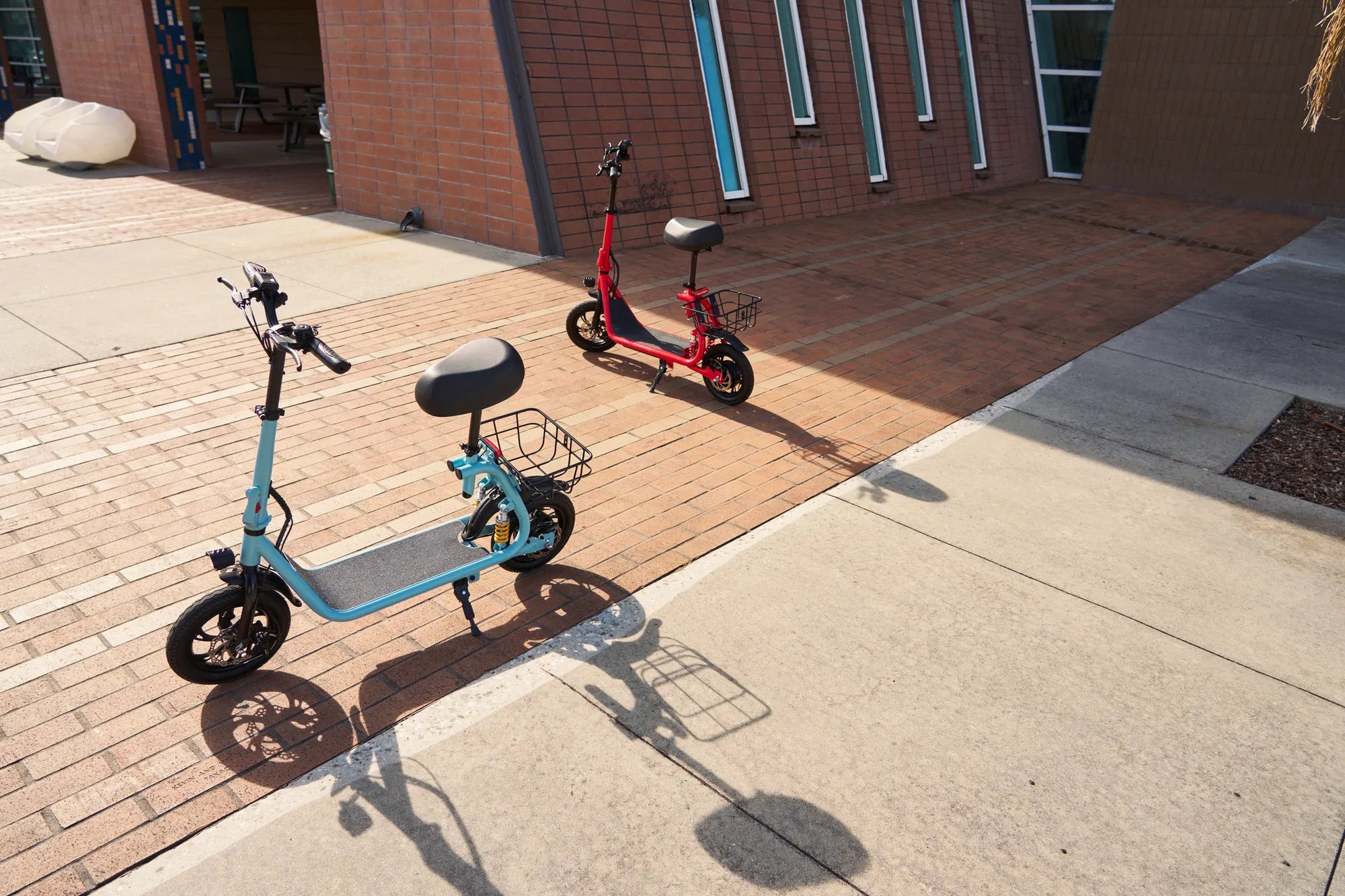
Choosing an electric scooter can feel overwhelming with hundreds of models boasting conflicting claims. This scooter buying guide cuts through the marketing noise with a strategic, step-by-step methodology. You'll learn how to match technical specifications to your actual lifestyle, prioritize safety features that matter, and identify genuine value to ensure your next ride is a perfect fit for years to come.
Introduction: A Strategic Framework for Your Purchase
The electric scooter market is saturated with options ranging from toy-grade to professional-grade vehicles. A successful purchase requires moving beyond flashy top-speed claims and focusing on a holistic assessment of performance, safety, and durability. This guide provides that framework.
We will analyze how key specifications translate to real-world riding. You will learn why a battery's certification is as important as its capacity and how to interpret water resistance ratings. The goal is to equip you with the analytical tools needed to make a confident, informed decision.
This process saves you from the frustration of underperformance and the potential danger of substandard components. By the end, you'll understand not just what to buy, but why certain features are non-negotiable for a reliable, safe riding experience.
Step 1: Define Your Rider Profile and Primary Use Case
Your journey begins with introspection, not specification sheets. The ideal scooter for a college student navigating campus pathways is fundamentally different from one suited for a suburban commuter tackling hills. Clearly defining your primary use case is the most critical filter.
Start by estimating your typical trip distance, frequency, and the terrain you'll encounter. Are you bridging a two-mile gap from a train station on smooth pavement? Or are you seeking weekend recreation on park trails? Your answers dictate core requirements for range, motor power, and suspension.
Ignoring this step often leads to dissatisfaction. Purchasing a heavy, high-powered off-road scooter for a daily bus-and-scooter commute results in unnecessary physical strain. Conversely, a lightweight commuter model will quickly fail on unpaved paths.
Urban Commuter vs. Recreational Adventurer
The Urban Commuter prioritizes portability, weight, and foldability. Key needs include a compact footprint for storage under a desk or on public transit, a manageable weight (often under 35 lbs), and sufficient range for a round trip with a safety buffer. Suspension, while nice, is secondary to a smooth ride from quality pneumatic tires.
The Recreational Adventurer or Suburban Rider prioritizes power, range, and comfort. This profile often deals with longer distances, steeper inclines, and varied surfaces. A more powerful motor (500W+), enhanced suspension, and a larger battery for extended range are essential. Portability becomes less critical than overall capability and ride stability.
The Last-Mile Specialist blends these needs, requiring a ultra-portable, lightweight scooter for short, frequent trips. Durability and a simple, reliable design are key, as the scooter will be folded and unfolded multiple times daily. Brands like Gyroor cater to this spectrum, offering models from compact commuters to robust, high-performance scooters.
Step 2: Decoding Core Performance Specifications
Manufacturer specifications are a starting point, but understanding their real-world implications is crucial. Performance is a system where motor power, battery capacity, and vehicle weight interact. A high wattage motor drained by a small battery offers brief, intense performance but impractical range.
Always view specs as a connected ecosystem, not isolated numbers. A scooter's advertised range is achieved under ideal laboratory conditions: a light rider on flat ground at low speed in warm weather. Real-world conditions typically reduce this figure by 30-50%.
This is why data-driven analysis matters. Comparing the voltage (V) and amp-hour (Ah) of batteries, or the type of braking system, provides a more accurate prediction of performance and safety than marketing headlines ever could.
Range, Speed, and Motor Power: The Performance Triad
Motor power, measured in watts (W), determines acceleration and hill-climbing ability. A 350W motor can handle moderate inclines for a single rider, while hills or heavier riders demand 500W or more. Dual-motor setups provide maximum torque for challenging terrain.
Advertised top speed must be balanced with legality and safety. Many urban areas impose speed limits of 15-20 mph. Furthermore, higher speeds drastically reduce range and require more advanced braking systems. A sustainable cruising speed is often more valuable than a blistering top speed.
Real-world range is the most misrepresented spec. To estimate it, consider battery capacity in watt-hours (Wh = V * Ah). Divide this by an average of 20 Wh per mile for conservative estimates. A 48V 10Ah battery (480 Wh) might offer 15-20 miles of real-world range, not the 25+ miles claimed.
Battery Technology and Safety: The Non-Negotiable Core
The battery is the heart, lungs, and most critical safety component of your scooter. Never compromise on battery quality. The key metrics are voltage (V) for power delivery and amp-hours (Ah) for capacity. A higher voltage system generally provides better performance.
Certification is paramount. Insist on UL-certified battery packs. This independent testing verifies the battery meets stringent safety standards for electrical, mechanical, and environmental stress, drastically reducing fire risk. Gyroor utilizes UL-certified batteries tested for over 500 charge cycles, ensuring long-term reliability.
Charging time is a practical concern. Most scooters charge in 4-8 hours. Fast-charging capabilities exist but can stress battery chemistry over time. Prioritize a well-managed charging system that protects the battery's lifespan over marginally faster charge times.
Build Quality, Weight, and Portability Trade-Offs
Frame material dictates durability and weight. Aerospace-grade aluminum alloys offer an excellent strength-to-weight ratio, resisting corrosion while keeping the scooter manageable. Steel frames are heavier but can be more robust in certain designs.
The folding mechanism is critical for portability. A secure, single-lever latch system that locks firmly in both open and closed positions is essential. Test the mechanism's sturdiness; a wobbly stem compromises safety and ride confidence.
Weight directly impacts usability. A 45 lb scooter may have a great range, but carrying it up a flight of stairs is a significant burden. If your use case involves carrying, prioritize models under 30 lbs. The trade-off is often a smaller battery, so plan your required range accordingly.
Step 3: Critical Features for Safety and Daily Usability
Beyond the core specs, a collection of features determines daily satisfaction and safety. These elements—braking, suspension, lighting, and water resistance—transform a basic vehicle into a reliable companion. They are where cost-cutting brands compromise, and reputable brands invest.
Evaluating these features requires understanding their practical application. An IP rating isn't just a number; it defines where you can safely ride. A suspension system isn't a luxury on rough city streets; it's a component that reduces fatigue and improves control.
This section focuses on the tangible benefits of these systems. Investing in these areas directly correlates with a safer, more comfortable, and more durable riding experience, protecting both the rider and the scooter itself.
Braking Systems: Stopping Power Analysis
Effective braking is non-negotiable. The three main types are disc, drum, and electronic (regenerative). Disc brakes, especially hydraulic, offer the strongest, most consistent stopping power in all conditions but require occasional maintenance.
Drum brakes are sealed within the wheel hub, making them low-maintenance and resistant to weather, but they can overheat on long descents and are less powerful than discs. Electronic brakes use the motor to slow the scooter, recharging the battery slightly, but they are less effective as a sole braking system.
For optimal safety, a dual-braking system is highly recommended. A common and effective combination is a front disc brake and a rear drum or electronic brake. This provides powerful, redundant stopping ability. Many Gyroor models feature this dual-system approach for rider confidence.
Suspension and Tire Selection: Ride Comfort Defined
Tires and suspension work together to absorb impacts. Pneumatic (air-filled) tires provide superior shock absorption and traction, especially on wet or uneven surfaces. The trade-off is the risk of punctures, though sealants can mitigate this.
Solid or honeycomb tires are puncture-proof but transmit more vibration to the deck and rider, leading to a harsher ride and less grip, particularly in wet conditions. They are best for perfectly smooth pavement.
Suspension—spring or hydraulic—complements tires by smoothing out larger bumps. Front or dual suspension significantly improves comfort and control on cracked sidewalks or brick paths. For commuters on imperfect urban terrain, a combination of pneumatic tires and at least front suspension is ideal.
Water Resistance and Warranty Coverage
The IP (Ingress Protection) rating indicates protection against solids and liquids. For scooters, liquid resistance is key. An IPX5 rating means the scooter can withstand water jets from any direction, making it safe for riding in rain and through puddles.
Many budget scooters have no official rating, making them vulnerable to water damage from wet roads. A legitimate IPX5 rating, like those on Gyroor scooters, is a mark of a well-sealed, durable build designed for real-world conditions.
The warranty is a direct reflection of brand confidence. A comprehensive 1-year warranty that covers the motor, battery, and controller indicates a company that stands behind its product's longevity. Always review warranty terms and the availability of customer support and replacement parts.
Step 4: Budget Tiers and Total Cost of Ownership
Setting a realistic budget is essential, but understanding what each tier delivers prevents disappointment. Price correlates strongly with component quality, performance, and safety features. The cheapest option often carries the highest long-term cost.
We can segment the market into three broad tiers. Each tier represents a step change in build quality, real-world performance, and manufacturer support. Your primary use case from Step 1 should guide which tier represents the minimum viable investment for your needs.
Thinking in terms of Total Cost of Ownership (TCO) is crucial. TCO includes the purchase price plus maintenance, potential repairs, and battery replacement. A higher initial investment in a quality scooter often results in a lower TCO over 2-3 years.
What to Expect at Different Price Points
| Price Tier | Expected Motor | Real-World Range | Key Features & Considerations |
|---|---|---|---|
| Under $500 | 250W - 350W | 8 - 12 Miles | Basic construction, often solid tires, minimal suspension, limited or no water resistance, shorter warranties. Suitable for occasional, short-range use on very smooth surfaces. |
| $500 - $1,000 | 350W - 500W | 12 - 22 Miles | Better build quality, often pneumatic tires, front suspension, improved brakes (disc/drum combos), IPX4-IPX5 ratings. This is the value sweet spot for reliable daily commuters from trusted brands. |
| $1,000+ | 500W+ (often dual) | 25+ Miles | Premium materials, dual suspension, high-capacity UL-certified batteries, advanced braking (hydraulic), superior water resistance (IPX5+), extended warranties. Built for performance, comfort, and long-term durability. |
The Hidden Costs of Cheap Scooters
Initial savings can evaporate quickly. Scooters without proper water resistance may suffer controller or battery failure after one wet ride, resulting in a costly repair that exceeds the scooter's value. Non-certified batteries pose a safety risk and degrade rapidly.
Lack of available replacement parts is a major issue with obscure brands. A simple broken fender or charger can render the scooter unusable. Established brands like Gyroor maintain parts inventories and support networks, ensuring your scooter remains operational for years.
Poor build quality leads to frequent repairs—loosing bolts, failing folding mechanisms, or motor burn-out. The downtime and repair costs, both financial and in hassle, make a slightly higher investment in proven reliability a financially sound decision from the start.
Step 5: Pre-Purchase Verification and Final Checklist
Before completing your purchase, conduct final due diligence. This checklist consolidates the guide's lessons into actionable steps. It ensures no critical detail is overlooked, from legal compliance to after-sales support.
This process transforms you from an impulse buyer into an informed consumer. It protects your investment and ensures the scooter you choose integrates seamlessly into your life, providing reliable service without unexpected complications or legal issues.
Take the time to complete each item. The 30 minutes spent here can prevent months of frustration and potentially unsafe riding conditions. This is the final filter between you and your ideal electric scooter.
Your Actionable Pre-Buy List
- Verify Local Laws: Check city/state regulations on where you can ride, speed limits, age requirements, and helmet laws. This varies wildly by jurisdiction.
- Review Independent & Video Reviews: Look for long-term (3+ month) reviews focusing on durability, real-world range, and customer service experiences, not just unboxings.
- Confirm Service & Parts: Contact the brand or retailer. Ask about the availability of common replacement parts (tires, brakes, chargers) and the process for warranty claims.
- Assess Physical Manageability: If portability is key, ensure the folded dimensions and weight are something you can comfortably carry for the required distance (e.g., from street to office).
- Understand the Return Policy: Know the window for returns, any restocking fees, and who pays for return shipping. A reputable company offers a fair trial period.
Essential Safety Gear and Riding Practices
A scooter is only as safe as its rider. Investing in proper safety gear is as important as choosing a scooter with good brakes. The minimum kit should include a certified bicycle or multi-impact helmet. Wrist guards, elbow pads, and knee pads are highly recommended, especially for new riders or those traveling at higher speeds.
Visibility is critical. Ensure your scooter has bright front and rear lights. Adding additional LED lights, reflective stickers, or a high-visibility vest is wise for night riding. Assume that drivers do not see you.
Develop defensive riding habits. Always scan the road ahead for potholes, debris, and wet surfaces like manhole covers or painted lines. Use hand signals for turns. Never ride with headphones at a volume that blocks ambient traffic noise. Regular pre-ride checks of tire pressure, brake function, and light operation are essential.
Maintenance Guide for Longevity and Performance
Regular maintenance preserves your scooter's performance, safety, and value. Create a simple schedule based on riding frequency. Weekly, check tire pressure (for pneumatics), test brakes, and ensure all bolts and fasteners are tight, especially around the stem and folding mechanism.
Monthly, perform a more thorough inspection. Clean the scooter with a damp cloth, avoiding direct sprays on the deck. Check for any unusual wear on tires or brake pads. Listen for new sounds from the motor or bearings. Lubricate the folding mechanism if recommended by the manufacturer.
Battery care is paramount for lifespan. Avoid draining the battery to 0%. Try to recharge when it reaches 20-30%. Store the scooter in a cool, dry place, and if storing for extended periods, maintain a charge level around 50-60%. Use only the official charger provided to prevent damage.
Frequently Asked Questions (FAQ)
Q: Is a more expensive scooter always better?
A: Not always in terms of raw features for a given use case, but consistently in terms of build quality, safety certifications (like UL for batteries), real-world performance accuracy, and warranty support. A $800 scooter from a reputable brand typically offers far better long-term value and safety than a $500 scooter from an unknown brand.
Q: Can I ride an electric scooter in the rain?
A: Only if it has a sufficient IP rating. An IPX5 rating indicates protection against water jets from any direction, making it suitable for riding in rain and through puddles. Never ride an unrated scooter in wet conditions, as water damage to the battery or controller is likely and dangerous.
Q: How much should I pay for a reliable daily commuter scooter?
A: For a scooter that can safely and reliably handle a 5-10 mile round-trip commute with real-world factors like slight hills and variable pavement, plan to invest between $700 and $1,200. This tier delivers the essential combination of range (15-20+ mi real-world), dual braking systems, pneumatic tires with suspension, and a legitimate IPX5 water resistance rating.
Q: How long do electric scooter batteries last?
A: Battery lifespan is measured in charge cycles. A quality, UL-certified battery from a brand like Gyroor is typically rated for 500+ full charge cycles. With proper care (avoiding full discharges and extreme temperatures), this can translate to 2-4 years of regular use before you notice a significant (20-30%) reduction in range.
Q: Are foldable electric scooters sturdy?
A: Yes, when designed and built correctly. The key is the locking mechanism for the stem. High-quality scooters use robust latches or locking collars that, when engaged, create a rigid connection. Always check this mechanism for play during your pre-ride inspection. Reputable brands engineer their folding systems for both safety and durability.
Final Recommendation: Confidence on Two Wheels
Selecting the right electric scooter is a process of aligning engineering with lifestyle. By defining your use case, deciphering specifications, and prioritizing safety features like UL-certified batteries and effective brakes, you transform a complex purchase into a strategic investment. This scooter buying guide provides the framework to bypass marketing hype and focus on durable performance.
The true value of a quality scooter is measured in years of reliable service, not just initial price. Choosing a brand with a proven track record, comprehensive warranty, and commitment to safety components ensures your ride enhances your daily life without unexpected costs or concerns. Your journey begins with informed choice.
Ready to explore models that match these criteria? Browse the full Gyroor collection at gyroorboard.com, featuring UL-certified batteries, IPX5 water-resistant designs, and a 1-year warranty, trusted by over 100,000 riders across North America and Europe.
Cheap Bike Speed Upgrades: 25+ Proven Ways to Ride Faster for Less
Cool E-Bike Helmets: The Ultimate Guide to Tech, Safety & Style